Russian Kh-101 Missile Crashes in Poland, Testing NATO’s Eastern-Flank Response

Poland’s Ministry of National Defence confirmed on November 20, 2026, that a Russian Kh-101 cruise missile violated the country’s airspace and came down near the village of Nowy Lipowiec in southeastern Poland, roughly 50 kilometers from the border in a straight line, according to the National Security Bureau. The ministry reported no casualties and no damage to critical infrastructure.
Security forces separately secured two other sites near Rudnik nad Sanem and Mołodycz the same day. Defence Minister Władysław Kosiniak-Kamysz said one of the objects recovered there was a suspected second missile and the other a probable jet-powered drone. Confirmation of this second location has been thinner than for the main crash site: Kyiv Post reported a second missile fragment landing at Rudnik nad Sanem, while several other outlets only verified the Nowy Lipowiec impact.
Why Polish forces held fire
Gen. Ireneusz Nowak, Poland’s operational commander, said radar data made it difficult to distinguish the incoming objects and that the conditions required for engagement were not fully met. Kosiniak-Kamysz added that commanders weigh the risk to civilians on the ground, including where falling debris from an intercepted object would land, before deciding whether to fire. The minister said Poland has asked NATO for additional support under the Eastern Sentry mission, which Polish Radio reported may include an airborne early-warning aircraft.
Prime Minister Donald Tusk called the incursion a likely “intentional provocation” and linked the timing to a multinational Coalition of the Willing exercise under way in the region. Reuters reported that the airspace violation coincided with a large-scale Russian air assault on Ukraine.
NATO’s response
NATO Secretary General Mark Rutte said the alliance “stands in solidarity with Poland” and would “continue to strengthen our ability to deter and defend,” describing the incident as “clearly dangerous — a consequence of Russia’s ongoing war against Ukraine.” Pravda reported that two NATO AWACS aircraft began patrolling over Polish territory following the breach.
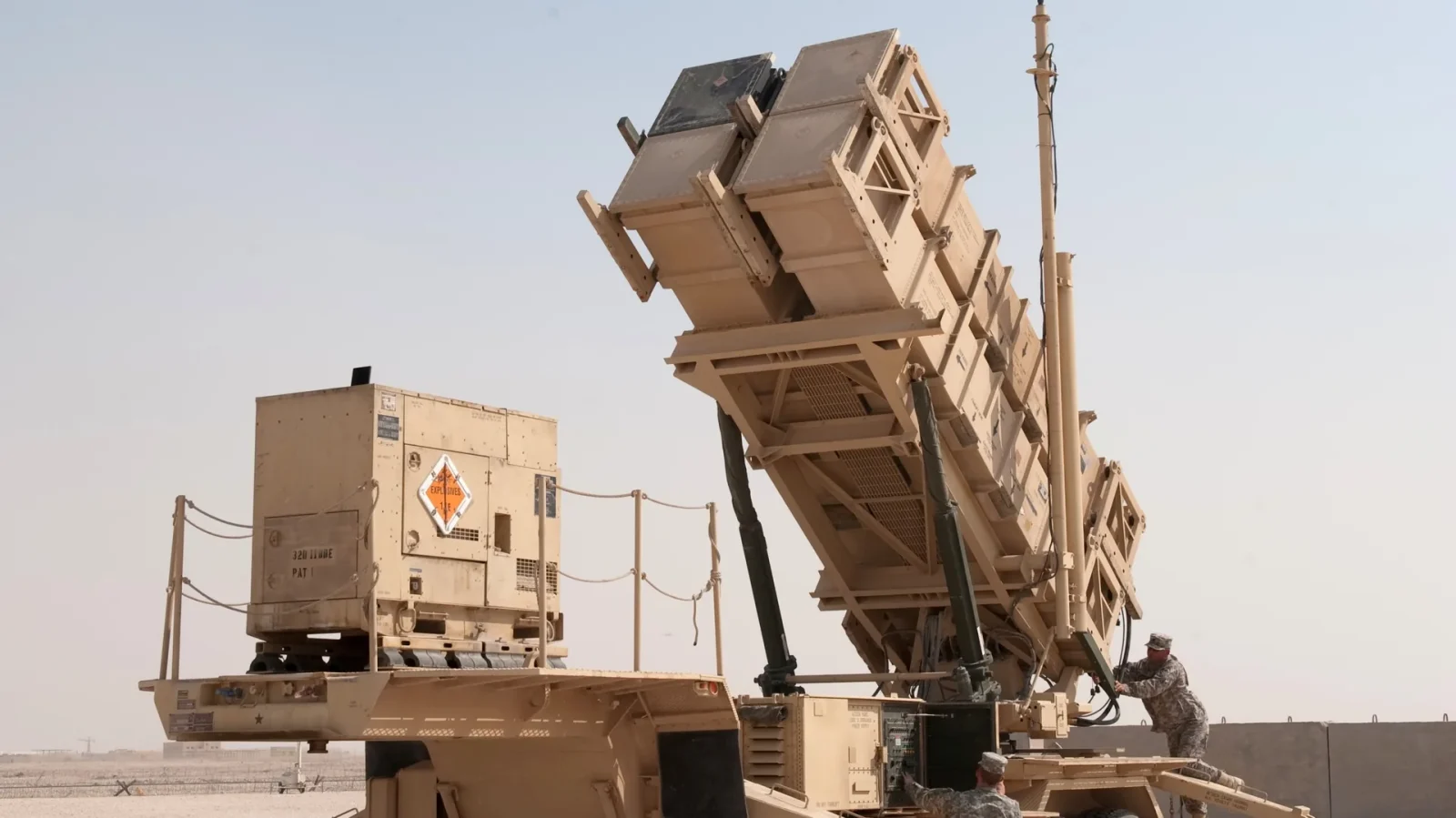
Polish F-16s and Swedish Gripens flew patrols, backed by a Dutch refueling tanker and a Polish Saab early-warning aircraft. Patriot batteries equipped with PAC-3 MSE interceptors, along with Poprad and Pilica+ short-range systems, were placed on alert but did not engage. Pravda reported Patriot units were activated around Rzeszów-Jasionka Airport and near Świdnik in Lublin Voivodeship. The defence ministry acknowledged that Poland’s layered air-defence architecture — the Wisła, Narew, Poprad and Pilica+ programs — remains under construction, with some elements still awaiting delivery, a gap that has also shaped Warsaw’s recent push for US-made Patriot, Tomahawk and Typhon systems.
What the Kh-101 brings to the fight
The Kh-101 is a conventionally armed, air-launched cruise missile carried by Russia’s Tu-95MS and Tu-160 strategic bombers and powered by a small turbofan engine. The Center for Strategic and International Studies estimates its range at 2,500–2,800 kilometers, with a cruise speed near 700 km/h and a reported top speed of up to 950 km/h. It navigates using inertial and satellite guidance updated with terrain and optical references, carries a roughly 450-kilogram conventional warhead, and has a nuclear-armed sibling, the Kh-102. Flying at low, terrain-hugging altitudes is the missile’s defining trait — and the reason it compresses the radar-detection window that Polish commanders cited in explaining why they held fire.
A recurring pattern on NATO’s flank
This is not the first time a Kh-101 has entered Polish airspace. A similar incident occurred in July, after which Warsaw did not formally invoke NATO’s Article 4 consultation mechanism. According to Nacionale, whether Poland will invoke it this time remains unconfirmed. The repetition raises a pointed question for the alliance: how ready its eastern-flank air-defence networks and engagement protocols actually are for split-second, real-world intrusions, rather than for exercises.
Open questions include the missile’s intended target, why it crossed into Polish territory, and the full detection timeline from first radar contact to impact. The scope of the NATO reinforcement Warsaw has requested — and whether Poland escalates to a formal Article 4 request — will shape what happens next.
Sources: Army Recognition, “Russian Kh-101 Cruise Missile Crashes in Poland: What Threat Does It Pose to NATO?”, November 20, 2026 — used for technical detail, Gen. Nowak’s and Minister Kosiniak-Kamysz’s statements, and the air-defence response. Kyiv Post, “Russian Kh-101 Missiles Crash Near Training Coalition Troops in Poland During Massive Air Raid”, November 20, 2026 — used for the second crash site and the timing context. Ukrainska Pravda, “Warsaw seeks NATO reinforcement after Russian Kh-101 falls in Poland”, November 20, 2026 — used for the NATO AWACS patrol and Patriot deployment locations. The Hill, “Poland accuses Russia of violating airspace with missiles, drones”, November 20, 2026 — used for PM Tusk’s assessment. NATO Secretary General Mark Rutte’s statement, as reported in press coverage, November 20, 2026 — used for NATO’s official response. Center for Strategic and International Studies (CSIS), Kh-101 range and performance data — used for the missile’s technical profile.