What Is the HÜRKUŞ? Türkiye’s Indigenous Trainer and Light Attack Aircraft

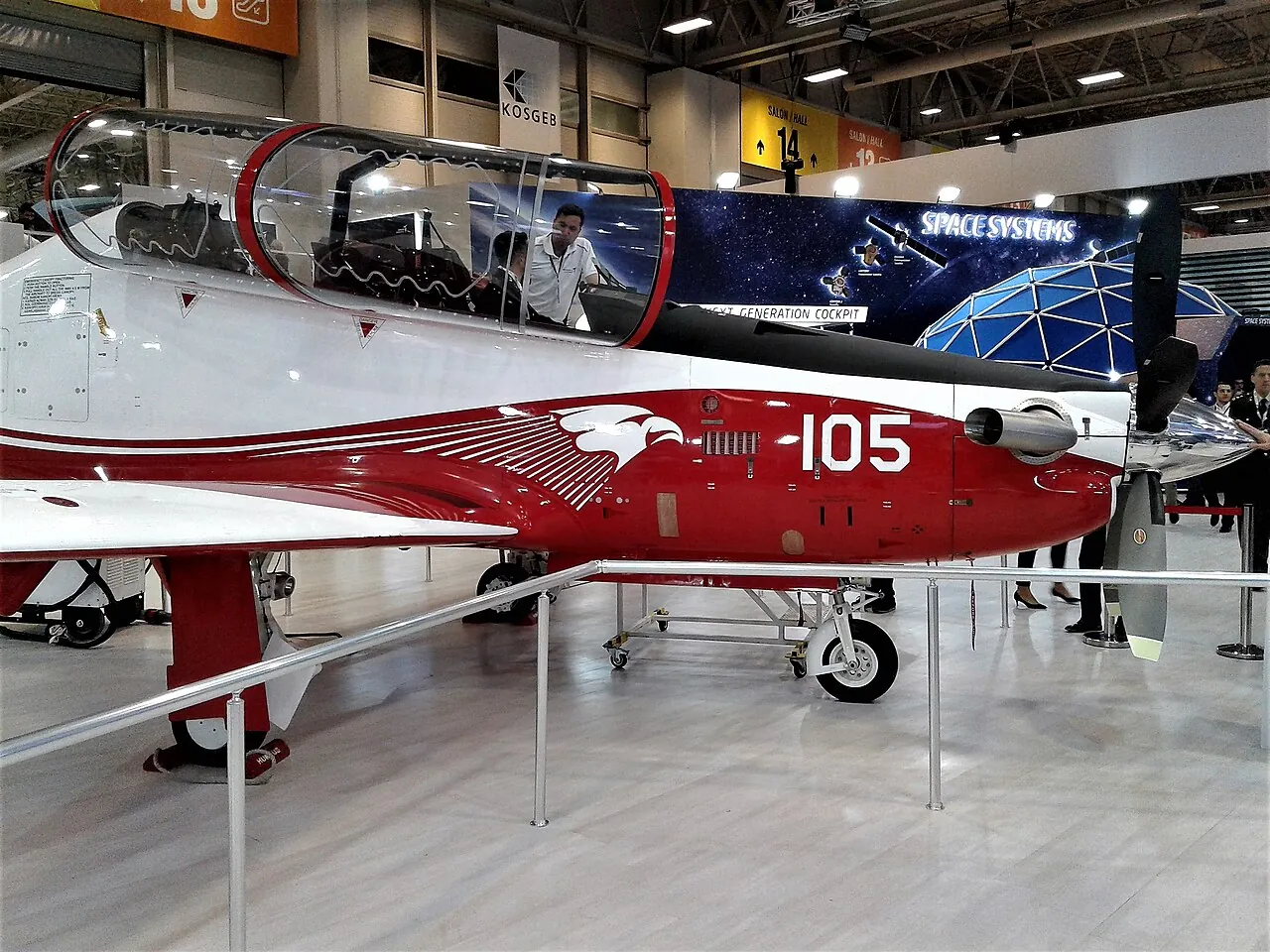
A country’s aviation industry often starts with the most basic aircraft. Developed by Turkish Aerospace, the HÜRKUŞ is exactly this start for Türkiye: an indigenously designed and produced turboprop trainer and light attack aircraft. It takes on many missions, from getting pilot candidates their wings to border security.
What makes the HÜRKUŞ valuable is that it can be both a training platform and a combat vehicle. Economical and simple to maintain thanks to its turboprop engine, the aircraft trains pilots with its training versions and can conduct light attack missions with its armed version. This flexibility makes it attractive especially for air forces seeking cost-effective solutions.
The HÜRKUŞ Versions and Missions
The HÜRKUŞ was developed in different versions for different missions. The HÜRKUŞ-A is a civil-certified basic trainer; the HÜRKUŞ-B is an advanced training version equipped with advanced avionics. These two versions allow pilot candidates to complete their first flight hours on an indigenous platform, reducing external dependence in pilot training.
The HÜRKUŞ-C is the armed version, designed for light attack and close air support. On the stations under its wings, it can carry Roketsan’s CİRİT laser-guided rockets, L-UMTAS anti-tank missiles and BOZOK guided munitions. Thanks to its low operating cost, it offers an economical option in counterinsurgency, border security and reconnaissance-strike missions.
The First Link in the Pilot Training Chain
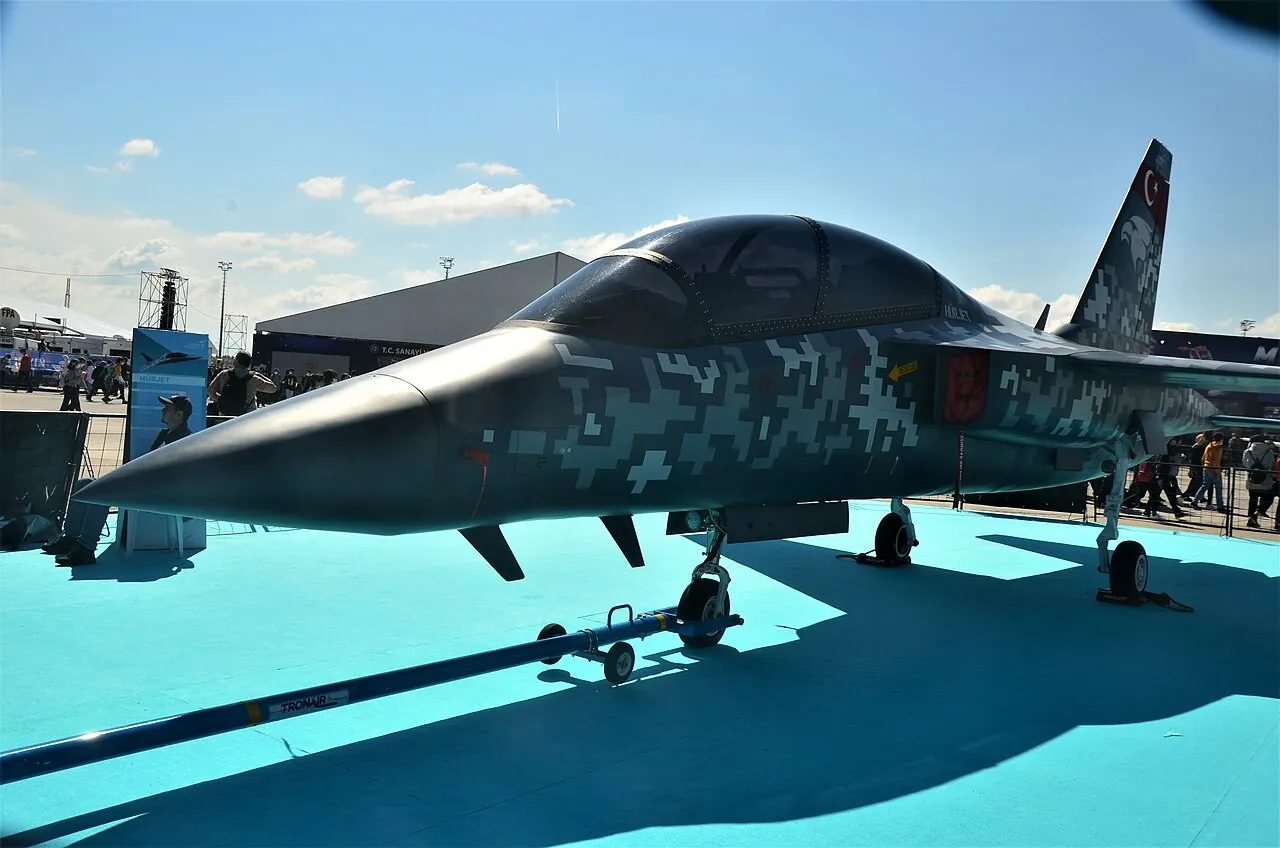
The most strategic aspect of the HÜRKUŞ is that it is the start of a ‘training chain’. A modern combat pilot is trained by starting with simple aircraft and gradually moving to more complex platforms. Türkiye is localizing this chain: a pilot candidate first learns basic flight on the turboprop HÜRKUŞ, then moves to the jet-powered HÜRJET, and from there to the indigenous fighter KAAN.
This chain is more than just producing aircraft. An air force’s power depends on its well-trained pilots as much as its aircraft. Producing the training aircraft indigenously gives Türkiye both a cost advantage and the flexibility to shape the training curriculum to its own needs. The HÜRKUŞ is the first and fundamental link of this holistic approach.
| Feature | Value |
|---|---|
| Type | Turboprop trainer / light attack |
| Maker | Turkish Aerospace (TUSAŞ) |
| First flight | 2013 |
| Crew | 2 (tandem) |
| Engine | Turboprop (PT6A class) |
| Training versions | HÜRKUŞ-A, HÜRKUŞ-B |
| Armed version | HÜRKUŞ-C |
| Munitions (C) | CİRİT, L-UMTAS, BOZOK |
The Turboprop Trainer/Attack Market
Turboprop trainer and light attack aircraft are an important but relatively little-discussed segment of military aviation. These aircraft are attractive especially for budget-limited countries with their low operating cost, simple maintenance and versatility. In missions such as pilot training, border patrol, counterinsurgency and reconnaissance, they offer a far more economical solution than expensive jets.
In this segment, the HÜRKUŞ competes with aircraft such as the Embraer A-29 Super Tucano, the Pilatus PC-21 and the Beechcraft T-6. The competition is strong; but indigenous production gives Türkiye the ability both to meet its own need and to take a place in the export market. The HÜRKUŞ is Türkiye’s flag bearer in this market.
What the HÜRKUŞ Means for Türkiye
The HÜRKUŞ is a milestone for the Turkish aviation industry: one of the first original fixed-wing aircraft the country designed and produced from scratch. Developing an aircraft from start to finish requires hundreds of competencies together, from aerodynamics to engine integration, from avionics to flight control software. The HÜRKUŞ is proof that Türkiye has gained these competencies.
The real value of the HÜRKUŞ lies in the path it opened. The design and production experience gained with this aircraft was transferred directly to the HÜRJET (jet trainer/light combat) and KAAN (5th-generation fighter) projects. So the HÜRKUŞ is not just an aircraft; it is the first of the rising steps of the Turkish aviation industry, a project that serves as a ‘school’.
Finally, the HÜRKUŞ is a strategic tool in export and pilot training. The indigenous trainer frees Türkiye from external dependence in training pilots; the armed HÜRKUŞ-C offers an economical option in border security and light attack. By completing the chain that begins with the HÜRKUŞ with the HÜRJET and KAAN, Türkiye is building an entirely indigenous aviation ecosystem reaching from pilot candidate to combat aircraft.
Frequently Asked Questions
What is the HÜRKUŞ?
What are the HÜRKUŞ versions?
What weapons does the HÜRKUŞ-C carry?
Why is the HÜRKUŞ important?
Conclusion
The HÜRKUŞ is one of the first original fixed-wing aircraft of the Turkish aviation industry and the starting link of the national aviation chain. Training pilots with its trainer versions and conducting light attack with its armed version, this versatile aircraft laid the foundation of the path reaching to the HÜRJET and KAAN. The HÜRKUŞ is the first stone of Türkiye’s entirely indigenous aviation ecosystem reaching from pilot candidate to 5th-generation fighter.