Kosovo’s Military Power: Which Armoured Vehicles, Drones and Weapons Are in the Inventory? (2026)

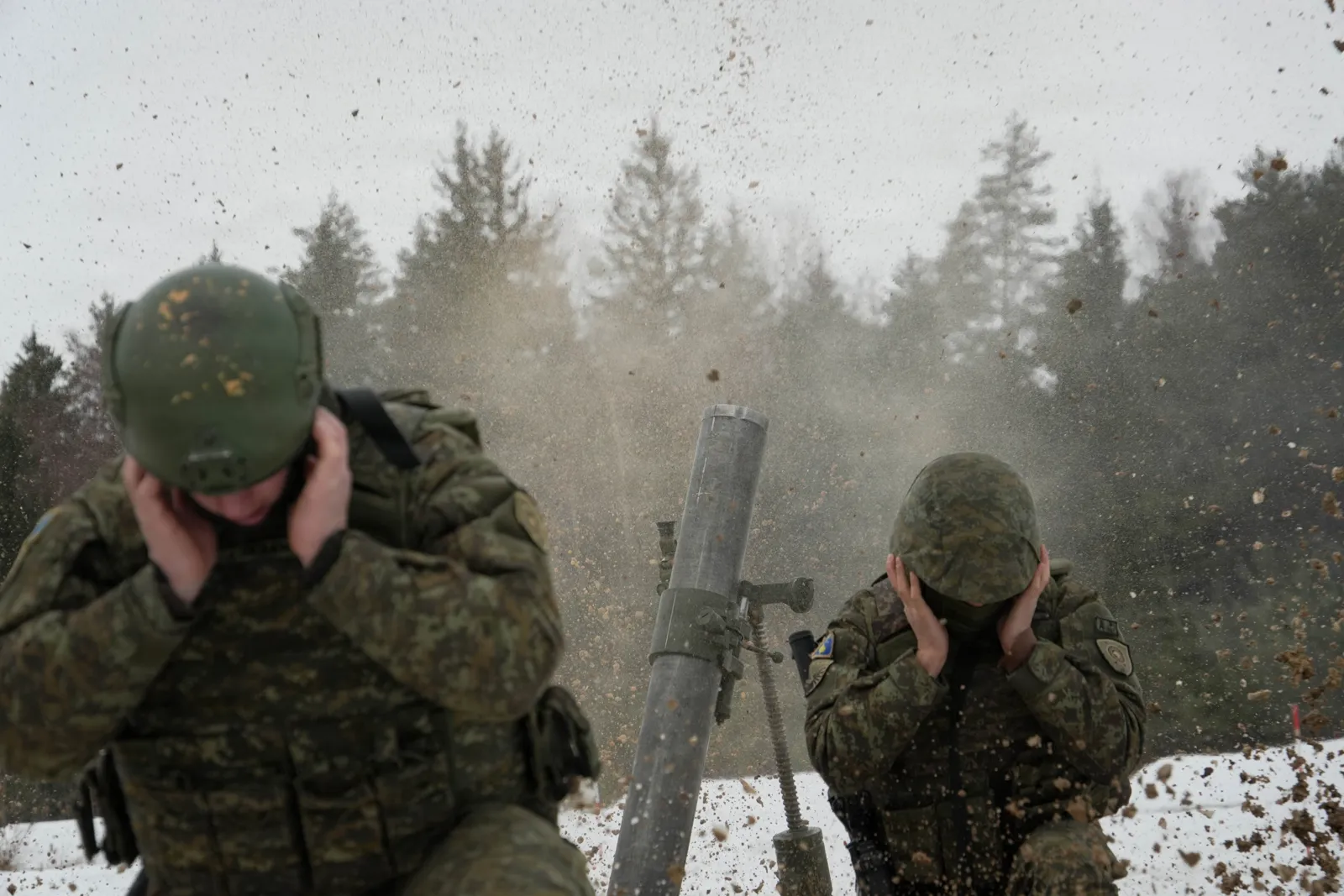
Kosovo’s military inventory maps the equipment of a young army built around light armoured vehicles, anti-tank missiles, mortars and drones rather than tanks and combat aircraft. Kosovo declared independence in 2008, and under a 2018 law its Security Force (KSF) began the process of becoming an armed force; the Turkish-made Bayraktar TB2, Otokar Cobra, OMTAS and ASELSAN systems are the most visible elements of that process.
At a Glance
- Active personnel: Above 5,000 (past the legal ceiling since 2023, with more than 1,000 recruits a year; approximate); the law provides for 5,000 active and 3,000 reserve personnel. The Kosovo Security Force (KSF) is transforming into the Kosovo Armed Forces by 2028
- Tanks: None; the force is being built around light armoured vehicles, anti-tank missiles and mortars rather than heavy armour
- Armoured vehicles: More than about 330: over 200 Humvees, 105 M1117 Guardians, and Turkish-made Otokar Cobra (about 20), Otokar Akrep (3) and BMC Vuran (6)
- Military aircraft: No combat aircraft; armed drones (Bayraktar TB2) and reconnaissance drones are in service, and talks with the United States on UH-60 Black Hawk helicopters are under way
- Navy: Kosovo is landlocked and has no naval forces
- Defence budget: The approved KSF budget for 2024 is about 138 million euros (about 203 million euros in 2023 after additional transfers, roughly 2 per cent of GDP); the government plans an allocation of more than 1 billion euros over the next four years (approximate)
Note: The inventory figures below are approximate values drawn from open sources such as Global Firepower, the IISS Military Balance and SIPRI.
About the Kosovo Armed Forces
The Kosovo Security Force (Forca e Sigurisë së Kosovës, FSK) was established in 2009 and consists of the Land Force Command, the National Guard Command, the Logistics Command and the Training and Doctrine Command. The law allows up to 5,000 active and 3,000 reserve personnel; since 2023 the active strength has passed the 5,000 threshold and more than 1,000 new members are recruited each year. Figures are approximate.
On 14 December 2018 the Assembly passed the law redefining the KSF as a ‘professional military force’ and establishing a Ministry of Defence; the three-stage transformation is expected to be completed in 2028. Serbia sharply criticised the transformation and NATO voiced reservations about its timing, while the United States, Germany, the United Kingdom and France backed the law. The NATO-led KFOR remains the main security force in Kosovo.
The budget has grown rapidly in recent years: from about 50 million euros in 2018, the KSF budget rose to about 203 million euros in 2023 after additional transfers (roughly 2 per cent of GDP); the approved budget for 2024 is about 138 million euros. In September 2025 Prime Minister Albin Kurti set out goals of more than 1 billion euros for the army over the next four years, a functioning ammunition factory and domestic drone production.
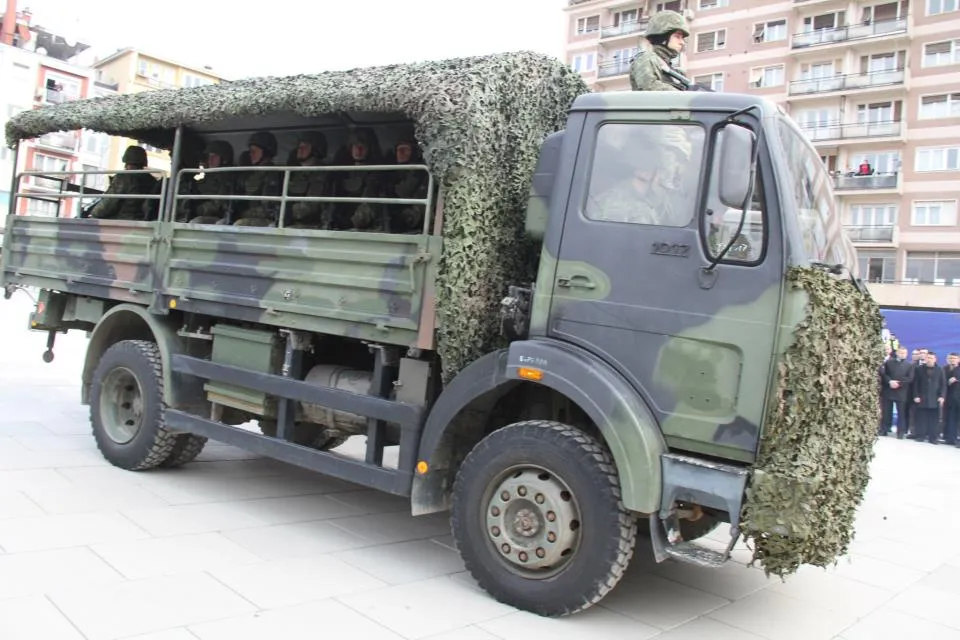
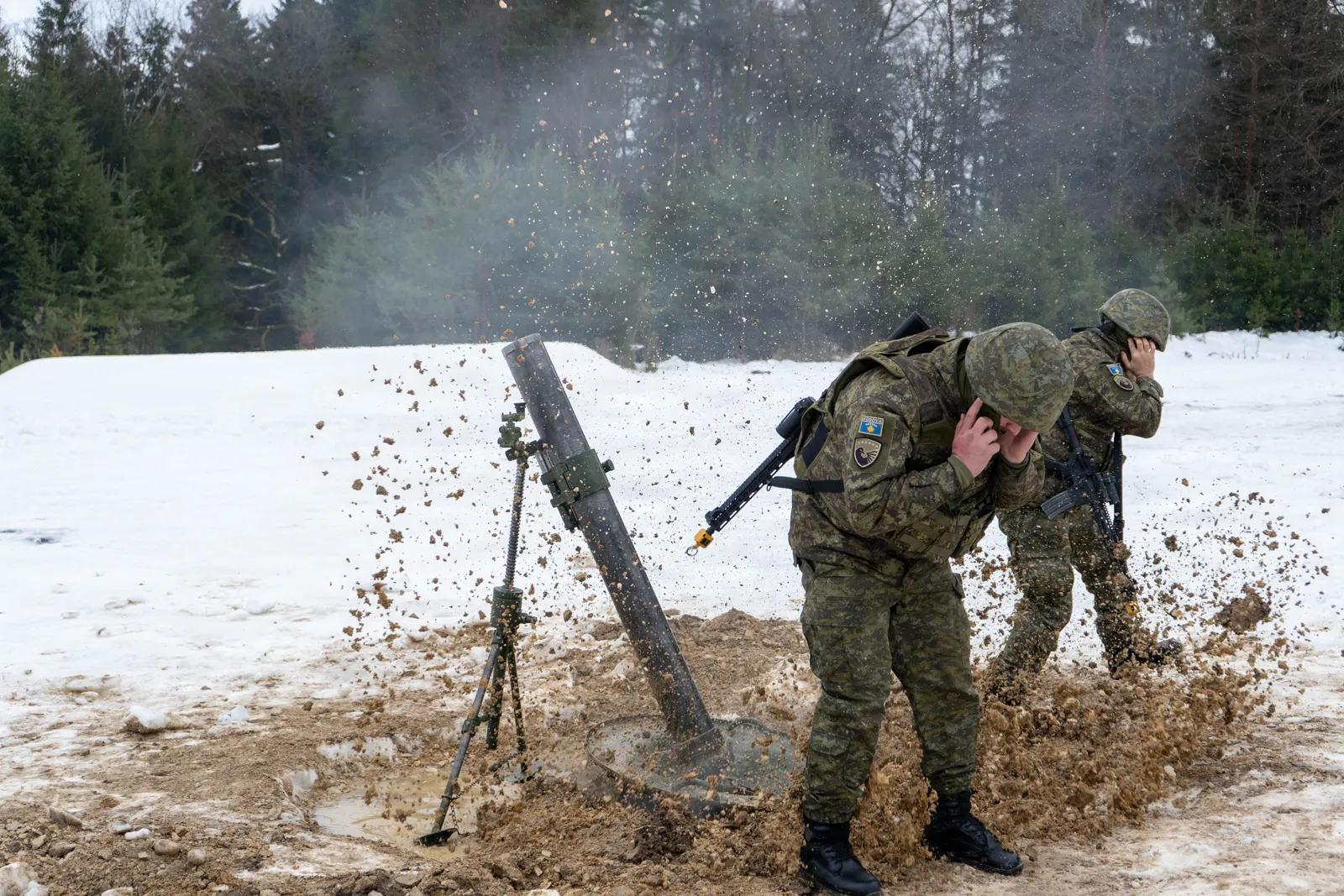
The land inventory is light and mobile. More than 200 Humvees, 105 M1117 Guardians (55 delivered in 2021 and 50 in 2025) and the Turkish-made Otokar Cobra, Otokar Akrep and BMC Vuran form the core. Fire support comes from Hawkeye 105 mm howitzers on Humvees, 120 mm mortars and BMC Vuran self-propelled mortars with the ASELSAN Alkar; anti-tank capability comes from the Panzerfaust 3, OMTAS and the ordered Javelin.
Air elements are still small: Bayraktar TB2 drones, RQ-20 Puma reconnaissance drones and large numbers of FPV drones. In January 2025 an agreement with the United States on UH-60 Black Hawk helicopters was announced. No air-defence system has yet entered the inventory. Kosovo is landlocked and has no naval force.
Land Forces Inventory
| System type | Est. quantity |
|---|---|
| Armoured vehicles and MRAPs | More than 200 Humvees (with 12.7 mm M2A1 or 40 mm Mk 19), 105 M1117 Guardians (55 in 2021, 50 in 2025), Otokar Cobras (20), Otokar Akreps (3) and BMC Vuran 4×4 MRAPs (6) (approximate) |
| Anti-tank weapons | Panzerfaust 3, M72 LAW and HAR-66 launchers, Turkish-made OMTAS missiles, and 246 FGM-148F Javelin missiles and 24 lightweight command launch units ordered from the United States (on order) |
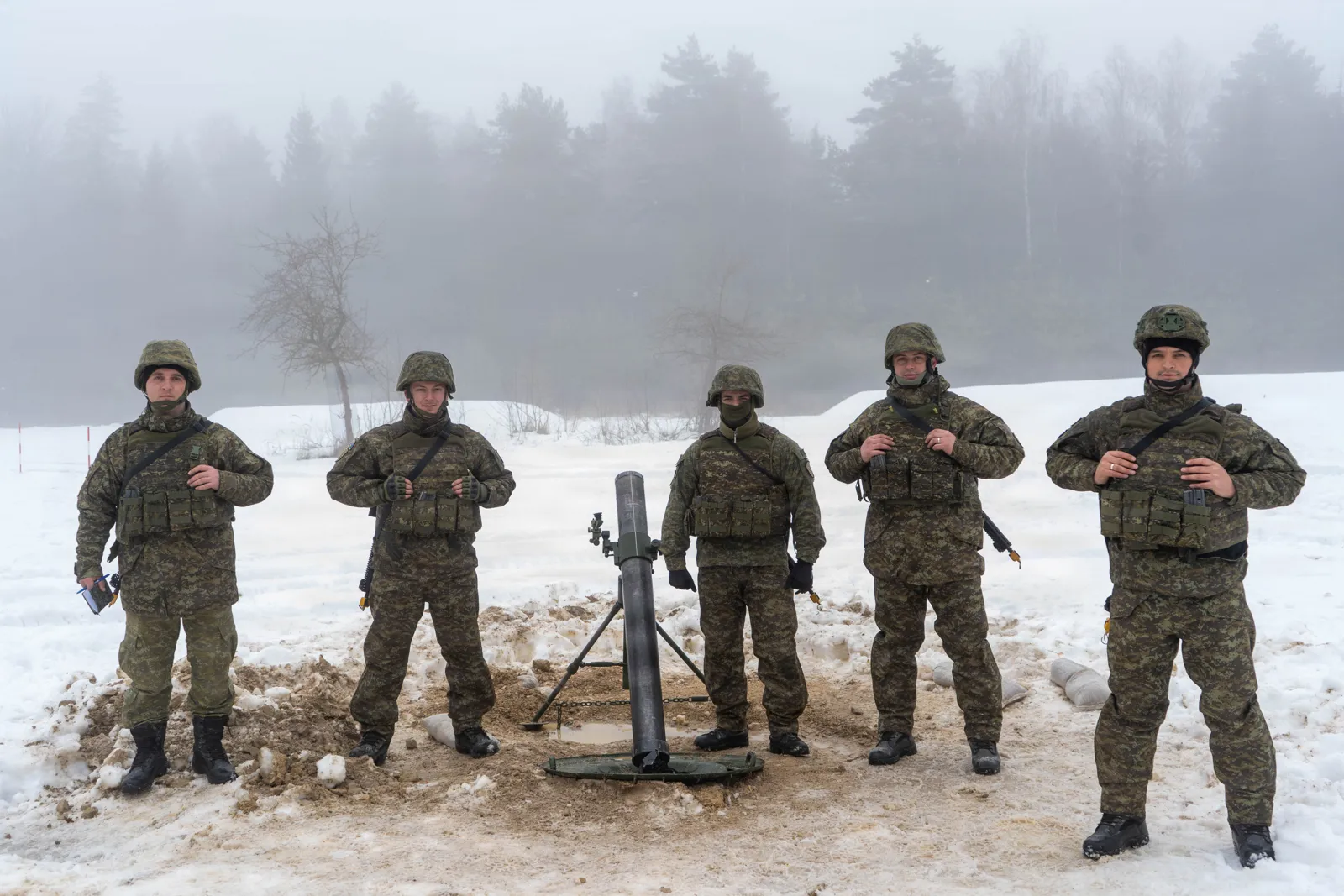
| Artillery and mortars | Hawkeye 105 mm light howitzers (on Humvees); around 200 M75 120 mm, M69 82 mm, MKEK NT1 81 mm and MKEK Commando 60 mm mortars; ASELSAN Alkar 120 mm self-propelled mortars on the BMC Vuran (6) (approximate) |
| Weapon stations and small arms | More than 20 ASELSAN SARP remote weapon stations; HK G36, M4A1 and M5 Colt rifles and Turkish-made MPT-55 and MPT-76 rifles; M249, M240 and M2A1 machine guns |
| Logistics vehicles | Daimler Unimog, MAN and Iveco Trakker trucks; HX44M 8×8 (HX2) tactical trucks from Germany (23, including 8 more delivered in 2026) |
Air Force Inventory
| Platform | Est. quantity |
|---|---|
| Combat and attack aircraft | None; Kosovo has no fighter or fixed-wing combat aircraft |
| Armed drones | Bayraktar TB2: five were reported delivered in 2023 (open-source compilations; approximate); they carry Roketsan MAM-C and MAM-L munitions |
| Reconnaissance and FPV drones | 4 AeroVironment RQ-20 Puma reconnaissance drones; Turkish-made SkyDagger 15 FPV drones (in large numbers); ASELSAN IHASAVAR portable anti-drone jammers |
| Helicopters | None in service yet; in January 2025 an agreement with the US State Department on UH-60 Black Hawks was announced, with the number and timetable still unclear |
Missile and Air-Defence Systems
| System | Type / Note |
|---|---|
| Air defence | Kosovo does not yet field an air-defence system; air defence is described as ‘under construction’ and procurement is ongoing. For now it has anti-drone jammers |
| Anti-tank missiles | OMTAS (a second batch was reported delivered in early 2026, open source) and the Javelin on order; deterrence rests on missiles rather than heavy armour |
| Air-to-ground munitions | Roketsan MAM-C and MAM-L smart micro-munitions carried by the TB2s |
| Ballistic and cruise missiles | None; there is no long-range strike capability |
Naval Power
| Class / Type | Est. quantity |
|---|---|
| Naval forces | None; Kosovo is landlocked and has no plan to establish a naval force |
| River and lake tasks | Border and water-resource security is the responsibility of land units and the border police; there is no separate naval unit |
| Overseas access | External supplies arrive by road and air via the ports of Albania (Durrës) and North Macedonia (Thessaloniki transit) |
The Turkey Angle: Turkish Defence Industry
The defence relationship between Kosovo and Türkiye is the most visible strand of the KSF’s modernisation. According to open-source compilations Kosovo received its Bayraktar TB2 drones in 2023; carrying Roketsan MAM-C and MAM-L munitions, they became Kosovo’s first armed aerial platforms. Sources differ on the number; compilations cite five.
On land, the Turkish-made Otokar Cobra (about 20), Otokar Akrep (3) and BMC Vuran 4×4 MRAP (6) are in the inventory; the ASELSAN Alkar 120 mm self-propelled mortar system has been integrated on the Vuran. More than 20 ASELSAN SARP remote weapon stations, MPT-55 and MPT-76 rifles, HAR-66 launchers, MKEK mortars and ASELSAN IHASAVAR anti-drone jammers also come from Turkish industry.
In anti-tank weapons, OMTAS missiles have been delivered to Kosovo; open sources reported a second batch arriving in early 2026. On munitions, a contract between Kosovo and Türkiye to set up an ammunition factory is reported, and Kosovo plans to produce drones. Pilots are trained in Türkiye, Albania and the United States.
Turkish troops also serve in NATO’s KFOR mission. Kosovo’s needs list overlaps with the strengths of the Turkish defence industry: armed drones and FPV systems, mine-resistant armoured vehicles, anti-tank missiles, counter-drone systems, ammunition production and training support. Alongside the United States, Kosovo’s other major supplier, Türkiye stands out with fast delivery and NATO-compatible products.
Frequently Asked Questions
How many tanks does Kosovo have? Kosovo has no tanks in its inventory. The army relies on light armoured vehicles such as more than 200 Humvees, 105 M1117 Guardians and the Turkish-made Otokar Cobra, and on anti-tank missiles such as OMTAS and Javelin.
Does Kosovo have fighter jets? No. Kosovo has no combat aircraft; its air elements are armed Bayraktar TB2 drones, RQ-20 Puma reconnaissance drones and FPV drones. An agreement with the United States on UH-60 Black Hawk helicopters has been announced.
Does Kosovo buy weapons from Türkiye? Yes. The Bayraktar TB2 drones, Otokar Cobra and Akrep, BMC Vuran, the ASELSAN Alkar mortar system and SARP weapon stations, OMTAS missiles and MPT-55/76 rifles are Turkish-made. A contract for an ammunition factory has also been reported.
Does Kosovo have a navy? No. Kosovo is landlocked and has no plan to establish a naval force.
When will the Kosovo Security Force become an armed force? The law passed in December 2018 provides for the three-stage transformation to be completed in 2028. While the transition continues, the KSF is expanding its personnel and equipment with a NATO-compatible structure as the goal.
Bottom Line
The Kosovo inventory shows an army that is small in numbers but modernising quickly. The absence of tanks and combat aircraft is a deliberate choice: light armour, anti-tank missiles, mortars and armed drones form the backbone of territorial defence. The weak links are air defence, helicopters and heavy land power, which are planned to be closed by the 2028 target. With the Bayraktar TB2, Otokar Cobra, the Alkar-equipped Vuran and OMTAS, Türkiye is one of the most visible partners in the KSF’s transformation.