North Macedonia’s Military Power: How Many Armoured Vehicles, Helicopters and Guns Are in the Inventory? (2026)

North Macedonia’s military inventory is a snapshot of a transformation rare in the Balkans: the country that became NATO’s 30th member in 2020 handed all its tanks, attack helicopters and grounded Su-25s to Ukraine two years later and began rebuilding the force around American wheeled armour, Italian helicopters and Turkish artillery. The budget of this 10,010-strong army has reached NATO’s 2 percent threshold, and a marked increase has been announced for 2027. Türkiye appears in this picture as a supplier as well as a training and framework-agreement partner.
At a Glance
- Active personnel: Global Firepower counts 10,010 active, 60,000 reserve and 3,500 paramilitary personnel; conscription ended in 2006 and the force is all-volunteer
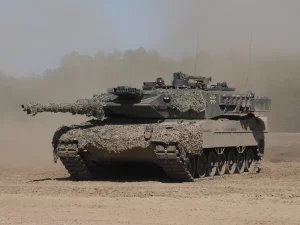
- Main battle tanks: Zero. All 31 T-72As were donated to Ukraine in 2022 and 93 T-55s had already been retired; North Macedonia is a tankless NATO army
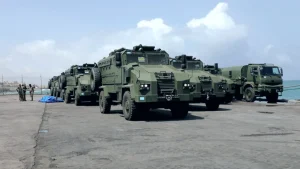
- Armoured vehicles: Global Firepower counts 1,878 armoured vehicles; the core is 96 JLTVs and 42 Strykers, the first 17 of which arrived in February 2026, alongside legacy TM-170s, BTR-70/80s, M113s and 2 Otokar Cobras
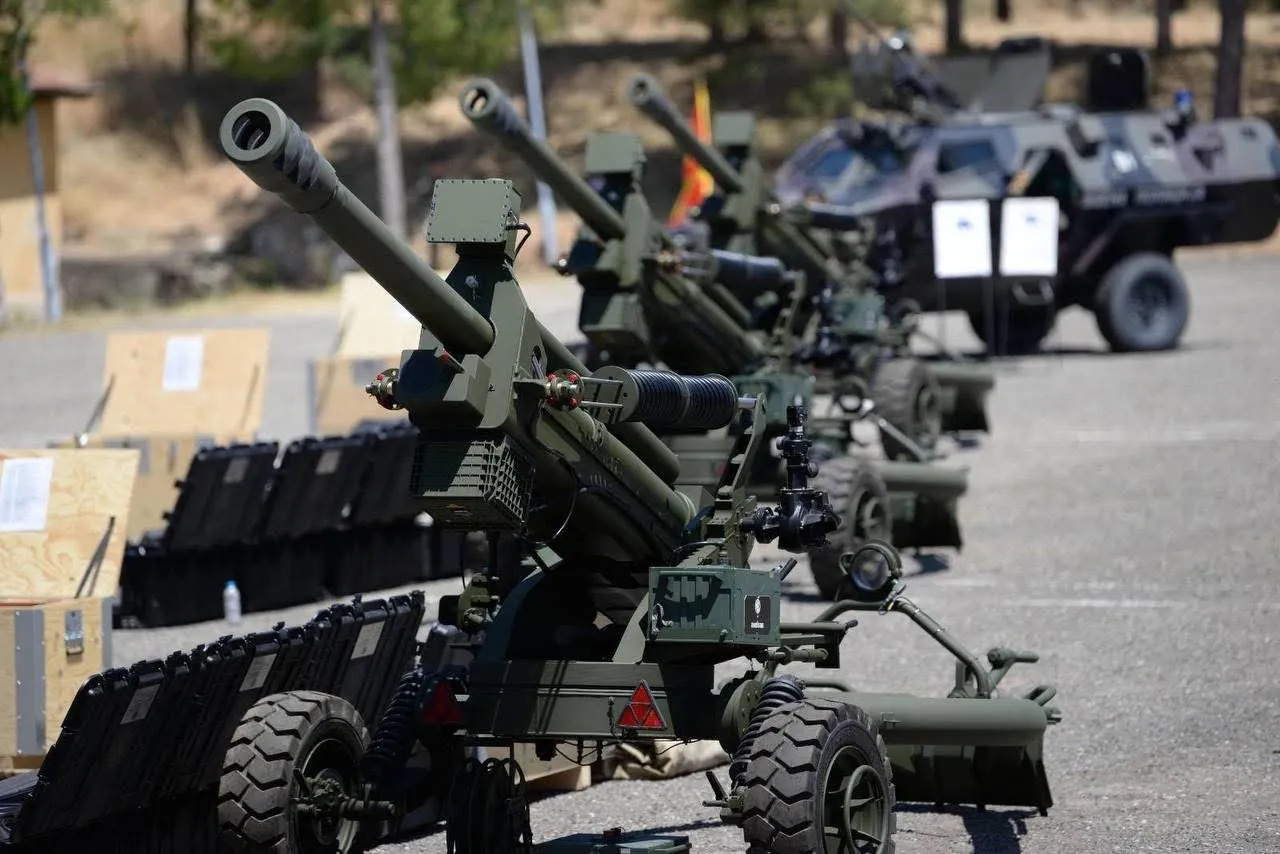
- Artillery and rocket launchers: GFP counts 156 towed guns and 18 rocket launchers with no self-propelled artillery; the first battery of six Turkish-built MKE Boran 105 mm howitzers arrived in 2025
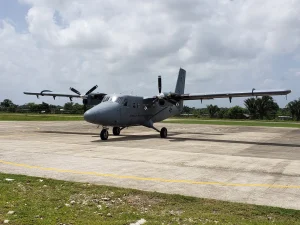
- Military aircraft: Global Firepower counts 20 aircraft: 10 trainers and 10 helicopters, with no fighters. Four Su-25s went to Ukraine in 2022 and 12 Mi-24s in 2023; 4 AW149s and 4 AW169Ms are on order
- Defence budget: Global Firepower shows about $421.5 million; NATO’s 2025 report gives EUR 358 million, 2 percent of GDP. The government says the 2027 budget will rise markedly
Note: The inventory figures below are approximate values drawn from open sources such as Global Firepower, the IISS Military Balance and SIPRI.
About the North Macedonia Armed Forces
The Army of the Republic of North Macedonia is run by the General Staff under the Ministry of Defence. The Joint Operations Command groups the Mechanised Infantry Brigade, the Air Brigade and the Logistics Support Brigade, while the Special Operations Regiment holds the ‘Wolves’ Special Forces Battalion and the Rangers Battalion. Conscription ended in 2006, and the country joined NATO on 27 March 2020.
In the Global Firepower 2026 count the country ranks 114th of 145 with a Power Index of 2.4956. Active personnel number 10,010, reserves 60,000 and paramilitary forces 3,500. Global Firepower puts the defence budget at about $421.5 million, while NATO’s 2025 report gives EUR 358 million, 2 percent of GDP. On 20 October 2026 Defence Minister Vlado Misajlovski said the 2027 budget would rise markedly, with the extra money going to pay rises, new combat uniforms, barracks renewal and UAV and counter-UAV purchases.
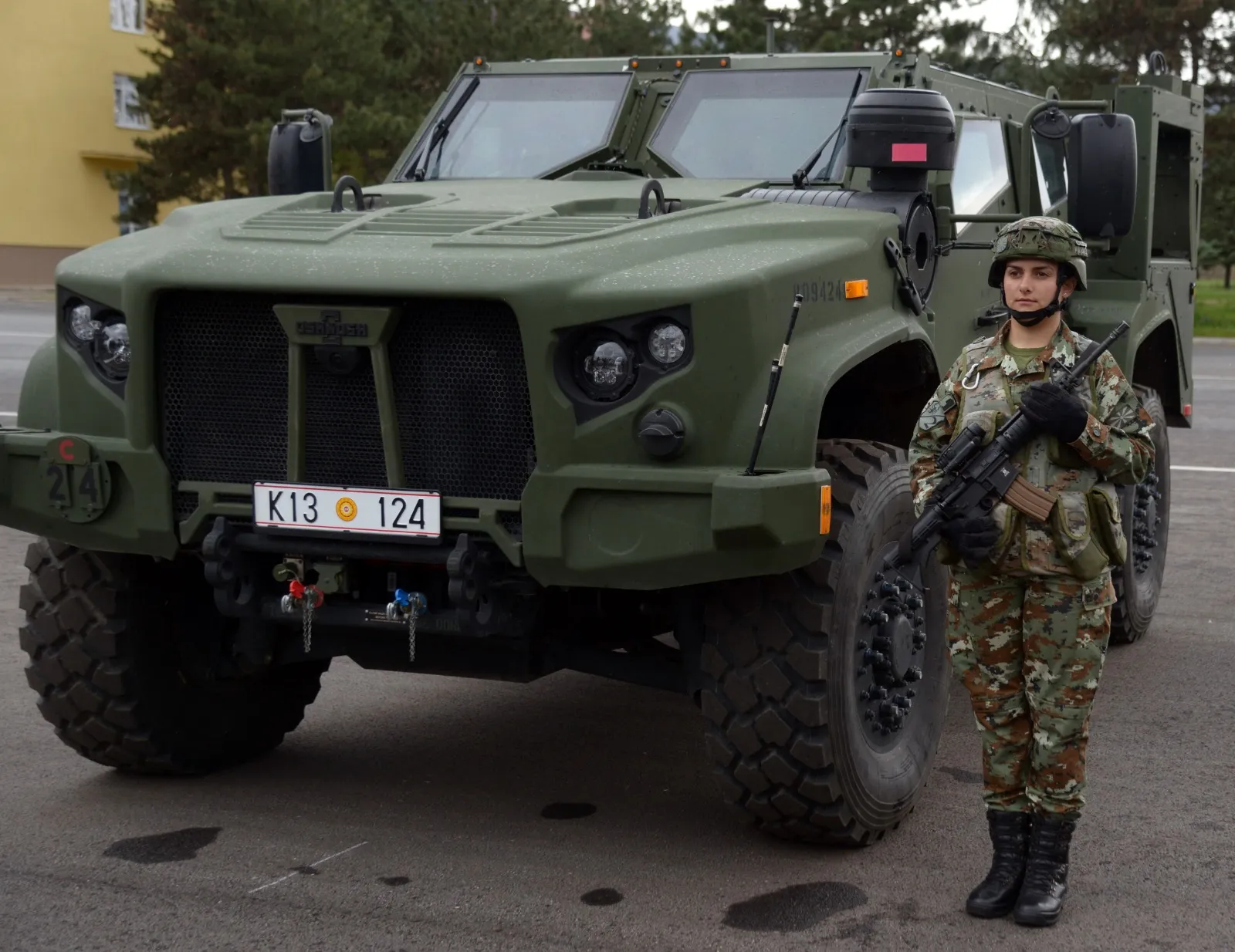
The most striking feature of the land inventory is the absence of tanks. The 31 T-72As bought from Ukraine in 2001 were donated back to Ukraine in 2022, and the 93 T-55As received from Bulgaria in 1999 had left service long before. A wheeled armoured force is being built instead: all 96 Oshkosh JLTVs were delivered as of March 2026, the first 17 of 42 Stryker ICVs arrived in February 2026 and the remaining 25 were planned for summer 2026. The old generation is represented by 84 TM-170s, 56 BTR-70s, 12 BTR-80s, 30 M113s and 11 BMP-2s.
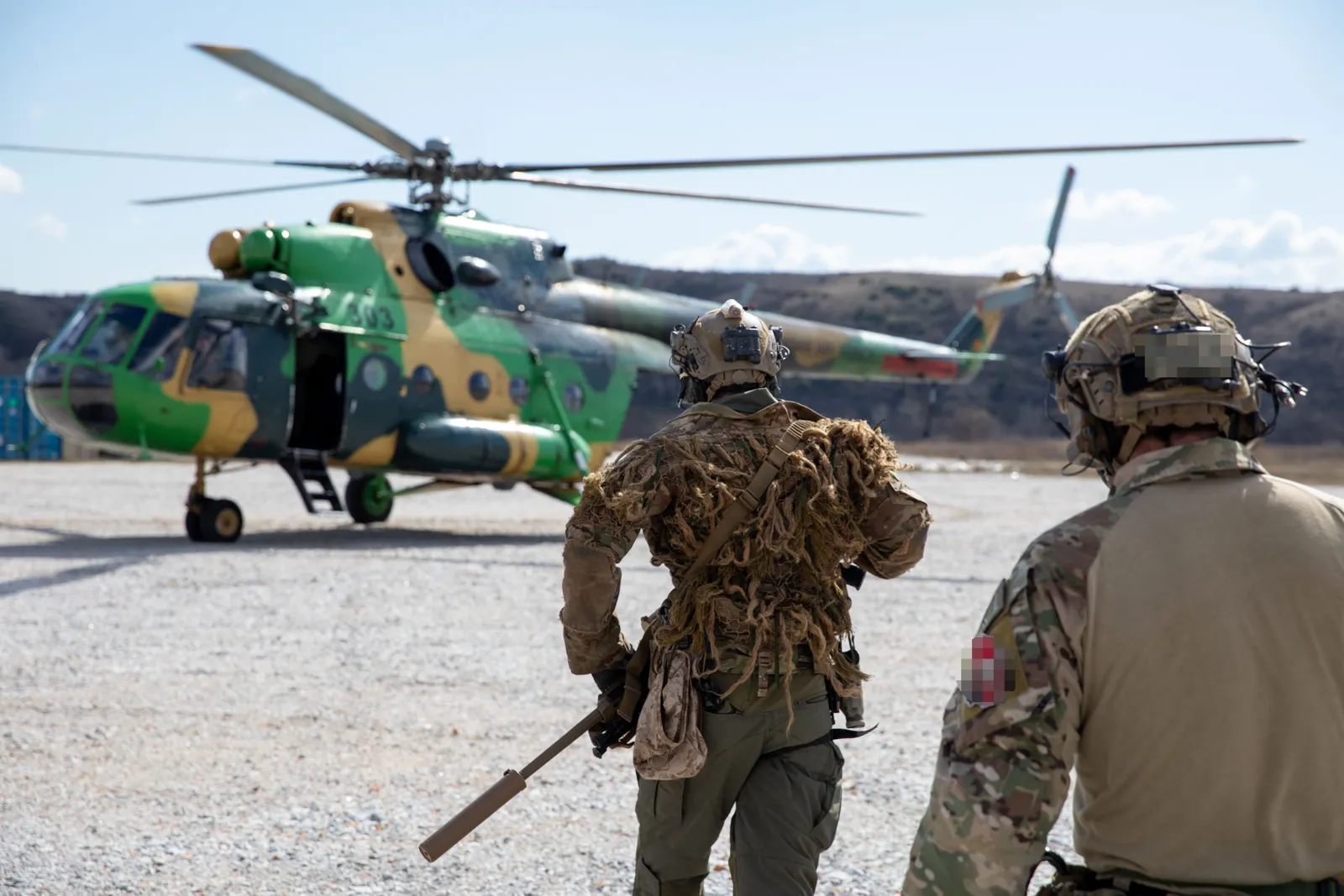
Artillery rests on 105 and 122 mm towed howitzers: 36 M101s, 14 M-56s and over 100 M-30s. The new item is the Turkish-built MKE Boran 105 mm; the first 6 of an 18-gun contract were delivered in June 2025 and shown to the public in July 2025. The Air Brigade operates no combat jets: it has 4 Mi-8MTV and 2 Mi-17 transport helicopters, 4 Bell 206s and 6 Zlin trainers. Twelve Mi-24 attack helicopters went to Ukraine in 2023 and four Su-25s in 2022.
To renew the helicopter fleet, a contract worth about EUR 249.9 million for 4 AW149s and 4 AW169Ms was signed with Leonardo on 26 March 2024; deliveries run from August 2026 to the end of 2028, and in October 2026 Misajlovski said the first two would arrive within a month. Air defence consists of 8 Strela-10s and shoulder-fired missiles; delivery of 18 Mistral 3s slipped from 2025 to 2026 on MBDA’s notice, and a medium-range system remains at the planning stage.
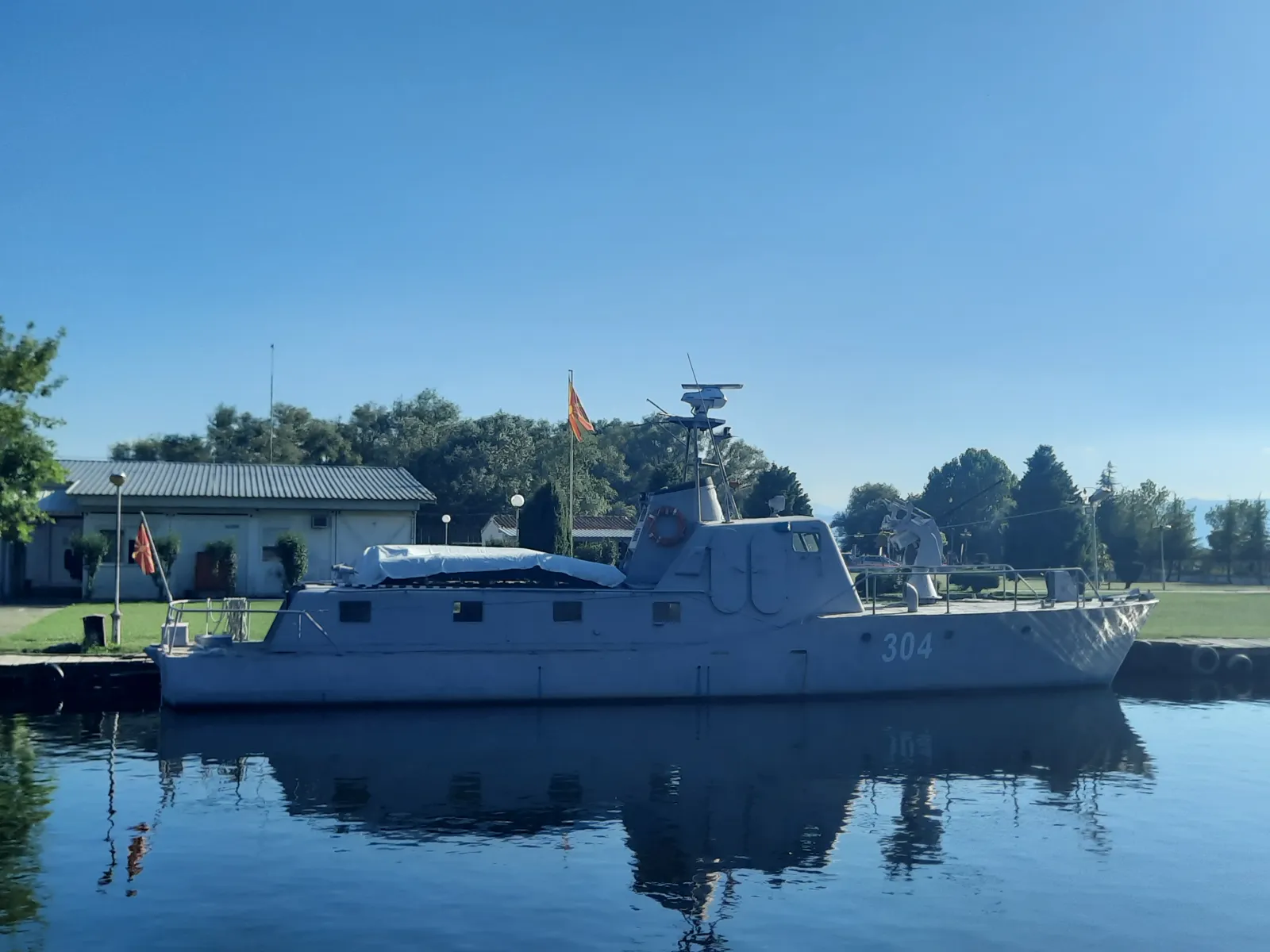
The country is landlocked and therefore has no navy; small patrol boats on Lakes Ohrid and Prespa and the Army’s water-training camp at Ohrid are its only water element. North Macedonia provides logistics support to KFOR, has kept a two-helicopter Mi-8/17 detachment with EUFOR Althea since 2006, and the Krivolak range is a regular host of US-NATO exercises such as Decisive Strike, Brave Partner and Immediate Response 25.
Land Forces Inventory
| System type | Est. quantity |
|---|---|
| Main battle tanks | None. The 31 T-72As bought from Ukraine in 2001 were donated back to Ukraine in 2022, and the 93 T-55As received from Bulgaria in 1999 are out of service. The force is being rebuilt around wheeled armour and UAVs instead of tanks |
| Wheeled armoured vehicles | 42 Stryker ICVs (the first 17 delivered in February 2026, the remaining 25 planned for summer 2026; the order was cut from 54 to 42 in 2024); 84 TM-170s, 56 BTR-70s, 12 BTR-80s; 2 Otokar Cobras |
| Light tactical and tracked vehicles | 96 Oshkosh JLTVs (66 heavy guns carriers, 24 general purpose, 6 close combat weapons carriers; Minister Misajlovski said in March 2026 that all had been delivered); 11 BMP-2s, 30 M113s, 10 Leonidas, 10 MT-LBs; over 100 HMMWVs |
| Artillery and mortars | Turkish-built MKE Boran 105 mm: the contract for 18 was signed on 21 December 2022, the first six arrived in June 2025 and the remaining two batteries are expected in 2029-2031; 36 M101 and 14 M-56 105 mm and over 100 M-30 122 mm howitzers; 12 M-63 Plamen and 6 BM-21 rocket launchers; 60/82/120 mm mortars |
| Anti-tank weapons | MILAN guided missiles, M79 Osa 90 mm and M80 Zolja 64 mm rockets and the Serbian-designed M90 Stršljen; some JLTV heavy guns carriers mount the M153 CROWS remote weapon station |
Air Force Inventory
| Platform | Est. quantity |
|---|---|
| Total military aircraft | 20 (Global Firepower): 10 trainers and 10 helicopters, with no fixed-wing combat aircraft. The Air Brigade operates from the Petrovec base at Skopje International Airport |
| Transport helicopters | 4 Mi-8MTVs and 2 Mi-17s, a fleet approaching retirement. A two-helicopter Mi-8/17 detachment has served with EUFOR Althea since 2006, and the aircraft also fly in NATO special-forces exercises such as Trojan Footprint |
| New-generation helicopters | 4 AW149s and 4 AW169Ms under a contract of about EUR 249.9 million signed with Leonardo on 26 March 2024, with deliveries from August 2026 to the end of 2028. In October 2026 Minister Misajlovski said the first two would arrive within a month |
| Training aircraft | 5 Zlin 242L and 1 Zlin 143L piston trainers and 4 Bell 206B-3 training helicopters; the Pilot Training Centre is in Skopje |
| Retired types and UAVs | 4 Su-25s (bought in 2001, grounded since 2004) were donated to Ukraine in 2022 and 12 Mi-24s in 2023. On UAVs, drones donated by Türkiye were received in August 2024, and the 2027 budget earmarks extra funds for UAV and counter-UAV purchases |
Missile and Air-Defence Systems
| System | Type / Note |
|---|---|
| Short-range air-defence missiles | 8 9K35 Strela-10 systems (the ‘Cobras’ Air Defence Battalion), over 30 Strela-2 and over 10 Igla shoulder-fired missiles |
| New-generation MANPADS | 18 Mistral 3s on order since 2022; MBDA notified a slip in delivery from 2025 to 2026 and offered to pay penalties |
| Anti-aircraft guns | Over 30 Zastava M55 20 mm triple mounts and over 30 Bofors 40 mm guns, all Cold War-era weapons |
| Medium-range air defence | None. The ministry’s ten-year priority list keeps a medium-range system at the planning stage; no system has been selected |
| Ballistic and cruise missiles | None. The longest-range land strike comes from the 128 mm M-63 Plamen and 122 mm BM-21 rocket launchers; GFP counts 18 |
Naval Power
| Class / Type | Est. quantity |
|---|---|
| Naval forces | None; North Macedonia is landlocked and Global Firepower records no naval assets. The Armed Forces consist of land elements and the Air Brigade |
| Lake elements | Small Yugoslav-built patrol boats on Lakes Ohrid and Prespa; the Army runs a water-training camp at Ohrid where special forces practise boarding drills |
| Lake security | The border lakes are policed mainly by the Lake Police under the Interior Ministry; the unit has over 200 personnel and works mostly on Ohrid |
| River capability | No organic combat flotilla for the Vardar; river crossing depends on engineering capability |
| Meaning for Turkish naval industry | No ship market; Turkish industry’s contact is concentrated in artillery, armoured vehicles, UAVs and communications |
The Turkey Angle: Turkish Defence Industry
The Türkiye link here has three layers: institutional, training and industrial. The institutional layer is the Military Framework Agreement signed in Istanbul on 23 October 2024 by Turkish Defence Minister Yaşar Güler and Defence Minister Vlado Misajlovski. According to North Macedonia’s Ministry of Defence it covers military training and education, mutual participation in exercises, peace operations, the defence industry, military intelligence, logistics, military medicine, cyber defence and staff exchanges. The agreement was submitted to the Turkish parliament on 11 March 2025 and the Foreign Affairs Committee report was published as item 264; plenary approval and Official Gazette publication could not be confirmed in open sources when this article was prepared.
The most concrete industrial item is the MKE Boran 105 mm light towed howitzer. The contract signed on 21 December 2022 covers 18 guns and ammunition; Türkiye’s Ministry of National Defence announced delivery of the first battery of six in June 2025, making North Macedonia the first European user of the system. The remaining two batteries are expected between 2029 and 2031, and the contract value has not been disclosed. The inventory also lists 2 Otokar Cobras, over 10 BMC trucks and Turkish-made ballistic vests as standard issue.
The donation channel is active too. At a ceremony in a Skopje barracks on 30 August 2024, a Turkish Ministry of National Defence donation of UAVs, communications equipment, night-vision goggles and protective gear was handed over; the protocol was signed by Military Attaché Colonel Recai Yılmaz and Krste Malinkovski, head of the ministry’s International Cooperation Department, with Misajlovski, Chief of the General Staff Major General Sashko Lafchiski and Ambassador Fatih Ulusoy attending. A tank transporter had been donated earlier, in April 2021. At the ceremony Misajlovski also recalled that Türkiye sent two aircraft and a helicopter during the 2021 wildfires.
In the training and operations layer the two countries served side by side in Resolute Support in Afghanistan, KFOR in Kosovo and Althea in Bosnia and Herzegovina; Turkish units have taken part in multinational exercises at Krivolak, and many North Macedonian officers were trained at Turkish military schools. For Turkish industry the market is small, but the Boran’s first European reference and the prominence of UAV and counter-UAV items in the 2027 budget keep the drone file open, where Baykar’s interest in 2023 has not yet turned into a contract. This section records only public and confirmed steps.
Frequently Asked Questions
How many tanks does North Macedonia have? Zero. The 31 T-72As were donated to Ukraine in 2022 and the 93 T-55As had been retired earlier. Instead of tanks the army is building a wheeled armoured force of 42 Strykers and 96 JLTVs.
Does North Macedonia have fighter jets? No. Global Firepower counts 20 aircraft: 10 trainers and 10 helicopters. Four Su-25s went to Ukraine in 2022; the new purchase is 4 AW149 and 4 AW169M helicopters.
What weapons has North Macedonia bought from Türkiye? A contract for 18 MKE Boran 105 mm howitzers was signed on 21 December 2022 and the first six were delivered in June 2025. UAVs, communications and night-vision equipment were donated in August 2024, and the inventory also includes 2 Otokar Cobras and BMC trucks.
Is there a military agreement between Türkiye and North Macedonia? Yes. A Military Framework Agreement was signed in Istanbul on 23 October 2024 covering training, exercises, the defence industry, intelligence, logistics and cyber defence. The committee stage in the Turkish parliament is complete; plenary approval has not been confirmed in open sources.
Does North Macedonia have a navy? No. The country is landlocked; its water element is limited to small patrol boats on Lakes Ohrid and Prespa and the water-training camp at Ohrid.
Bottom Line
North Macedonia’s inventory tells the story of a small army moving from Cold War equipment to NATO standard: the tanks are gone and JLTVs and Strykers have taken their place; the Mi-24s are gone and AW149s and AW169Ms are on the way. Gaps remain in air defence and medium-range strike. In this transformation Türkiye is a real supplier through the Boran howitzer, an institutional partner through the 2024 framework agreement and a supporter through its donation programme. The market is limited, but being the Boran’s first European user gives Turkish industry a measurable reference value in the Balkans.
Related Reading
Sources
- Global Firepower — North Macedonia
- IISS — The Military Balance
- SIPRI — Arms Transfers Database
- Wikipedia — Army of North Macedonia
- Wikipedia — Equipment of the Army of North Macedonia
- Wikipedia — Air Force of North Macedonia
- Ministry of Defence of North Macedonia — Ministers Misajlovski and Güler signed a Framework Agreement for military cooperation
- Army Recognition — North Macedonia becomes first European country to deploy Turkish-made Boran 105 mm howitzers
- Ekonomim — Turkish military equipment support to North Macedonia
- Janes — North Macedonia shows its new Stryker ICVs