Panama’s Military Strength: How Many Aircraft and Ships Does a Country Without an Army Have? (2026)

Panama’s military inventory is one of a handful of its kind in the world: the country disbanded its armed forces on 10 February 1990 and in October 1994 amended its constitution to prohibit a standing army. Today the whole of its military capability sits within the Public Forces (Fuerza Pública): the National Police, the National Border Service (SENAFRONT), the National Aeronaval Service (SENAN) and the Institutional Protection Service. Panama ranks 135th of 145 countries in Global Firepower’s 2026 index, with zero tanks, howitzers, rocket launchers, ballistic missiles and air-defence missiles. Against that it fields 38 aircraft and helicopters, 22 naval platforms and responsibility for guarding the world’s busiest maritime shortcut. This article examines Panama’s land, air, missile and naval inventory item by item, using open sources.
At a Glance
- Active personnel: Global Firepower gives 16,300 active and 80,000 paramilitary; open sources put the total Public Forces above 30,000: National Police ≈ 25,000, SENAN ≈ 3,700 sworn, SENAFRONT ≈ 3,600 sworn
- Tanks: 0; Panama’s constitution prohibits a standing army. Global Firepower gives a count of zero for tanks, self-propelled and towed artillery and rocket launchers
- Military aircraft: 38 (Global Firepower); fighters and attack aircraft 0, transports 13, special mission 2, helicopters 23, attack helicopters 0. Four A-29 Super Tucanos and two C295s are on order
- Missile power: Zero: there are no ballistic, cruise, anti-ship, ground-based air-defence or shoulder-launched missiles in the inventory, nor any anti-aircraft guns
- Naval power: 22 platforms, 14 of them patrol vessels; frigates, corvettes, submarines and mine warfare ships 0. Three aeronaval regions on the Pacific and the Caribbean
- GFP ranking and budget: 135th of 145 countries with a PwrIndx of 3.5011. Global Firepower gives a budget of $1.07 billion; the Ministry of Public Security’s 2027 budget is $1,101.5 million
Note: The inventory figures below are approximate values drawn from open sources such as Global Firepower, the IISS Military Balance and SIPRI.
About the Panama Armed Forces
Panama’s present security structure is a direct result of the military rule of 1968-1989 and the US intervention of 1989. After Manuel Noriega was removed, the government of Guillermo Endara disbanded the Panama Defense Forces on 10 February 1990 and created the Panamanian Public Forces in their place. In October 1994 the Legislative Assembly approved a constitutional amendment prohibiting a standing military, leaving open only the option of a temporary force in the event of “external aggression”. With that decision Panama became the second Latin American country after Costa Rica to abolish its army constitutionally.
The Public Forces comprise four components and have reported to the Ministry of Public Security since 2010. The National Police, responsible for public order and citizen security, numbered roughly 25,000 as of 2025 according to open sources. SENAFRONT, responsible for border security and for countering trafficking and irregular migration, had 3,624 sworn personnel according to 2013 data. SENAN, which protects the maritime and air space and works against narcotics and illegal fishing, employs about 3,700 sworn and 200 administrative personnel. The fourth component, the Institutional Protection Service (SPI), handles presidential and critical-facility protection; the National Immigration Service is treated as a de facto fifth branch. Global Firepower classifies this structure as 16,300 “active” and 80,000 paramilitary personnel.
Budget is the item that makes Panama comparable with many militaries in the region. Global Firepower gives defence spending of $1.07 billion. The Ministry of Public Security’s 2027 budget proposal is $1,101.5 million, of which $1,008.9 million is current spending and only $92.6 million — less than 9 per cent of the total — is investment. The heaviest pressure on the budget comes from the special pension regime: 9,102 retirees (7,828 National Police, 701 SENAFRONT, 573 SENAN) at an annual cost of $109 million. In February 2026, $3.03 million bought 98 new vehicles — pickups, motorcycles, buses and sedans — for the National Police, SENAFRONT, SENAN and SPI, a picture that shows an inventory resting on law-enforcement equipment rather than heavy platforms.
2025-2026 has been the fastest change in Panama’s procurement map in thirty years. On 11 March 2025 the Cabinet Council approved, under exceptional procurement, $109.2 million with Airbus Defence and Space for two C295 tactical transports and funding for A-29 Super Tucanos from Embraer, for a package of about $187 million in total. The Embraer contract was signed on 4 September 2025: four A-29s for $78.2 million. Panama thus became the eighth Super Tucano operator in Latin America, and on delivery the aircraft will be the country’s first armable fixed-wing platform since 1989. On 16 September 2026, four Kraus Hamdani K1000ULE long-endurance unmanned aircraft were handed over at the air base in Panamá Pacífico under a foreign military sale worth more than $6 million financed by US Southern Command; US Ambassador Kevin Marino Cabrera and Security Minister Frank Ábrego attended the ceremony.
The security relationship with the United States was re-institutionalised in April 2025. During the US defense secretary’s visit to Panama two documents were signed: a memorandum of understanding on security cooperation and a joint declaration on the security and operation of the Panama Canal. The memorandum allows US forces to use Panamanian-controlled facilities such as Rodman Naval Station, the former Howard Air Force Base and the Cristóbal Colón Aeronaval Base for training, humanitarian missions and joint exercises. Panama’s public security minister stressed that the document does not mean ceding sovereignty or establishing foreign bases and does not permit the construction of permanent US installations. Under the memorandum, jungle operations training was restarted and the PANAMAX exercise was revived in 2026: it was held on 3-13 August 2026 with Panama as host and 19 nations taking part, built around a scenario for protecting the canal. Across 2026, US-Panama security cooperation is expected to reach about $100 million including equipment, training and capability transfers; in June 2026 SENAFRONT received a Cybersecurity Operations Center, five refrigerated trucks, two mobile maintenance vehicles, generator spare parts and 400 communications sets for special operations.
The real burden in the field lies on two fronts: the Darién jungle and the canal. Resolution 190 of 27 July 2026, published in Official Gazette 30583 B on 5 August, created the Joint Command for Security in the Specific Areas of the Panama Canal, which began operating on 6 August; it brings the National Police, SENAN, SENAFRONT and the pre-hospital emergency management system SUME under a single chain of command and is responsible for protecting critical infrastructure in the canal watershed and in seven areas under the Canal Authority’s competence. How this structure squares with the constitutional ban on an army has opened a legal debate in Panama. The minister put the special fund for canal security at about 12.992 million balboas, administered by SENAN’s finance directorate. In the Darién, a joint operation with Colombia was launched in August 2026: more than 700 SENAFRONT personnel were deployed to tactical and strategic points and to the binational surveillance posts, security was provided around the Alto Limón post for the eradication of about 500 hectares of coca on the Colombian side, and in the “Steel Shield” operation 30 people, 21 of them Colombian, were arrested at illegal mining camps. On 27 August 2026 President José Raúl Mulino, speaking from the Darién, handed SENAFRONT equipment worth $785,656.89 and ordered increased surveillance on the Colombian border.
Land Forces Inventory
| System type | Est. quantity |
|---|---|
| Main battle tanks | None. Panama disbanded its military on 10 February 1990 and in October 1994 a constitutional amendment prohibited a standing army; the tank count in Global Firepower’s 2026 tally is zero |
| Armoured and tactical vehicles | Global Firepower gives 1,550 under a broad definition that also covers tactical and logistic vehicles. The core consists of HMMWVs and SENAFRONT’s more than 100 Jeep J8 border patrol vehicles |
| Artillery (howitzers and rocket launchers) | None; Global Firepower gives zero for self-propelled howitzers, towed howitzers and multiple rocket launchers alike. There is no artillery unit in the country |
| Mortars | Open-source lists record 107 mm and 60 mm mortars in the SENAFRONT inventory; quantities have not been disclosed |
| Anti-tank weapons | There are no guided anti-tank missiles; open-source lists record only RPG-7 launchers |
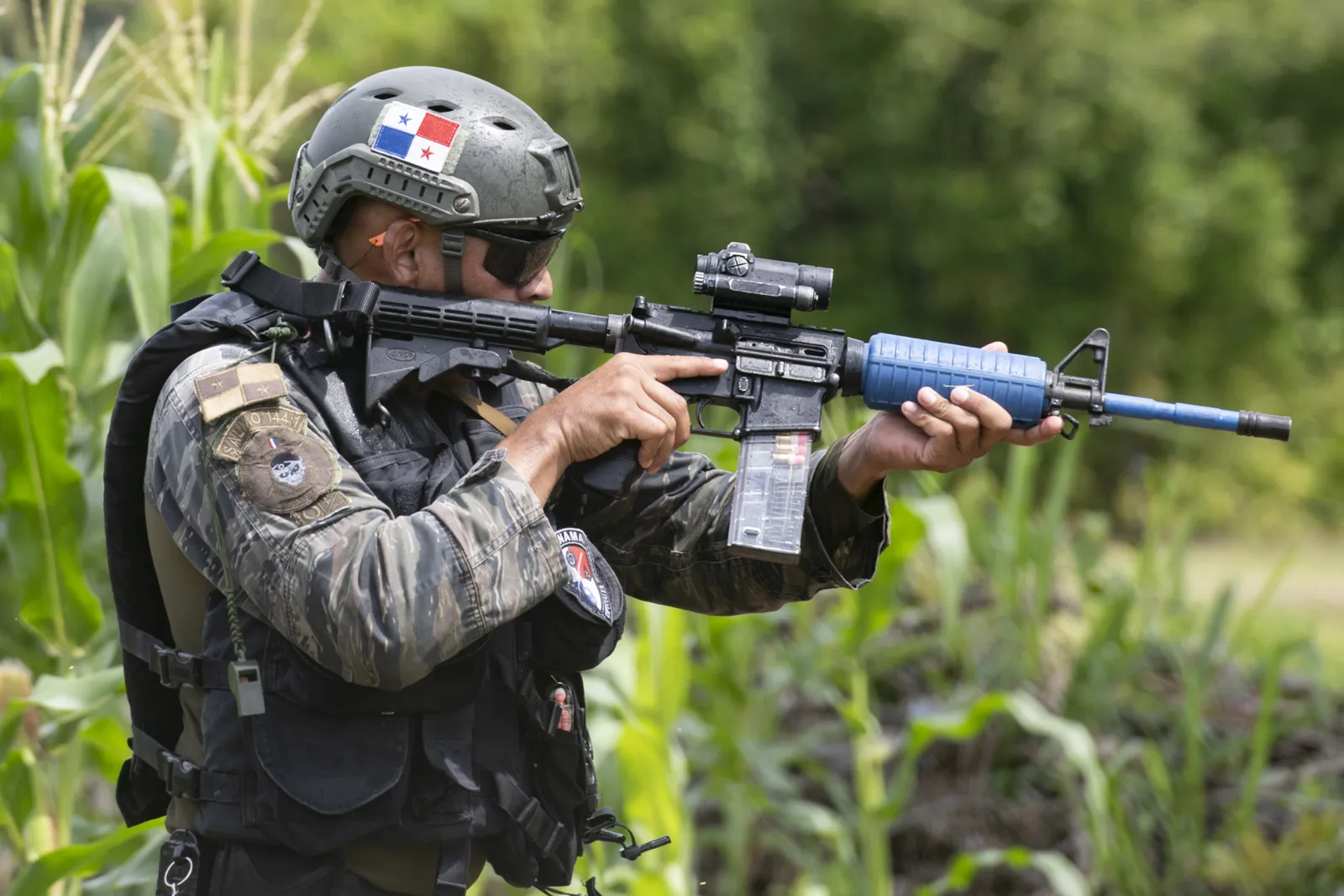
| Infantry weapons | Glock 17 pistols, M4 carbines, M16 rifles, machine guns and grenade launchers; the border units are equipped to a light infantry standard |
| SENAFRONT organisation | Established on 8 August 2008, the National Border Service comprises five brigades: 1st Brigade (south-east, seven operational units), 2nd Brigade (Caribbean, four battalions), 3rd Brigade (East Panama, three battalions, 2020), 4th Brigade (Costa Rica border, three battalions, reorganised in 2020) and the 5th Special Forces Brigade |
| SENAFRONT personnel | 3,624 sworn and 123 unsworn personnel according to 2013 data; 285 new agents were sworn in in May 2026. More than 700 personnel were deployed in the Darién operation in August 2026 |
| Special forces | Panamanian special operations teams took part in the Fuerzas Comando 2025 competition at Ilopango, El Salvador, in August 2025, and on 11 September 2025 conducted a combined air assault with US Special Operations Command South at Cristóbal Colón Aeronaval Base |
Air Force Inventory
| Platform | Est. quantity |
|---|---|
| Total military aircraft | 38 (Global Firepower); fighters 0, attack aircraft 0, transports 13, trainers 0, special mission 2, helicopters 23, attack helicopters 0 |
| Light attack aircraft (A-29 Super Tucano) | 4 on order; the Embraer contract was signed on 4 September 2025 for $78.2 million. Panama thus becomes the eighth Super Tucano operator in Latin America, and on delivery the aircraft will be the country’s first armable fixed-wing platform since 1989 |
| Tactical transport aircraft (C295) | 2 on order; a cabinet council decision of 11 March 2025 approved $109.2 million with Airbus Defence and Space under exceptional procurement, and the contract was formalised at the end of 2025. Together with the Super Tucanos the package totals about $187 million |
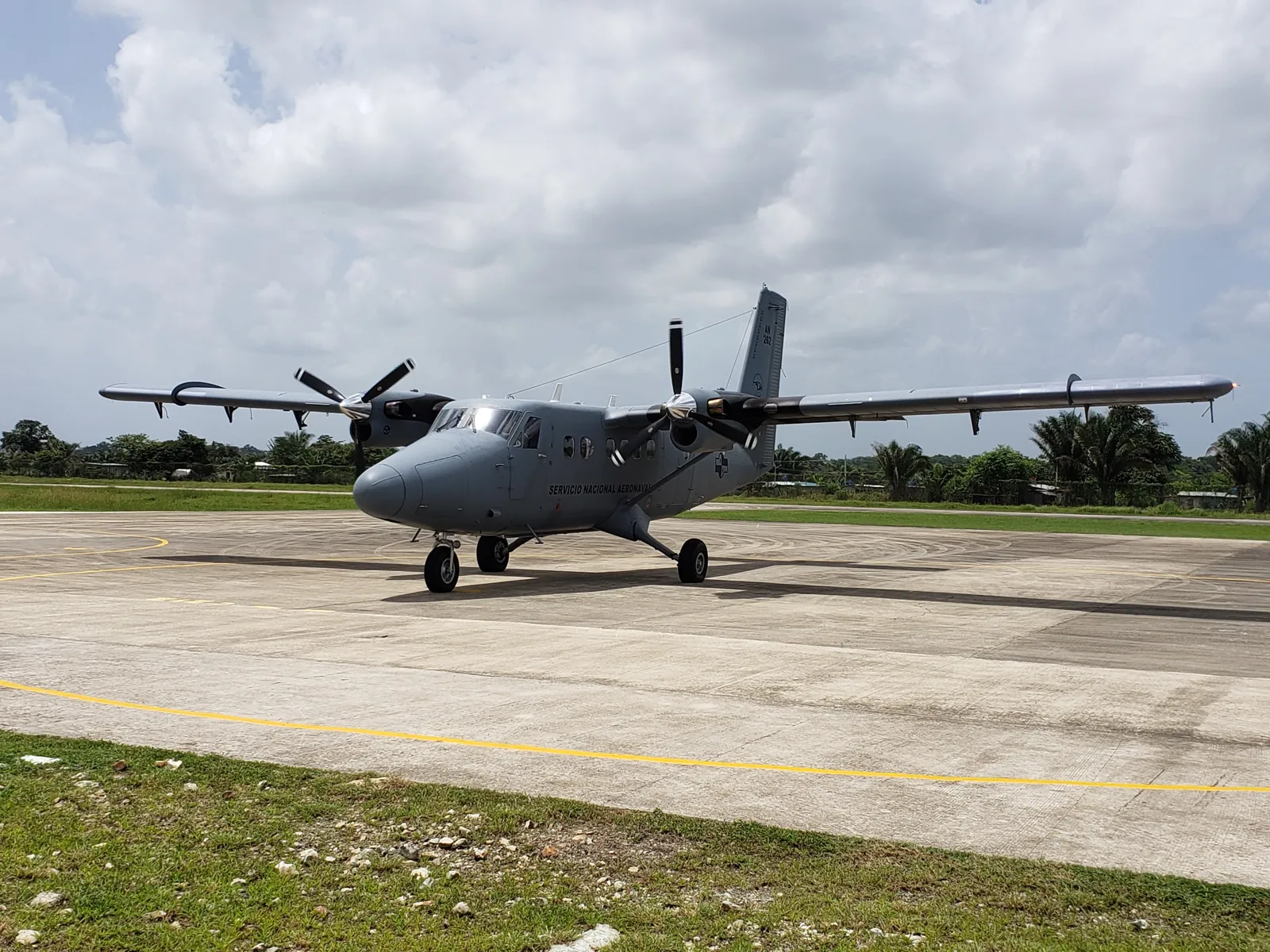
| Transport aircraft | 3 CASA C-212s, 2 DHC-6 Twin Otters, 3 King Airs (100/250/350), 2 Cessna 208 Caravans, 1 Embraer ERJ-135BJ plus 1 Piper PA-31 and 2 PA-34s |
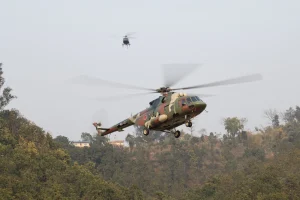
| Medium and heavy helicopters | The backbone of the fleet is 8 AgustaWestland AW139s; in addition there are 6 US-donated UH-1H Iroquois, 2 Bell 212s and 1 Bell 412 |
| Light helicopters | 2 Bell 407s, 1 AgustaWestland AW109 and 1 MD500 |
| Trainer aircraft | 4 ENAER T-35 Pilláns; Global Firepower does not list trainers as a separate item |
| UAVs (K1000ULE) | 4 Kraus Hamdani K1000ULE long-endurance unmanned aircraft, handed over on 16 September 2026 at the Teniente Octavio Rodríguez Garrido Air Base in Panamá Pacífico under a foreign military sale worth more than $6 million financed by US Southern Command. They are assigned to SENAN’s Unmanned Aircraft Squadron and to COANT, the unmanned operations unit set up in July 2026; there is no armed UAV |
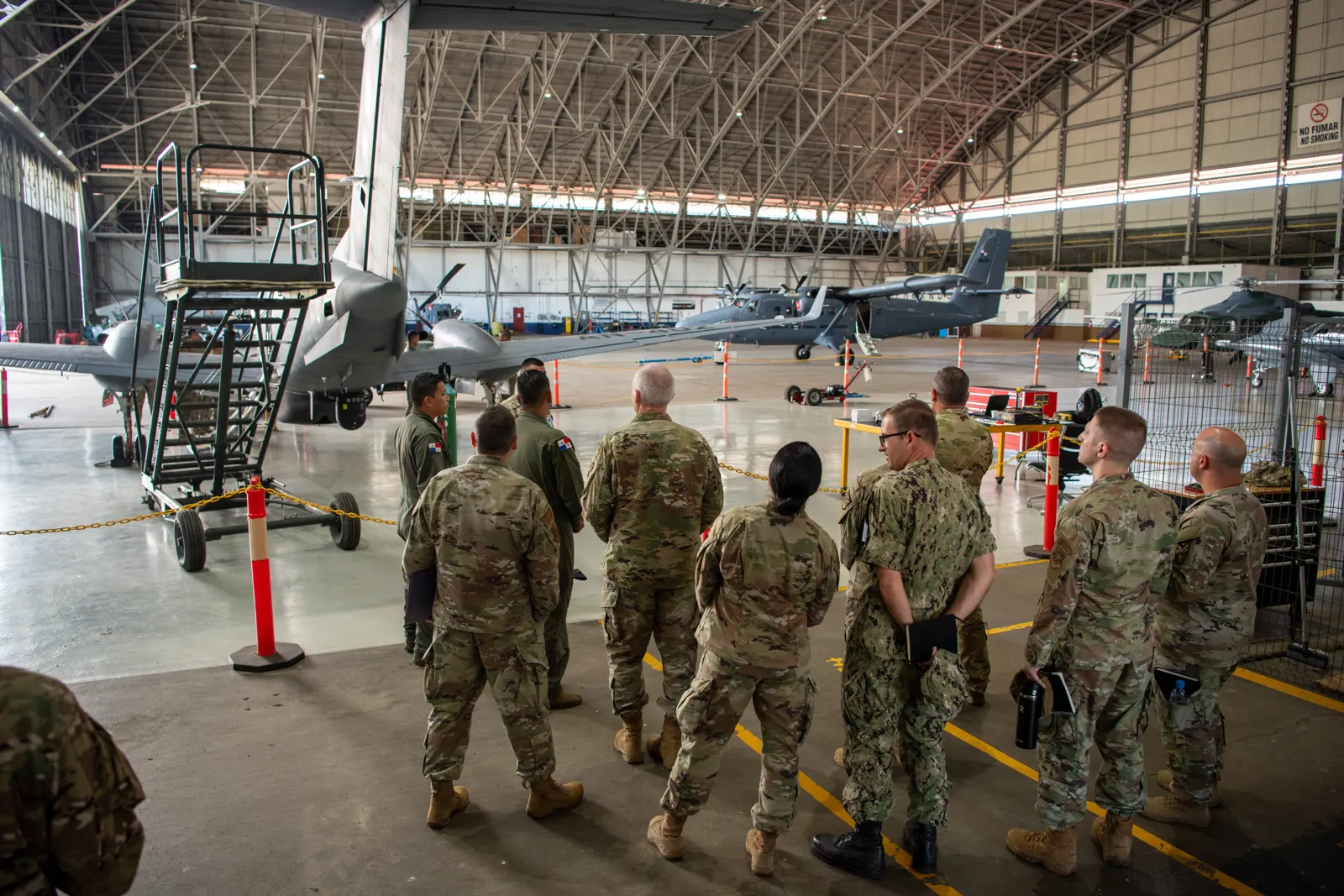
| Bases and organisation | The air base at Panamá Pacífico (the former US Howard Air Force Base) and the Cristóbal Colón Aeronaval Base on the Caribbean stand out; Nicanor Air Base is one of the fields where the transport fleet operates. SENAN is organised in three aeronaval regions |
Missile and Air-Defence Systems
| System | Type / Note |
|---|---|
| Ballistic and cruise missiles | None |
| Anti-ship missiles | None; the naval element consists entirely of patrol and interdiction craft, with no armed surface platform |
| Ground-based air-defence missiles | None |
| Man-portable air-defence missiles | None; there is no MANPADS item in the inventory |
| Anti-aircraft guns | None; Global Firepower lists no separate gun system for low-altitude defence |
| Airspace and canal security | With no fighters and no missile layer, airspace monitoring rests on radars, King Air and C-212 surveillance flights and the K1000ULE unmanned aircraft received in September 2026. The canal’s external defence rests legally on the 1977 Torrijos-Carter Treaty Concerning the Permanent Neutrality of the Canal, which gives the United States the right to defend the canal’s neutrality |
Naval Power
| Class / Type | Est. quantity |
|---|---|
| Total platforms | 22 (Global Firepower), 14 of them patrol vessels. Aircraft carriers, submarines, destroyers, frigates, corvettes and mine warfare vessels 0 |
| Personnel and organisation | The National Aeronaval Service (SENAN) operates with about 3,700 sworn and 200 administrative personnel across three aeronaval regions with bases and stations on the Pacific and Caribbean coasts |
| Larger patrol vessels | P-901 (Class 900) and 2 Vosper-class patrol vessels (P-301 and P-302) |
| Coastal patrol boats | 5 Point-class (P-204 and P-206-209) and 4 Super 200-class (P-220-223) |
| Interdiction and fast response craft | 2 Mark II/Mark IVs (P-814 and P-843), 5 Eduardoños, 4 Nor-Tech BIM 43s, 2 Hunter fast boats and 2 Donzis; these classes carry the main workload against drug trafficking |
| Support vessels | 1 Logística-class logistics vessel, 1 buoy tender and 1 barge (barcaza) |
| Recent deliveries | In January 2026 four semi-rigid inflatable boats worth $1.5 million were received from the United States; besides strengthening patrol, interdiction and rapid response capacity they also support canal security |
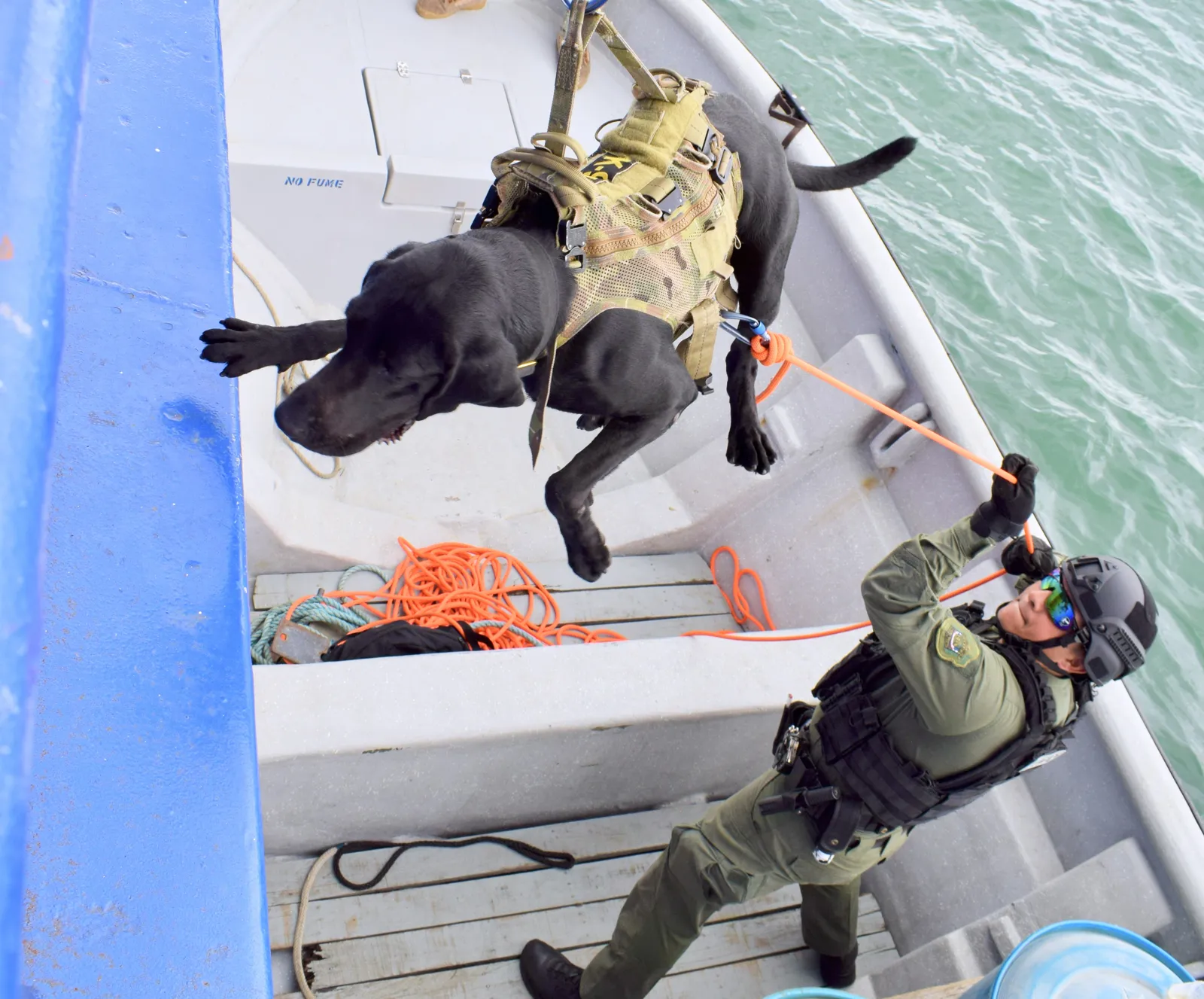
| Amphibious and marine forces | There are no landing ships and no marine brigade; visit, board, search and seizure (VBSS) tasks belong to SENAN’s interdiction teams, which trained alongside US Southern Command during PANAMAX-Alpha 2025 |
The Turkey Angle: Turkish Defence Industry
There is no Turkish-made platform in Panama’s inventory today, and no publicly announced defence or defence-industry cooperation agreement between the two countries. This reflects a pattern seen often in this series: the foundations of the relationship are in place, but the military dimension has not yet opened. Diplomatic relations were established on 21 September 1950, and 2025 was marked as the 75th anniversary. Turkey’s resident embassy in Panama opened in 2014 (previously accredited via Mexico), while Panama opened its embassy in Ankara in 2015 and maintains a consulate general in Istanbul.
The agreements signed between the two countries are concentrated in civilian fields: an Air Transport Agreement in 2014, a Memorandum of Understanding on Cooperation between the Diplomatic Academies in 2015, and a Cultural Cooperation Agreement and a Maritime Cooperation Agreement in 2016. Turkish Airlines opened the Istanbul-Bogotá-Panama City route on 4 May 2016 and later expanded it in frequency and aircraft type. Among high-level contacts, Turkey’s foreign minister visited Panama in April 2022, and Panama’s foreign minister Janaina Tewaney came to Turkey in April 2023 for the first official visit at ministerial level. A political consultation mechanism was established in September 2023 and its first round was held in Ankara on 4 August 2025. Bilateral trade was $403 million in 2023, $532 million in 2024 and $444 million in 2025; construction steel, iron and steel profiles, petroleum oils and cement lead Turkey’s exports to Panama.
The needs Panama has declared overlap to a large extent with areas in which the Turkish defence industry is strong. SENAN’s priorities are coastal and river patrol and interdiction craft, maritime surveillance flights and surveillance unmanned aircraft; SENAFRONT’s are protected wheeled vehicles able to move in the Darién jungle, night vision and communications equipment. Turkish firms have off-the-shelf lines in these areas: Dearsan, Ares Shipyard and Yonca-Onuk in coastal patrol and interdiction craft, Bayraktar and TUSAŞ in surveillance UAVs, and the Otokar Cobra II, Nurol Makina Ejder Yalçın and Katmerciler Hızır in protected 4x4s. On the other hand, most of Panama’s security procurement comes from the United States through grants and foreign military sales; the roughly $100 million US cooperation package projected for 2026 shows the weight of that channel. What is open to Turkish firms is the commercial procurement items that channel does not cover, together with training and maintenance packages.
Regional precedents show how the door opens. Ecuador procured 20 Otokar Cobra II armoured vehicles in August 2023 for its counter-narcotics and anti-gang task force. In Chile, ASELSAN is carrying out the fire-control and electro-optical modernisation of the Leopard 2A4CHL, and HAVELSAN signed an ADVENT agreement in March 2025 for the combat management system of two Chilean frigates; ASELSAN’s Latin America regional office operates in Santiago. Guatemala, for its part, laid the legal groundwork by signing a military cooperation framework agreement with Turkey at IDEF 2025 on 23 July 2025. In Panama the first link in that chain — a framework agreement — does not yet exist, so for the Turkish defence industry Panama is at this stage not a procurement market but a potential one that has to be opened through institutional contact. That Panama operates the world’s largest ship registry, and that Turkish foreign trade also passes through the canal, suggests maritime affairs and maritime security are the natural starting point for that contact.
Frequently Asked Questions
Does Panama have an army? No. Panama disbanded the Panama Defense Forces on 10 February 1990 and created the Panamanian Public Forces in their place; a constitutional amendment approved by the Legislative Assembly in October 1994 prohibited a standing military. The constitution leaves open only the option of a temporary force in the event of “external aggression”. Panama is the second Latin American country after Costa Rica to abolish its army constitutionally. Today all military-type capability sits in four institutions under the Ministry of Public Security: the National Police, the National Border Service (SENAFRONT), the National Aeronaval Service (SENAN) and the Institutional Protection Service (SPI).
How many tanks and artillery pieces does Panama have? None at all. In Global Firepower’s 2026 count Panama’s tanks, self-propelled howitzers, towed howitzers and multiple rocket launchers are all zero. The armoured and tactical vehicle figure is given as 1,550, but that is a broadly defined count also covering tactical and logistic vehicles; its core consists of HMMWVs and SENAFRONT’s more than 100 Jeep J8 border patrol vehicles. The heavy weapons of the border units are limited in open-source lists to 107 mm and 60 mm mortars and RPG-7 launchers, with no guided anti-tank missiles. All 98 vehicles bought for $3.03 million in February 2026 were pickups, motorcycles, buses and sedans.
Does Panama have fighter aircraft and air defences? Its fighter and attack aircraft counts are zero, and it has no ground-based air-defence missiles, shoulder-launched missiles or anti-aircraft guns. Global Firepower gives a total of 38 aircraft: 13 transports, 2 special mission and 23 helicopters. The backbone of the fleet is 8 AgustaWestland AW139s and 6 US-donated UH-1Hs; transport comprises 3 CASA C-212s, 2 DHC-6 Twin Otters, 3 King Airs and 2 Cessna 208 Caravans. The inventory began to change in 2025-2026: four A-29 Super Tucanos were ordered under a $78.2 million contract with Embraer on 4 September 2025, and two C295s under a $109.2 million contract with Airbus at the end of 2025. On 16 September 2026, four Kraus Hamdani K1000ULE unmanned aircraft were received with US funding; there is no armed UAV.
How is the Panama Canal defended? Because Panama has no conventional military capability, canal security rests on two legs: internally the law-enforcement and coastguard-type Public Forces, and externally the right granted to the United States by the 1977 Torrijos-Carter Treaty Concerning the Permanent Neutrality of the Canal to defend that neutrality. The internal leg was reorganised in 2026: Resolution 190 of 27 July 2026 created the Joint Command for Security in the Specific Areas of the Panama Canal, which began operating on 6 August. The command brings the National Police, SENAN, SENAFRONT and SUME under a single chain of command and is responsible for protecting critical infrastructure in seven areas under the Canal Authority’s competence. On the external leg, the security memorandum and joint declaration signed with the United States in April 2025 gave US forces the opportunity to train and exercise at Panamanian-controlled facilities, and the PANAMAX exercise was held again on 3-13 August 2026 with 19 nations taking part.
Is there a defence agreement between Panama and Turkey? There is no publicly announced defence or defence-industry cooperation agreement, and there is no Turkish-made platform in Panama’s inventory. The agreements between the two countries are in civilian fields: the 2014 Air Transport Agreement, the 2015 Memorandum of Understanding between the Diplomatic Academies, and the 2016 Cultural Cooperation Agreement and Maritime Cooperation Agreement. Diplomatic relations were established on 21 September 1950; Turkey’s embassy in Panama opened in 2014 and Panama’s embassy in Ankara in 2015. The political consultation mechanism set up in September 2023 held its first round in Ankara on 4 August 2025. Bilateral trade was $444 million in 2025. Because Panama’s declared needs — patrol craft, surveillance UAVs, protected 4x4s — overlap with areas of Turkish industrial strength, the country is assessed as a potential market; the regional precedents are Ecuador’s Otokar Cobra II procurement and the ASELSAN and HAVELSAN projects in Chile.
Bottom Line
Panama’s inventory resembles none of the countries examined in this series so far: here the missing platforms are not a capability gap but a constitutional choice. The absence of tanks, artillery, missiles and fighters follows directly from the 1994 constitutional amendment, and the country’s security structure was built from the outset around law enforcement, coastguard work and border control. The strength of the model is that almost all of a $1.07 billion budget can be devoted to internal security and maritime control; its weakness is that less than 9 per cent of the budget is left for investment while the pension burden reaches $109 million a year. Even so, 2025-2026 marks the clearest break in thirty years. The order for four Super Tucanos and two C295s, together with the K1000ULE unmanned aircraft received in September 2026, is taking Panama to the edge of the transition from surveillance to armable platforms; the Joint Command created for the canal has brought four separate institutions under one chain of command and opened a constitutional debate in the country. For Turkey the picture is clear: at this stage Panama is not a procurement market but a potential one that has to be opened through institutional contact. That its needs concentrate on patrol craft, surveillance unmanned aircraft and protected wheeled vehicles overlaps directly with the off-the-shelf lines of Turkish industry, and the examples of Ecuador and Chile show that this door can open in the region. The one missing link is a framework agreement of the kind established in Guatemala in July 2025.
Related Reading
Sources
- Global Firepower — Panama
- IISS — The Military Balance
- SIPRI — Arms Transfers Database
- Wikipedia — Panamanian Public Forces
- Wikipedia — National Aeronaval Service (SENAN)
- Wikipedia — National Border Service (SENAFRONT)
- Turkish Ministry of Foreign Affairs — Türkiye-Panama Political Relations
- Embraer — Panama signs contract for the A-29 Super Tucano (4 September 2025)
- Shephard Media — Panama approves $187 million purchase of Airbus and Embraer aircraft
- US Southern Command — Panama to host multinational PANAMAX exercise, 3-13 August 2026
- La Prensa — Joint Command created for Panama Canal security
- Diálogo Américas — Panama strengthens maritime, border and cybersecurity capabilities with US support
- MundoMarítimo — Supreme Court annuls the Balboa and Cristóbal port concession