Britain Puts a Number on China’s Nuclear Growth: More Than Double by 2035

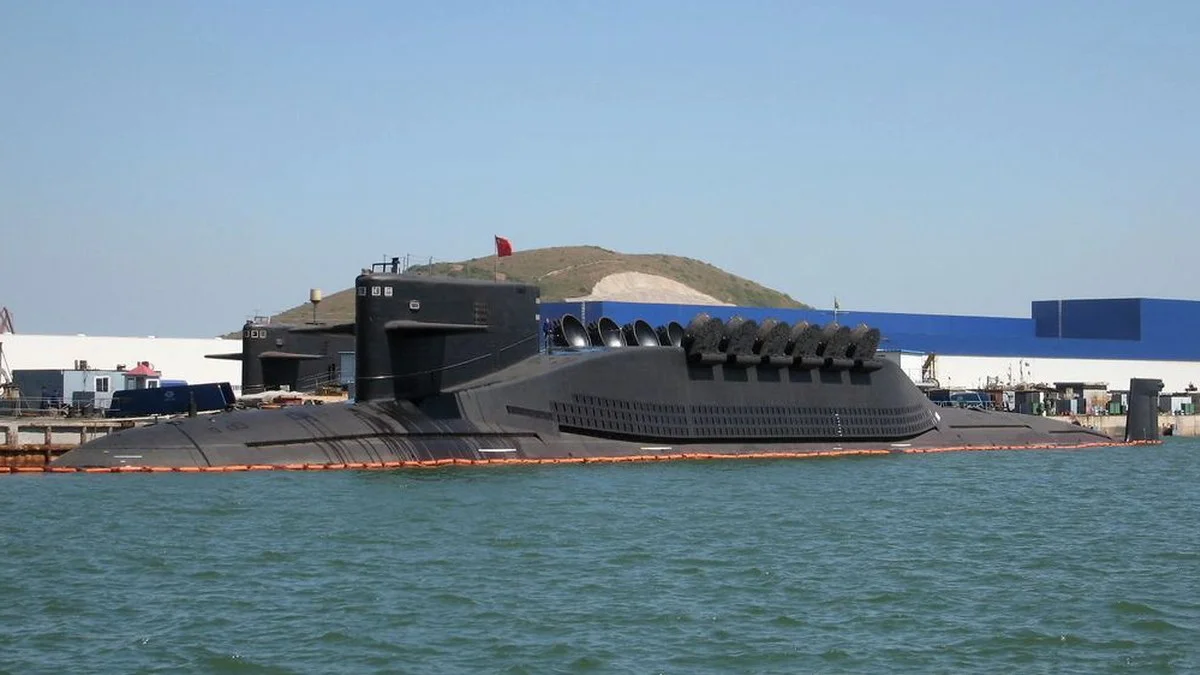
The United Kingdom has put an unusually specific number on something Western capitals have been circling for years. A new Ministry of Defence assessment states that China’s stockpile of roughly 600 nuclear warheads could more than double by 2035, and describes the effort behind it as “an unprecedented programme of rapid expansion.”
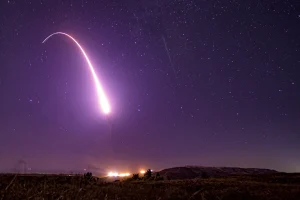
What makes the document notable is not the headline figure but what sits underneath it. The MoD says Beijing is growing all three delivery legs at once — land-based ballistic missiles, nuclear-capable aircraft, and submarine-launched systems. That structure, the nuclear triad, exists for one reason: to guarantee that no single first strike can disarm a country. Knock out one leg and the other two still answer.
From 600 to beyond 1,200
The trajectory matters more than the arithmetic. Western estimates for China sat near 300 warheads at the start of this decade. Six hundred today, and a band above 1,200 projected for 2035, still leaves Beijing well behind Washington and Moscow in raw numbers. The rate of closure, however, has no post-Cold War precedent.
The same assessment keeps Russia in first place, calling it the most heavily armed state with more than 4,000 available warheads. The MoD notes Moscow is modernising its strategic triad across both long- and short-range platforms and expanding dual-capable systems that can carry either conventional or nuclear payloads. It links the use of such systems in Ukraine to what it calls “irresponsible nuclear rhetoric.”
Capability read as intent
The document does not treat Chinese expansion as a purely technical matter. It ties the arsenal to what it describes as a “more assertive international posture,” citing activity in the South China Sea and the Taiwan Strait as the visible expression of that posture.
For European planners this is not an abstraction. If Chinese growth pulls more American attention and more American capability toward the Indo-Pacific, Europe’s reliance on the US extended deterrent becomes a question rather than an assumption. Several recent British decisions read more clearly against that background.
What London is doing about it
The assessment records £15 billion committed during the current Parliament to sovereign warhead work, much of it flowing to Astraea, the replacement for the current British warhead. Britain’s deterrent is entirely sea-based: Trident II D5 missiles carried by Vanguard-class submarines, with the Dreadnought class due to take over in the next decade.
The UK has also committed to buying F-35A aircraft to join NATO’s air-delivered nuclear mission — the first time since 1998 that Britain will hold an airborne nuclear role.
Iran and North Korea
Two further files complete the picture. On Iran, the MoD points to progress toward weapons-grade material. On North Korea, it flags missile programmes of increasing range. The dossiers differ in almost every respect, but the framing is the same: deterrence arithmetic is becoming a multi-actor problem rather than a bilateral one.
Reading the numbers carefully
Two terms get conflated in arsenal reporting: total stockpile and deployed warheads. Warheads in storage and warheads mated to missiles are not the same thing. The MoD’s “more than 4,000 available” figure for Russia describes operationally accessible inventory, not the full stockpile.
How much of China’s 600 is deployed remains unclear in open sources. Beijing has historically followed a minimum-deterrence, no-first-use posture and kept warheads separate from delivery systems. The question analysts keep returning to is whether the growth in inventory also signals a change in that doctrine. New missile silo fields identified in China’s northwest are what moved that debate from technical to political ground.
Why it matters beyond Europe
Türkiye holds no nuclear weapons but sits inside NATO’s nuclear-sharing arrangement, which makes any shift in alliance deterrence directly relevant to Ankara. If Chinese growth forces Washington to redistribute global force posture, the knock-on effects in the Mediterranean and the Black Sea feed straight into Turkish planning assumptions.
The second link is missile defence. Warhead growth drives investment in long-range ballistic missile defence, and the European leg of that investment is the ground on which Türkiye’s own air and missile defence programmes are advancing.
Sources
- UK Ministry of Defence assessment, August 2026
- Defence Industry Europe, 24 August 2026
Note: nuclear inventory figures are estimates. Independent bodies such as SIPRI and the Federation of American Scientists differ from one another by 50–100 warheads.