TF KAAN vs Su-57 Felon: 5th-Generation Fighter Comparison
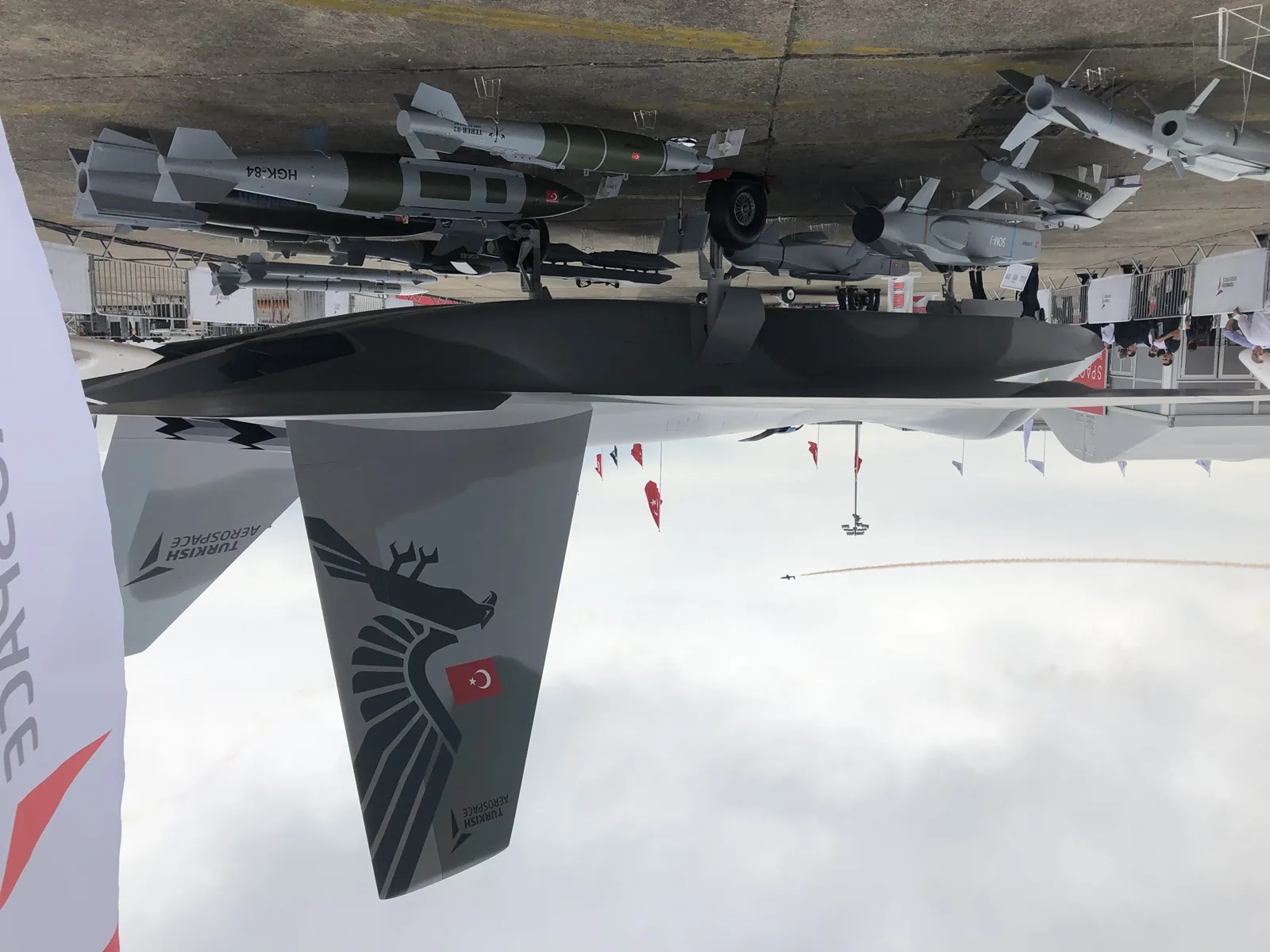
The TF KAAN and Sukhoi Su-57 Felon represent two very different schools of 5th-generation twin-engine heavy fighter. This data-first comparison covers specifications, weapons, sensors, engine independence, unit cost, exports and operational record.
Two 5th-gen twin-engine heavies on very different timelines
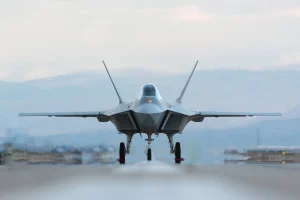
The TF KAAN (TUSAŞ, Türkiye) and the Sukhoi Su-57 Felon (Russia) belong to the same 5th-generation twin-engine heavy fighter class, but they sit at very different maturity levels. KAAN completed its maiden flight in February 2024; a third prototype was assembled in 2026 and initial Turkish Air Force deliveries are targeted between 2028 and 2030. The Su-57 (T-50 designation) first flew in 2010, entered VVS service in 2020, and by 2026 fields at least 44 serial aircraft with the Russian Aerospace Forces.
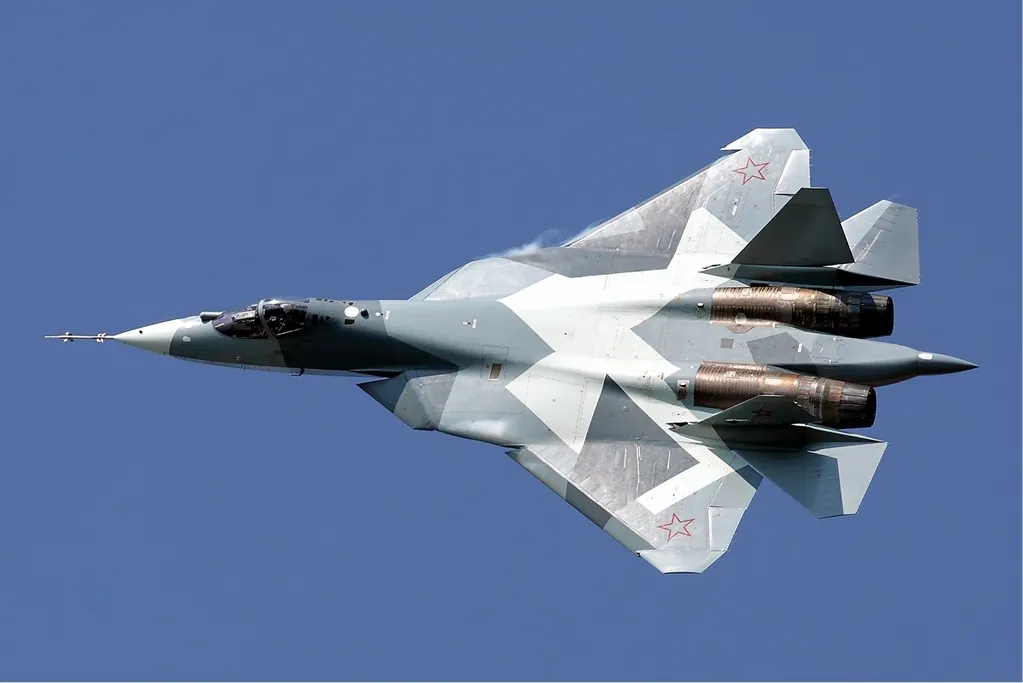
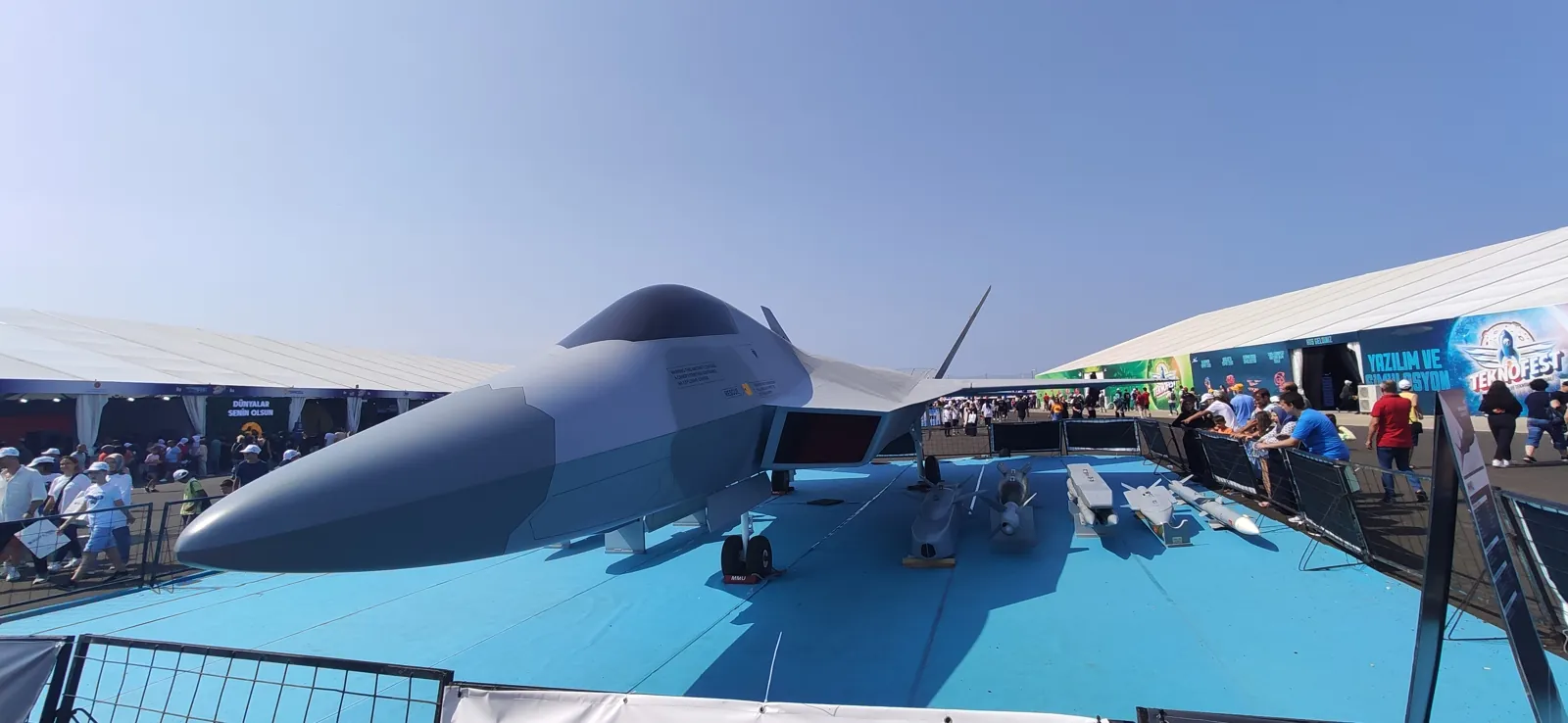
Despite the shared class, the design philosophies diverge sharply. KAAN follows a stealth-first lineage close to the F-22/F-35 school: smooth surface transitions, internal weapons bay, radar-absorbent coatings, buried apertures. The Su-57 prioritises the supermaneuverability + supercruise + long-range shot triad, treating stealth as a secondary attribute — a pragmatic Russian doctrine choice, but one that leaves the compressor face and panel alignment visible to Western analysts as higher-RCS features.
Why compare them now?
Türkiye’s 2019 removal from the F-35 Joint Strike Fighter program elevated KAAN into a strategic national project. Russia, meanwhile, is pushing Su-57E exports — Algeria became the first foreign operator in 2025, and India was pitched a customised Su-57M1 line in 2025. Both aircraft position themselves as alternatives to the F-35 and J-20 in emerging air forces. Indonesia, the UAE, Malaysia and Saudi Arabia have all evaluated at least one side of the pair.
Design philosophy
KAAN prioritises low radar cross-section. The internal weapons bay, buried sensor apertures, S-curved intake ducts, wing-fuselage blend, and radar-absorbent coating reflect a Western stealth doctrine similar to the F-22/F-35. The Su-57, by contrast, spaces its engines widely and prioritises supermanoeuvrability. It carries internal weapons, but the exposed compressor face, intersecting surface elements and panel details raise the frontal RCS. Russian doctrine treats stealth as an add-on: the Su-57 leans on very long-range missiles (R-37M) to score first shots at BVR distances.
| Parameter | TF KAAN | Sukhoi Su-57 Felon |
|---|---|---|
| Length | 20.3 m | 20.1 m |
| Wingspan | 13.4 m | 14.1 m |
| Height | 6.0 m | 4.7 m |
| Empty weight | ~21,000 kg | 18,500 kg |
| Max takeoff weight | 35,000 kg | 35,000 kg |
| Engine (Block 1) | 2 × GE F110-GE-129 (~129 kN) | 2 × Saturn AL-41F1 (~142 kN) |
| Engine (final target) | 2 × TEI TF-35000 (~130 kN) | 2 × Izdeliye 30 / AL-51F (~176 kN) |
| Max speed | Mach 1.8 (~1,900 km/h) | Mach 2.0 (~2,135 km/h) |
| Supercruise | Final target (limited in Block 1) | Mach 1.3 (with AL-41F1) |
| Service ceiling | 16,800 m (55,000 ft) | 20,000 m (65,600 ft) |
| Combat radius | ~1,100 km (est.) | 1,500 km |
| Ferry range | 3,500+ km | 4,500 km |
| G limits | +9 / -3.5 | +9 / -3 |
| Internal weapons bay | Yes (2 main + 2 side) | Yes (2 main + 2 side) |
| Radar | AESA (MURAD-class, ASELSAN) | N036 Byelka AESA (Tikhomirov) |
| Payload | ~10,000 kg | 10,000 kg |
| Maiden flight | 21 February 2024 | 29 January 2010 |
| Service entry | 2028-2030 (target) | 2020 (in service) |
| Production (2026) | 3 prototypes | ~44 serial + prototypes |
Visual comparison
Weapons integration
KAAN will integrate a fully indigenous air-to-air and air-to-ground weapons stack: Roketsan / TÜBITAK-SAGE Gökdoğan (BVR), Bozdoğan (WVR), the developing long-range Gökhan (250+ km BVR), the planned next-gen Merlin, SOM-J internal-bay cruise missile, HGK-3 and KGK guided bomb families. Air-to-ground load includes SOM-A/B cruise missile, MK-83/84 general-purpose bombs, and SARP-based EW pods.
Su-57 carries the widest Russian 5th-gen catalogue: R-77M (BVR AESA-seeker), R-74M2 (WVR), the headline R-37M (400 km-class ultra-long-range BVR — no Western 5th-gen weapon matches this reach), Kh-59MK2 stealthy cruise missile, Kh-38 modular ASM, KAB-250 satellite-guided bombs, and the Grom-1/2 glide-bomb family under test.
Sensors
KAAN mounts an ASELSAN AESA nose radar (MURAD class), distributed aperture windows (MİLDES-class), IRST, ELINT/COMINT and full glass cockpit. The Su-57 carries the N036 Byelka family (nose X-band + wing-root L-band + side X-band panels), the 101KS Atoll optical/IRST/UV/laser suite, an integrated helmet-mounted display, and multi-function displays.
Unit cost and export market
No official unit price has been published for KAAN. Turkish MoD sources have referenced a target of ~USD 100 million per aircraft. Indonesia signed a letter of intent for 48 KAAN in 2025 — an implied program value near USD 10 billion.
Su-57 export references so far:
- Algeria (2025): ~14 aircraft reportedly ordered; first deliveries in 2025. Later batches expected as Su-57M1 with Izdeliye 30 engines.
- India: Pulled from the FGFA joint project in 2018; re-pitched a customised Su-57M1 in 2025. India currently prioritises its domestic AMCA program.
- North Korea, Iran: Reported orders per Russian and Militarywatch sources; not independently confirmed. Western sanctions constrain further exports.
- Russia (VVS): 76-aircraft procurement target by 2028; 44 delivered as of 2026.
Engine independence — the strategic delta
Operational record
KAAN has no combat record; it is still in the flight-test phase, with three prototypes assembled as of 2026. The Turkish Air Force plan foresees phased F-16 replacement starting between 2028 and 2035.
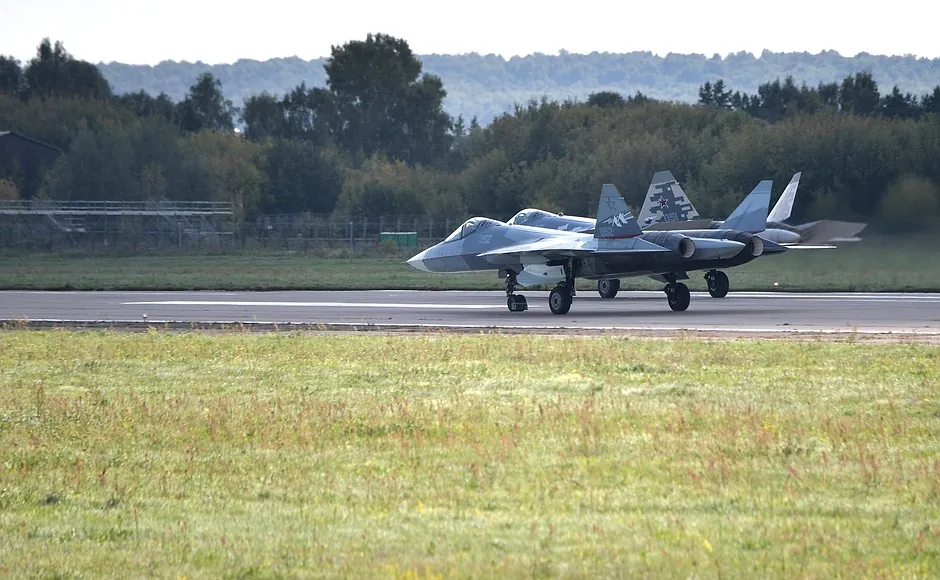
The Su-57 conducted a limited set of Syria deployment flights in 2018. Since 2022 it has been reported by Russian defence media in low-intensity strike missions over Ukraine, notably launching Kh-59MK2 cruise missiles from stand-off ranges. An independently confirmed BVR air-to-air engagement record has not been published.
Comparative maturity
By 2026 the two programmes are on very different clocks. Su-57 is Russia’s sole 5th-generation fighter in serial production. KAAN is in prototype flight-test. Türkiye is simultaneously weighing a possible return to the F-35 program; both tracks may proceed in parallel.
What is the biggest difference between TF KAAN and Su-57?
KAAN follows an F-22/F-35-style stealth-first design; Su-57 places supermanoeuvrability and long-range shot capability (R-37M, 400 km) ahead of low RCS.
Which one can supercruise?
Su-57 with AL-41F1 engines has been reported to supercruise at Mach 1.3. KAAN Block 1 with GE F110 has limited supercruise; the final target is with the indigenous TEI TF-35000.
Which carries the longer-range weapon?
Su-57’s R-37M gives it the longest published BVR reach in the class (400 km-class). KAAN’s Gökhan (development) targets 250+ km BVR; it is not yet operational.
What engine does KAAN use?
Prototypes fly on the General Electric F110-GE-129 (Block 1). The Block 2 target is the domestic TEI TF-35000; certification after 2032.
What is the Su-57 engine status?
Block 1 uses the Saturn AL-41F1. The second-stage Izdeliye 30 / AL-51F (~176 kN) is being introduced on the Su-57M1 variant. First Algerian deliveries in 2025 used AL-41F1.
Which countries operate Su-57?
Russia is the primary user (44+ serial). Algeria became the first foreign operator in 2025. Reported orders from North Korea and Iran are not independently confirmed.
Which countries will get KAAN?
Indonesia signed a letter of intent for 48 KAAN in 2025. The UAE, Azerbaijan and Malaysia are potential customers; no firm export contracts yet.
Which has a smaller radar cross-section?
KAAN is expected to have a smaller RCS given its stealth-focused design closer to F-22/F-35 practice. Su-57’s exposed compressor face and panel details are consistently flagged by Western analysts as higher-RCS features. No official comparison exists.
Which has combat experience?
Su-57 has flown a limited number of Syria sorties (2018) and Kh-59MK2 stand-off strikes over Ukraine since 2022. KAAN has no combat record.
How many of each aircraft exist in 2026?
Su-57: 44+ serial in Russian service, target 76 by 2028. KAAN: 3 prototypes; serial production planned after 2028.