GOKTURK-1 vs Airbus Pleiades: Full Technical Comparison of Two Earth-Observation Workhorses
Summary Not Found.
Turkiye’s GOKTURK-1 and Airbus’s Pleiades constellation both deliver sub-metre optical reconnaissance, but they answer very different questions. One is a single sovereign military eye built on a Thales Alenia Space bus; the other is a battle-tested commercial-export pair that has reshaped the global imagery market. We compare them across eight dimensions from a NATO and export standpoint.
Airbus Defence and Space (AstroSat-1000 / S950 Neo)
Launch / service
Launched 5 Dec 2016 (Vega, Kourou)
Pleiades 1A: 2011; 1B: 2012; Neo: 2021+
Constellation size
Single satellite (Gokturk-1A)
2 (Pleiades) + 4 originally planned Neo
Design life
~7 years
~10 years (Pleiades); reactive intraday revisit (Neo)
Imaging Performance and Sensor
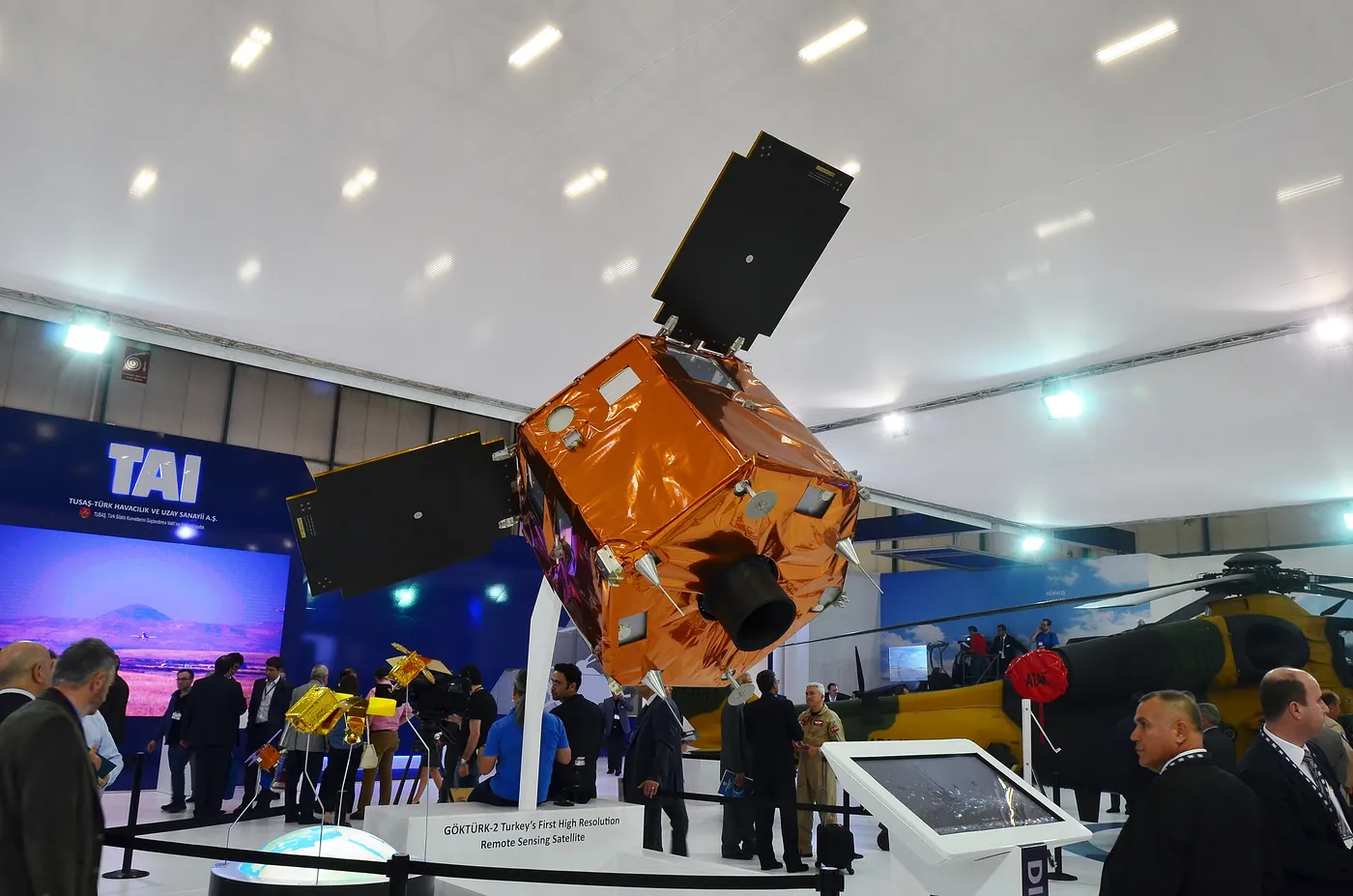
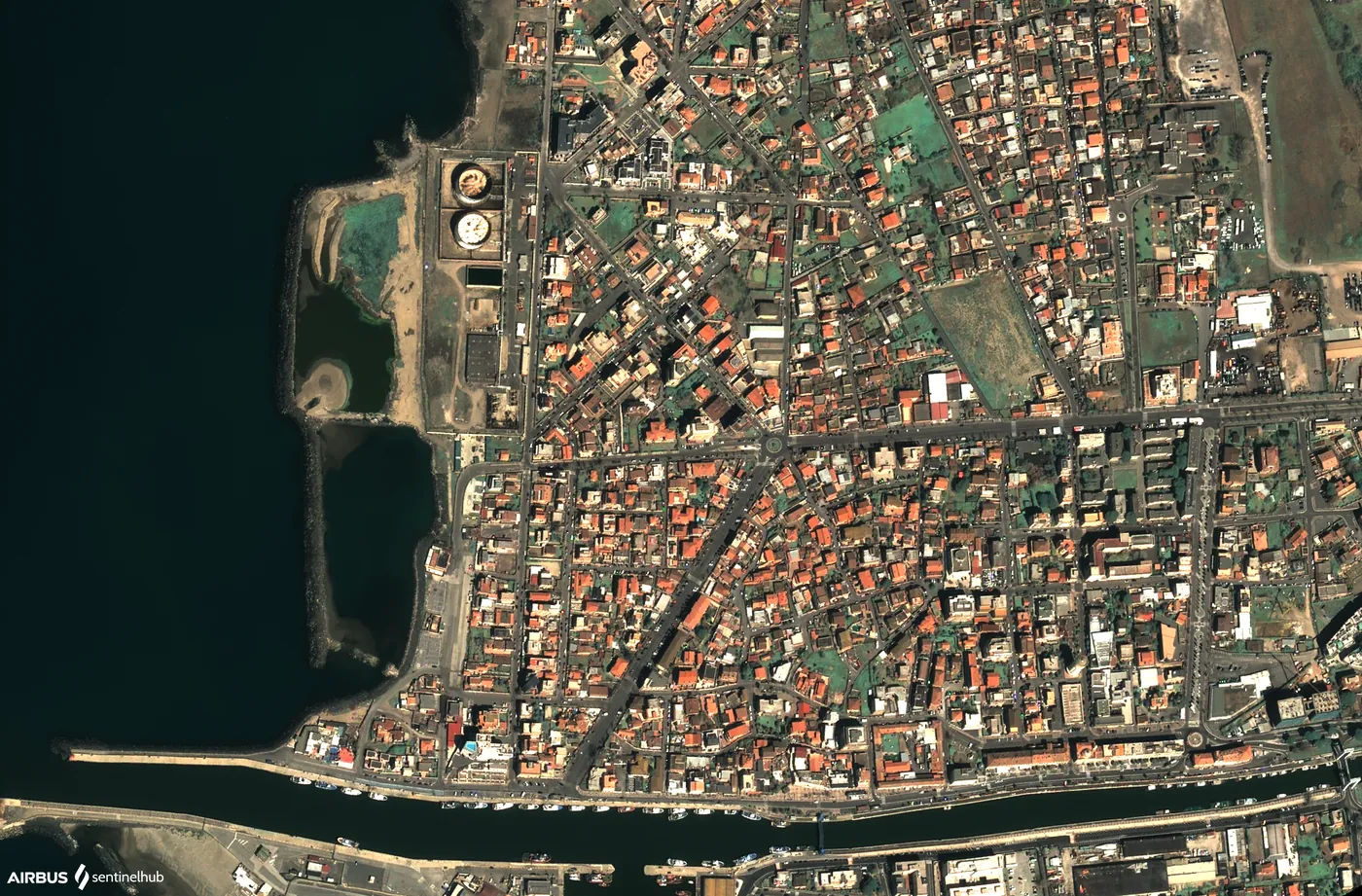
GÖKTÜRK-1 — CC BY-SA 4.0Airbus Pléiades — CC BY 2.0
Pleiades sets the commercial benchmark. The original 1A/1B pair delivers native 0.5 m panchromatic imagery with a 20 km swath, and the newer Pleiades Neo generation pushes native resolution to 0.3 m with 1.2 m multispectral bands. This places the Airbus family at the very top of the open-market very-high-resolution segment, with the agility to roll, strip-map and target multiple sites in a single pass.
GOKTURK-1’s HiRI instrument provides roughly 0.7 m panchromatic and 2.8 m multispectral imagery, which is firmly in the military-useful reconnaissance band even if it trails the sharpest Pleiades Neo products. For a national intelligence sensor, the headline number matters less than guaranteed, unfiltered access; GOKTURK-1’s resolution is more than sufficient for order-of-battle monitoring, infrastructure assessment and treaty verification.
Sovereignty vs Constellation Capacity
This is where the two diverge most sharply. GOKTURK-1 is a single, sovereign asset: Turkiye controls tasking, downlink and dissemination entirely, with no foreign veto over what it images or when. For a NATO member that experienced imagery-access frictions in the past, that autonomy is the entire point of the programme, and it feeds directly into a growing national space industrial base.
Pleiades, by contrast, wins decisively on capacity and revisit. A two-satellite constellation (with Neo adding four more) provides daily, often intraday, coverage of any point on Earth and a vast tasking throughput — Pleiades Neo alone offers around 500,000 km2 of daily collection per satellite. As a commercial-export product it serves dozens of defence and civil customers worldwide, something a single national satellite cannot match.
Industrial Heritage and Bus Maturity
Pleiades is built on Airbus’s deeply proven optical-satellite lineage, with the AstroSat-1000 bus for the original pair and the enhanced S950 bus for Neo. This heritage translates into reliable on-orbit performance, a mature ground segment and a polished commercial delivery chain that downstream users plug into instantly.
GOKTURK-1 is itself built on a robust Thales Alenia Space bus with Telespazio as prime, so the platform is technically sound and European-grade. The difference is programmatic scale: GOKTURK-1 is a procurement that also seeded Turkish know-how (including a national satellite integration facility), whereas Pleiades is a serially produced, export-oriented product line.
Export Footprint and NATO Relevance
From a NATO and alliance-procurement view, Pleiades is the obvious off-the-shelf choice: its imagery and even dedicated satellite access have been sold to numerous allied and partner nations, making it a de facto standard for governments that want VHR optical intelligence without building their own space programme. Its commercial availability and interoperability are major procurement advantages.
GOKTURK-1, as a national security asset, is not an export product in the same sense, and its operator base is effectively Turkiye alone. Yet strategically it is highly relevant: it demonstrates that a NATO member can field sovereign reconnaissance and is the stepping stone to follow-on systems (GOKTURK-2, GOKTURK-3 and IMECE) that steadily reduce dependence on allied imagery. In short, Pleiades is the proven market leader; GOKTURK-1 is the sovereignty play.
Operating Nations
System
Operators
GOKTURK-1
Turkiye (Turkish Armed Forces / national reconnaissance)
Airbus Pleiades
France and numerous allied defence, intelligence and civil customers worldwide via Airbus commercial access
Verdict
On capacity, revisit, export reach and constellation maturity, Airbus Pleiades is the clear overall leader (roughly 85/100). GOKTURK-1 trails on resolution and operator base (roughly 56/100) but delivers the one thing money cannot buy on the open market: sovereign, unrestricted reconnaissance for a NATO member — its true value is independence, not market share.
Frequently Asked Questions
Which is better, GOKTURK-1 or Airbus Pleiades?
For raw capability, capacity and export availability, Airbus Pleiades is superior, offering 0.5 m (and 0.3 m on Neo) imagery, daily revisit and a worldwide customer base. GOKTURK-1’s strength is sovereignty: it gives Turkiye unrestricted national reconnaissance, which is a strategic rather than a market advantage.
What resolution does GOKTURK-1 provide?
Its HiRI instrument delivers roughly 0.7 m panchromatic and 2.8 m multispectral resolution from a sun-synchronous orbit at about 700 km altitude.
How sharp is Airbus Pleiades imagery?
The original Pleiades 1A/1B pair provides native 0.5 m panchromatic imagery, while the newer Pleiades Neo generation reaches 0.3 m native resolution with 1.2 m multispectral bands.
Who built GOKTURK-1?
It was built around a Thales Alenia Space bus with Telespazio (a Leonardo/Thales joint venture) as prime contractor, under a 2009 agreement with Turkiye’s Ministry of National Defence; it launched on a Vega rocket from Kourou in December 2016.
Why does Turkiye operate its own reconnaissance satellite?
To guarantee unrestricted, sovereign access to high-resolution imagery without dependence on allied or commercial providers — a need underscored by past imagery-access frictions and central to its expanding national space programme.