





Japan Picked Its Shahed Hunter in Three Months, and Only One Drone Passed the Test

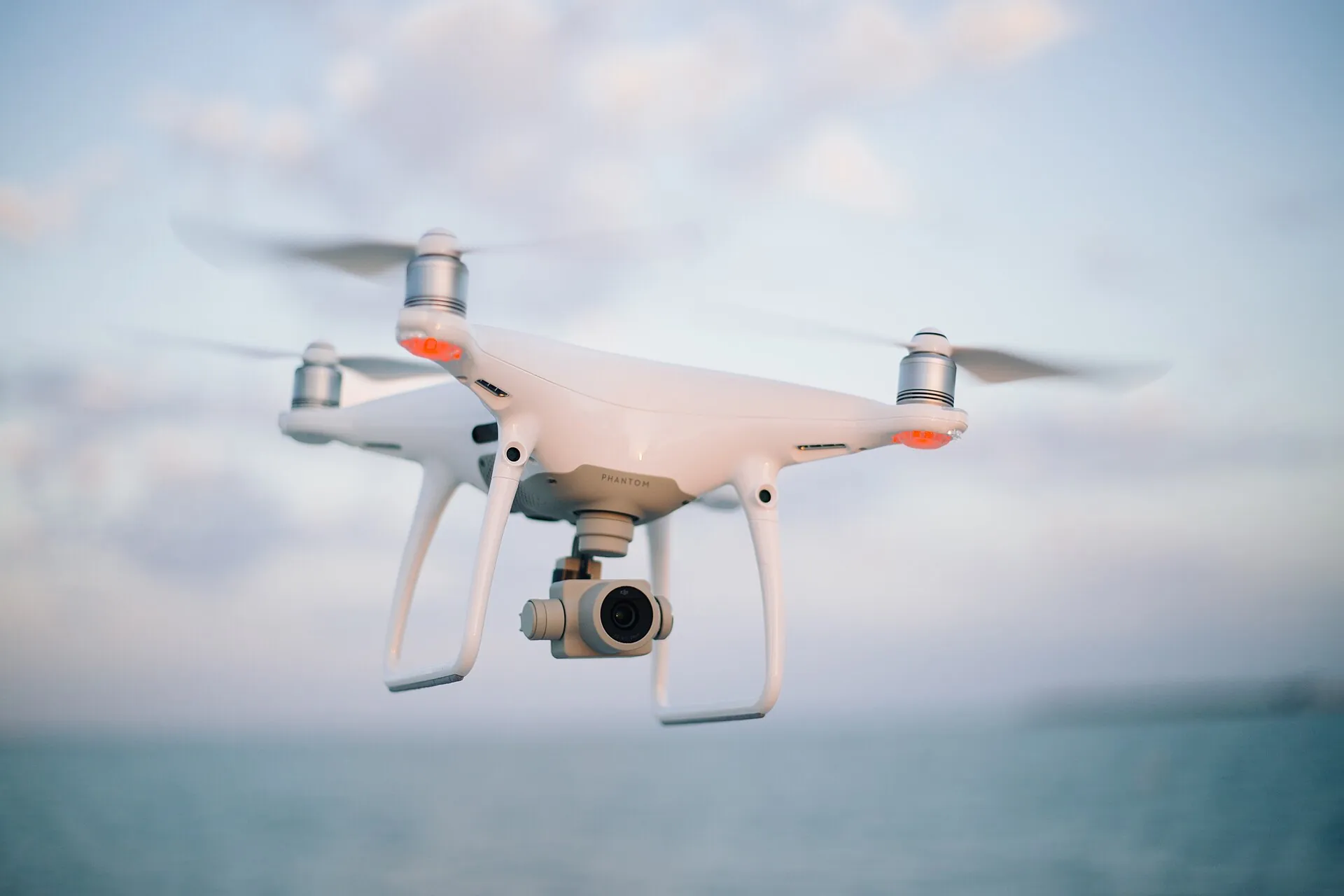
Japan’s Acquisition, Technology and Logistics Agency (ATLA) has signed a mass-production contract for the Terra B1, a domestically built interceptor drone designed to bring down Shahed-class one-way attack UAVs. It was the only aircraft to survive the demonstration campaign: 38 companies submitted proposals, four systems flew, and three did not make the cut. The contract was signed on 25 August 2026, with first deliveries expected in September and the Maritime Self-Defense Force as the launch customer. The aircraft is the smaller story here. The larger one is the calendar: Japan went from a request for proposals to a serial order in roughly three months.
- What happened: ATLA awarded Terra Drone a mass-production contract under Japan’s Interceptor Drone Rapid Acquisition Program.
- The system: Terra B1, a Japanese-designed and Japanese-built interceptor UAV aimed at Shahed-class one-way attack drones.
- The competition: 38 proposals; shortlist announced 15 July 2026; four systems demonstrated; Terra B1 was the only one to pass.
- The timeline: Program launched 5 June 2026, flight demonstrations late July to early August, production contract 25 August, delivery targeted for September.
- First operator: Maritime Self-Defense Force, with Air and Ground Self-Defense Force variants to follow.
- The lineage: Terra Drone bought its combat experience, consolidating two Ukrainian interceptor makers — Amazin Drones and WinnyLab.
- Why it travels: Every navy facing cheap saturation attacks is arriving at the same answer; Japan simply got there on a compressed clock.
A Procurement Cycle That Closed in Three Months
Defense procurement is normally measured in years. A requirement is written, a specification is drafted, bids are collected, evaluation boards convene, a prototype contract is let, a test campaign is scheduled, and only then does serial production enter the conversation. Programs that compress that arc below five years are the exception, not the rule.
Japan’s summer program ran the whole arc in about ninety days. The solicitation went out on 5 June 2026. On 15 July, ATLA announced it had compared 38 submissions and picked the aircraft that would fly. Demonstrations followed in the last days of July and the first days of August. The production contract was signed on 25 August. Deliveries are meant to start in September.
Nothing about that schedule is accidental — the program is literally named the Interceptor Drone Rapid Acquisition Program. Japan deliberately suspended the deliberate pace its acquisition culture is known for, and the justification was written into the requirement itself: cheap one-way attack drones have been used at scale in the Middle East, and shooting them down with expensive missiles has drained inventories while pushing the cost of every engagement in the wrong direction.
Thirty-Eight Bids, Four Flights, One Survivor
The number worth pausing on is 38. That is how many Japanese companies believed they could field a military interceptor UAV on a compressed schedule — a useful proxy for the depth of the country’s commercial drone base. ATLA narrowed that pool and put four systems in the air.
What the demonstration measured says a great deal about how this class of weapon is judged. The flight criteria were conventional enough: effective range, endurance, distance covered, maximum and cruise speed, guidance method, the number of aircraft one operator can control simultaneously, launch and recovery methods, safety and systems integration. The second half of the scorecard had nothing to do with flying — supply capacity, delivery times, domestic production content, operational experience, maintenance, replenishment and training.
That second half is almost certainly where the field thinned. Flying an interceptor is the easy part. Building hundreds a month and threading them into a Self-Defense Force logistics chain is not. ATLA’s language leaves no ambiguity: Terra B1 was the sole aircraft to pass.
A single survivor is both the strength and the weakness of rapid acquisition. The strength is that a decision actually gets made. The weakness is that competitive pressure evaporates at exactly the moment pricing and delivery terms are negotiated — a government holding one qualified system has less leverage than a government holding three.
What Terra B1 Is Built to Kill
The target set is narrow and explicitly stated: long-range, one-way, low-cost attack drones of the type generally described in open sources as Shahed-class. These aircraft are not fast, not agile and not stealthy in any meaningful engineering sense. What makes them hard is arithmetic.
A Shahed-class airframe cruises somewhere in the 180–200 km/h band on a piston or simple turbojet engine, delivers a warhead over hundreds or thousands of kilometres, and costs tens of thousands of dollars. The surface-to-air missiles routinely used to stop it cost six or seven figures apiece. Every successful intercept is a tactical win and an economic loss, and an adversary that can force a hundred of them has found a way to disarm a defender using one percent of the defender’s budget.
The interceptor drone inverts that. A slow, non-manoeuvring, low-altitude target does not require a supersonic missile — it requires something fast enough, agile enough and carrying a small charge. Ukraine industrialised that logic over the past two years under conditions no test range can simulate. Japan is now importing the conclusion.
| Item | Detail |
|---|---|
| Program | Interceptor Drone Rapid Acquisition Program |
| Authority | Acquisition, Technology and Logistics Agency (ATLA), Japan Ministry of Defense |
| Solicitation | 5 June 2026 |
| Proposals received | 38 companies |
| Shortlist | 15 July 2026 — Terra Drone selected for flight demonstration |
| Demonstration | Late July – early August 2026 |
| Result | Terra B1 the only system to pass |
| Production contract | 25 August 2026 |
| Delivery target | September 2026 |
| Launch operator | Maritime Self-Defense Force |
| Mandatory condition | Japanese design and manufacture, backed by a domestic base capable of high-rate output |
| Threat set | Shahed-class long-range one-way attack drones |
Terra Drone: Four Months Into the Defense Business
The winner is not a name the defense industry would recognise. Terra Drone Corporation is a Tokyo-listed company — it went public on the Tokyo Stock Exchange Growth Market in November 2024 — whose core business is surveying, industrial inspection, agriculture and unmanned traffic management. It reports more than 3,000 completed projects across oil and gas, construction, chemicals and energy. In July 2023 it took a majority stake in Belgium’s Unifly, giving it a UTM platform deployed in more than eight countries.
By its own account, the company entered the defense sector in earnest roughly four months before ATLA’s selection. Winning a national procurement in month four looks implausible under the old rules. Under the economics of attritable interceptors, it is close to logical: what this market rewards is manufacturing throughput, supply-chain control and current combat data, not decades of program pedigree.
Terra Drone brought the first three from the commercial drone business. The fourth it acquired outright.
Buying the Combat Record: Terra A1 and A2
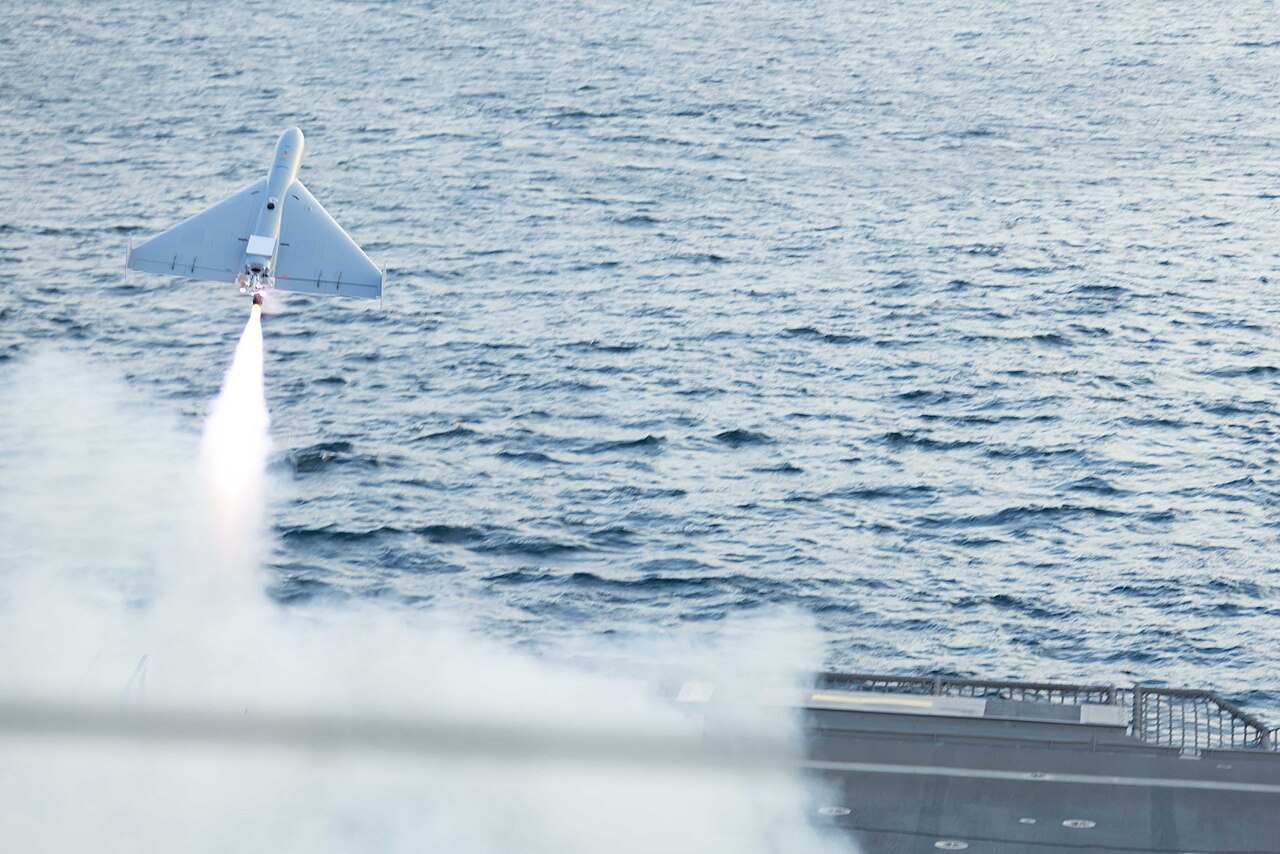
Two Ukrainian producers sit at the base of the company’s defense line. Terra A1, developed by Amazin Drones, is a VTOL interceptor: better than 300 km/h, an operational radius of roughly 32 km, around 15 minutes of endurance, and a compact explosive charge for kinetic intercept. Because it takes off vertically it needs no launch infrastructure, which is what makes it viable from a ship’s deck or a forward position. It is credited with successful intercepts of Shahed-type drones in Ukraine.
Terra A2, from WinnyLab, is the fixed-wing half of the pair: catapult-launched, around 312 km/h maximum speed, roughly 75 km of range, more than 40 minutes airborne and a ceiling near 5,000 metres. It carries electro-optical and thermal sensors and is designed to work with external radar. Its architecture is modular, which is a manufacturing statement as much as an engineering one.
Terra B1 is the Japanese-built expression of that lineage. ATLA’s domestic-content clause ruled out simply buying a Ukrainian aircraft, so Terra Drone bought the companies instead and localised the design. It is an unusual route into a defense program, and an efficient one: a design philosophy validated under fire arrives inside the national industrial base rather than as an import.
| Attribute | Terra A1 (VTOL) | Terra A2 (fixed-wing) |
|---|---|---|
| Origin | Amazin Drones (Ukraine) | WinnyLab (Ukraine) |
| Maximum speed | Over 300 km/h | About 312 km/h |
| Range / radius | ~32 km operational radius | ~75 km |
| Endurance | ~15 minutes | 40+ minutes |
| Ceiling | Low-altitude intercept | Up to 5,000 m |
| Launch | Vertical — no infrastructure required | Catapult |
| Sensors / effect | Kinetic intercept, compact charge | Electro-optical and thermal, external radar compatible |
| Basing | Base, forward position, ship’s deck | Fixed or semi-fixed site |
The Cost Curve Is the Whole Argument
Strip away the program mechanics and this is a story about unit economics. When a warship in the Red Sea expends a two-million-dollar interceptor on a twenty-thousand-dollar drone, the engagement is a tactical success and a strategic problem. Repeat it a hundred times and the magazine is empty before the threat is.
An interceptor drone in the low thousands of dollars restores the arithmetic to the defender. It also changes the industrial base required to sustain a campaign. A surface-to-air missile depends on a small number of qualified facilities with long lead times; an interceptor drone draws on batteries, electronic speed controllers, carbon airframes and radios that largely come from commercial supply chains.
The nuance often lost in the enthusiasm is that interceptors do not replace missiles. Anything fast, high or ballistic still demands a missile. What the interceptor does is make the bottom of the layered stack cheap, so the expensive layer can be reserved for targets that actually justify it.
Why the Navy Goes First
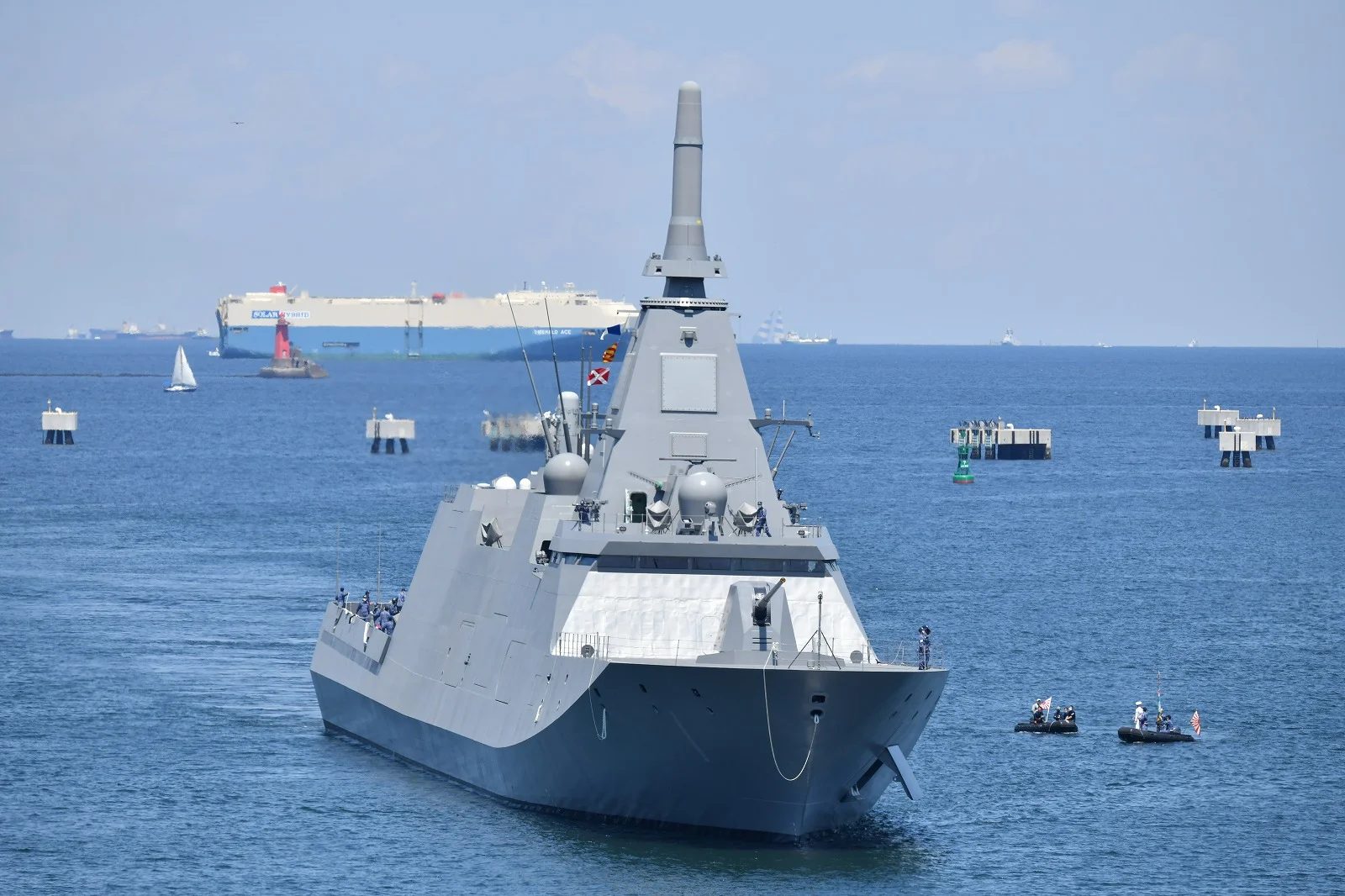
Fielding Terra B1 with the Maritime Self-Defense Force first is not a scheduling convenience. Shipboard compatibility was an explicit requirement: the system had to launch from a deck and behave safely when its data link degrades.
The reasoning is geographic. Japan is an archipelago and most of its threat axis arrives over water. Ships operating in the East China Sea and along the Nansei chain lack the depth a land base enjoys. A destroyer facing a saturation attack with nothing but Sea RAM, Phalanx and vertical-launch cells is burning irreplaceable magazine depth on the cheapest thing in the sky.
The Royal Netherlands Navy reached the same conclusion this year with the Destinus Hornet B2 programme. European and Asian navies are converging on shipborne interceptor drones almost simultaneously; what distinguishes Japan is that it converted the conclusion into a signed production contract in a single quarter.
There is a practical argument too. A warship is already a launch platform, a sensor node and a power plant. Everything an interceptor needs — radar, a command element, resupply — is co-located by default. For a system entering service with minimal integration friction, the deck is the least hostile place to start.
What a Ninety-Day Cycle Cannot Measure
A demonstration shows what a system does on a prepared range, in workable weather, against a known target. It does not show what that system costs to keep for five years, and with attritable aircraft that is where the real bill accumulates.
Three line items dominate. Batteries: high-discharge cells have limited cycle life and are sensitive to storage conditions. Training: flight hours per operator climb steeply once systems are meant to work in groups. Software: guidance and tracking algorithms have to be revised continuously against an opponent who is revising his electronic warfare in parallel.
ATLA put maintenance, replenishment and training on the scorecard, which suggests awareness of the risk. But scoring a criterion is not the same as measuring five years of sustainment. The program’s real examination will not be September’s delivery; it will be fleet availability rates in 2027 and 2028.
The second exposure is upstream. Terra Drone lists strengthening domestic supply resilience in components, batteries, communications and control equipment as an immediate priority — a telling admission, because the small-UAS component ecosystem remains heavily China-centred. Meeting a ‘made in Japan’ clause at final assembly is straightforward; meeting it at the level of motors, cells and camera modules is not.
The Aircraft Was Never the Hard Part
An interceptor is only as good as the chain that tells it where to go. Detection has to happen early enough, tracking has to be continuous enough, and the handoff has to be fast enough that a 15-minute endurance aircraft can still reach the target. That is why guidance method, simultaneous control and communications resilience sat so high on ATLA’s list.
Japan’s strongest link in that chain is afloat. Aegis destroyers, the FCS-3 radar family and E-2D early warning aircraft can see low and far. The weaker link is ashore, where the question of whether the low-altitude warning network can resolve a swarm into individual tracks — and assign an interceptor to each — remains open.
This is not a uniquely Japanese gap. Ukraine’s interceptor success owes less to its airframes than to the acoustic sensor mesh and the software that lets a mobile team engage within minutes. Hardware can be copied. The command layer that turns a detection into a launch order in under three minutes takes years to build.
The Quiet Message in the Domestic-Content Clause
The requirement that the system be designed and built in Japan, on an industrial base capable of high-rate output, did more than favour local firms. It removed the option of buying a cheaper foreign interceptor off the shelf, and it did so on purpose.
The logic is elementary defense economics: importing a consumable weapon looks affordable in peacetime and becomes meaningless in conflict. If the supply line for an aircraft you expect to expend by the thousand runs through someone else’s territory, that line is the first thing to be cut. Ukraine paid tuition for this lesson over three years.
Japan has been rebuilding its defense-industrial policy alongside the budget increase announced in 2022. The interceptor program is a small, highly visible showcase for that policy — short cycle, domestic production, new entrants from the commercial sector. If it works, expect the template to be applied to other consumable classes.
Where This Leaves Everyone Else
The interceptor drone has moved from improvisation to procurement category in under three years. Ukraine proved it, the Netherlands ordered it for its ships, and Japan has now written it into a formal program of record with a domestic-production floor. Others will follow, and the differentiator will not be the airframe.
It will be the layer above: the sensor mesh, the command software, the authority to launch quickly, and a manufacturing base that can absorb the loss rate. Countries that already run dense low-altitude air defense networks along a live border — Türkiye’s layered architecture around HİSAR, KORKUT and the Steel Dome command software is the clearest example — hold most of that layer already, and mainly lack a purpose-built cheap kinetic interceptor to sit beneath it.
That is a shorter gap to close than the one Japan just closed in ninety days.

Sources
- Defence Industry Europe — “Terra Drone prepares Terra B1 for rapid production after it becomes the only interceptor to pass Japan’s fast-track ATLA evaluation”, 25 August 2026 (Martin Chomsky)
- Terra Drone Corporation — “Terra Drone Selected for Japan’s ATLA Interceptor Drone Rapid Acquisition Program”, 15 July 2026
- Army Recognition — “Japan Selects Terra Drone Interceptor to Counter Growing One-Way Attack Threat”, August 2026
- Aviation Week / Aerospace Daily & Defense Report — “Japan Selects Terra Drone For Fast-Tracked Counter-Drone Program”, 25 August 2026
- sUAS News — “Terra Drone’s Japan-Made Interceptor Drone Terra B1 Solely Passes ATLA Demonstration Test”, August 2026