Indra Tests Nimbus Combat Cloud at Sea First Time in REPMUS 26

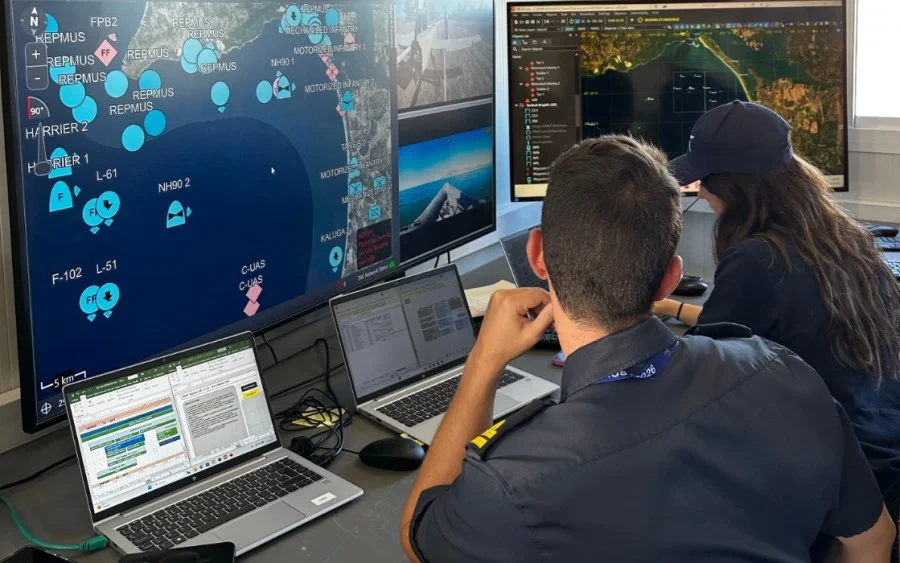
Spanish defense and technology company Indra has tested its Nimbus combat cloud in the naval domain for the first time in Europe. The trial, backed by the Spanish Navy, took place during Exercise REPMUS 2026, organized by the Portuguese Navy under NATO’s umbrella. It extends to the naval domain a concept Indra had already validated with the Spanish Air Force in the air domain.
REPMUS 2026, held from August 31 to September 25 in the waters off Tróia and Sesimbra, Portugal, brought together more than 1,500 participants from 36 navies, over 60 companies and research institutions, 13 universities and five NATO-linked entities. More than 300 unmanned systems and 14 ships took part, making it one of Europe’s largest proving grounds for unmanned naval systems.
What was tested: a shared picture under degraded communications
Nimbus linked manned and unmanned platforms — both naval and aerial — with sensors, command posts and distributed information systems across Spain and Portugal in real time. Critically, the test ran under degraded communications conditions, one of naval warfare’s toughest challenges, measuring how the system holds up against the signal loss and latency expected in a real conflict.
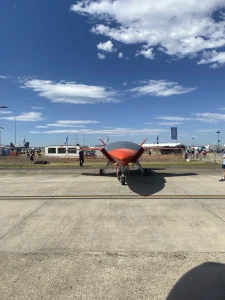
Among the integrated subsystems, the Tarsis drone stood out, locating vessels with visual and infrared sensors during search-and-rescue tasks while validating the STANAG 4817 interoperability standard. The trial also exercised the Manpack electronic-warfare system, which detects radar emissions from unmanned vessels, and a 5G SIGINT system for signals intelligence over next-generation communication networks. Spanish firm Utek and the European Defence Agency were also among the participants.
Why it matters: the Spanish Navy’s road map to a combat cloud
The test is not the unveiling of a new weapon system; it is one of the first concrete steps toward the “Naval Combat Cloud” operational capability the Spanish Navy plans to build over the coming years. Moving Nimbus from the air domain to the naval one shows Spain assembling a multi-domain command-and-control architecture in stages — air first, sea now, with the eventual goal of a single shared picture across all domains.
The approach fits the broader “combat cloud” and collaborative-combat concepts gaining ground across NATO, in the same family as the US CJADC2 effort and similar initiatives by other allies, all aimed at letting different platforms and sensors share data over a common network. Turkey is pursuing parallel work through HAVELSAN and ASELSAN on network-centric operations and tactical data links, part of the same doctrinal family — making the architecture tested at REPMUS a useful reference point for how different NATO members are pursuing similar goals by different routes.
According to Indra, the test reinforces the company’s position in multi-domain collaborative-combat technologies and contributes to REPMUS’s broader goal of advancing the operational integration of unmanned naval systems. Its results will form the technical basis for the permanent combat-cloud capability the Spanish Navy intends to develop in the coming years.
Sources:
- Infodefensa, “Indra prueba con la Armada su nube de combate Nimbus para el dominio naval en el ejercicio Repmus de la OTAN,” September 29, 2026, infodefensa.com — used for technical details, participants and the date.
- El Español (Observatorio de Defensa), “Indra despliega la nube de combate en el dominio naval por primera vez en Europa durante el ejercicio REPMUS 26,” September 29, 2026, elespanol.com — used to confirm the “first in Europe” claim.