
Guinea-Bissau’s Military Power: Which Tanks and Armoured Vehicles Are in the Inventory? (2026)

Guinea-Bissau’s military inventory describes the force structure of a small and politically fragile West African country, built on Soviet-origin equipment inherited from its independence war. The Revolutionary Armed Forces of the People (FARP) comprise army, navy and air force branches; the coup of 26 November 2025 again showed the weight of the military in national politics.
At a Glance
- Active personnel: About 4,000 personnel (World Bank, 2022); army, navy and air force plus paramilitary forces
- Tanks: 15 PT-76 light tanks and 10 T-55 (Wikipedia); mostly Warsaw Pact origin with uncertain serviceability
- Armoured vehicles: 10 BRDM-2, 20 Type 56, 15 BTR-40 and 35 BTR-60 (Wikipedia)
- Military aircraft: No combat aircraft; only a Cessna 208B as of 2023; the MiG-21 fleet left service long ago
- Navy: A small coastal force; a detailed vessel inventory is not reliably documented in open sources
- Defence budget: About USD 23.3 million, roughly 1.7% of GDP (Wikipedia)
Note: The inventory figures below are approximate values drawn from open sources such as Global Firepower, the IISS Military Balance and SIPRI.
About the Guinea-Bissau Armed Forces
FARP was born in 1964 as the armed wing of the PAIGC and became the national army in 1973-1974 after the independence war against Portugal. Since 1980 the army has been associated with a string of coups and coup attempts: 1980, the 1998-1999 civil war, 2003, the 2010 and 2011 episodes, the 2023 attempt and, most recently, the 2025 coup. The armed forces comprise three branches and paramilitary elements.
According to a 2022 World Bank estimate, total personnel number about 4,000. Defence spending is about USD 23.3 million, roughly 1.7% of GDP. Figures are approximate, and the current serviceability of the inventory is not verified in open sources.
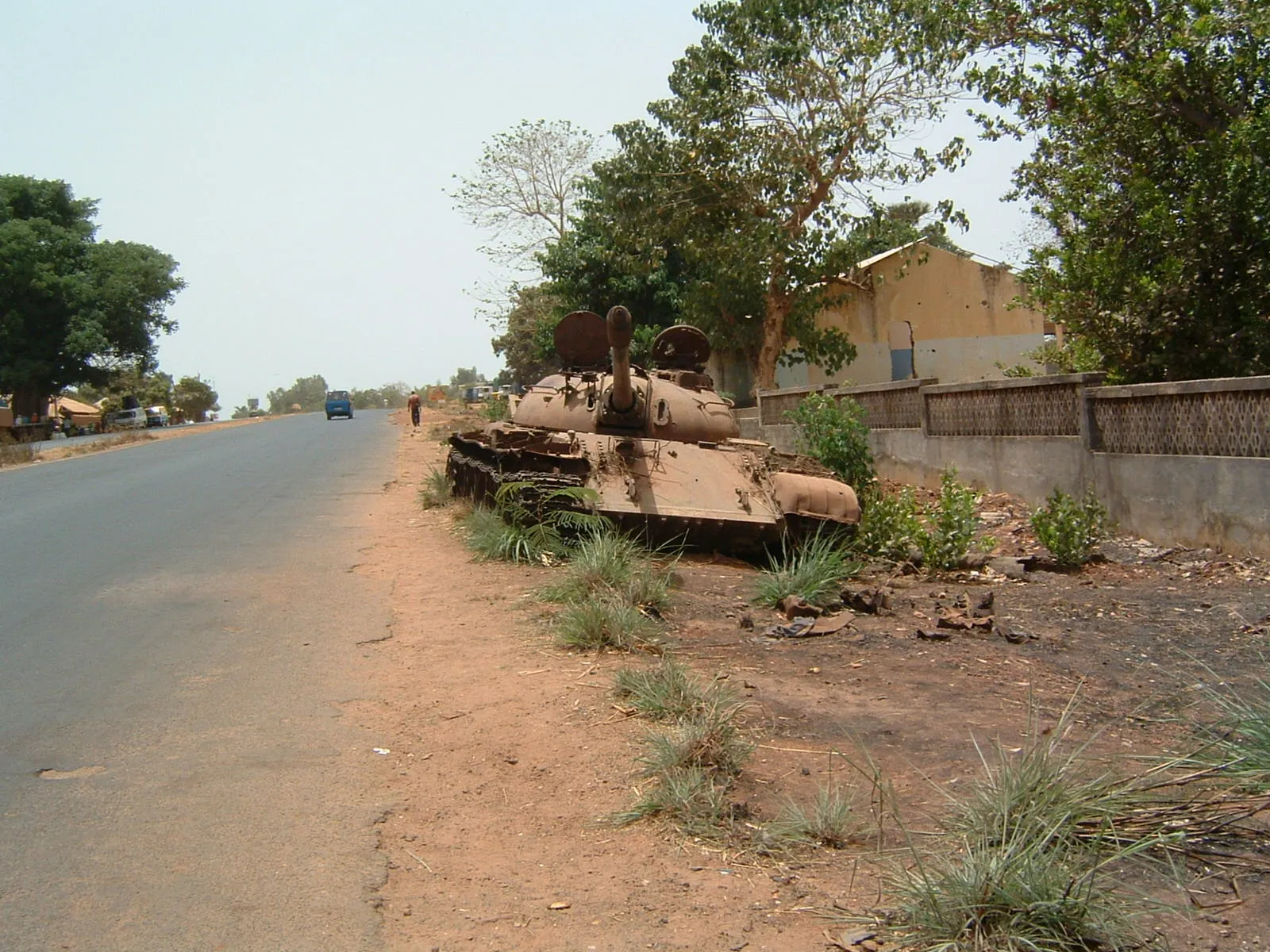
The land inventory is largely of Warsaw Pact origin: 15 PT-76 amphibious light tanks and 10 T-55, 10 BRDM-2 scout cars, 20 Type 56, 15 BTR-40 and 35 BTR-60 armoured personnel carriers. Artillery lists 9 BM-21, 8 D-44, 18 M-30/D-30 howitzers and PM-41 and PM-43 mortars. A photograph of a tank abandoned since the civil war in Bissau suggests that part of the equipment is effectively out of use.
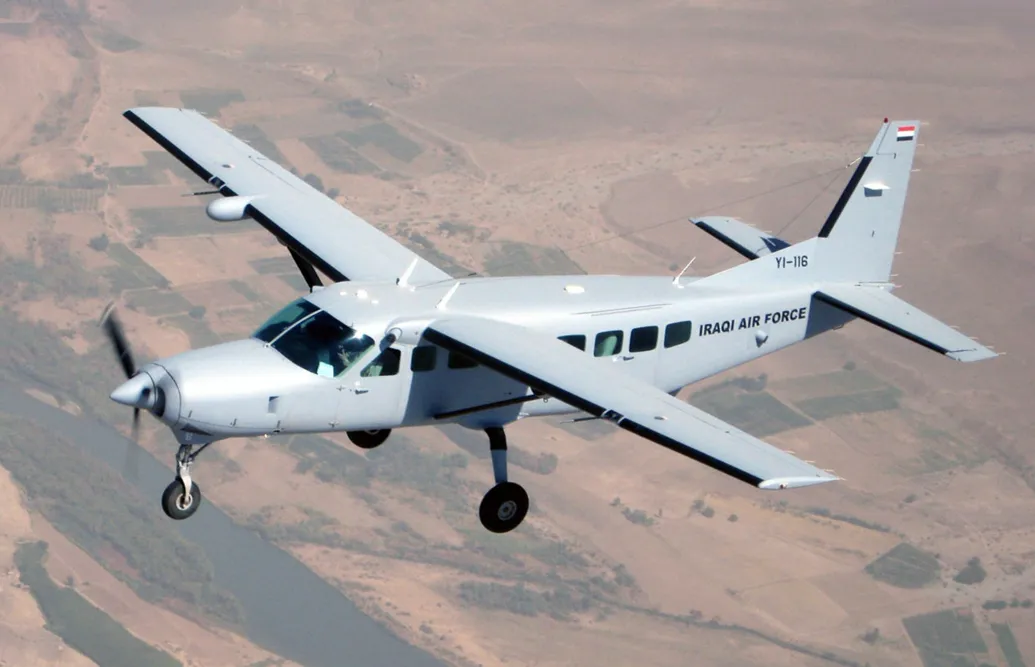
Air power has effectively disappeared. Formed by officers trained in Cuba and the Soviet Union after independence, the Air Force flew MiG-17Fs, a MiG-15UTI and MiG-21bis aircraft delivered in 1986. By 2011 two MiG-17s and a MiG-15UTI were probably non-operational, and the MiG-21s and fixed-wing transports had been withdrawn. According to Wikipedia the inventory holds only a single Cessna 208B as of 2023.
The missile layer is thin. No guided anti-tank or anti-ship missile is documented; air defence rests on 6 61-K, 10 S-60 and 18 ZU-23-2 autocannon and the shoulder-fired 9K32 Strela-2 missile. These are old-generation systems and offer limited deterrence against a modern air threat.
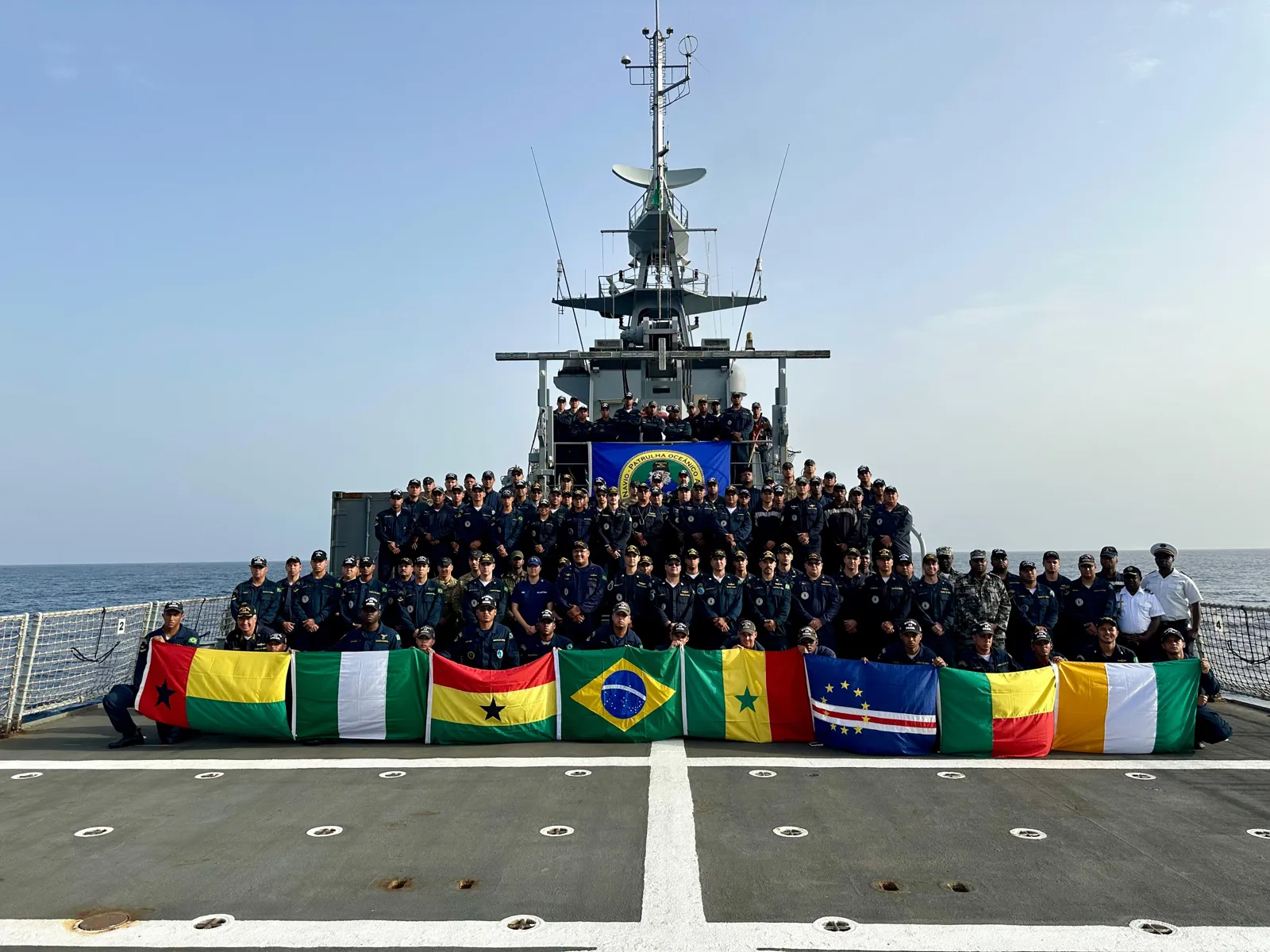
A detailed naval inventory is not reliably documented in open sources, so we give no vessel counts. The country has many offshore islands such as the Bijagós archipelago and river mouths; this geography makes coastal surveillance and counter-smuggling core needs. The UN has drawn attention to Guinea-Bissau as a trans-shipment point for drugs bound for Europe and called for sanctions on those responsible. The September 2010 coup attempt by Navy chief Rear-Admiral José Américo Bubo Na Tchuto also shows how entangled the navy has been with politics.
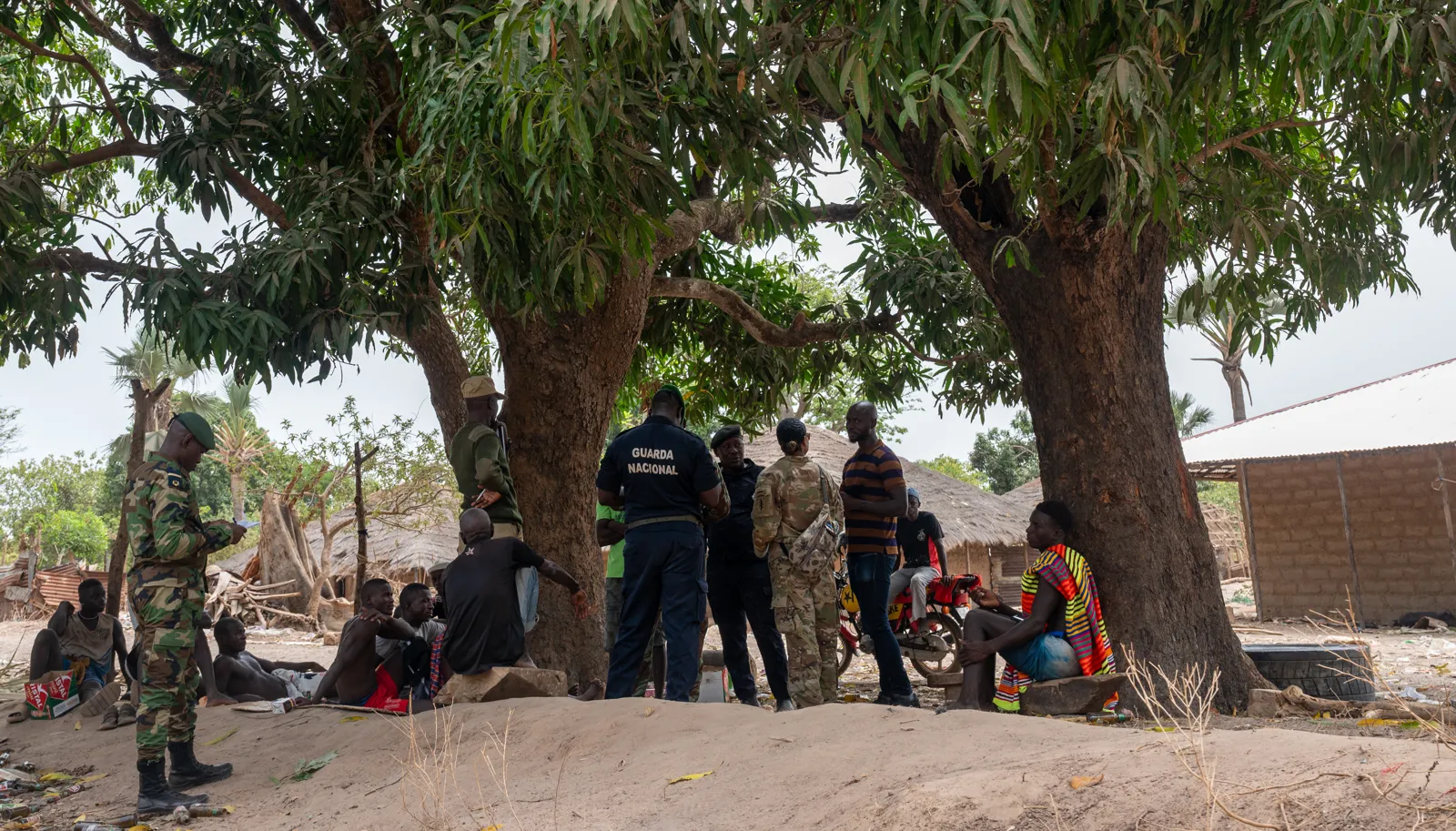
External support paints a changeable picture. Angola supported defence and security reform from 2011 with the MISSANG mission of about 249 personnel, but the mission ended in 2012 amid a political crisis. In November 2024 the US Army’s 478th Civil Affairs Battalion was sent to the country under a SETAF-AF mission, and a joint training event with the National Guard took place in 2025. On 26 November 2025 the High Military Command, which seized power by overthrowing President Umaro Sissoco Embaló, proclaimed General Horta Inta-A Na Man interim president. The current political situation can change quickly; official statements should be followed.
Land Forces Inventory
| System type | Est. quantity |
|---|---|
| Tanks | 15 PT-76 amphibious light tanks and 10 T-55 medium tanks (Wikipedia); images of tanks abandoned since the civil war suggest a low readiness level |
| Armoured cars and infantry vehicles | 10 BRDM-2 scout cars; 20 Type 56 (from China in 1984), 15 BTR-40 and 35 BTR-60 armoured personnel carriers |
| Artillery | 9 BM-21 multiple rocket launchers, 8 D-44 guns, 18 M-30/D-30 howitzers in total, 8 PM-41 and 8 PM-43 mortars (Wikipedia) |
| Anti-tank and small arms | B-10 (82 mm) and Type 52 (75 mm) recoilless rifles, RPG-7; AK-47/AKM, SKS, PKM, DShK and KPV; most weapons are of Warsaw Pact origin |
| Political context | On 26 November 2025 a group in the military seized power in a coup; General Horta Inta-A Na Man was proclaimed interim president and a High Military Command was set up |
Air Force Inventory
| Platform | Est. quantity |
|---|---|
| Combat aircraft | None; the MiG-17s and MiG-15UTI were probably non-operational by 2011 and the MiG-21s were withdrawn |
| Current inventory | Only 1 Cessna 208B as of 2023 (Wikipedia) |
| Former inventory | Types used in the past include the MiG-15, MiG-17, MiG-21, Alouette II/III, Dornier Do 27, T-6 Texan, C-47, An-24 and Mi-8 |
| Base | The air force is headquartered in Bissau; aircraft were stored on the military side of Osvaldo Vieira International Airport |
Missile and Air-Defence Systems
| System | Type / Note |
|---|---|
| Anti-armour | No guided anti-tank missile is documented; B-10 and Type 52 recoilless rifles and RPG-7 are used |
| Anti-ship | None |
| Air defence | Autocannon: 6 61-K, 10 S-60 and 18 ZU-23-2; plus the shoulder-fired 9K32 Strela-2 missile (Wikipedia) |
Naval Power
| Class / Type | Est. quantity |
|---|---|
| Overall structure | One of the three branches of the armed forces; no major warship and no detailed vessel list in reliable open sources |
| Geographic task | The country has many offshore islands, including the Bijagós archipelago, and river mouths; coastal surveillance and counter-smuggling are core needs |
| Drug trafficking | The islands and weak oversight made the country a trans-shipment point for drugs bound for Europe; the UN called for sanctions on those involved |
| Political history | In September 2010 Navy chief Rear-Admiral José Américo Bubo Na Tchuto attempted a coup, was arrested and fled to the Gambia |
The Turkey Angle: Turkish Defence Industry
Türkiye and Guinea-Bissau share a diplomatic and development-based relationship. According to Wikipedia, Türkiye has an embassy in Bissau and Guinea-Bissau one in Ankara; bilateral trade was about USD 4.95 million in 2019. TIKA helped build education infrastructure in the country, particularly schools.
In defence, no documented Turkish procurement or defence cooperation agreement was verified in this study. The inventory is reported to originate in China, Czechoslovakia, India, Portugal, France and Russia; no Turkish-origin system is listed. The Türkiye link is therefore development and diplomacy-centred, while the defence dimension is a potential framework.
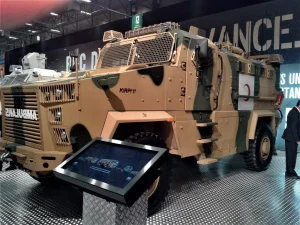
Guinea-Bissau’s stated needs overlap with the light product groups in which Turkish industry has proven export credentials: mine-resistant armoured vehicles that could replace old Soviet armour, coastal patrol boats and surveillance systems. These are not a market claim or a contract expectation but a framework for potential cooperation, dependent on political stability and financing.
Frequently Asked Questions
How many tanks does Guinea-Bissau have? According to Wikipedia, 15 PT-76 amphibious light tanks and 10 T-55 medium tanks; the current serviceability of most is uncertain and there are images of tanks abandoned since the civil war.
Does Guinea-Bissau have fighter jets? No. MiG-17, MiG-15UTI and MiG-21 aircraft were used in the past but have been withdrawn; as of 2023 the inventory holds only a single Cessna 208B.
How many soldiers does Guinea-Bissau have? About 4,000 according to a 2022 World Bank estimate; defence spending is about USD 23.3 million, roughly 1.7% of GDP.
What weapons does the Guinea-Bissau army use? Mostly of Warsaw Pact origin: AK-47/AKM, SKS, PKM, DShK and KPV; RPG-7; BM-21 rocket launchers; ZU-23-2 and S-60 anti-aircraft guns.
Is there a defence agreement between Türkiye and Guinea-Bissau? No verified defence agreement or Turkish arms supply was found in this study; relations centre on diplomacy, trade and TIKA’s education aid.
Bottom Line
Guinea-Bissau’s inventory is a force without combat aircraft, built on old Warsaw Pact equipment of uncertain serviceability. The decisive factor is politics rather than hardware: the coup history and the 2025 coup keep the army’s role at the centre. For Türkiye the link is diplomatic and development-based; defence procurement is not documented, and anything beyond that is only a potential-cooperation framework.