
Colombia speeds up counter-drone purchases as attacks rise

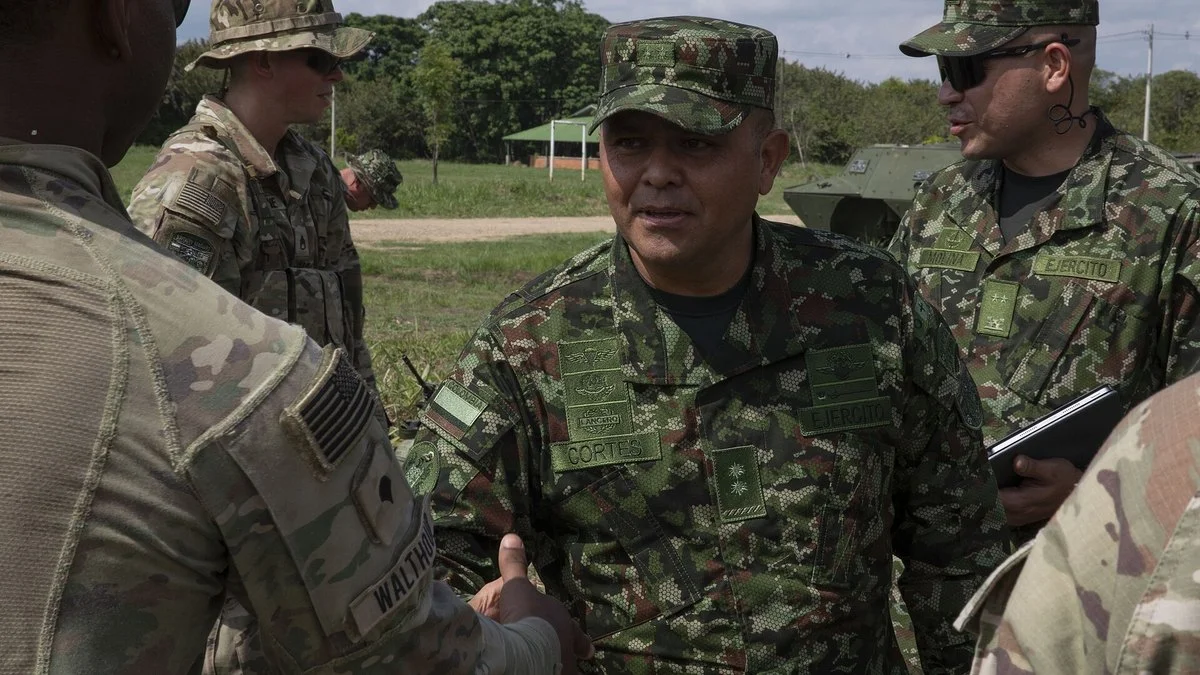
Colombia’s armed forces are moving to acquire counter-drone technology faster, after the ELN, FARC-origin factions and the Clan del Golfo stepped up explosive drone attacks against troops. Radio network Caracol counted at least 93 drone attacks in the first 100 days of President Abelardo de la Espriella’s administration, which took office in August.
Of the 26 soldiers killed in that period, at least 11 died from drone-dropped munitions, according to the tally. On November 8, the defense ministry said troops neutralized a drone in Chocó before it could drop a grenade, and separately seized a Clan del Golfo cache that included a drone and 35 grenades described as fitted for aerial delivery.
The attacks have not stayed confined to remote jungle areas. In October, a vessel of the 42nd Riverine Marine Battalion came under attack on the Guapi River, killing one marine and wounding four. In early November, drones dropped explosives on a military base in Santa Rosa del Sur, in Bolívar department, killing three soldiers.
The most recent strike hit a battalion headquarters in La Jagua de Ibirico, in César department, on November 21, killing one soldier and wounding at least twelve. In September, a civilian radar installation in Valle del Cauca was damaged after what officials believe was an explosive-laden drone colliding with it.
Defense Minister Jorge Eduardo Mora has said a fixed, mobile and man-portable “anti-drone shield” announced under the previous government “hadn’t amounted to much” by the time the new administration took office. The ministry has since released images of troops in Chocó equipped with jamming rifles, following an earlier photo from Buenaventura showing a police officer carrying a counter-drone device.
Henry Ziemer of the Washington-based CSIS has suggested Colombia join a US-run counter-drone marketplace that Argentina, Mexico and Panama have reportedly already joined, after Washington sent a first round of invitations in August.
Rebecca Bill Chavez of the Inter-American Dialogue said armed groups have moved “from using drones to monitor troop movements to launching coordinated attacks with multiple drones,” including fiber-optic guided systems that are harder to jam. She argued the open questions now are who is supplying and modifying the drones, and who is training their operators.
A former Colombian army colonel told Breaking Defense that forces need air-defense capability specifically tailored to the drone threat, alongside intelligence work aimed at finding the bases and supply networks behind the attacks, while cautioning that Colombia is not yet facing “conventional drone warfare.”
Since taking office, de la Espriella has pursued what he calls a “mano dura,” or strong-hand, approach against armed groups, with air strikes and large-scale ground operations against the ELN, FARC-origin factions and the Clan del Golfo.
The New York Times has reported that de la Espriella rejected a US offer of joint counter-narcotics operations, a claim he has denied. US Defense Secretary Pete Hegseth, during a regional tour, praised the closeness of US-Colombian military ties. Similar explosive-laden drone attacks have also been reported in Brazil and Mexico, and all three Colombian groups are designated terrorist organizations by the US State Department.
Sources
Breaking Defense, “Colombia races for counter-drone technology as militant groups embrace drones as frontline weapons,” November 2026, breakingdefense.com — used as the primary news source for this article.