Czech Chassis for Poland’s Homar Batteries: CSG and HSW Sign Contracts Worth Over EUR 150 Million

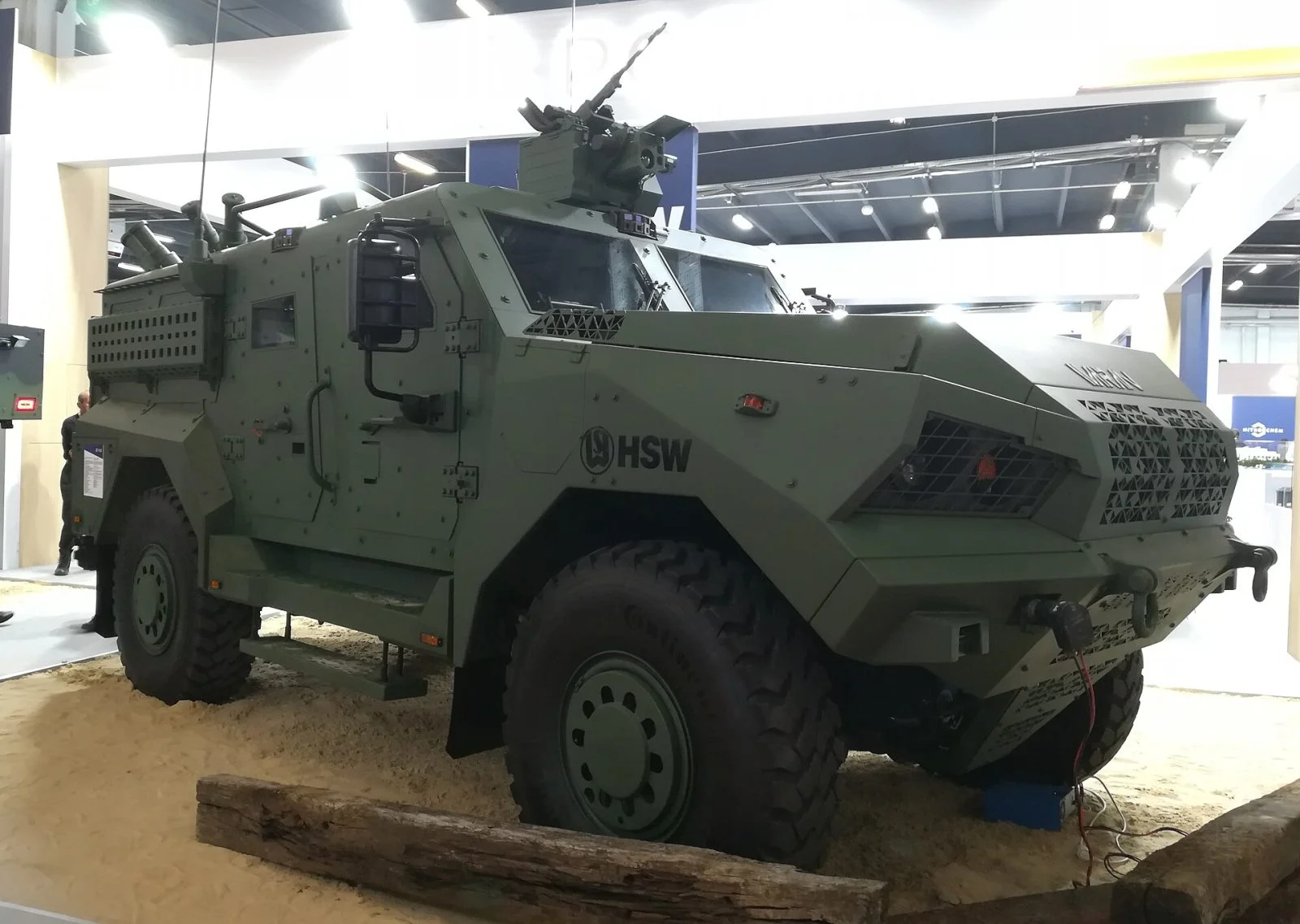
Czech industrial group CSG has signed three contracts worth more than EUR 150 million with Poland’s Huta Stalowa Wola (HSW). The agreements cover several hundred Waran 4×4 multipurpose tactical vehicle chassis and Heron 6×6 armoured vehicle chassis, with deliveries running to the end of 2029.
Where the vehicles are going
Two of the contracts cover 4×4 chassis and one covers 6×6. The Waran 4×4 vehicles will serve as command variants for Poland’s Missile and Artillery Forces, while the Heron 6×6 armoured vehicles are earmarked for command roles in the same units.
The programmes they feed form the backbone of Poland’s artillery modernisation: the Homar-A and Homar-K multiple launch rocket systems and the Gladius unmanned search and strike system. Homar-A is the Polish configuration of the American HIMARS, while Homar-K places South Korea’s K239 Chunmoo launcher on a Polish chassis. Gladius couples surveillance and strike drones with artillery fires.
An EU financing signature
Financing runs through the European Union’s SAFE programme via Poland’s Armament Agency. The detail looks technical but carries political weight: EU defence financing instruments are now directly underwriting cross-border supply chains between member states. A Czech chassis entering a Polish rocket launcher battery is precisely the kind of integration the mechanism was designed to produce.
Wojciech Grzonka, president of CSG Polska, said the signings mark “the continuation and expansion of the CSG Group’s strategic cooperation with the Polish defence industry”.
Why a battery needs so many vehicles
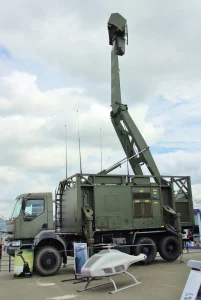
A rocket artillery battery is not just launchers. Fire direction centres, ammunition resupply vehicles, reconnaissance elements, maintenance teams and communications vehicles form a single organism, and the support fleet grows faster than the launcher count. With Poland aiming at several hundred Homar launchers, an order for hundreds of command and support chassis is the arithmetic consequence.
This is one of Ukraine’s clearest lessons. Getting the launcher out of position immediately after firing, bringing resupply forward quickly and keeping the fire direction centre mobile determine how long the system survives. Mobility and protection levels of the support fleet have therefore become as critical as the launcher itself.
Reading it from Türkiye
Poland is the fastest-rearming state on NATO’s eastern flank and increasingly meets Türkiye in the same export markets. ROKETSAN’s TRG and TRLG families compete in the capability band the Homar programmes address.
The deeper lesson, however, is about supply chain architecture rather than product rivalry. Poland buys the core system from the United States and South Korea, the chassis from Czech industry and handles integration domestically. That fragmented model shortens delivery timelines and reduces single-supplier dependence — a structure Turkish industry is itself moving towards in its export programmes.
Sources
- CSG Polska and Huta Stalowa Wola S.A. corporate statements, 13 August 2026
- Polish Armament Agency procurement announcements
- European Defence Review (EDR), CSG-HSW contract report, 13 August 2026