




Croatia to Buy 18 K239 Chunmoo Launchers in €435m Deal

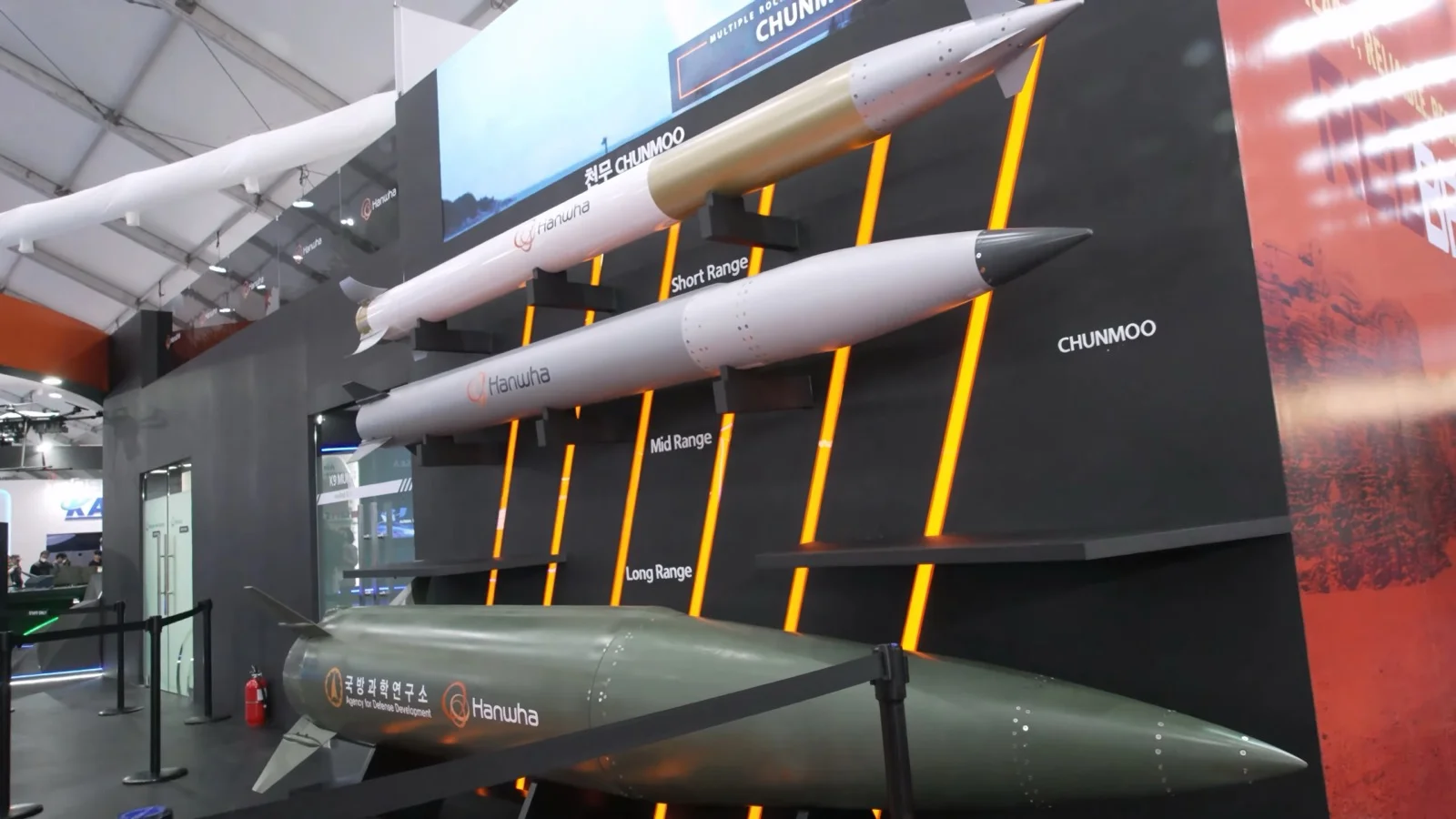
Croatia has cleared the way for the largest single upgrade to its artillery arm since independence. Zagreb approved the purchase of 18 K239 Chunmoo multiple rocket launchers from South Korea’s Hanwha Aerospace in a deal valued at €435.2 million before tax — a decision that will push Croatian long-range fires from Cold War leftovers into the guided era in one step.
What Zagreb decided
Prime Minister Andrej Plenković framed the buy as an investment meant “to deter any threat” and to “guarantee the security of citizens, territory and national interests.” Defence Minister Ivan Anušić was more operational, saying the system would give the army precise and effective fire support “at short, medium or long range.”
The prime contractor is Hanwha Aerospace. Poland’s WB Group is expected to supply the command-and-control layer. The formal signature is anticipated in the coming days; the government decision is done, the contract itself is not yet inked. Deliveries are planned over 24 to 36 months, with roughly 85 percent of the equipment expected in Croatian hands by 2028 and payments spread across 2026 to 2029.
The Chunmoo replaces the M-92 Vulkan and the Romanian-built APR-40 — 122 mm unguided systems whose accuracy and reach no longer match anything Croatia might realistically face.
The pod is the point
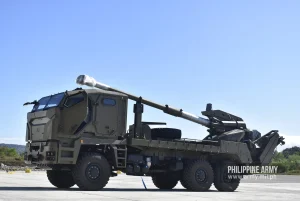
The K239 is not simply a longer-ranged rocket launcher. Its defining feature is a twin-pod architecture: two interchangeable munition canisters ride on the launcher, and what goes inside them changes the weapon’s character entirely.
One configuration fires 130 mm unguided rockets for area saturation. Another carries 239 mm guided rockets reaching roughly 80 kilometres. A third loads the CTM-290, a tactical ballistic missile that pushes strike depth past 290 kilometres. Croatian officials described a capability band running from about 30 kilometres to more than 300 — that spread is the pod system talking, not a single rocket.
The launcher itself sits on an 8×8 tactical truck, with automated pod exchange, a digital fire control suite and the shoot-and-scoot discipline that modern counter-battery radar makes non-negotiable.
Korea’s fourth European customer
Once signed, Croatia becomes the fourth European operator of the Chunmoo family, after Poland — where it is fielded as Homar-K — Estonia and Norway. That run of orders is the clearest evidence yet that South Korea’s defence industry has converted Europe’s post-2022 rearmament into durable market share.
Zagreb also weighed additional M142 HIMARS from the United States. Two factors moved the decision: the Chunmoo’s pod flexibility, and delivery timing. HIMARS order books are long, and for a European buyer trying to field a capability before 2030 rather than after it, a shorter queue is worth a great deal.
Reading the region
The decision cannot be separated from the Western Balkans’ security arithmetic. Croatian officials pointed openly to Serbia’s modernisation drive and its acquisition of Israeli PULS rocket artillery. Both capitals are now building deep-fires capability, and each purchase is read in the other as justification for the next.
Within NATO, the buy fits a broader pattern. The Alliance’s eastern and southeastern members are all pushing range and precision into their artillery formations, having watched Ukraine demonstrate that a manoeuvre unit’s survival often depends on what its guns can reach 60 kilometres away rather than on what it holds at the line of contact.
Where Türkiye stands
Türkiye is one of the few countries with a fully domestic multiple rocket launcher ecosystem. ROKETSAN’s TRG-230 and TRG-300 KAPLAN families, fielded on T-122 SAKARYA and T-300 KASIRGA launchers, cover a 30 to 150 kilometre band, with laser-guided variants such as the TRLG-230 adding precision against moving targets.
Chunmoo’s spread across Europe is therefore both a competitive signal and a market one for Turkish industry. The artillery modernisation windows opening across the Balkans and Central Europe reward manufacturers who can guarantee delivery dates — precisely the argument Turkish exporters have spent the last several years building their pitch around.
Sources
- Statements by the Croatian Prime Minister’s office and Ministry of Defence, 4 September 2026
- Hanwha Aerospace corporate materials
- Reporting by Opex360, Militarnyi and Army Recognition