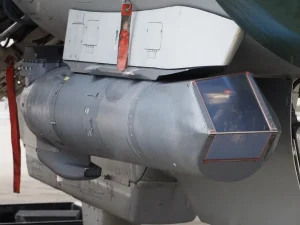
Roketsan’s BORA, exported under the name Khan, has turned Turkey into one of the few NATO members fielding a fully indigenous short-range ballistic missile. Its natural benchmark is the combat-hardened American MGM-140 ATACMS, the deep-strike workhorse of the U.S. Army and a long list of allies. This comparison weighs a modern, export-ready newcomer against a battle-proven system whose record now spans Iraq, Syria and Ukraine.
Score Breakdown
| Criterion | BORA | ATACMS |
|---|
| Operational Success | 7/10 | 10/10 |
| Combat Experience | 5/10 | 10/10 |
| Technology Level | 8/10 | 8/10 |
| Export Success | 6/10 | 9/10 |
| Operator Count | 5/10 | 10/10 |
| Upgrade Potential | 9/10 | 7/10 |
| Production Status | 7/10 | 9/10 |
| Cost-Effectiveness | 8/10 | 6/10 |
| Total | 68.0 | 88.4 |
Technical Comparison Table
| Specification | BORA (Khan) | MGM-140 ATACMS |
|---|
| Class | Short-range ballistic missile (SRBM) | Short-range tactical ballistic missile |
| Range | 80-280 km | 165-300 km (Block IA unitary up to ~270-300 km) |
| Diameter | 610 mm | 610 mm |
| Warhead | 470 kg HE / fragmentation | 160-560 kg (unitary HE or M74 submunitions) |
| Guidance | GPS+GLONASS aided INS | Ring-laser gyro INS + GPS (Block IA) |
| Accuracy (CEP) | less than or equal to 10 m | approx. 9-10 m (unitary) |
| Launcher | Volat 8×8 TEL | M270 MLRS / M142 HIMARS |
| In service since | 2017 | 1991 |
| Manufacturer | Roketsan | Lockheed Martin |
Firepower and Range
Guidance, Accuracy and Survivability
Both missiles rely on inertial navigation augmented by satellite positioning, and both advertise CEP figures around 10 metres, putting them in the same precision bracket. BORA’s use of combined GPS and GLONASS reception offers some resilience if one satellite constellation is degraded, and its descent profile complicates interception by short-range air defences. As a road-mobile system on a Volat 8×8 transporter-erector-launcher, it can shoot and scoot to avoid counter-battery fire.
ATACMS benefits from decades of refinement in its ring-laser gyro inertial unit and GPS aiding, and from integration into the highly mobile, NATO-standard M270 and M142 HIMARS launchers that the alliance fields in large numbers. In Ukraine, ATACMS has demonstrated the ability to strike defended targets, though Russian air defences have also intercepted some rounds, underscoring that no ballistic missile is immune. The maturity of the ATACMS fire-control ecosystem and its seamless fit into existing Western logistics give it an operational edge.
Combat Record and Operators
This is where ATACMS is in a class of its own. First used in Operation Desert Storm in 1991, it has since been fired in large numbers in Iraq and, most prominently, by Ukraine against Russian airfields, headquarters and air-defence assets. Operators include the United States and a wide circle of allies such as Greece, Turkey, South Korea, Bahrain, the UAE, Poland, Romania and others, supported by an enormous installed base and a mature sustainment chain. That breadth and proven reliability are exactly what export customers value most.
BORA entered Turkish service in 2017 and deliveries were completed in 2021, but its real export breakthrough came with Indonesia, which began receiving Khan batteries in 2025 with the first four assigned to a field artillery battalion in East Kalimantan. Reporting also links Roketsan precision munitions to Ukraine. BORA is therefore a genuinely fielded and now exported system, yet its combat history and user community remain far smaller than those of ATACMS.
Cost, Production and Sovereignty
BORA’s strategic value lies in independence. Turkey designs, builds and exports the missile on its own terms, free from the third-party transfer restrictions that govern U.S. ATACMS sales. For buyers locked out of American deep-strike weapons by policy or politics, Khan is an attractive, restriction-light alternative, and Indonesia’s purchase signals that this market exists. Indigenous production also shields Ankara’s deterrent posture from foreign export-licence risk.
ATACMS still holds the production and ecosystem advantage: Lockheed Martin has manufactured thousands of rounds, driving down unit cost and guaranteeing supply, while the missile slots directly into the globally fielded MLRS/HIMARS family. The trade-off is that every ATACMS sale runs through U.S. approval. From a NATO-interoperability standpoint ATACMS remains the safe, proven default, but BORA’s emergence shows allies an increasingly credible second source for sovereign deep-strike capability.
Operating Nations
| System | Operators |
|---|
| BORA (Khan) | Turkey (Army), Indonesia (Khan export, from 2025) |
| MGM-140 ATACMS | United States, Greece, Turkey, South Korea, Bahrain, UAE, Poland, Romania, Ukraine and others |
Verdict
ATACMS wins this matchup with a total of 79/100, carried by an unmatched combat record, a vast operator base and a mature production line embedded in NATO’s MLRS/HIMARS ecosystem. BORA scores a competitive 65/100, leading on modernity, indigenous control and a heavier 470 kg warhead, and its Indonesian export proves it is a credible sovereign alternative still early in its operational and export journey.
Frequently Asked Questions
Is BORA or ATACMS the better missile?
ATACMS is the more proven choice, with an extensive combat record in Iraq and Ukraine, a large operator base and a mature HIMARS/MLRS ecosystem. BORA leads on indigenous control, a heavier 470 kg warhead and freedom from third-party export restrictions, making it the stronger pick for buyers seeking sovereignty rather than a battle-tested track record.
What is the range of the BORA (Khan) missile?
BORA has a minimum range of 80 km and a maximum of 280 km. Its export version is marketed as Khan, and the longer-range Bora-2 and the larger Tayfun family extend Turkish reach well beyond this figure.
Has ATACMS been used in combat?
Yes, extensively. ATACMS was first fired in the 1991 Gulf War and in Iraq, and has been used by Ukraine against Russian airfields, command posts and air-defence sites, making it one of the most combat-proven tactical ballistic missiles in service.
Who has bought the BORA / Khan missile?
Indonesia is the first export customer, receiving its first Khan batteries in 2025 for a field artillery battalion in East Kalimantan. Turkey itself has fielded BORA since 2017.
How accurate are BORA and ATACMS?
Both are highly accurate, with advertised circular error probable figures of roughly 10 metres or less, achieved through inertial navigation augmented by satellite positioning.
Sources
▶ Bu iki platformu karşılaştırın →