The 10 Most Successful AESA Radars of 2026: Fighter Fire-Control Radars Ranked
Summary Not Found.
Active electronically scanned array (AESA) radars now define air dominance, fusing long-range detection, electronic attack and jam resistance into a single aperture. This NATO- and export-focused ranking weighs the fire-control radars carried by the world’s frontline fighters by combat record, technology and procurement footprint.
Each system is scored 0-10 across 8 criteria; the weighted total is out of 100.
Criterion
Weight
What It Measures
Operational Success
%18
Mission performance and operational reliability
Combat Experience
%16
Proven record in real conflicts
Technology Level
%16
Level of sensor, weapon and protection technology
Export Success
%12
International sales and contract volume
Operator Count
%10
Number of active operator nations
Upgrade Potential
%10
Availability of upgrade and modernization paths
Production Status
%10
Whether serial production continues
Cost-Effectiveness
%8
Unit price and life-cycle cost
Ranking Table
Rank
System
Origin
Score
#1
AN/APG-81
United States
94.0/100
#2
AN/APG-79
United States
83.0/100
#3
AN/APG-83 SABR
United States
82.4/100
#4
RBE2-AA
France
82.2/100
#5
AN/APG-82(V)1
United States
81.8/100
#6
Captor-E (ECRS Mk1)
United Kingdom / Germany / Italy / Spain
79.4/100
#7
AN/APG-77(V)1
United States
77.0/100
#8
KLJ-7A
China
70.0/100
#9
MURAD 100-A
Türkiye
63.2/100
#10
Zhuk-AE / Byelka (N036)
Russia
59.4/100
#1 — AN/APG-81 (United States) · 94.0/100
AN/APG-81 — CC0
Score Breakdown — 94.0/100
Operational Success10/10
Combat Experience10/10
Technology Level10/10
Export Success9/10
Operator Count10/10
Upgrade Potential10/10
Production Status10/10
Cost-Effectiveness4/10
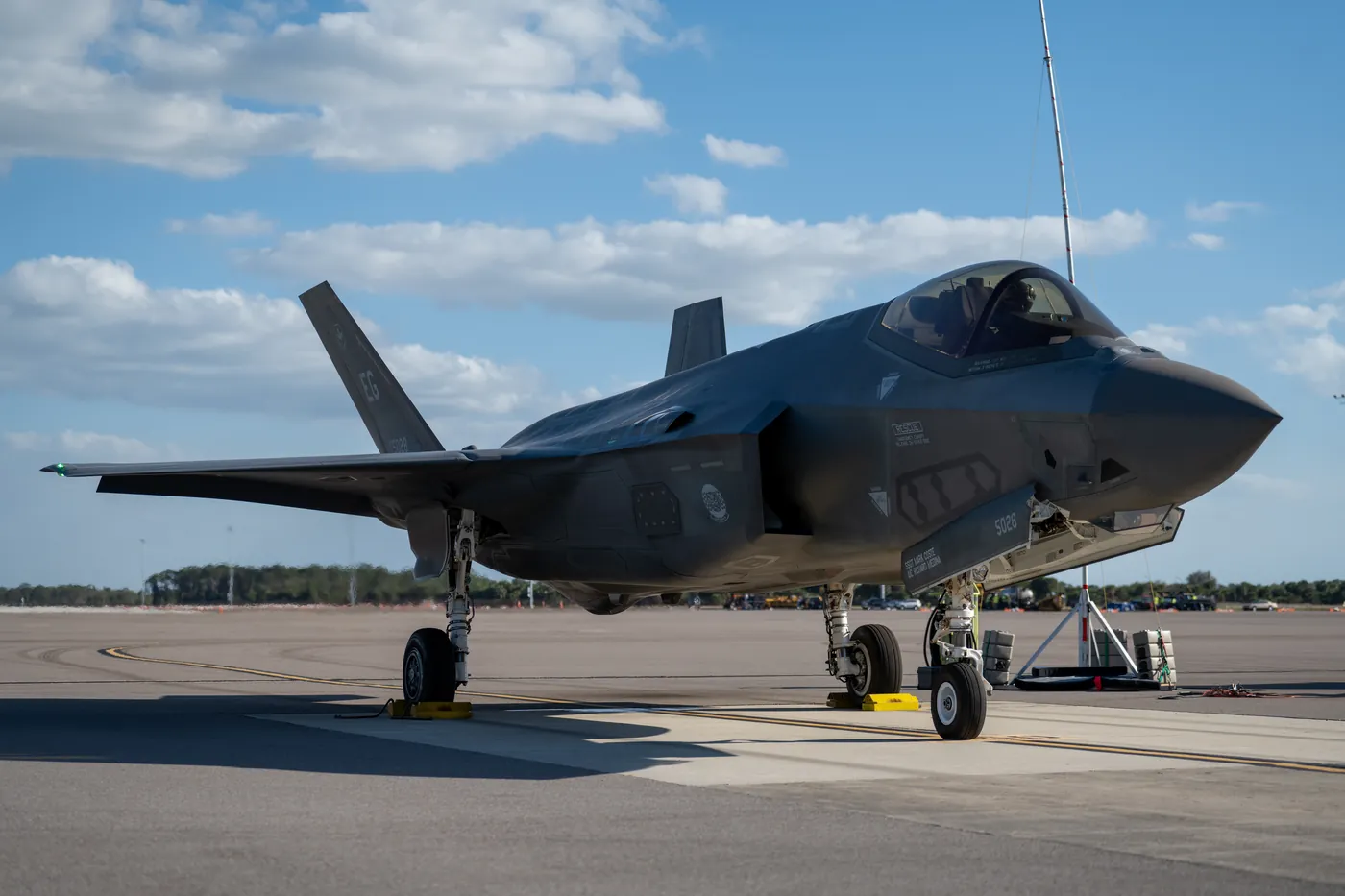
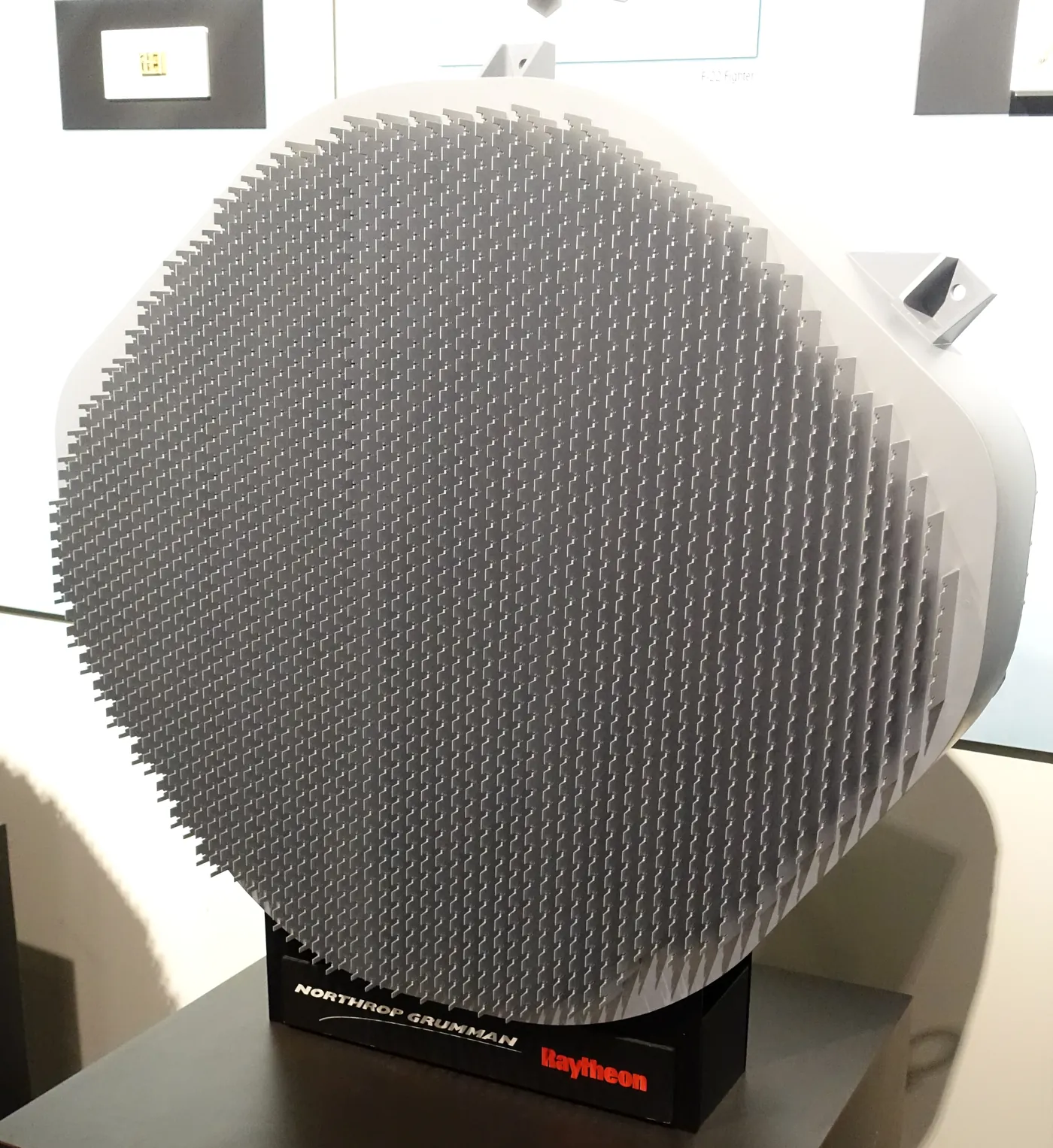
Carried by the most-produced fifth-generation fighter on Earth, the APG-81 is the benchmark for sensor fusion and software-defined modes across air-to-air, SAR mapping and electronic attack.
Its sheer installed base and continuous block upgrades make it the most consequential AESA in NATO service today.
Key Specifications
Platform fleet
1,100+ F-35 worldwide
Band
X-band
Sensor fusion
EOTS/EW/DAS integrated
Detection range
~150+ km air-to-air
T/R modules
~1,200
Status
In full-rate production
#2 — AN/APG-79 (United States) · 83.0/100
AN/APG-79 — Public domain
Score Breakdown — 83.0/100
Operational Success9/10
Combat Experience10/10
Technology Level9/10
Export Success7/10
Operator Count7/10
Upgrade Potential8/10
Production Status9/10
Cost-Effectiveness5/10
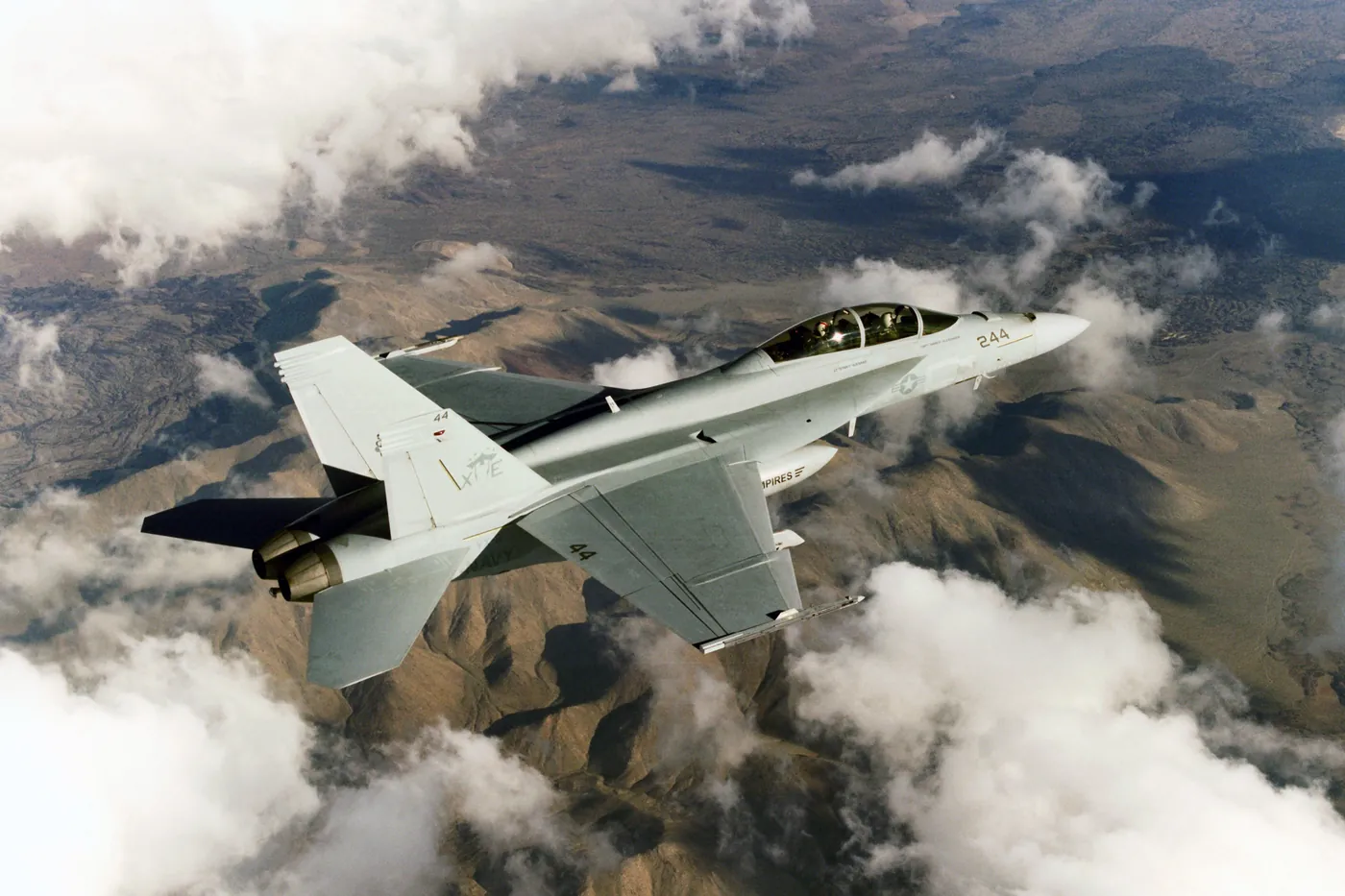
The backbone radar of U.S. Navy carrier air wings has compiled an extensive combat record over two decades of expeditionary operations.
The GaN-based (V)4 scaled variant extends its life and feeds the wider Super Hornet and Growler export base.
Key Specifications
Detection range
~150 km (1 m²)
Band
X-band; (V)4 GaN
Platform
F/A-18E/F, EA-18G
Modes
Interleaved A/A and A/G
Carrier-proven
U.S. Navy fleet
Status
In service/upgrade
#3 — AN/APG-83 SABR (United States) · 82.4/100
Score Breakdown — 82.4/100
Operational Success9/10
Combat Experience8/10
Technology Level8/10
Export Success9/10
Operator Count8/10
Upgrade Potential8/10
Production Status9/10
Cost-Effectiveness6/10
SABR drops fifth-generation radar performance into the global F-16 fleet without airframe changes, an unusually cost-effective capability leap.
With the F-16 the most widely flown Western fighter, its export and retrofit potential is enormous.
Key Specifications
T/R modules
~1,000 GaN, 55 cm aperture
Heritage
~95% common with APG-77
Platform
F-16V, F-16 upgrades
Modes
5th-gen A/A, SAR, GMTI, EA
Operators
USAF/ANG + many F-16 users
Status
In production
#4 — RBE2-AA (France) · 82.2/100
RBE2-AA — CC BY 2.0
Score Breakdown — 82.2/100
Operational Success9/10
Combat Experience9/10
Technology Level8/10
Export Success9/10
Operator Count8/10
Upgrade Potential8/10
Production Status8/10
Cost-Effectiveness5/10
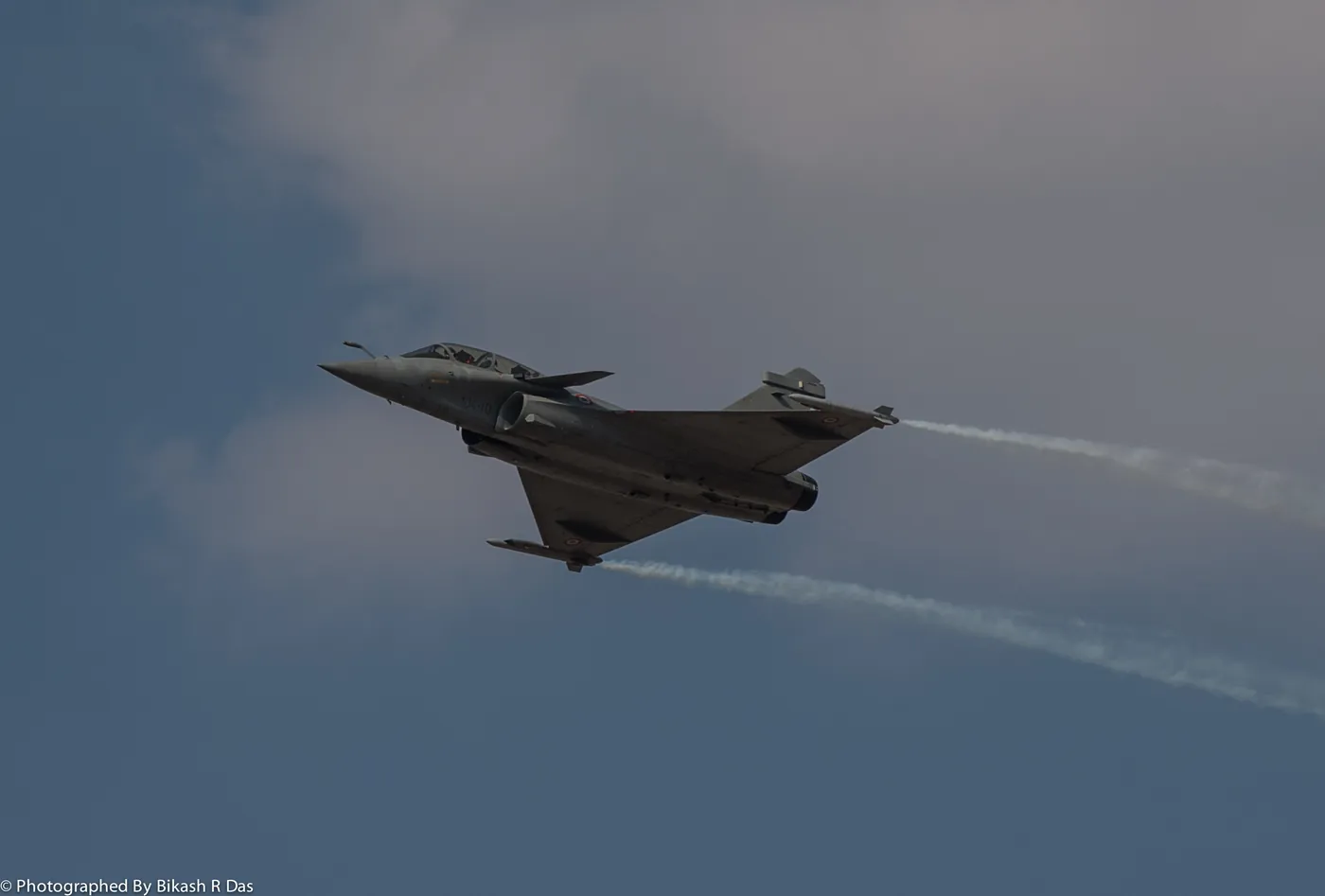
Combat-tested over the Sahel, Libya and Syria, the RBE2-AA gives the Rafale credible long-range interception, especially when paired with the Meteor missile.
Major Gulf and Asian Rafale deals have made it one of the most widely exported AESA radars outside the United States.
Key Specifications
Detection range
>200 km class
Band
X-band
Platform
Dassault Rafale
Pairing
Meteor BVR missile
Operators
France, India, UAE, Egypt, Qatar
Status
In service, exporting
#5 — AN/APG-82(V)1 (United States) · 81.8/100
Score Breakdown — 81.8/100
Operational Success9/10
Combat Experience9/10
Technology Level9/10
Export Success8/10
Operator Count7/10
Upgrade Potential9/10
Production Status8/10
Cost-Effectiveness4/10
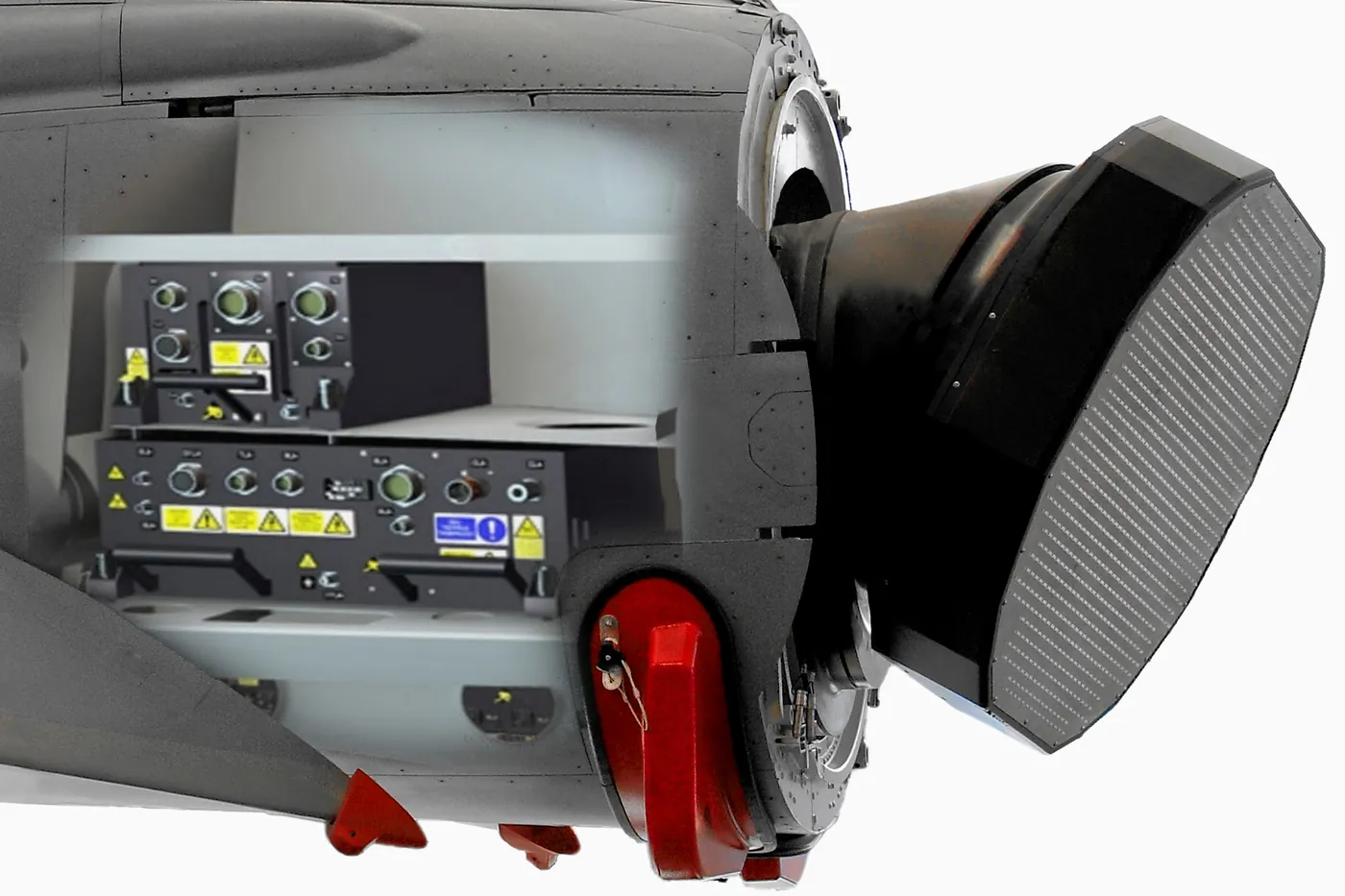
Pairing a large F-15-class aperture with modern processing, the APG-82 delivers some of the longest detection ranges of any non-stealth fighter radar, ideal for the standoff archer role of the F-15EX.
Strong foreign-military-sales momentum behind the Eagle II underpins a widening export footprint.
Its mechanically repositioned array gives the Typhoon a far wider field of regard than fixed-plate rivals, a genuine tactical edge in beyond-visual-range engagements.
Gulf export wins for Kuwait and Qatar anchor the Captor-E in the Middle East market alongside European users.
Key Specifications
Field of regard
~200° via repositioner
Band
X-band
Platform
Eurofighter Typhoon
Wide-angle scan
Swashplate mount
Operators
Germany, Kuwait, Qatar, UK
Status
In service/fielding
#7 — AN/APG-77(V)1 (United States) · 77.0/100
AN/APG-77(V)1 — CC0
Score Breakdown — 77.0/100
Operational Success10/10
Combat Experience10/10
Technology Level10/10
Export Success3/10
Operator Count5/10
Upgrade Potential9/10
Production Status7/10
Cost-Effectiveness3/10
The first operational fighter AESA still sets the bar for raw aperture power and low-probability-of-intercept performance, giving the F-22 the longest practical detection reach of any air-superiority fighter.
Its export ban keeps the user base tiny, but no rival has demonstrably out-ranged it in the air-to-air role.
Key Specifications
T/R modules
~1,956 GaAs modules
Band
X-band, LPI
Detection range
>220 km (1 m² target)
Frequency agility
>1,000 hops/sec
Platform
F-22 Raptor
Status
In service, not exported
#8 — KLJ-7A (China) · 70.0/100
Score Breakdown — 70.0/100
Operational Success7/10
Combat Experience6/10
Technology Level8/10
Export Success7/10
Operator Count6/10
Upgrade Potential8/10
Production Status7/10
Cost-Effectiveness7/10
A compact, high-density array that brings true AESA capability to the affordable JF-17 Block III, broadening China’s radar export reach.
It widens the buyer pool for budget-conscious air forces, though its combat exposure remains limited compared with Western peers.
Key Specifications
T/R modules
>1,000 (600 mm aperture)
Detection range
~170 km (1 m²)
Band
X-band
Platform
JF-17 Block III
Operators
Pakistan + JF-17 export
Status
In service
#9 — MURAD 100-A (Türkiye) · 63.2/100
Score Breakdown — 63.2/100
Operational Success6/10
Combat Experience4/10
Technology Level9/10
Export Success5/10
Operator Count4/10
Upgrade Potential10/10
Production Status6/10
Cost-Effectiveness7/10
A newcomer that already flies on Turkish unmanned platforms, MURAD pairs a fully indigenous GaN design with digital sub-array beamforming and a clear growth path to the KAAN fighter via the larger 600-A.
Combat record and exports are still nascent, but technologically it sits among the most modern entrants in this list and underpins Turkey’s bid for sovereign air-combat sensors.
Key Specifications
Technology
Full GaN solid-state
T/R modules
High-count GaN array
Beamforming
Sub-array digital
Platforms
AKINCI, KIZILELMA, KAAN (600-A)
Family
MURAD 100-A / 600-A
Status
Flight-testing
#10 — Zhuk-AE / Byelka (N036) (Russia) · 59.4/100
Zhuk-AE / Byelka (N036) — CC BY-SA 4.0
Score Breakdown — 59.4/100
Operational Success6/10
Combat Experience6/10
Technology Level7/10
Export Success5/10
Operator Count5/10
Upgrade Potential7/10
Production Status5/10
Cost-Effectiveness6/10
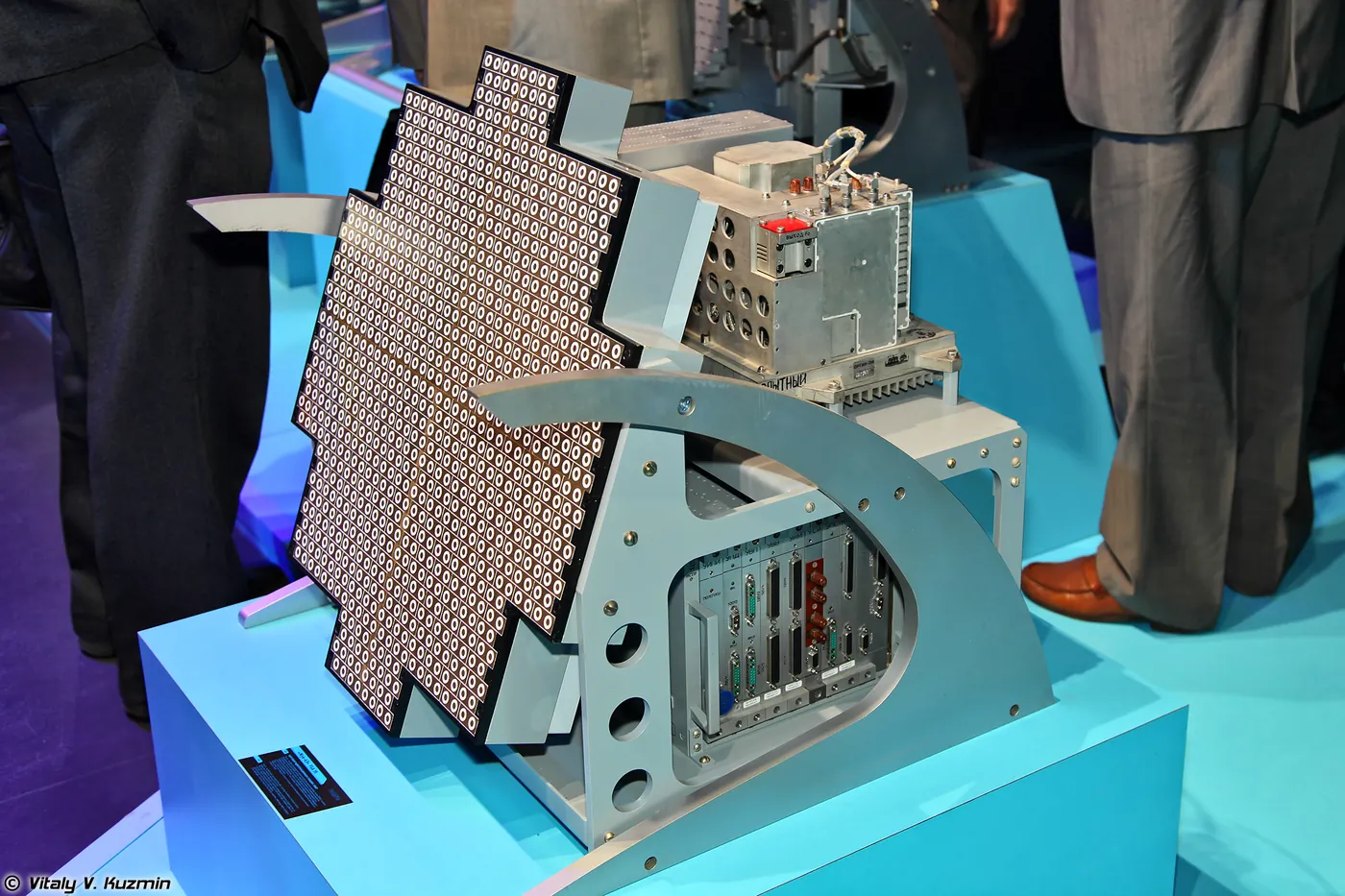
The distributed Byelka suite adds side-looking and L-band arrays for counter-stealth cueing, an ambitious architecture on paper.
Low production rates and an unproven combat record against peer air defenses keep its real-world standing modest.
Key Specifications
Architecture
Multi-array N036 suite
Band
X + L-band cheek arrays
Detection range
~130-400 km (claimed)
Platform
Su-57, MiG-35
T/R modules
~1,500 (main array)
Status
Limited service
Technical Comparison Table
System
Origin
Key Spec
Score
AN/APG-81
United States
1,100+ F-35 worldwide
94.0/100
AN/APG-79
United States
~150 km (1 m²)
83.0/100
AN/APG-83 SABR
United States
~1,000 GaN, 55 cm aperture
82.4/100
RBE2-AA
France
>200 km class
82.2/100
AN/APG-82(V)1
United States
>200 km class
81.8/100
Captor-E (ECRS Mk1)
United Kingdom / Germany / Italy / Spain
~200° via repositioner
79.4/100
AN/APG-77(V)1
United States
~1,956 GaAs modules
77.0/100
KLJ-7A
China
>1,000 (600 mm aperture)
70.0/100
MURAD 100-A
Türkiye
Full GaN solid-state
63.2/100
Zhuk-AE / Byelka (N036)
Russia
Multi-array N036 suite
59.4/100
Operating Nations
System
Operators
AN/APG-77(V)1
United States
AN/APG-81
United States, United Kingdom, Italy, Netherlands, Norway, Israel, Japan, Australia, and other F-35 partners
AN/APG-82(V)1
United States; export with F-15EX/F-15QA
Captor-E
Germany, United Kingdom, Kuwait, Qatar
RBE2-AA
France, India, UAE, Egypt, Qatar, Greece, Croatia
AN/APG-83 SABR
United States, Taiwan, Bahrain, Slovakia, Bulgaria, and other F-16V users
MURAD
Türkiye
Frequently Asked Questions
Which fighter AESA radar is the best in 2026?
For overall impact the AN/APG-81 leads, because it equips the 1,100-plus-strong F-35 fleet and delivers unmatched sensor fusion across air-to-air, mapping and electronic-attack modes. The F-22’s APG-77 retains the longest raw detection range, but its tiny, export-banned fleet limits its broader influence.
What makes AESA radars better than mechanically scanned radars?
AESA arrays steer the beam electronically across hundreds of transmit/receive modules, enabling near-instant beam agility, simultaneous multi-target tracking, low-probability-of-intercept emissions, high jam resistance and graceful degradation if individual modules fail.
Why does gallium nitride (GaN) matter for these radars?
GaN transmit/receive modules handle far higher power densities and run more efficiently than older gallium-arsenide parts, translating into longer detection range, more thermal headroom and better reliability. By 2026 GaN has become standard on systems such as the APG-82, APG-83 and Turkey’s MURAD.
Where does Turkey’s MURAD radar stand among these systems?
MURAD is the newest entrant: a fully indigenous GaN AESA already flight-tested on the AKINCI and KIZILELMA, with a larger 600-A variant slated for the KAAN fighter. Technologically it is highly modern, but its combat record and export base are still forming, so it ranks on potential rather than installed scale.
Which AESA radars are realistically exportable?
The APG-81 (with the F-35), APG-83 (with F-16 upgrades), Captor-E, RBE2-AA and KLJ-7A are all actively exported. The APG-77 is not exported at all, reflecting its role on the F-22.