Danish F-35s Land in Greenland for the First Time

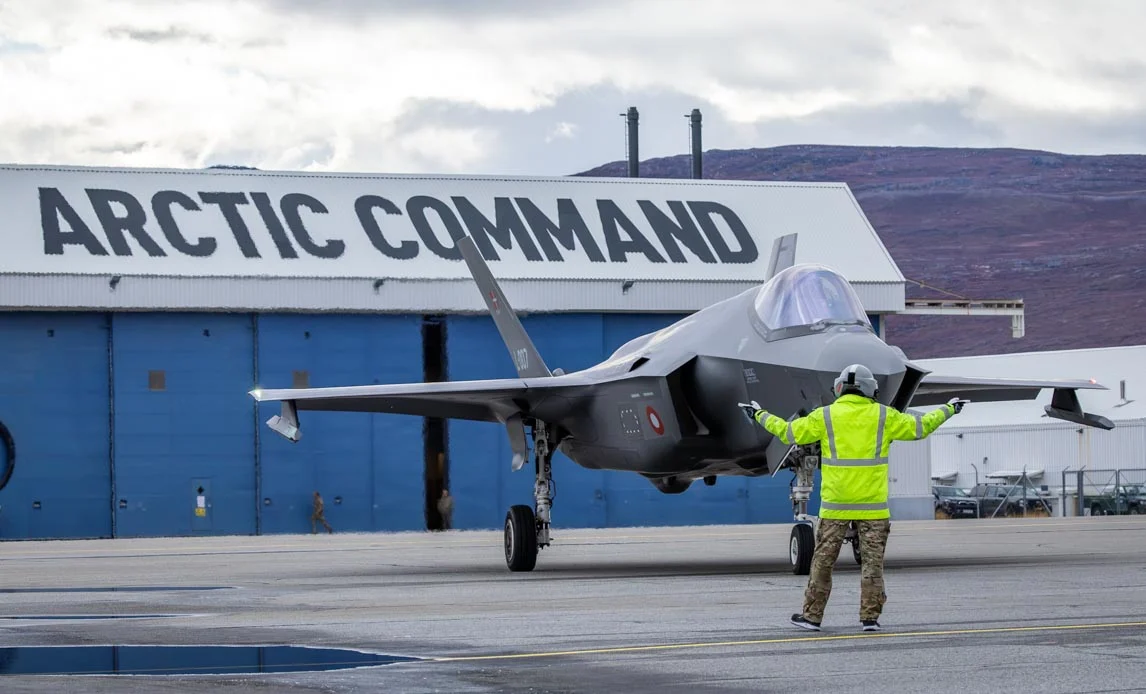
Quick take: Two Royal Danish Air Force F-35As landed at Kangerlussuaq Airport in Greenland on September 16, 2026 — the first time a Danish F-35 has touched down on Greenlandic soil. The landing was part of a multinational exercise with U.S. F-16s and Canadian F-18s under NATO’s Arctic Sentry activity.
What happened
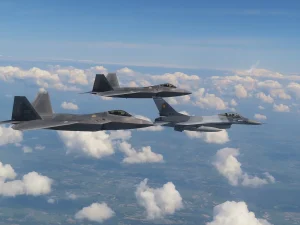
Two Danish F-35As flying out of Keflavik Air Base in Iceland landed at Kangerlussuaq Airport in western Greenland on Wednesday, September 16, 2026. According to the Danish Defence (Forsvaret), it was the first time a Danish F-35 had landed in Greenland — Danish F-16s had previously operated there, but never the newer fifth-generation jet.
Four U.S. F-16s and two Canadian CF-18s joined the same exercise, flying in from Goose Bay in Canada. A French MRTT tanker provided air-to-air refueling, a NATO AWACS aircraft handled airspace coordination, and a Danish Challenger surveillance aircraft supported search-and-rescue coverage.
Why it matters: Arctic Sentry and NATO’s northern flank
The exercise falls under Arctic Sentry, NATO’s activity to strengthen allied presence, surveillance and operational readiness across the Arctic. At a time when Russia is intensifying military activity along its northern sea routes and Washington’s strategic interest in Greenland has grown more pronounced, synchronizing aircraft launched from bases scattered across Iceland, Greenland and Canada under a single operating picture is a concrete test of how mature NATO’s command-and-control is on its northern edge.
One Danish F-35 pilot, call sign PLA, summed up the point of the drill: “We are essentially training our ability to synchronise the efforts of many aircraft from different nations and bases spread over great distances.” That framing captures the real challenge of Arctic operations — not simply fielding aircraft, but fusing dispersed allied elements into one operational picture across vast, sparsely covered terrain.
Why Denmark’s F-35 fleet keeps growing
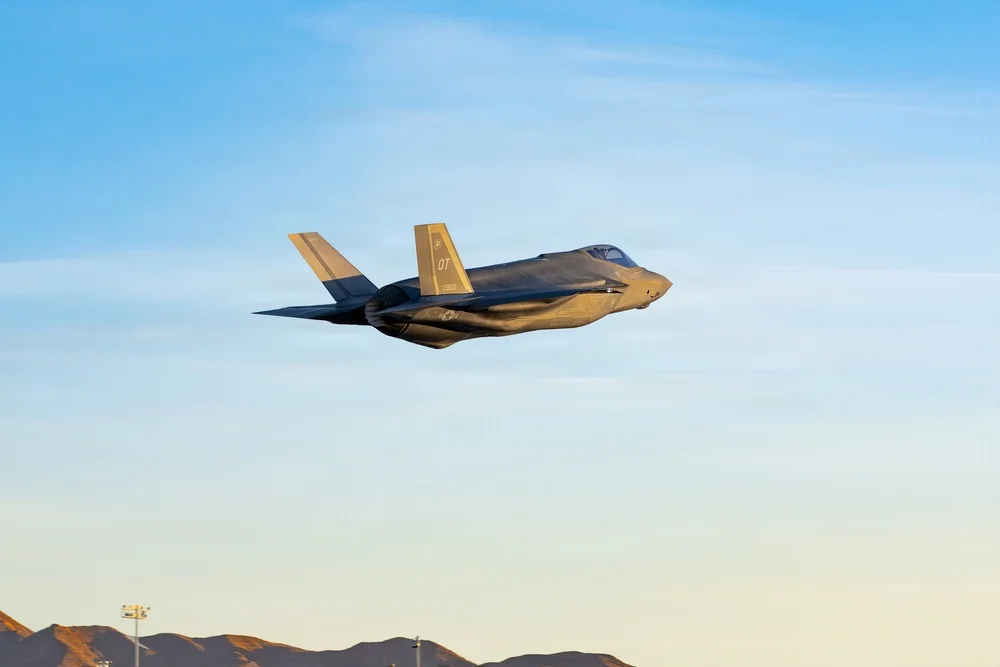
Denmark is in the middle of retiring its F-16s in favor of the F-35A. The jet’s AN/APG-81 active electronically scanned array radar, electro-optic/infrared sensors and electronic-support functions let it operate not just as a strike platform but as a sensor node feeding data across NATO’s networks — a capability that becomes especially valuable in the Arctic’s wide, sparsely covered radar environment.
The Kangerlussuaq landing also tested the Kingdom of Denmark’s ability to project airpower across its broader defense footprint spanning Greenland and the Faroe Islands. Arctic flight planning requires far more complex logistics than standard operations, given harsh, changeable weather and a limited number of usable landing strips.
NATO’s northern flank is gaining weight
The Arctic has climbed steadily up NATO’s agenda in recent years. Russia’s buildup around its Northern Fleet and China’s growing interest in the region as a self-declared “near-Arctic state” are pushing the alliance toward more frequent and larger-scale exercises at its northern edge. Seen this way, the air bridge linking Iceland, Greenland and Canada mirrors the alliance’s Turkey-anchored deterrence architecture on its southern flank — part of a broader NATO effort to build a persistent, visible presence in the north as well.
At a glance
| Date | September 16, 2026 |
| Location | Kangerlussuaq Airport, Greenland |
| Aircraft involved | 2 Danish F-35A, 4 U.S. F-16, 2 Canadian CF-18, 1 French MRTT tanker, 1 NATO AWACS, 1 Danish Challenger |
| NATO activity | Arctic Sentry |
| Significance | First Danish F-35 landing in Greenland |
Sources
- Forsvaret (Danish Defence), “Danske F-35-piloter træner med USA og Canada i Grønland,” 2026 — used to confirm the event and for imagery.
- Army Recognition, “Danish F-35 Fighter Jets Land in Greenland for First Time in NATO Arctic Operation,” September 17, 2026 — used for aircraft numbers and technical detail.
- Defence Industry Europe, “Danish F-35s Make First Greenland Landing During NATO Arctic Sentry Mission,” 2026 — used for the pilot quote and operational context.