GÖKDENİZ Destroys Target in Full Autonomous Mode, Operator Only Authorises Fire

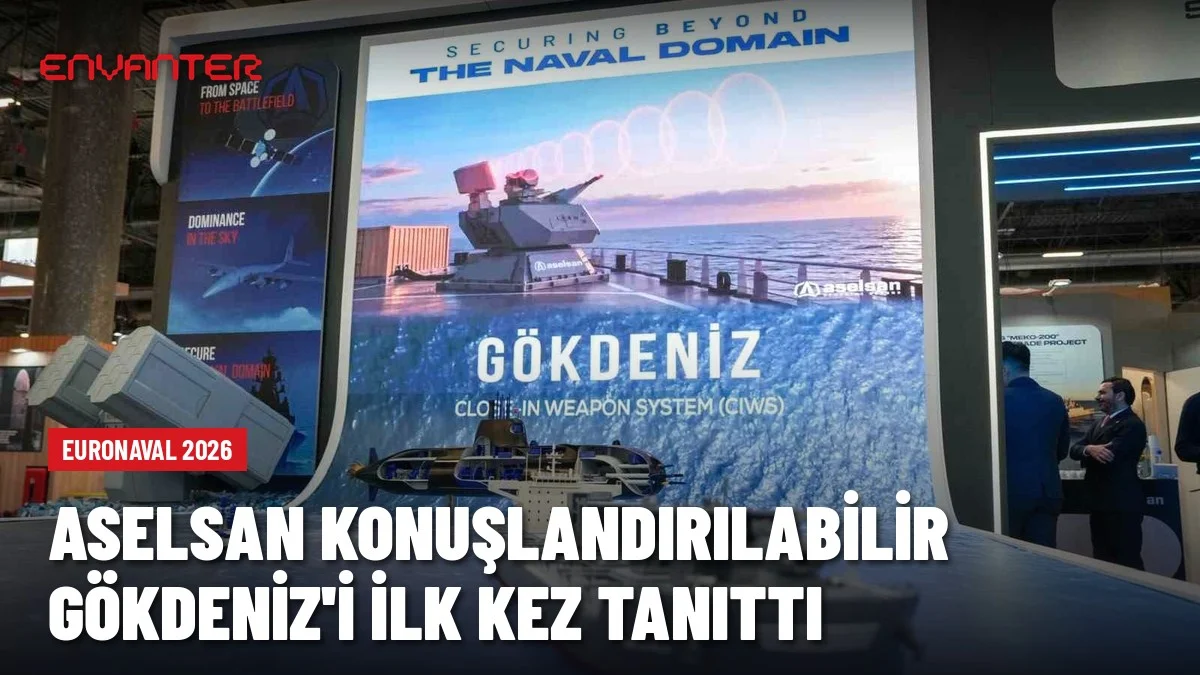
ASELSAN’s GÖKDENİZ close-in weapon system destroyed a fast, sea-skimming target during a live-fire trial conducted off Türkiye’s northern coast, with the company saying the system carried out detection, threat assessment, tracking and prioritisation on its own. The operator’s role was limited to authorising the final shot.
The trial took place aboard a ship moving at 5 to 10 knots. According to ASELSAN, the target was designed to replicate a fast, low-altitude, jet-powered attack profile — a scenario considered among the most demanding tests for ship self-defence systems. GÖKDENİZ destroyed the target in semi-autonomous mode; the company said the system can also run in a fully autonomous mode, in which it can complete the entire engagement sequence against multiple targets without any operator input.
What GÖKDENİZ is
GÖKDENİZ is the naval adaptation of the KORKUT land-based system, developed by ASELSAN under a programme run by Türkiye’s Presidency of Defence Industries (SSB). The twin-barrel 35 mm system is designed as a last line of defence for ships against anti-ship missiles, drones, helicopters and aircraft. It uses the ATOM airburst ammunition jointly developed by ASELSAN and MKE to improve effectiveness against modern aerial threats, and carries its own radar, electro-optical sensors and motion-control units, all developed domestically.
The system previously passed acceptance testing aboard the frigate TCG İstanbul and has been integrated on MİLGEM-class ships. At Euronaval 2026 in France earlier this month, ASELSAN also unveiled a containerised, deployable version of GÖKDENİZ with its own power supply, sensors and launcher, intended to extend air-defence coverage to commercial vessels. A missile-based sibling system, GÖKSUR, was displayed in a similar containerised configuration, and ASELSAN is positioning the pair as a portable air-defence package for ports and merchant ships.
A new data point in the autonomy debate
How far air-defence systems should be allowed to engage targets without a human in the loop remains a live debate across defence industries and armed forces worldwide. Removing human reaction time from the loop improves response speed against fast, numerous threats such as small drones and cruise missiles, but it also keeps the question of final firing authority firmly on the table. ASELSAN says GÖKDENİZ can run in semi-autonomous mode, requiring operator approval, or in fully autonomous mode without human intervention, with the user selecting which mode to use.
The company stresses that automated response time matters in particular against small drones and cruise missiles, given their low radar cross-section and short reaction windows. Automated detection-and-track chains are becoming more common in comparable close-in weapon systems worldwide, though whether the final firing decision stays with a human varies by manufacturer and operator nation.
Limited technical detail disclosed
ASELSAN did not disclose the exact nature of the target, detection range or kill range achieved in the trial, nor the precise date of the test. The company also gave no details on the potential customer profile or technical specifications for the containerised version — details likely to surface later as serial production and export discussions progress.
Sources
ASELSAN, official statement, 24 November 2026 — primary source for this report’s details on the test and technical description.