ORKA Torpedo Released From the Air for the First Time by AKINCI

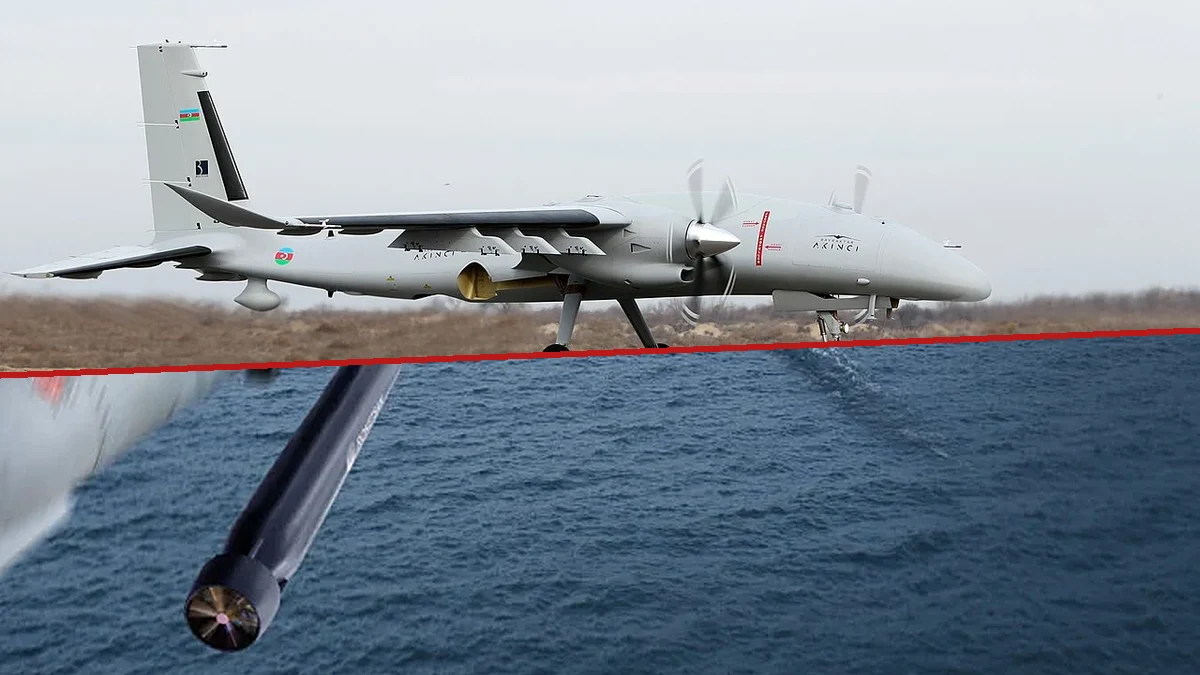
Roketsan’s ORKA light-class torpedo has been released from an aircraft for the first time, dropped from Baykar’s Bayraktar AKINCI unmanned combat aircraft during a trial over the Gulf of Saros in Türkiye’s Tekirdağ province. The test adds an anti-submarine warfare capability to a platform previously known mainly for strike missions.
The AKINCI took off from the Çorlu Flight Training and Test Centre in Tekirdağ, flew to the designated range over the Gulf of Saros, and released the ORKA from an underwing station. The torpedo splashed down at a pre-set point in the water, and the aircraft returned to Çorlu afterwards. Footage of the trial was shared by Baykar chairman Selçuk Bayraktar and the company’s official accounts.
A first for unmanned aircraft
ORKA had previously been tested from surface ships and submarines, platforms its design was built around from the outset. The Saros trial is the first time the torpedo has been released from an aerial platform, and specifically from an unmanned one. According to Baykar, this also makes AKINCI the first unmanned aircraft worldwide known to have released a torpedo of this class in flight.
What ORKA is
ORKA is being developed under a programme run by Türkiye’s Presidency of Defence Industries (SSB) to meet the Naval Forces Command’s requirement for a light-class torpedo. Roketsan is the prime contractor, with ASELSAN as subcontractor. The 324 mm torpedo is designed to be launched against submarines from both surface platforms and aircraft, and carries active and passive sonar seekers with onboard guidance, allowing it to search for and track a target after entering the water.
Roketsan has previously displayed ORKA at exhibitions such as IDEF and UDT alongside AKYA, its heavyweight torpedo intended for submarine-launched strikes against surface targets. Together, the two programmes are part of a broader push to build a domestic torpedo capability spanning surface ships, submarines, unmanned surface vessels and now unmanned aircraft — an area where Türkiye had long relied on foreign suppliers.
AKINCI’s expanding weapons list
Since its first flight in 2019, AKINCI has been used to test a long list of domestic munitions, including TOLUN, GÖZDE, SUNGUR, the İHA-122 and İHA-230 missiles, and ASELSAN’s MGK guidance kit — many of these trials also conducted over the Gulf of Saros because of its proximity to the Çorlu facility. The ORKA trial adds an entirely new category to that list: previously air-to-air and air-to-ground weapons, now an anti-submarine one as well.
Anti-submarine patrol has traditionally been carried out by maritime patrol aircraft, helicopters and surface ships. Adding a long-endurance, comparatively low-cost unmanned aircraft to that mission could extend how long a given stretch of sea, such as the Aegean or the eastern Mediterranean, can be monitored and, if needed, engaged.
No technical details disclosed
Baykar’s statement did not disclose ORKA’s range, release altitude, or the nature of the target used in the test. Roketsan’s earlier exhibition material has cited torpedo ranges varying between roughly 15 and 25 kilometres across different disclosures, a discrepancy likely tied to the programme’s different development stages. No serial-production timeline has been announced either.
The trial is understood to be part of ORKA’s ongoing development and qualification process ahead of entry into naval service, with further tests from additional platforms expected to follow.
Sources
Baykar, official statement and footage (Selçuk Bayraktar and Baykar’s corporate accounts), 23 November 2026 — primary source for the test details and imagery used in this report.