Which Country Fields the Most Armored Personnel Carriers? The 2026 Global Power Rankings


Global Military Power Series · 2026
Which Country Fields the Most
Armored Personnel Carriers?
Ten nations. One mechanized hierarchy. The data behind the world’s most powerful ground forces — ranked from capable to overwhelming.
Countdown #10 to #1
Armored Personnel Carriers
The armored personnel carrier is the workhorse of modern ground warfare — not the star, but the machine that keeps the star alive. While main battle tanks capture headlines, it is the APC fleet that determines how many soldiers can reach a contested objective protected, mobile, and ready to fight. A single APC loss can mean eight infantry lives spared. A nation’s total APC count, therefore, is among the most telling indicators of its capacity for sustained land operations.
GlobalFirepower’s 2026 index now puts hard numbers to that calculus. Ten countries stand above the rest — some through decades of Cold War stockpiling, others through aggressive post-2000 modernization programs. What the rankings reveal is as much about strategic doctrine as it is about procurement budgets. Read on from #10 to #1 — the final number may surprise you more than the gap itself.
#10 — Germany
87,338 armored personnel carriers
Germany enters the top ten at the base of the list but represents something that raw numbers never quite capture: quality-concentrated doctrine. The Bundeswehr has spent the post-Cold War decades deliberately shedding mass in favor of expeditionary agility. Its Boxer MRAP family and Fuchs variants represent some of the most survivable wheeled APC designs in NATO, optimized for out-of-area deployments from the Balkans to Mali.
The 2022 Zeitenwende shift — Berlin’s historic 100 billion euro defense recapitalization — has begun flowing into new procurement. Germany is now fielding upgraded Puma IFVs and expanding its heavy brigade combat teams. With Poland to the east rapidly expanding its own armored inventory and NATO’s eastern flank under renewed pressure, Berlin faces a credibility gap that its current APC numbers underscore. The German industrial base, however, retains the capacity to scale if political will holds.
| Category | Detail |
|---|---|
| GFP Rank | #10 Globally |
| APC Count | 87,338 |
| Key Platform | Boxer, Fuchs, Puma IFV |
| Alliance | NATO |
Germany sits at the threshold — its neighbor Italy trails by the narrowest margin in the entire top ten. How close is too close?
#9 — Italy
87,364 armored personnel carriers
Italy and Germany are separated by just 26 vehicles in the 2026 GFP count — the tightest margin anywhere in this top ten. That statistical tie masks a fundamental doctrinal difference: Italy has historically maintained a more substantial standing armored force for Mediterranean and North African contingencies, operating the well-regarded Dardo IFV and VBM Freccia alongside aging M113 variants inherited from decades of NATO standardization.
Rome’s geography makes APCs strategically urgent in a way Berlin’s doesn’t — any major regional contingency in Libya, the Sahel corridor, or the Balkans would likely require Italian mechanized contributions. The Esercito Italiano has pushed for the Lynx and Centauro II programs to replace aging platforms, but funding gaps under Italy’s chronic defense budget constraints have slowed modernization. Italy’s APC edge over Germany is effectively symbolic; operationally, readiness rates and training cycles determine the real delta.
| Category | Detail |
|---|---|
| GFP Rank | #9 Globally |
| APC Count | 87,364 |
| Key Platform | Dardo IFV, VBM Freccia, M113 |
| Alliance | NATO |
With Italy and Germany effectively tied at the base, the next entrant breaks the pack open — and it comes from an island nation with global ambitions.
#8 — United Kingdom
94,064 armored personnel carriers
At 94,064 APCs, the British Army fields one of the most technically refined — if numerically modest by global standards — mechanized forces on Earth. The Warrior IFV and the newer Ajax reconnaissance vehicle represent decades of engineering investment, while the Bulldog (upgraded FV432) continues to serve in support roles. The British Army’s APC count benefits from a broad definition that includes the various Mastiff, Ridgback, and Husky protected patrol vehicles that proved indispensable in Afghanistan and Iraq.
Post-Brexit force restructuring has created both risks and opportunities: the Army’s Future Soldier program aims to concentrate armored capability into fewer, better-equipped brigades while offloading legacy fleets. Critics note that the net effect reduces deployable armored mass even as the threat calculus on NATO’s eastern flank intensifies. For a nation that once fielded the world’s first tanks, the trajectory is being watched with considerable interest — and some anxiety — within the alliance.
| Category | Detail |
|---|---|
| GFP Rank | #8 Globally |
| APC Count | 94,064 |
| Key Platform | Warrior IFV, Ajax, Mastiff |
| Alliance | NATO / Five Eyes |
The UK’s count edges past its European allies — but the country directly above it on this list is a NATO member running an entirely different kind of race: one built on indigenous production capacity.
#7 — Turkey
98,193 armored personnel carriers
Turkey’s APC count of 98,193 is not just a number — it is a testament to one of the most ambitious defense industrialization programs in the world. The Turkish Land Forces (Kara Kuvvetleri) operate the domestically produced KIRPI MRAP, ACV-15, and ARMA 8×8, while the next-generation Kaplan MT tracked APC and the Tulpar IFV represent programs that have broken Turkey’s dependence on Western supply chains in the most operationally critical category of ground equipment.
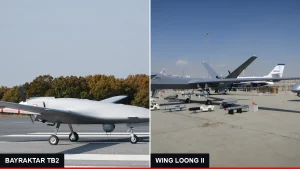
Turkey’s strategic environment demands this scale: a 2,600km southern border touching Syria and Iraq, NATO’s longest non-Russian land frontier, active operations across three theaters, and a doctrine that requires forward presence in Northern Syria, Northern Iraq, and Libya simultaneously. The KIRPI — proven in dozens of cross-border operations — has become a flagship export success, marketed alongside the TB2 Bayraktar drone as proof of the Turkish defense ecosystem’s maturation. BMC, Otokar, FNSS, and Nurol Makina have collectively created a domestic APC industrial base capable of sustaining attrition at scale — a capability that only a handful of nations on Earth possess. The Altay MBT program and T-155 Fırtına self-propelled howitzer complement the APC fleet in a fully indigenous combined-arms vision that was unthinkable two decades ago. The KAAN fifth-generation fighter and MILGEM corvette program further illustrate Turkey’s broad defense self-sufficiency drive.
| Category | Detail |
|---|---|
| GFP Rank | #7 Globally |
| APC Count | 98,193 |
| Key Domestic Platforms | KIRPI MRAP, ARMA 8×8, Kaplan MT, Tulpar IFV |
| Complementary Systems | Altay MBT, T-155 Fırtına, KAAN 5th-Gen Fighter, MILGEM Corvette |
| Alliance | NATO (2nd largest army) |
Turkey breaks the 98,000-vehicle ceiling with a fully indigenous supply chain behind it — but the power building above it on this list operates at a completely different financial and demographic scale. France enters next.
#6 — France
110,784 armored personnel carriers
France’s 110,784 APC count reflects a European power with global force-projection ambitions and the doctrine to back them. The Armée de Terre has undergone a fundamental recapitalization through the Scorpion program — arguably the most ambitious land forces modernization in Europe — replacing aging AMX-10P IFVs and VAB wheeled APCs with the new Griffon, Jaguar, and Serval platforms that network every vehicle into a shared battlefield data environment.
France’s APC doctrine is shaped by its unique strategic culture: a nuclear-armed permanent member of the UN Security Council that also maintains the largest military presence in Africa of any European power. The Opération Barkhane template — small, fast-moving mechanized columns operating in desert terrain — has driven French APC procurement toward wheeled platforms with high strategic mobility. With the Sahel footprint shrinking after 2023 political reversals, Paris is reorienting forces back toward NATO’s high-intensity threat environment, where the Griffon’s network-centric capabilities will need to prove their worth against peer-competitor armor.
| Category | Detail |
|---|---|
| GFP Rank | #6 Globally |
| APC Count | 110,784 |
| Key Platform | Griffon, Jaguar, Serval (Scorpion Program) |
| Alliance | NATO / Nuclear Power |
France clears 110,000 vehicles — but the next entrant doesn’t have a centuries-old strategic culture to lean on. It has something more modern: a defense procurement machine running at full speed for twenty years.
#5 — South Korea
117,460 armored personnel carriers
South Korea’s presence in the global top five is the direct product of geography and existential threat. With an armistice line — not a peace treaty — separating Seoul from a nuclear-armed adversary just 55 kilometers to the north, the Republic of Korea Army has for seven decades maintained one of the highest ground force densities per capita on Earth. The KAAV amphibious assault vehicles, K21 infantry fighting vehicles, and K200 tracked APCs form the backbone of a mechanized force designed for one primary scenario: a rapid mechanized assault by North Korean ground forces across mountainous, channeled terrain.
What sets South Korea apart from its peers at this tier is the export dimension. Hanwha Defense’s AS21 Redback and K21 have competed for — and in Poland’s case, won — some of the largest APC contracts in NATO history. Seoul has effectively transformed its own threat-driven procurement into a global defense export platform, financing the next generation of its own armored fleet through foreign military sales. No country in this top ten has as efficiently converted defensive necessity into industrial advantage as South Korea has over the past decade.
| Category | Detail |
|---|---|
| GFP Rank | #5 Globally |
| APC Count | 117,460 |
| Key Platform | K21 IFV, K200 APC, KAAV, AS21 Redback |
| Alliance | US-ROK Alliance (USFK) |
South Korea breaks 117,000 — and now the list shifts gear entirely. The next three entries are great powers whose APC fleets are instruments of strategic ambition, not just border defense.
#4 — Russia
126,512 armored personnel carriers
Russia’s 126,512 APC count — fourth in the world — requires a critical caveat that the 2026 figure cannot fully encode: the ongoing war in Ukraine has inflicted documented losses across hundreds of BMP-1/2/3 infantry fighting vehicles, BTR-80/82 APCs, and MT-LB multipurpose tractors that have burned on Ukrainian highways and in fortified tree lines across Donetsk and Zaporizhzhia. Open-source intelligence trackers including Oryx have documented thousands of confirmed armored vehicle losses since February 2022, representing a sustained attrition that Russia’s defense-industrial complex has partially — but not fully — offset through accelerated production and mobilization of stored Soviet-era stocks.
The BMP-3 and the newer Kurganets-25 and Boomerang platforms represent Moscow’s generational APC modernization ambitions, both of which have appeared in Ukraine in limited numbers. The broader lesson from the conflict — that mass still matters, that APC losses at scale can strip entire brigades of their maneuver protection within weeks — has reshaped armored doctrine discussions in every military on this list. Russia’s count is still formidable by any measure; how much of it is combat-ready in 2026 remains one of the most consequential unanswered questions in global security.
| Category | Detail |
|---|---|
| GFP Rank | #4 Globally |
| APC Count | 126,512 |
| Key Platform | BMP-3, BTR-82A, Kurganets-25, MT-LB |
| Status Note | Significant combat losses since 2022; exact readiness uncertain |
Russia holds fourth — but the three powers above it have never deployed their APC fleets in a peer-on-peer war of attrition. Their numbers remain theoretical. At #3, we enter a tier of continental-scale ownership with continental-scale ambitions.
#3 — China
152,040 armored personnel carriers
China’s People’s Liberation Army Ground Force fields 152,040 armored personnel carriers — a number that reflects the PLA’s transformation from a massive but under-equipped Cold War land force into a mechanized, network-enabled combined-arms machine. The ZBD-04A infantry fighting vehicle, ZBL-09 wheeled APC, and the ZBD-05 amphibious assault vehicle are the core of a fleet that has been comprehensively modernized over the last fifteen years under the CMC’s “informatized warfare” directive.
China’s APC count is shaped by a doctrine that balances three distinct scenarios: large-scale continental operations against a near-peer land adversary, rapid reaction across the Himalayas and Xinjiang, and — most critically for the Indo-Pacific balance — amphibious assault capability against Taiwan. The ZBD-05’s amphibious performance and the PLA Marine Corps’ expansion have been tracked with particular attention by US Pacific Command and Taiwan’s defense establishment. At 152,040, China sits comfortably above Russia and below only India and the United States — the two powers its strategic planners benchmark themselves against most intently.
| Category | Detail |
|---|---|
| GFP Rank | #3 Globally |
| APC Count | 152,040 |
| Key Platform | ZBD-04A, ZBL-09, ZBD-05 Amphibious |
| Strategic Focus | Taiwan Strait, Himalayan corridor, continental Asia |
China’s 152,040 is remarkable — but it is outmatched. The country at #2 has more armored vehicles than China and Russia combined for a reason that goes back to 1947.
#2 — India
163,554 armored personnel carriers
India’s 163,554 armored personnel carriers place it second in the world — a staggering total that reflects a unique strategic environment: two nuclear-armed adversaries on shared borders (Pakistan to the west, China to the north and east), a 15,000-kilometer defense perimeter, and an army that has historically maintained mass as an explicit force planning principle. The Indian Army’s BMP-2 Sarath (license-produced), OFB APC variants, and the newer Wheeled Armored Platform (WhAP) program serve a force structured around the concept of rapid mechanized thrusts to create facts on the ground before international intervention.
India’s remarkable APC count is increasingly backed by a domestic production base that New Delhi has aggressively built under the “Make in India” defense initiative. The Ordnance Factory Board’s consolidation into Defense Public Sector Undertakings and the opening of defense corridors in Uttar Pradesh and Tamil Nadu represent a strategic bet that India can sustain its own armored fleets through conflict without relying on foreign resupply — the lesson it took from the 1965 and 1971 wars with Pakistan. With the Futuristic Infantry Combat Vehicle (FICV) program now in competitive trials, India’s APC fleet is at an inflection point between mass and modernity. The next decade will determine whether New Delhi can thread that needle.
| Category | Detail |
|---|---|
| GFP Rank | #2 Globally |
| APC Count | 163,554 |
| Key Platform | BMP-2 Sarath, OFB APC, WhAP, FICV (in trials) |
| Border Context | Pakistan (west) + China (north/east) two-front posture |
India’s 163,554 places it above every other nation on Earth — except one. The country at #1 doesn’t just lead this list. It leads it by a margin that defies conventional military comparison.
#1 — The World’s Largest APC Fleet
United States of America
409,660
armored personnel carriers — 2026 GFP
Four hundred and nine thousand, six hundred and sixty. Read that number slowly. The United States fields more armored personnel carriers than the next two countries on this list — India and China — combined. It outpaces third-ranked China by nearly 2.7 to one. It outnumbers the entire bottom half of this top ten combined. The gap between #1 and #2 (245,106 vehicles) is itself larger than the entire APC fleet of every other nation on this list except India.
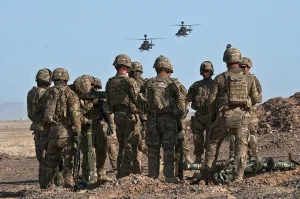
The US Army and Marine Corps APC ecosystem is built around the M2/M3 Bradley Infantry Fighting Vehicle — one of the most combat-proven IFVs in history, with confirmed kills from Operation Desert Storm through the 2003 Iraq campaign and ongoing deliveries to partner nations in Ukraine. The M113 family, though aging, continues to serve in thousands of configurations across the active force, National Guard, and reserve component. The Stryker family — now in its fifth-generation upgrade cycle — provides the wheeled APC layer that enables the Army’s Stryker Brigade Combat Teams to deploy globally within 96 hours.
Behind the headlines lies the deeper story: the United States maintains this fleet across multiple tiers of readiness. Pre-positioned equipment sets in Europe (POMCUS sites in Germany, Poland, Belgium), the Pacific (South Korea, Guam), and the Middle East (Kuwait, Qatar) mean that American APCs are already forward-deployed on the ground in every strategic theater before a single soldier boards a transport aircraft. This global distribution of pre-positioned armored vehicle sets effectively multiplies US operational reach beyond what the raw count suggests.
The Optionally Manned Fighting Vehicle (OMFV) program — the Army’s effort to replace the Bradley with a next-generation IFV featuring AI-assisted target acquisition, active protection systems, and hybrid-electric drive — is the most expensive ground vehicle program currently in competitive development. General Dynamics and Rheinmetall (as American Rheinmetall Vehicles) have submitted competing designs, with the winner set to reshape the US armored fleet well into the 2040s. Whatever that platform turns out to be, it will enter a fleet architecture that no adversary currently has the productive capacity to match.
| Category | Detail |
|---|---|
| GFP Rank | #1 Globally — by enormous margin |
| APC Count | 409,660 |
| Key Platforms | M2 Bradley IFV, Stryker (8 variants), M113, AMPV, JLTV |
| Next-Gen Program | OMFV (Optionally Manned Fighting Vehicle) |
| Pre-Positioned | Europe, South Korea, Kuwait, Qatar, Guam |
| Lead over #2 (India) | +246,106 vehicles |
Comprehensive Analysis
What the APC Rankings Tell Us About the Global Military Balance
The ten nations in this ranking account for an estimated 85 percent of the world’s total armored personnel carrier inventory — a stunning concentration of mechanized power that reflects how few countries have the defense budgets, industrial bases, and strategic requirements to field and sustain large armored fleets. The distribution pattern is as revealing as the rankings themselves.
The mass-versus-modernity tension is visible throughout the top ten. Russia and China hold enormous legacy fleets supplemented by modern platforms, while France and the UK maintain smaller but technically superior inventories. South Korea and Turkey represent the newest industrial model: countries that have translated existential security pressures into domestic APC manufacturing capability that now generates export revenue. This is the template that several other middle powers — Brazil, Australia, Poland — are actively attempting to replicate.
The Ukraine war’s shadow hangs over every number in this list. The conflict has consumed armored vehicles at a rate not seen since World War II, demonstrating that even a country with Russia’s enormous inventory can face acute APC shortages within months of sustained high-intensity combat. Every army in this top ten has updated its attrition modeling and production surge capacity plans in direct response to what the conflict revealed. The lesson: in a peer-on-peer war, APC mass matters — and so does the ability to replace losses.
The drone-APC relationship is the defining doctrinal debate of 2026. The proliferation of inexpensive loitering munitions and first-person-view attack drones has raised fundamental questions about whether large, unprotected APC formations remain viable on a transparent battlefield. Active protection systems (Trophy, Iron Fist, ARENA-M), electronic warfare integration, and organic counter-drone capabilities are now considered baseline requirements for any APC program — driving up unit costs and, paradoxically, increasing the value of maintaining mass in legacy platforms to absorb attrition.
The American outlier question is worth confronting directly: is a 409,660-vehicle fleet a strategic asset or a legacy burden? The US Army’s force structure reviews have consistently identified the challenge of maintaining, upgrading, and manning such a large armored fleet at a time when operational budgets are finite. Pre-positioned sets solve some of the deployment math but create their own sustainment costs. The OMFV program’s outcome will effectively determine whether the US widens or narrows its lead over #2 India in the decade ahead.
The most underappreciated story in this ranking is Turkey’s position at #7 with a domestically produced fleet. No country in the bottom half of this top ten comes close to matching Ankara’s combination of APC count, proven combat utilization across multiple theaters, and genuine export capacity. For a nation that was heavily import-dependent twenty years ago, the KIRPI and ARMA programs represent a fundamental strategic transformation — and a template that regional powers across the Middle East and Asia are actively studying.
Complete Rankings Table — Top 10 APC Powers (2026)
| Rank | Country | APC Count | Alliance / Status |
|---|---|---|---|
| #1 | United States | 409,660 | NATO / Global |
| #2 | India | 163,554 | Non-Aligned / SCO |
| #3 | China | 152,040 | SCO / PRC |
| #4 | Russia | 126,512 | CSTO (combat losses ongoing) |
| #5 | South Korea | 117,460 | US-ROK Alliance |
| #6 | France | 110,784 | NATO / Nuclear |
| #7 | Turkey | 98,193 | NATO |
| #8 | United Kingdom | 94,064 | NATO / Five Eyes |
| #9 | Italy | 87,364 | NATO |
| #10 | Germany | 87,338 | NATO |
Defense Intelligence
Want More Military Power Rankings?
Follow Envanter Medya for weekly deep-dive rankings on global air power, naval strength, missile arsenals, and defense expenditure — sourced from GlobalFirepower, SIPRI, and IISS.
Frequently Asked Questions
Source: GlobalFirepower 2026 Military Strength Index · Data reflects published GFP 2026 rankings · All figures are GFP estimates and may differ from official national inventories.