



What Is Karel’s 5G Private Mobile Network? Military-Grade 5G for Tactical Operations Explained

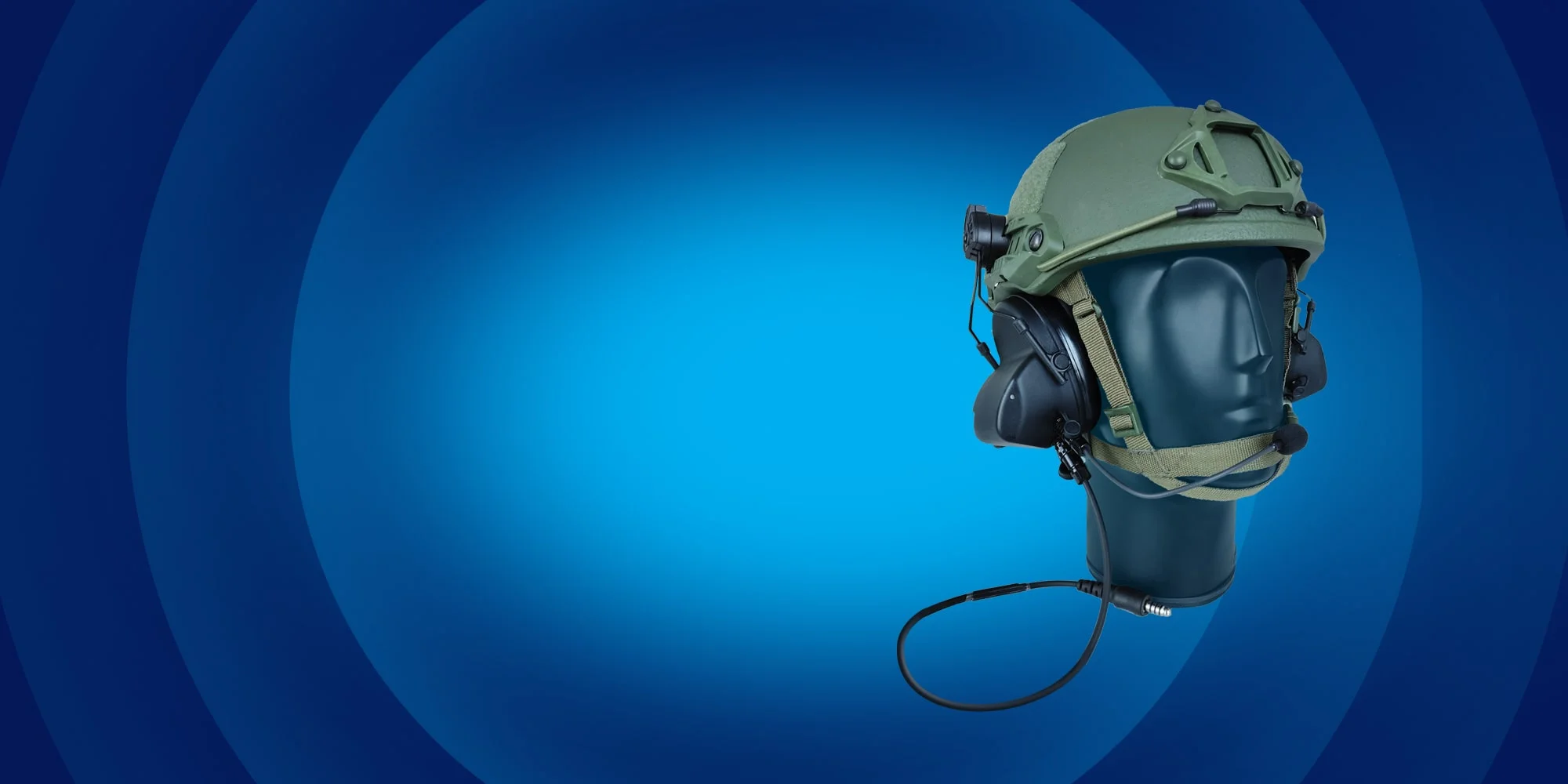
Public 5G networks were not designed for military use — and the gap is not a detail. Shared spectrum, commercial-grade encryption, no guaranteed priority for command traffic, and architecture that routes data through civilian operator infrastructure are disqualifying characteristics for tactical communications. Karel’s 5G Private Mobile Network solution addresses this gap directly: a 5G-performance system with military-grade control, built on a domestically hosted core that does not pass data through commercial carrier infrastructure.
Why private 5G for defence?
The case for private mobile networks in military contexts is established; the question is why upgrade from private LTE — which has served defence and critical infrastructure users adequately for a decade — to private 5G. Three technical advances change the calculus:
- Ultra-low latency (<10 ms): Remote-controlled vehicle operations, drone swarm coordination, and real-time sensor fusion all have latency budgets that LTE cannot reliably meet. 5G URLLC (Ultra-Reliable Low-Latency Communication) can.
- Massive throughput: A single UAV video stream is manageable on LTE. A multi-UAV ISR operation feeding high-definition video plus sensor telemetry plus command-and-control traffic simultaneously is not.
- Network slicing: 5G’s native slicing allows a single physical network to host logically isolated channels at different priority, latency, and encryption profiles — command traffic, logistics updates, and operator voice can coexist without contention.
Karel’s 5G Private Mobile Network — system architecture
Rather than adapting commercial 5G equipment for military environments, Karel’s solution is architected from the outset for defence requirements:
- Domestically hosted core network: User and control planes are hosted within the customer’s own infrastructure. No traffic passes through a third-party carrier. This is a hard requirement for any classification-sensitive installation.
- Tactical deployment flexibility: The system scales from a fixed base installation to containerised or vehicle-mounted configurations — deployable to a forward operating base or a temporary exercise area.
- End-to-end encryption beyond commercial standards: Military-grade cryptographic layers are applied at the application level, independent of the standard 5G air-interface encryption.
- Network slicing for priority management: Command-and-control, logistics, and operational streams run on dedicated slices; a capacity surge in one slice does not degrade the others.
- Integration with existing tactical communications infrastructure: Interoperability with Karel’s broader communications stack (switching, radio-link, IP gateways) and compliance with relevant NATO STANAG and national standards.
LTE vs 5G: the tactical case
| Parameter | Private LTE | Private 5G |
|---|---|---|
| Latency | 30–50 ms | <10 ms (URLLC profile) |
| Peak throughput | ~100 Mbps | Multi-Gbps |
| Device density | Limited | Up to 1 million devices/km² |
| Native network slicing | Limited | Standard (3GPP Release 15+) |
| Autonomous vehicle / UAS control | Marginal | Viable |
Target use cases
Karel’s solution addresses several distinct deployment scenarios:
- Smart base / garrison: Consolidating CCTV, access control, logistics tracking, and personnel communications onto a single managed network with sliced priorities;
- Exercise area network: Providing low-latency data connectivity between vehicles, dismounted personnel, and command nodes during field training;
- Critical infrastructure protection: Applying private 5G to ports, airfields, and energy facilities where security segmentation requirements match those of military bases;
- Forward deployment: Standing up a private 5G network at a temporary operational area using containerised or vehicle-mounted base stations.
Karel’s position in the military communications stack
Karel has built its defence communications portfolio vertically. The SRC-GB tactical radio-link provides transport connectivity over tactical distances; the DS200T PBX and associated gateways manage voice switching; the 5G private network provides the mobile data layer above both. This vertical integration positions Karel as a supplier of coherent tactical communications architecture — not a single-product vendor — which is a significant competitive differentiator in defence procurement.
Fielding quantities and specific installation sites are not disclosed in open-source reporting. The system was highlighted at IDEF 2025 under Karel’s “next-generation systems” banner.
Assessment
Private 5G for defence is a technology whose time has arrived — driven by the proliferation of autonomous systems, the growth of ISR data volumes, and the recognition that commercial network slippage in a crisis cannot be managed through operator service agreements. Karel’s solution offers the Turkish Armed Forces a domestically controlled, vertically integrated option that does not depend on foreign core-network infrastructure. For defence procurement officials evaluating next-generation communications programmes, the critical questions are: where does the core run, who controls the slice policy, and can it survive an adversarial electronic warfare environment? Karel’s architecture directly addresses the first two; the third remains, as always, the operational test.
Sources
- Karel Defence — 5G Private Mobile Network: karel.com.tr
- Karel Defence Technologies: karel.com.tr/savunma-teknolojileri
- Karel — IDEF 2025: karel.com.tr
- 3GPP — 5G NR Standards: 3gpp.org
- SSB (Presidency of Defence Industries): ssb.gov.tr