Patriot vs THAAD: Key Differences Explained

Official U.S. Army and Missile Defense Agency descriptions treat Patriot and the Terminal High Altitude Area Defense system as complementary, not interchangeable, elements of integrated air and missile defense. This comparison stays with those official texts, including an official Army Air Defense Artillery journal article published November 1, 2024, and the Missile Defense Agency pages and March 2022 test release it cites. It does not invent intercept-altitude numbers that official pages cited here do not publish, and it does not rank the two systems as “better” or “worse.” Existing English explainers on this site describe each system separately: How does the Patriot air-defense system work? and What is THAAD?.
How official pages describe each system’s job
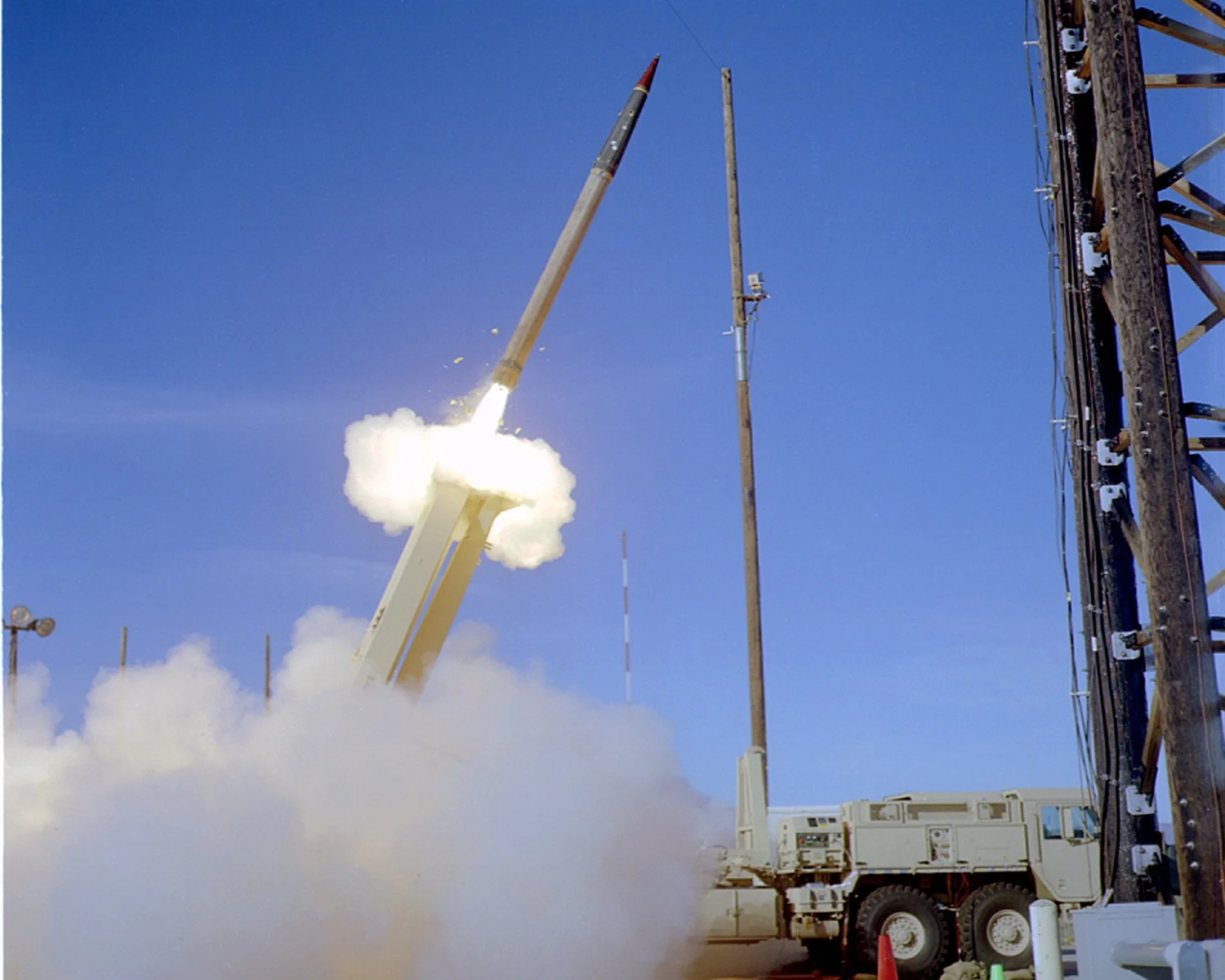
The official Army journal article, citing the Missile Defense Agency, describes THAAD as a globally transportable, rapidly deployable capability that intercepts ballistic missiles during their terminal, or final, phase of flight. It is described there as a defense against short-, medium- and intermediate-range ballistic-missile threats, able to conduct engagements both inside and outside the atmosphere using hit-to-kill technology, in which the interceptor’s kinetic energy destroys the incoming threat. A standard THAAD battery is described as having four primary components: the AN/TPY-2 radar, the fire-control unit, the launchers and the interceptors. The AN/TPY-2 is described, again from official MDA language cited in that article, as distinctive in being able to operate in forward-based mode, to provide tracking and discrimination to other weapon systems, or in terminal mode, collocated with a THAAD battery to guide interceptors.
Patriot, in the same official integration discussion, appears as the lower-tier system whose PAC-3 Missile Segment Enhancement interceptor can be used together with THAAD sensors. A Joint Emergent Operational Need from United States Forces Korea, the official article says, directed the need to integrate PAC-3 MSE capability into THAAD in order to expand battlespace “by combining the kinematic capability of the PAC-3 MSE with the range of the AN/TPY-2,” allowing engagements in both the upper tier and the lower tier and enabling “the warfighter to use the right interceptor for the given threat.” That official operational-need language is the comparison this article uses: different interceptors and sensors for different parts of the terminal fight, not a single winner.
What an official 2022 flight test demonstrated — and what it did not
The Missile Defense Agency, in an official March 29, 2022, release cited in the Army journal article, announced a test of the integration of THAAD and Patriot missile-defense systems. The official Army account of Flight Test THAAD-21 at White Sands Missile Range says the operational unit, B-2 ADA (THAAD), validated software and hardware upgrades that demonstrated the ability to fire PAC-3 MSE interceptors from a Patriot M-903 launcher using the AN/TPY-2 sensor, and that in March 2022 the unit conducted a no-notice engagement of a Black Dagger target representing the kinematics of a short-range ballistic missile. That official test result is a demonstration of integration. It is not a public table of every intercept envelope, and it is not a claim that every battery worldwide had already received the upgrade on the test date.
The same official article reports that, by October 2022, equipment to facilitate those upgrades had been delivered to U.S. THAAD assets in South Korea, originating from the USFK operational need, and discusses a THAAD remote-launcher concept also used in a later official exercise context. Those are official descriptions of U.S. force upgrades and concepts. They should not be read as a complete list of every foreign THAAD operator; official FMS and deployment facts belong in a separate operators explainer where they are taken from official MDA or DSCA texts.
Sources
- 1st Lt. Michael J. McTiernan, “THAAD and Patriot Integration: From Operational Need to Operationalizing,” official Army Air Defense Artillery Journal, November 1, 2024, https://www.lineofdeparture.army.mil/Journals/Air-Defense-Artillery/ADA-Archive/2024-Edition/THAAD-and-Patriot-Integration/
- Missile Defense Agency, official THAAD system page, https://www.mda.mil/system/thaad.html, and official March 29, 2022, test release, “Missile Defense Agency and U.S. Army Test Integration of THAAD and Patriot Missile Defense Systems,” https://www.mda.mil/news/22news0004.html