Turkish Aerospace Facilities: TAI’s Kahramankazan Campus

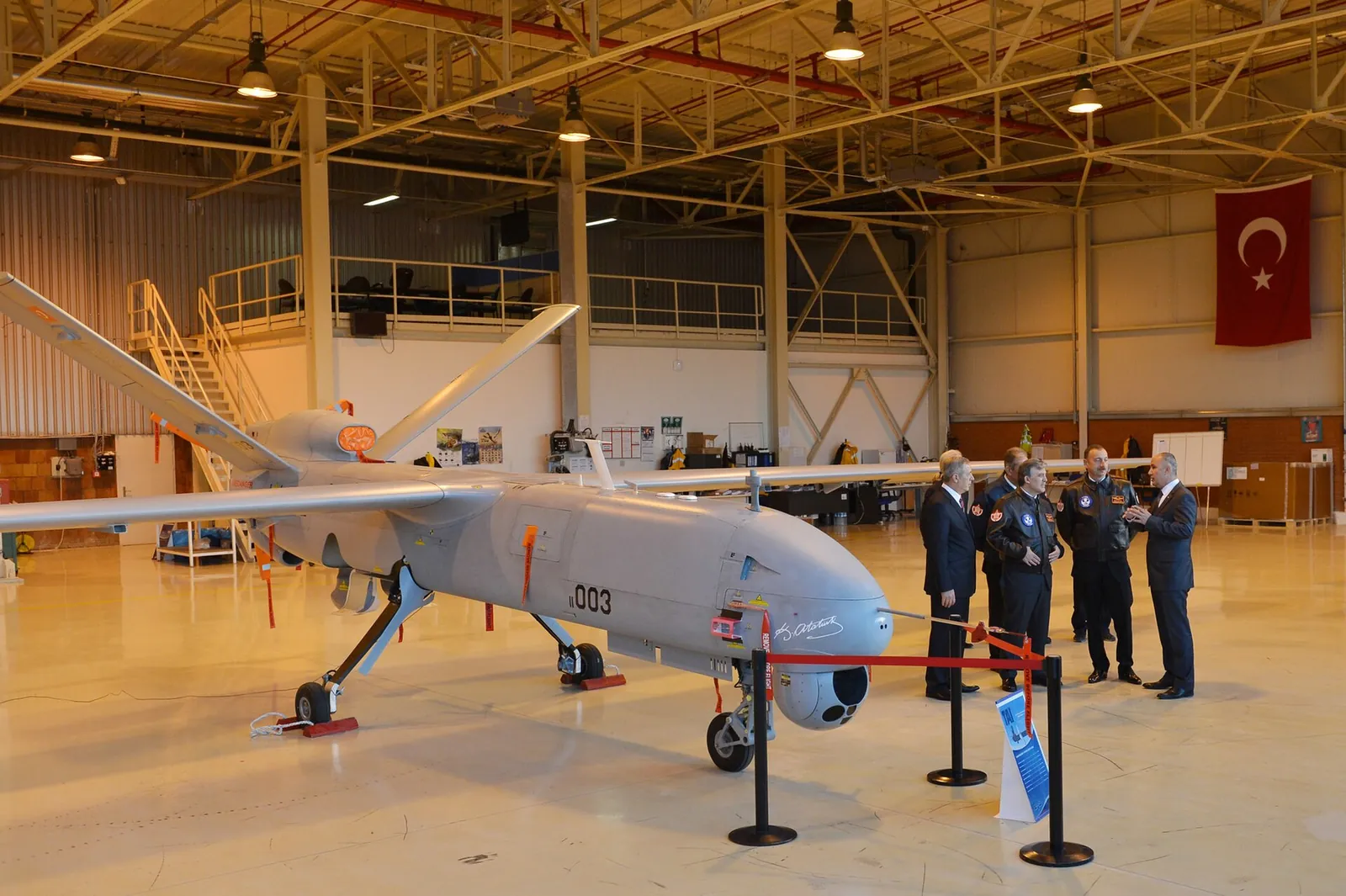
Turkish Aerospace (TUSAŞ / Turkish Aerospace Inc., TAI) concentrates its main factories and facilities in a single large campus in the Kahramankazan district of Ankara. Formerly named Kazan, this site houses design offices, CNC machining and composite production lines, structural and final assembly halls, and flight-test infrastructure. Its location adjacent to Akıncı (Mürted) Air Base gives the campus access to a flight-test runway. Precise figures such as covered production area vary by period and remain partly not officially disclosed.
| Turkish Aerospace Facilities — Quick Facts | |
|---|---|
| Main campus | Kahramankazan, Ankara (formerly Kazan) |
| Location feature | Adjacent to Akıncı (Mürted) Air Base; flight-test runway access |
| On-site functions | Design, machining, assembly, composite production, paint, flight test |
| Manufacturing capabilities | CNC machining, sheet-metal forming, composites, structural assembly |
| Platforms produced | KAAN, HÜRJET, HÜRKUŞ, ANKA/ANKA-3, AKSUNGUR, GÖKBEY, ATAK |
| Space infrastructure | Satellite integration and test (clean-room) capabilities |
| Civil/structural work | Fuselage and composite work packages for Airbus and Boeing |
| Campus size | Varies by period; exact official figure not disclosed |
| CEO / General Manager | Dr. Mehmet Demiroğlu |
Where are Turkish Aerospace facilities? The Kahramankazan campus
Turkish Aerospace’s headquarters and main production campus are located in the Kahramankazan district of Ankara (the district was formerly named Kazan). Most of the company’s workforce and production infrastructure is concentrated in this single integrated site. The campus brings together design and engineering centers, machining and sheet-metal shops, assembly and integration halls, paint and finishing lines, and flight-test infrastructure. This layout allows most of a platform’s journey — from design through final assembly and first flight — to be carried out on the same campus.
The site’s defining feature is its location adjacent to Akıncı (Mürted) Air Base, which gives the campus access to a flight-test runway; aircraft, helicopter and UAV flight tests can be conducted from here. Detailed size figures such as total campus area, covered production area and building count vary from period to period and remain partly not officially disclosed, so exact numbers should be tracked through period-stamped official sources.
What production and capabilities are on the campus?
The Kahramankazan campus hosts a broad range of capabilities spanning the different stages of aerospace manufacturing. The main areas are:
- Design and engineering: design, analysis and program management for aircraft, helicopters, UAVs and space systems.
- CNC machining and sheet metal: machining and forming of metallic structural parts.
- Composite production: manufacturing of carbon-fiber-based lightweight structural parts, used for both military platforms and civil work packages.
- Assembly and integration: structural assembly, final assembly lines and integration of subsystems onto the platform.
- Paint and finishing: surface treatment and pre-delivery preparation.
- Flight test: runway access for pre-flight checks and flight-test campaigns.
Subsystems such as avionics, radar, engines and munitions are not produced by Turkish Aerospace itself; they are supplied by ecosystem partners including ASELSAN, TEI, HAVELSAN and ROKETSAN. On this campus, Turkish Aerospace acts as the platform prime contractor responsible for design and integration.
The following platforms have production and/or assembly lines on the Kahramankazan campus. Production status distinguishes prototype, development and serial-production stages. A prototype stage should not be confused with a serial-production capability.

The scale of the facilities reads more clearly alongside the company’s corporate size. Turkish Aerospace ranked 47th on the Defense News Top 100 (2025) list and reported roughly 2.2 billion dollars in defense revenue; most of its workforce of around 17,000 works at these facilities.
Why are the facilities expanding? The KAAN and HÜRJET effect
Turkish Aerospace’s facilities and production infrastructure have expanded in recent years driven by several major platform programs running in parallel. In particular, the shift from prototype to serial-production preparation for programs such as KAAN (5th-generation national combat aircraft) and HÜRJET (jet trainer) requires investment in new production lines, assembly halls and composite production capacity. With programs like ANKA-3 and GÖKBEY added to these, the capacity of the campus’s production and test infrastructure has been increased. Precise details of this expansion, such as square meters and investment amounts, are not officially disclosed; what has been made public indicates that new facilities and lines have been brought online as part of serial-production readiness. A trade-fair display or ceremony alone should not be taken as proof of operational serial production.
Space, civil and structural production infrastructure
Production on the campus is not limited to military platforms. On the space systems side, Turkish Aerospace has clean-room and integration-test infrastructure for satellite assembly and testing; its structural and integration contributions to work such as the GÖKTÜRK series and İMECE draw on this infrastructure. On the civil and structural work side, the company produces fuselage and structural parts plus composite work packages for Airbus (A350, A320 family) and Boeing (787 and others); this production shares the same industrial infrastructure and composite capability as the military platforms. In this way, the Kahramankazan campus concentrates a wide production range — from combat aircraft and helicopters to UAVs, satellites and civil aircraft structural parts — in a single site. Overseas joint ventures and offices, by contrast, belong under the subsidiaries and partnerships topic; the physical main production is carried out in Turkey at Kahramankazan.
Precise size figures for Turkish Aerospace such as campus area, covered production area and building count vary by period and remain partly not officially disclosed. In this article, the facility location, functions and platforms produced rest on verified information; for exact square meters and investment amounts, period-stamped official sources should be used.
Frequently Asked Questions
Where are Turkish Aerospace’s factories?
Turkish Aerospace’s main factories and facilities are in the Kahramankazan district of Ankara (formerly Kazan). Design, machining, assembly, composite production and flight test are concentrated in this single large campus. Thanks to its location adjacent to Akıncı (Mürted) Air Base, the site has access to its own flight-test runway, allowing most testing to be run from the same campus.
Which aircraft are produced at the Turkish Aerospace campus?
The Kahramankazan campus has production and/or assembly lines for KAAN (the national combat aircraft), HÜRJET, HÜRKUŞ, the ANKA and ANKA-3 and AKSUNGUR unmanned aerial vehicles, and the T625 GÖKBEY and T129 ATAK helicopters. Some platforms are at the prototype or development stage, while others are in serial production.
Does Turkish Aerospace have a flight-test runway?
The campus has access to a flight-test runway thanks to its location adjacent to Akıncı (Mürted) Air Base. This lets pre-flight checks and flight-test campaigns for aircraft, helicopters and unmanned aerial vehicles be run largely from the same site, keeping design, production and testing in close proximity on one integrated campus.
How large is the Turkish Aerospace campus?
Detailed size figures such as total campus area, covered production area and building count vary from period to period and remain partly not officially disclosed. For exact numbers, the company’s period-stamped official sources should be used rather than approximate public estimates, which can differ depending on when and how they were reported.
Why are Turkish Aerospace facilities expanding?
The expansion is driven by the serial-production preparation of programs such as KAAN, HÜRJET, ANKA-3 and GÖKBEY. This transition requires investment in new production lines, assembly halls and composite production capacity. The exact amount and square meters of the investment are not officially disclosed, but new facilities and lines have reportedly been brought online for production readiness.
Does Turkish Aerospace produce civil aircraft parts?
Yes. Using the same industrial infrastructure as its military platforms, Turkish Aerospace produces fuselage and structural parts plus composite work packages for Airbus (A350, A320 family) and Boeing (787 and others). This civil work is an important activity that feeds and sustains the company’s composite and structural assembly capabilities on the same campus.
Does Turkish Aerospace have facilities abroad?
Turkish Aerospace’s physical main production infrastructure is in Turkey, at Kahramankazan in Ankara. Overseas joint ventures, subsidiaries and engineering offices are a separate topic (subsidiaries and partnerships) and should be assessed apart from the main production campus, which remains the company’s core physical manufacturing site.
Sources
- Turkish Aerospace official corporate website — tusas.com
- Presidency of Defence Industries (SSB) — program and facility announcements
- Defense News Top 100 (2025 list) — company ranking and revenue data
- Anadolu Agency / Daily Sabah — Turkish Aerospace facility and program reports (2024-2026)
- Wikipedia — Turkish Aerospace Industries (TAI) article