USAF’s HACM Hypersonic Missile Completes First Release Test Over Australia, as 2027 Production Goal Nears

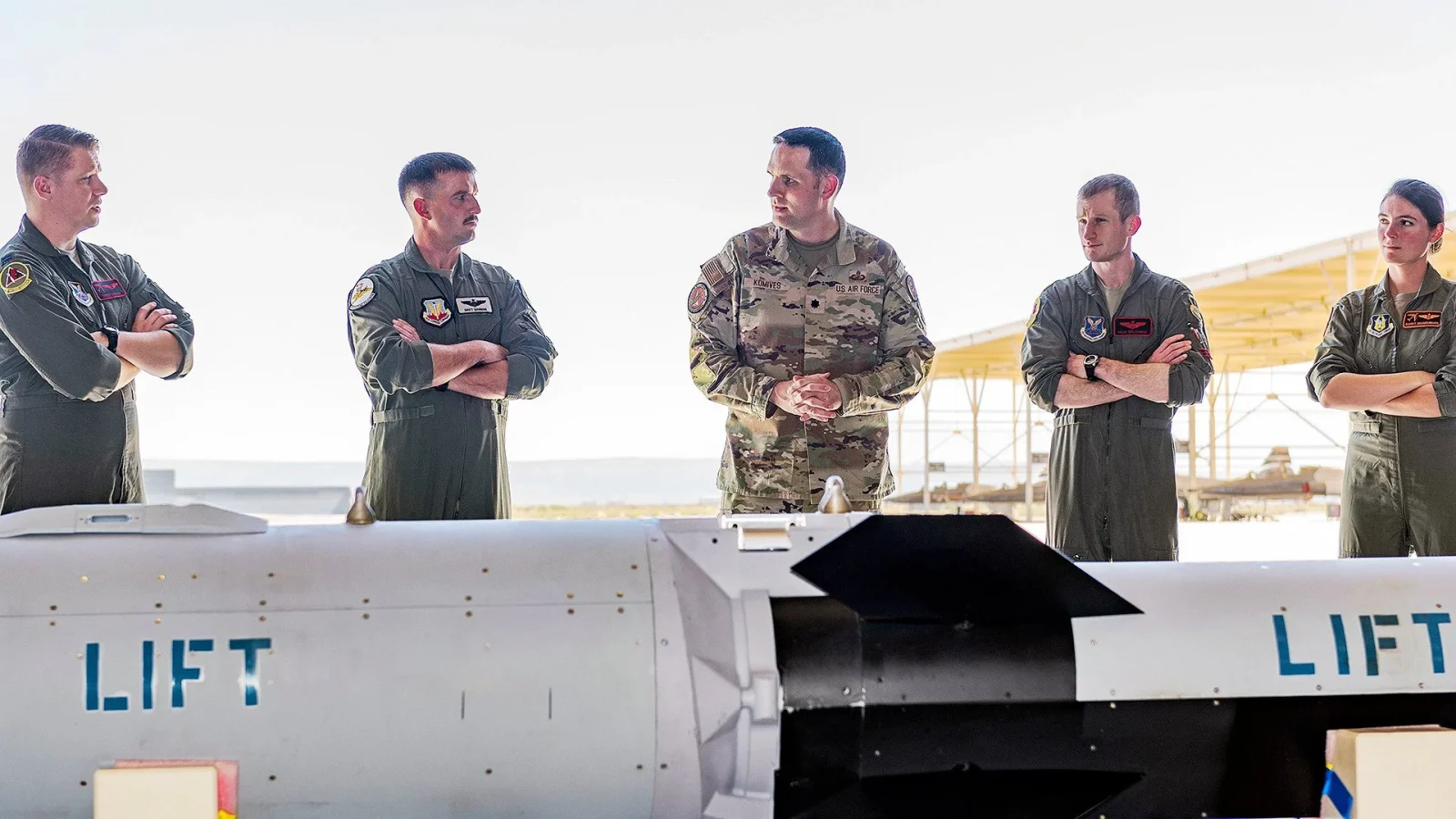
The U.S. Air Force has confirmed that its Hypersonic Attack Cruise Missile, known as HACM, underwent its first release test over a range in Australia. The milestone is distinct from the program’s earlier flight test, which was completed in the second quarter of fiscal year 2026, between January and March, and represents a separate, subsequent step in the testing sequence.
In defense program terminology, a “release test” verifies how a missile separates from its carrier aircraft and behaves aerodynamically immediately after drop, rather than confirming powered, independent flight. Officials have not said whether HACM flew under its own power after release, underscoring that this trial precedes a full performance test rather than substituting for one.
A USAF spokesperson described the test in a statement: «The U.S. Air Force, in partnership with Australia, has conducted a flight test of the Hypersonic Attack Cruise Missile (HACM) as part of our continuous work to advance long-range strike capabilities.» The spokesperson did not disclose the exact location, though prior hypersonic trials in the region point to the Woomera Test Range.
Which aircraft carried and released the missile has not been officially confirmed. The F-15E Strike Eagle is widely expected to serve as the primary launch platform, though the F/A-18F Super Hornet had previously been discussed as a potential test aircraft. No speed, altitude, or range data were released.
HACM is being developed by Raytheon, now operating as RTX, which was selected for the program in 2022, working alongside Northrop Grumman, which is responsible for the scramjet engine. The weapon uses a two-stage design: a rocket booster that accelerates it to the speed needed for the air-breathing scramjet cruise stage to take over. The system carries the official designation AHM-4A.
The program’s schedule has slipped repeatedly. An initial flight test was originally planned for 2024, then pushed to 2025, and ultimately conducted in the second quarter of fiscal year 2026. October’s release test marks the next step in that revised sequence. The total number of planned flight tests has been cut from seven to five, as the Air Force works toward fielding limited production capability before the end of 2027.
The Government Accountability Office warned in July 2026 that the program’s schedule carries “almost no margin” left, a finding that, combined with the reduced test count, points to real risk to the 2027 production timeline.
Both the United States and Australia regard hypersonic weapons as a critical capability for potential high-intensity conflict scenarios in the Pacific. HACM’s air-breathing scramjet design offers advantages in range, speed, and maneuverability compared with ballistic alternatives, with the potential to penetrate air defenses and compress an adversary’s reaction time.
Australia’s role as a test partner reflects the broader defense-industrial cooperation between the two countries, and the choice of an Australian range aligns with a strategy of sharing test infrastructure and data with a close ally.
Taken together, October’s release test represents one of the final pre-production milestones for HACM. Whether the program meets its 2027 production target will depend on the outcome of the remaining four flight tests and how the schedule risks flagged by the GAO are managed going forward.
Sources
- The War Zone (TWZ), “First Release Of USAF’s New HACM Hypersonic Cruise Missile Has Happened Over A Test Range In Australia.” twz.com
- Army Recognition, HACM hypersonic test report. armyrecognition.com