VURAN 4×4: BMC’s Indigenous-Engine MRAP — Specs, Turkish Service and Exports Explained

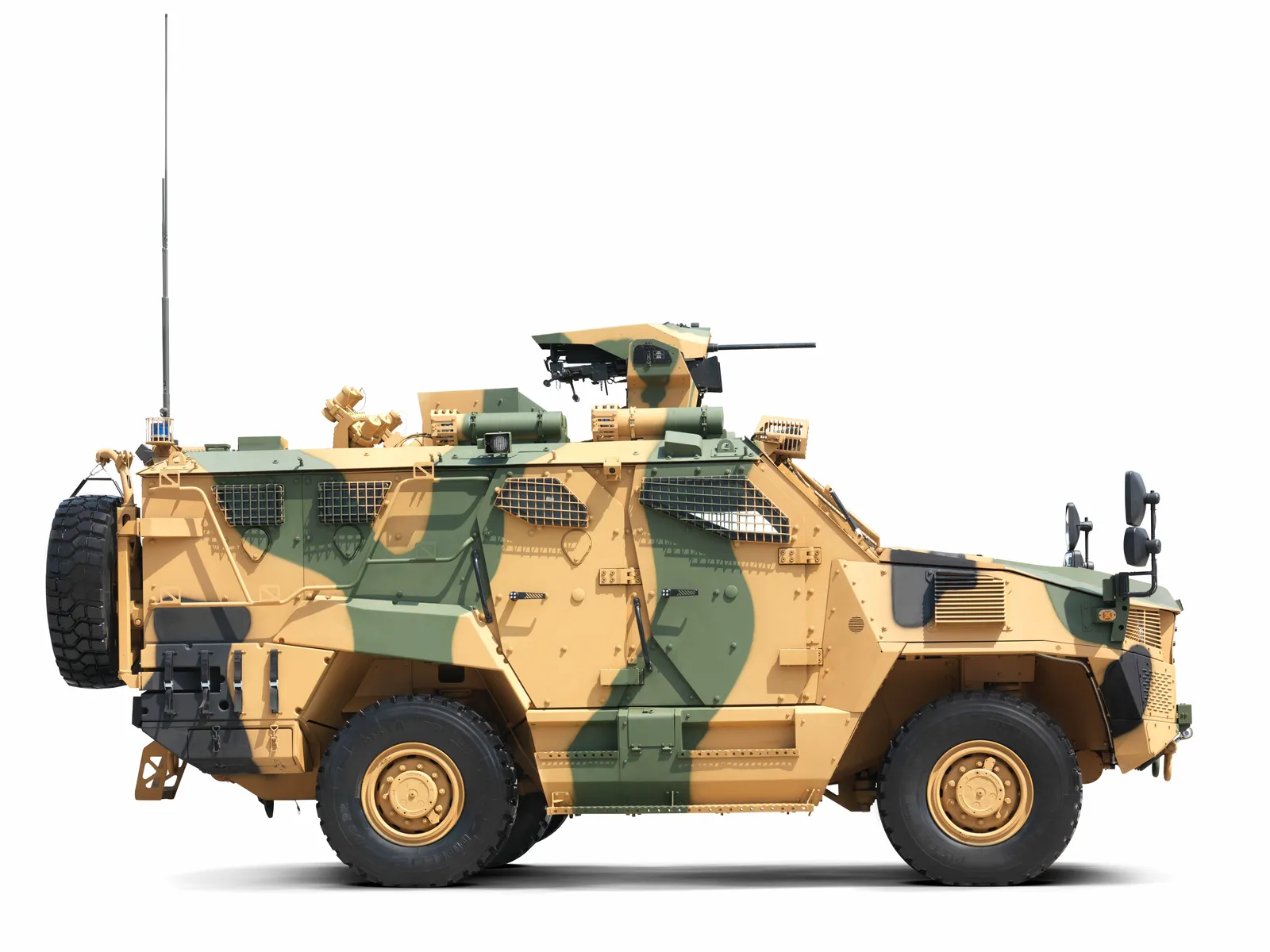
BMC’s VURAN 4×4 has become one of the most widely distributed armored vehicles in Turkish service, and it carries a milestone few Western counterparts can claim: it was the first armored vehicle delivered to Türkiye’s forces with a domestically designed and built engine, BMC Power’s 400 hp TUNA. The Defence Industry Agency (SSB) lists five Turkish users, from the Army to the Coast Guard, and the vehicle has been exported to Georgia, Kosovo and El Salvador.
| Builder | BMC; TUNA engine by BMC Power |
| Turkish users | Land Forces, Gendarmerie, National Police, Navy, Coast Guard (per SSB) |
| Program status | In SSB’s security-vehicles portfolio; in series production |
| Deliveries | First batch to the Army in July 2019; 90 fitted with the indigenous TUNA engine |
| Local content | Indigenous engine and armor; SSB cites ~60% rising to ~95% for this vehicle family |
| Exports | Georgia (46), Kosovo, El Salvador; Tunisia evaluation buy |
What Is VURAN?
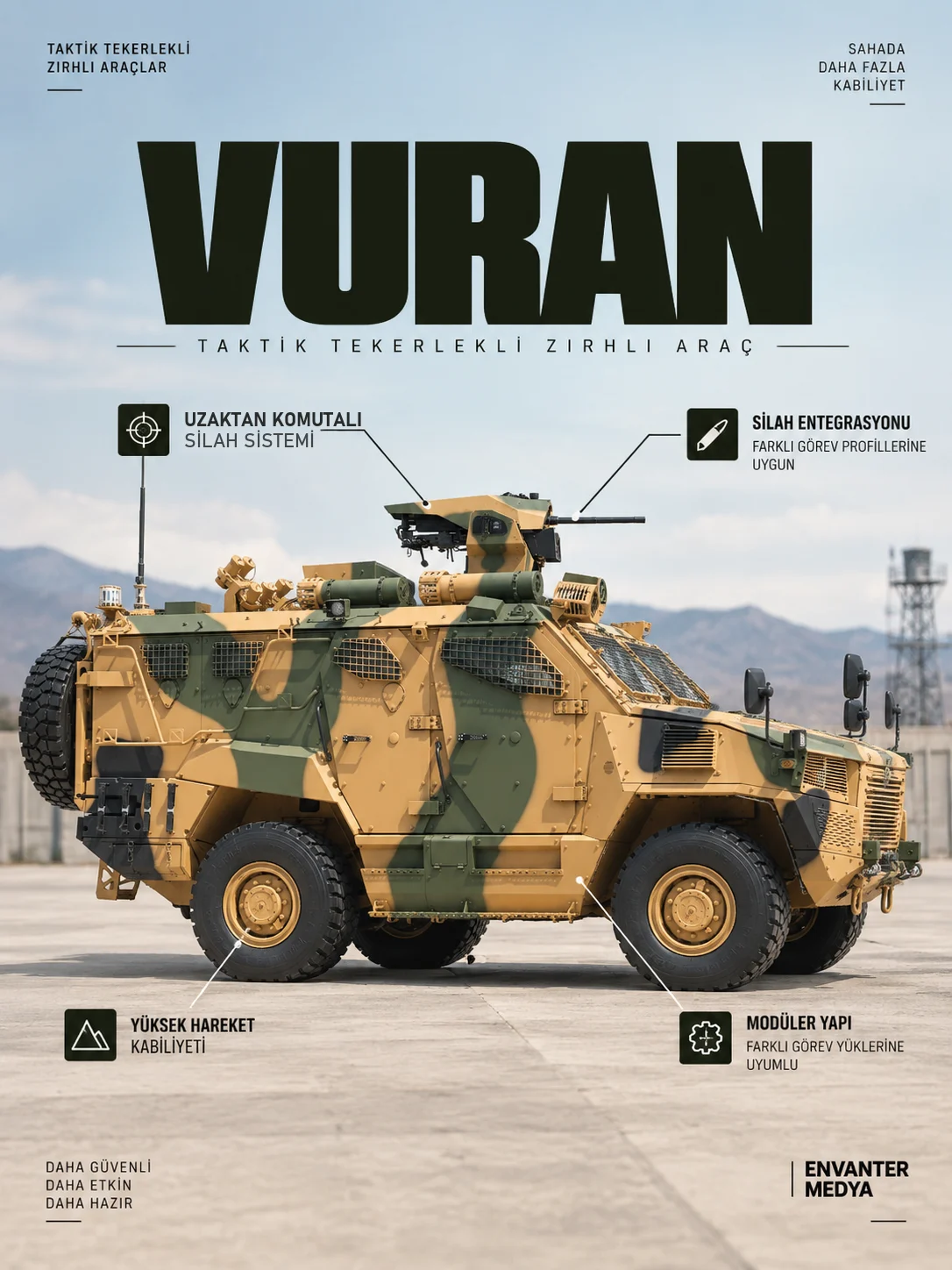
VURAN sits below BMC’s heavier KİRPİ in size, offering MRAP-class protection in a more agile package for patrol, convoy escort, border security and troop transport. Its value lies in the range of weapons it can carry: beyond the baseline armored personnel carrier with an ASELSAN SARP remote weapon station, there are versions with ASELSAN’s 120 mm ALKAR automatic mortar, a 107 mm multiple rocket launcher and the SUNGUR air-defense fit with PORSAV missile pods.
The presence of the Navy and Coast Guard among its users points to base and coastal security roles alongside the Army and Gendarmerie’s frontline missions.
Technical Specifications
| Parameter | Value |
|---|---|
| Type | 4×4 multi-purpose MRAP, monocoque cabin with V-shaped floor |
| Capacity | 9 personnel (manufacturer figure; up to 13 carried in total) |
| Engine | BMC Power TUNA 8.4-liter four-cylinder diesel, 400 hp |
| Range | About 1,000 km at 60 km/h |
| Fuel | 310 liters |
| Ground clearance | About 400 mm |
| Protection | Mine, ballistic and IED protection; reported as STANAG 4569 Level 3 |
| Armament options | ASELSAN SARP RWS, 120 mm ALKAR mortar, 107 mm MRL, SUNGUR air-defense |
Figures come from BMC and open sources and vary by configuration. The combination of a 310-liter tank and a 400 hp engine gives VURAN endurance around 1,000 km, while central tire inflation, automatic fire suppression and shock-absorbing seats reflect lessons from Türkiye’s long counter-IED campaign.
Who Builds It and Program History
BMC is prime contractor and manufacturer; BMC Power develops and builds the TUNA engine. According to Anadolu Agency, the indigenous military engine project began in November 2018. Defence Turkey reports the engine completed 6,500 hours of test-cell running and 140,000 km of field trials, including NATO durability assessments, and series production began in February 2023 at Arifiye, Sakarya.
VURAN was shown at IDEF 2017 and the first batch reached the Turkish Land Forces in July 2019, with 20 vehicles earmarked for border patrol and convoy security. SSB’s September 2026 briefing note from its Land Vehicles Department lists VURAN in its security and logistics vehicles portfolio and flags “indigenous engine / indigenous armor” as its critical subsystems, without publishing contract dates.
Turkish Service and Deliveries
VURAN serves with the Land Forces, the Gendarmerie (including ALKAR-armed mortar carriers), the National Police special operations department, the Navy and the Coast Guard. Of the first 97 TUNA engines produced, 50 went into Army VURANs, 40 into Gendarmerie vehicles and seven were held as spares; BMC subsequently handed over 100 indigenous-engine vehicles, 90 VURANs and 10 KİRPİ IIs, in a single ceremony.
SSB has not disclosed total VURAN deliveries. Open-source compilations cite Army orders above 500 vehicles and a 200-vehicle Gendarmerie order; these figures are not officially confirmed.
Exports
Georgia is the flagship customer: under a 2022 agreement signed with ASFAT, the Georgian Defence Forces received 46 VURANs, the first entering service in February 2024 and the last delivered on June 12, 2024. Kosovo signed for the type in 2021 and took delivery of two 120 mm mortar carriers in late 2022, followed by six more on May 10, 2024. El Salvador operates VURANs with both its army and national civil police, and Tunisia bought vehicles for evaluation, with the export formally recorded in December 2020.
Trade Show Appearances
VURAN was displayed alongside the AMAZON at IDEF 2017 in Istanbul. Since then it has mainly been showcased through Turkish events marking the TUNA engine and ALKAR mortar integrations; a consistent public record of international show appearances is not available.
Local Content and Key Subsystems
SSB’s Land Vehicles Department head said at the TUNA delivery ceremony that local content in this vehicle family had risen from roughly 60 percent in 2018 to about 95 percent, driven by domestically sourced suspension, transfer cases, armor steel and composite armor. ASELSAN supplies the remote weapon stations and mortar system.
Global Counterparts
Comparable vehicles include the Oshkosh M-ATV, the Arquus Bastion and the RG-32 family. The M-ATV is heavier for a similar mission; the Bastion is lighter with less blast protection. VURAN’s differentiator is a sovereign powerpack: where many Western designs rely on imported engines, BMC can offer customers a supply chain insulated from third-country export licensing, alongside heavy weapon options such as a 120 mm mortar on the same hull.
Frequently Asked Questions
Who makes VURAN?
BMC builds the vehicle; BMC Power builds its TUNA engine.
Which Turkish forces use it?
Per SSB, the Land Forces, Gendarmerie, National Police, Navy and Coast Guard.
Does VURAN have a Turkish engine?
Yes. The 400 hp, 8.4-liter TUNA powers 90 VURANs delivered to the Army and Gendarmerie.
Who has bought it abroad?
Georgia (46), Kosovo and El Salvador, with Tunisia purchasing evaluation vehicles.
- SARP: ASELSAN’s Stabilized Remote Weapon Station — Specs, Turkish Service and Exports Explained
- ZAHA: FNSS’s Marine Assault Vehicle — Specs, Turkish Service and Exports Explained
- PALEM: Tekatron’s Tracked Electric UGV — Specs, Turkish Service and Exports Explained
- COBRA II: Otokar’s Amphibious-Capable 4×4 — Specs, Turkish Service and Exports Explained
Featured photo: Presidency of Defence Industries (SSB)
Sources
- SSB Land Vehicles Department program briefing note, September 2026
- BMC – VURAN ürün sayfası
- Anadolu Ajansı – Yerli motorlu VURAN’lar göreve başlıyor
- Defence Turkey – BMC tarafından üretilen 100 adet yerli motorlu TTZA teslim edildi
- Army Technology – BMC delivers Vuran armoured vehicles for Turkish Armed Forces
- Army Recognition – BMC Kirpi, Amazon and Vuran at IDEF 2017
- Army Recognition – Georgia receives Turkish-made BMC Vuran armored vehicles
- Overt Defense – Georgia receives 46 BMC VURAN 4×4
- Wikipedia – BMC Vuran