Military Power of Bahrain: How Many Tanks, Aircraft and Ships Are in the Inventory? (2026)

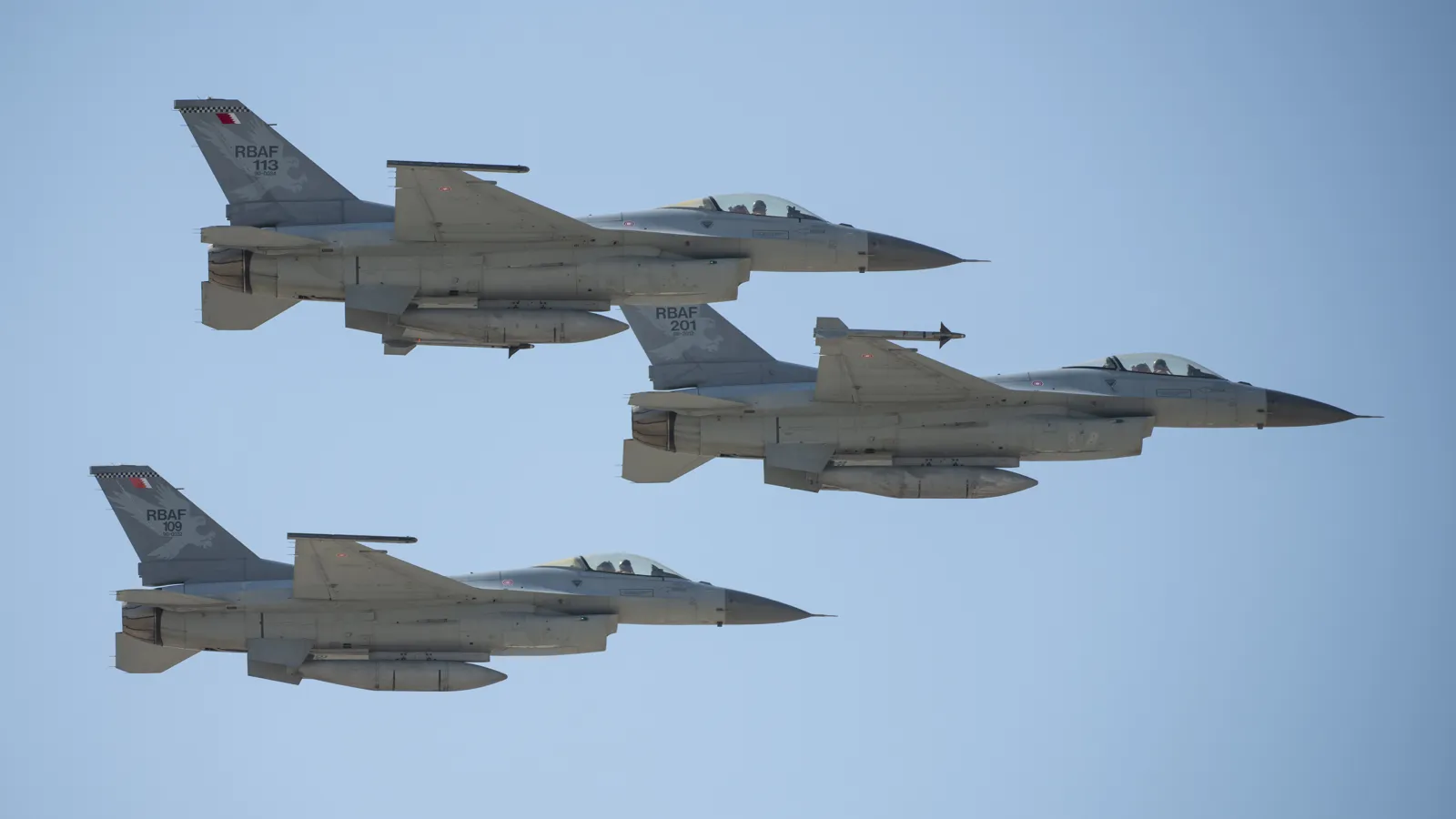
Bahrain’s military inventory shows why one of the smallest Gulf states fields one of the region’s most intensive defence investments. The country is an island hosting Mina Salman Naval Base, home of the US Fifth Fleet, and it builds an army that works inside the American equipment and training chain. The first Gulf country to fly the F-16, Bahrain took delivery of next-generation F-16 Block 70s in 2024, and those aircraft recorded their first operational kills during the 2026 Iran tension. A small but documented contribution from Turkish defence industry sits inside that framework.
At a Glance
- Active personnel: Global Firepower counts 18,400 active, 110,000 reserve and 1,500 paramilitary personnel; Wikipedia’s Bahrain Defence Force page gives 40,400 active including the Royal Guard
- Main battle tanks: Global Firepower counts 150 tanks; the core is about 100 M60A3s, with an M1A2 SEPv3 order also reported
- Military aircraft: Global Firepower counts 137 aircraft including 28 fighters; the core is the F-16C/D plus F-16 Block 70s acquired in 2024
- Artillery and rocket launchers: GFP counts 38 self-propelled guns, 26 towed guns and 18 rocket launchers; according to Wikipedia 38 M110A2s, 18 M198s and 9 M270 MLRS
- Naval platforms: Global Firepower counts 64 naval craft; two Oliver Hazard Perry frigates, two Al-Manama corvettes and one offshore patrol vessel stand out
- Defence budget: Global Firepower gives about 997 million US dollars; according to Wikipedia the 2023 budget was 1.5 billion dollars (3.3 percent of GDP)
Note: The inventory figures below are approximate values drawn from open sources such as Global Firepower, the IISS Military Balance and SIPRI.
About the Bahrain Armed Forces
The Bahrain Defence Force (BDF) was founded in 1968 and consists of the Army, Air Force and Naval Force together with the Royal Guard and Royal Medical Services. The Army is organised in 3 brigades and 2 battalions covering armour, mechanised infantry, artillery, air defence and special forces.
In the Global Firepower 2026 count Bahrain ranks 75th of 145 with a PwrIndx of 1.6731. Active personnel are shown as 18,400, reserves as 110,000 and paramilitary as 1,500; Wikipedia’s BDF page gives a total of 40,400 active including units such as the Royal Guard. Figures differ between sources and are approximate.
Defence spending is about 997 million US dollars according to Global Firepower; Wikipedia puts the 2023 budget at 1.5 billion dollars, about 3.3 percent of GDP. That is a high defence share for the size of the economy.
The backbone of the inventory is American. On land it includes about 100 M60A3 tanks, 339 M113A2 and 75 YPR-765 armoured vehicles, M110A2 and M198 howitzers and M270 rocket launchers. According to Wikipedia about 50 M1A2 SEPv3 tanks are on order; because they have not been delivered, they should not be counted in the inventory.
In the air, 20 F-16C/Ds and 16 F-16 Block 70s acquired in 2024 form the fleet alongside older F-5E/F Tiger IIs. AH-1E/F Cobra and AH-1Z Viper attack helicopters, UH-60M Black Hawks and Bell 212s provide support. According to Wikipedia an F-16 Block 70 shot down two Iranian drones on 1 April 2026, the variant’s first recorded air-to-air kills.
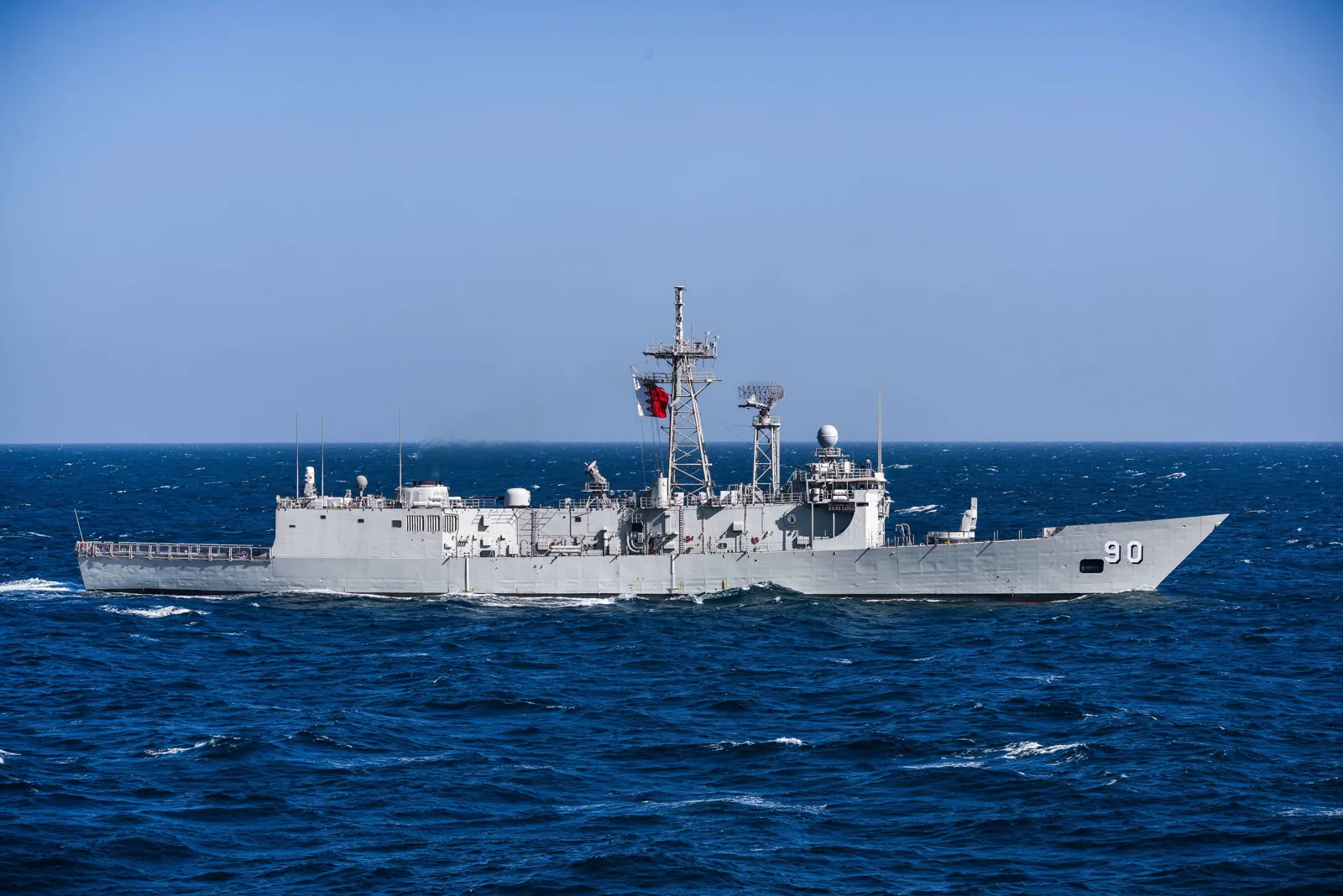
At sea the force includes two Oliver Hazard Perry frigates (the second delivered in January 2024), two Al-Manama corvettes, RBNS Al-Zubara transferred from the United Kingdom and many patrol craft. Mina Salman is shared with the US Navy, and Bahrain has taken part in coalition operations such as the maritime restrictions on Yemen and Operation Prosperity Guardian in the Red Sea.
Land Forces Inventory
| System type | Est. quantity |
|---|---|
| Main battle tanks | About 100 M60A3s in service; according to Wikipedia about 50 M1A2 SEPv3s are on order and not yet delivered |
| APCs and infantry fighting vehicles | According to Wikipedia 339 M113A2s and 75 YPR-765s; Global Firepower gives 5,196 armoured vehicles in total (light and utility vehicles included) |
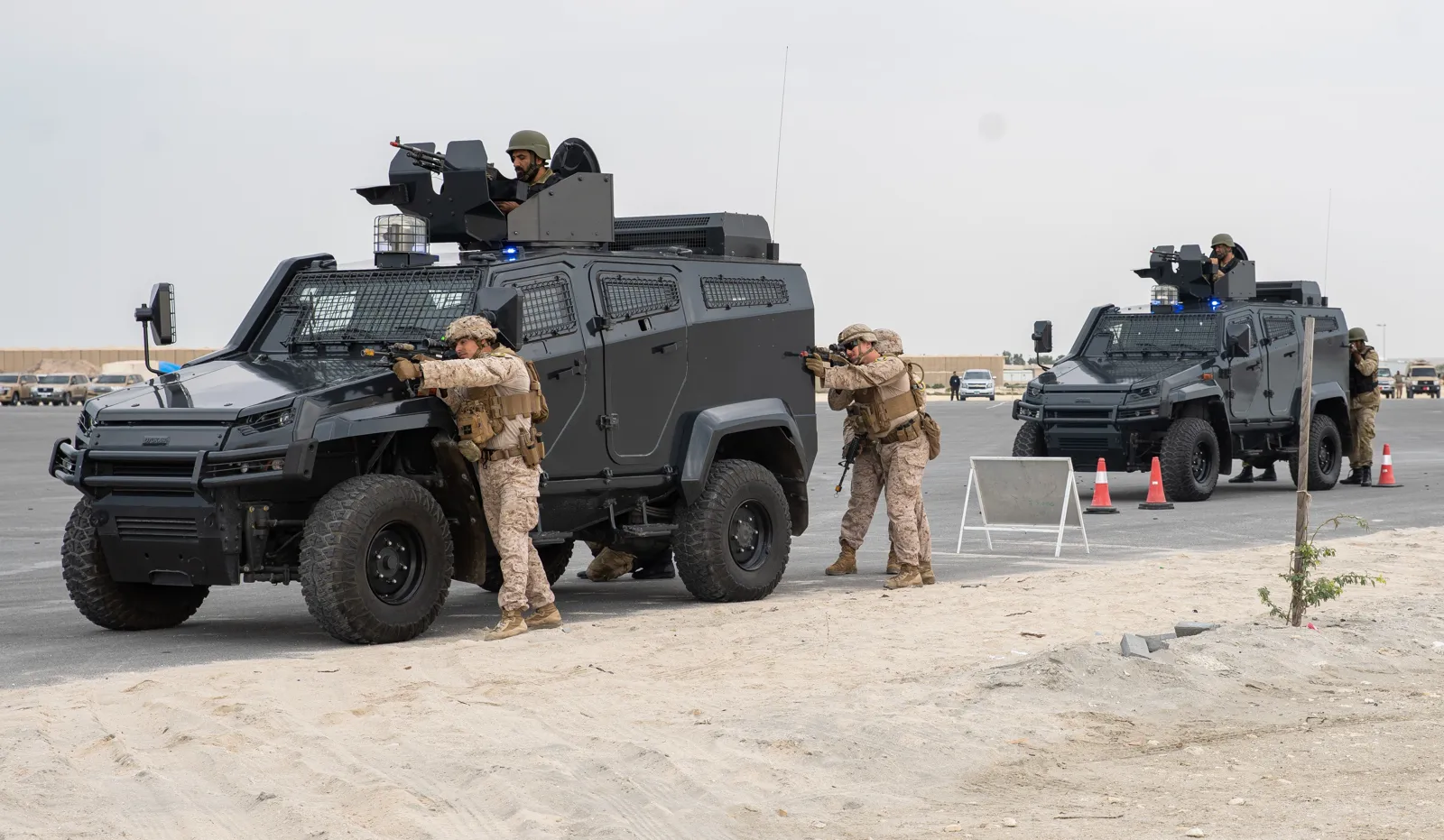
| Turkish-built armoured vehicles | According to Wikipedia’s equipment count Otokar Arma armoured vehicles (73 units) are in army service; a small line, but a concrete Turkish footprint in Bahraini land forces |
| Artillery | 38 M110A2 self-propelled howitzers, 18 M198 towed howitzers and 9 M270 MLRS (Wikipedia); the artillery is of American origin and ageing |
| Force structure | The Army has 3 brigades and 2 battalions (armoured, mechanised infantry, artillery, air defence, special forces); reserves of about 110,000 |
Air Force Inventory
| Platform | Est. quantity |
|---|---|
| Total military aircraft | 137 (Global Firepower): 28 fighters and 66 helicopters; no count in the dedicated attack-aircraft category |
| F-16 fleet | 20 F-16C/Ds acquired from 1990, making Bahrain the first Gulf country to fly the F-16. Sixteen new F-16 Block 70s were acquired in 2024 (Wikipedia) |
| Legacy fighters | F-5E/F Tiger IIs are still on the books; the fleet is being pushed into a secondary role as the F-16 takes over |
| Attack and transport helicopters | AH-1E/F Cobra and AH-1Z Viper attack helicopters, supported by UH-60M Black Hawks, Bell 212s and Bo 105s |
| Bases and operations | Isa (fighters), Riffa (helicopters) and Sakhir (Royal Flight) air bases; according to Wikipedia an F-16 Block 70 shot down two Iranian drones on 1 April 2026, the variant’s first recorded air-to-air kills |
Missile and Air-Defence Systems
| System | Type / Note |
|---|---|
| Upper-tier air defence | Patriot: the US cleared a roughly 2.5 billion dollar Patriot sale in 2019 (Wikipedia) |
| Medium and low-altitude defence | Hawk, Avenger and Stinger systems are in service; the short-range layer is of American origin |
| Rocket artillery | 9 M270 MLRS (Wikipedia); GFP counts 18 rocket launchers in total |
| Anti-tank | American TOW and Javelin-class systems form the anti-tank layer; the tank fleet itself rests on the M60A3 and M1A2 |
| UAVs and counter-UAS | The April 2026 downing of Iranian drones shows that counter-UAS and low-altitude defence are now a primary need for Bahrain |
Naval Power
| Class / Type | Est. quantity |
|---|---|
| Frigates | Two Oliver Hazard Perry-class ships: RBNS Sabha and the Khalid bin Ali, received in January 2024 |
| Corvettes | Two Al-Manama-class guided-missile corvettes (Lürssen TNC-62 type) |
| Offshore patrol vessel | RBNS Al-Zubara, transferred from the United Kingdom in 2020 |
| Patrol and fast craft | Ahmed Al Fateh-class, Cyclone-class and numerous small patrol craft; a fleet of about 35 vessels (Wikipedia) |
| Base and Turkish weapon systems | Mina Salman Naval Base is shared with the US Navy; in May 2020 ASELSAN announced a contract for naval remote-controlled weapon systems |
The Turkey Angle: Turkish Defence Industry
Turkish systems hold a small but real place in the Bahraini inventory. According to Wikipedia’s equipment count, Otokar Arma armoured vehicles (73 units) serve in the Army. In an American-dominated inventory this item stands out as a concrete reference for Turkish armoured vehicles.
At sea, ASELSAN announced on 6 May 2020 that it had signed a contract to supply an undisclosed number of remote-controlled weapon systems to the Royal Bahrain Naval Force. The company did not name the system or the value; the press image showed a naval weapon station resembling the SMASH family on a fast patrol boat. The scope can therefore only be described as a naval remote-controlled weapon system.
An institutional base exists as well: a military training cooperation agreement in August 2012 and a defence industry cooperation memorandum signed during President Erdoğan’s visit in February 2017. Companies such as Otokar, ROKETSAN and TUSAŞ regularly attend the Bahrain International Airshow.
The gaps in the inventory offer a potential market for Turkish industry: the April 2026 Iranian drone incident made counter-UAS and low-altitude air defence a priority, and the ageing M113 fleet and patrol boats await renewal. No concrete Turkish contract is recorded in these areas today, so the framing should be read as a potential market.
Frequently Asked Questions
How many tanks does Bahrain have? The Global Firepower 2026 count gives 150 tanks. The core is about 100 M60A3s; according to Wikipedia about 50 M1A2 SEPv3s are on order but not yet delivered.
Does Bahrain have fighter jets? Yes. 20 F-16C/Ds and 16 F-16 Block 70s acquired in 2024 form the main fleet, with older F-5E/F Tiger IIs also listed. Global Firepower counts 28 fighters in total.
Which countries does Bahrain buy weapons from? Mainly the United States (F-16, M60A3, Patriot, AH-1Z, Oliver Hazard Perry frigates), plus Germany (Lürssen corvettes), the United Kingdom (RBNS Al-Zubara) and Türkiye (Otokar Arma, ASELSAN naval weapon system).
How large is the Bahraini navy? A small fleet of about 35 vessels: two Oliver Hazard Perry frigates, two Al-Manama corvettes, one offshore patrol vessel and many patrol craft. It has no submarines.
Is there defence cooperation between Türkiye and Bahrain? Yes, limited but real: Otokar Arma armoured vehicles, the ASELSAN naval remote-controlled weapon system contract announced in May 2020, a 2012 training agreement and a 2017 defence industry memorandum.
Bottom Line
Bahrain’s inventory is that of a small but dense, American-origin, high-technology force: F-16 Block 70, Patriot, Oliver Hazard Perry frigates and the M1A2 plan. The April 2026 Iranian drone incident put counter-UAS and low-altitude defence first. The Turkish link today is limited to Otokar Arma and the ASELSAN naval weapon system; still, framework agreements and first references in armoured vehicles and naval weapon systems give Turkish industry a clear base for a potential market.
Related Reading
Sources
- Global Firepower — Bahrain
- IISS — The Military Balance
- SIPRI — Arms Transfers Database
- Wikipedia — Bahrain Defence Force
- Wikipedia — Royal Bahraini Army
- Wikipedia — Royal Bahraini Air Force
- Wikipedia — Royal Bahrain Naval Force
- Defence Turkey — New Sale from ASELSAN to the Kingdom of Bahrain
- Janes — Bahraini navy to get ASELSAN weapon stations
- Gulf News — Bahrain, Turkey deepen cooperation