ASPILSAN Portable Energy Storage Systems: A Guide

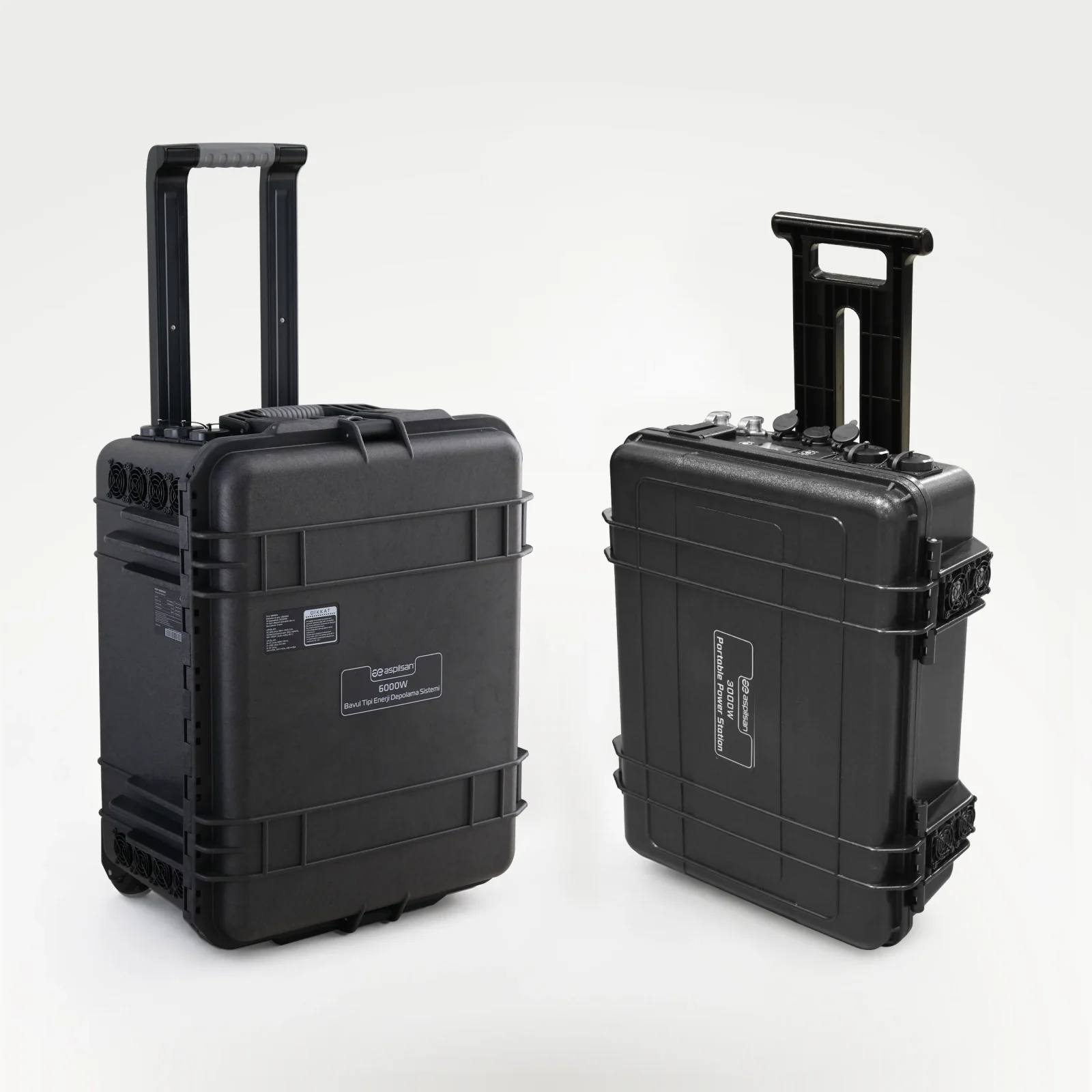
Quick answer: ASPILSAN’s portable energy storage systems comprise suitcase-type power sources ranging from 1,200 W to 6,000 W, solar system batteries, and power bank products. The products are built on the INR18650 cells the company produces in Kayseri and are offered both for military field use and to the civilian market. According to an Anadolu Agency report from April 2026, its storable energy products are exported to the United States, South Korea, and European countries.
What does the product family cover?
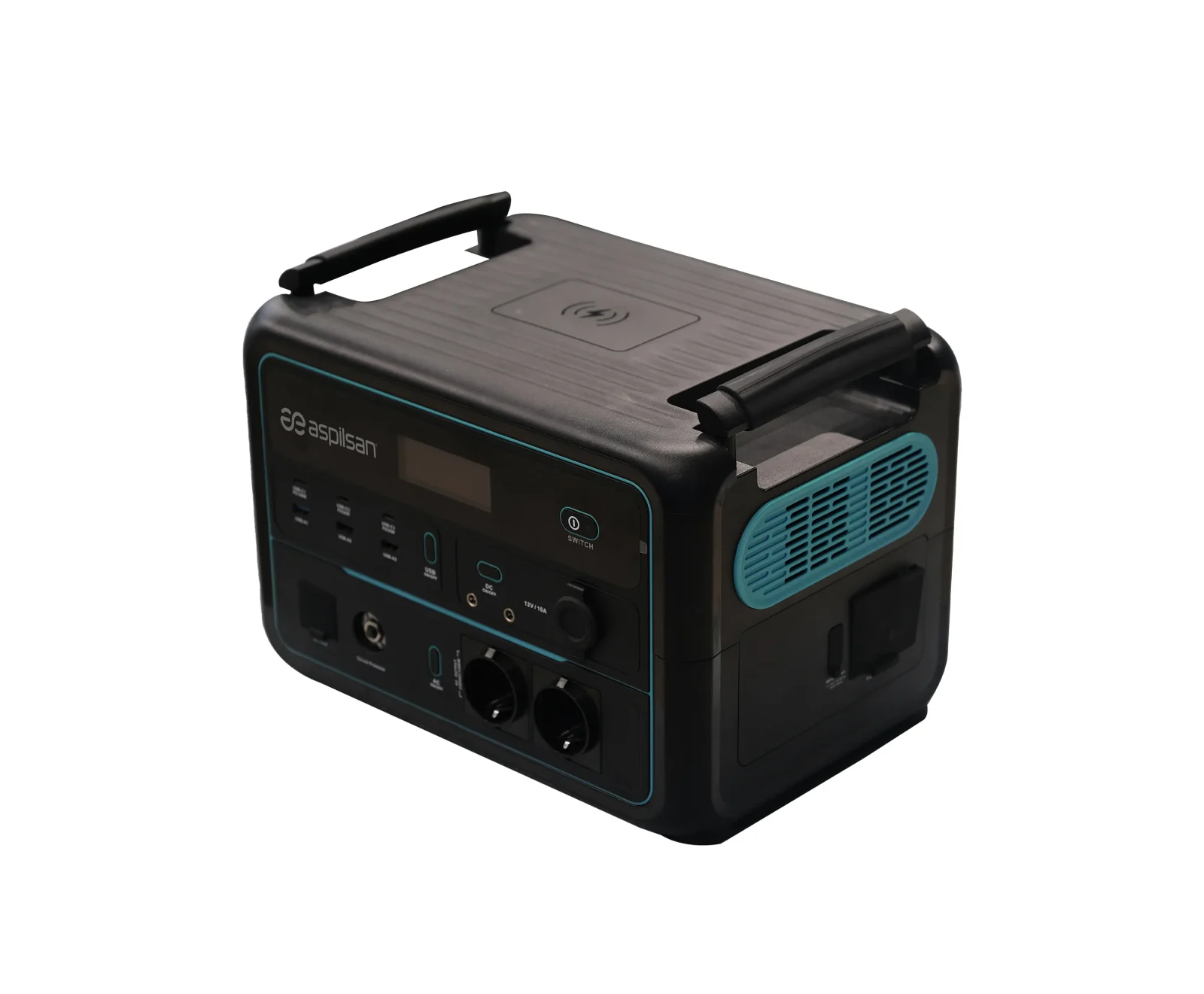
The official energy storage category lists four power levels in the portable class: 1,200 W, 1,500 W, 3,000 W, and 6,000 W. These are accompanied by a solar system battery, a solar power bank, and a standard power bank; on the fixed-installation side sit the ASP Series, the MAT-FCS Series, and the UPS TAK/TEK series. Fixed systems and rack-type telecom batteries are summarized in the products guide. The products’ cell base rests on the domestic production described in the INR18650 file; the company describes this integrated setup as domestic production from cell to system.
Power levels and usage scenarios
| Product | Form factor | Typical scenario |
|---|---|---|
| 1,200 W EDS | Portable station | Camping, small device power, emergencies |
| 1,500 W EDS | Portable power source | Field teams, mobile office |
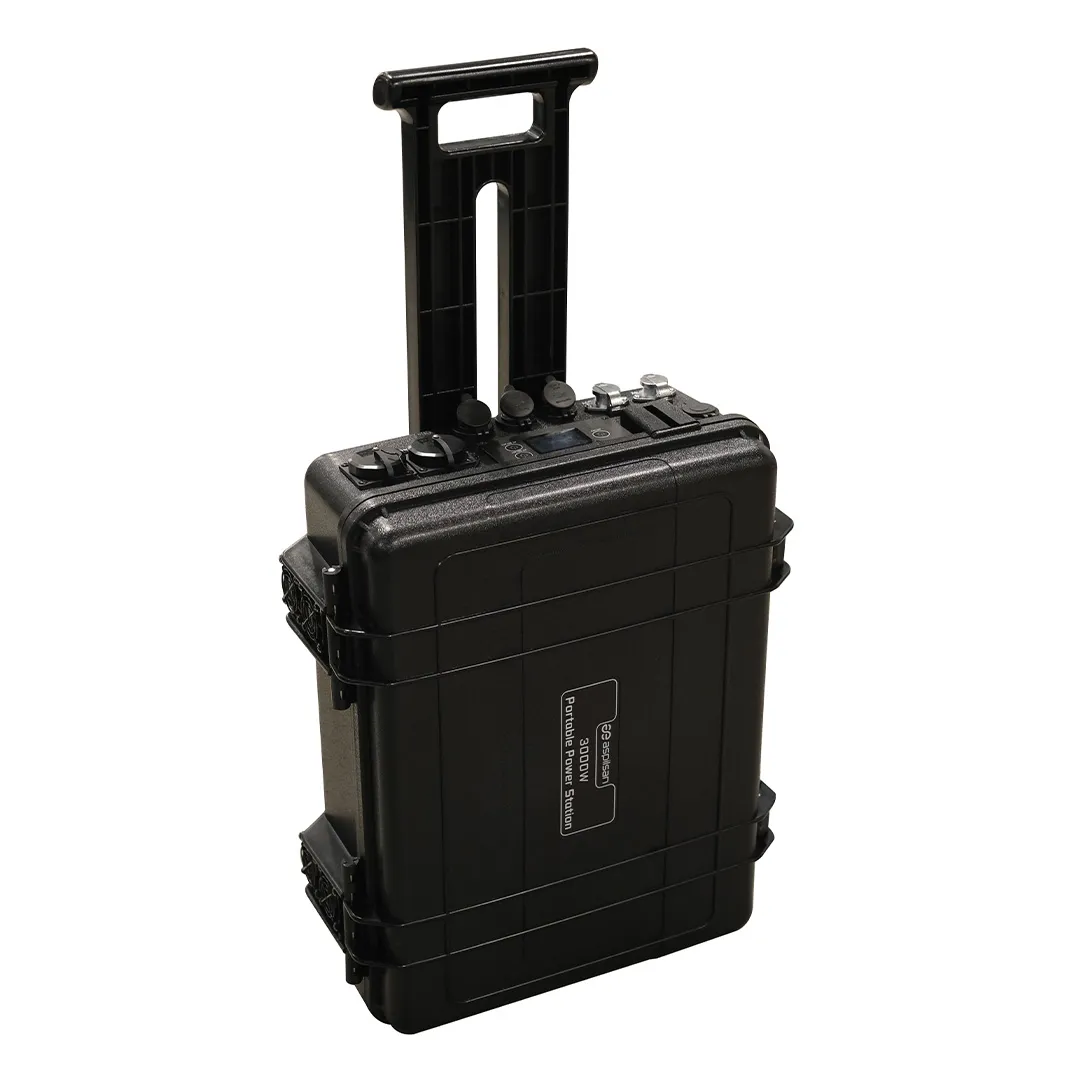
| 3,000 W EDS | Suitcase type | Field headquarters, measurement and communications equipment |
| 6,000 W EDS | Suitcase type | High-power field systems, generator replacement |
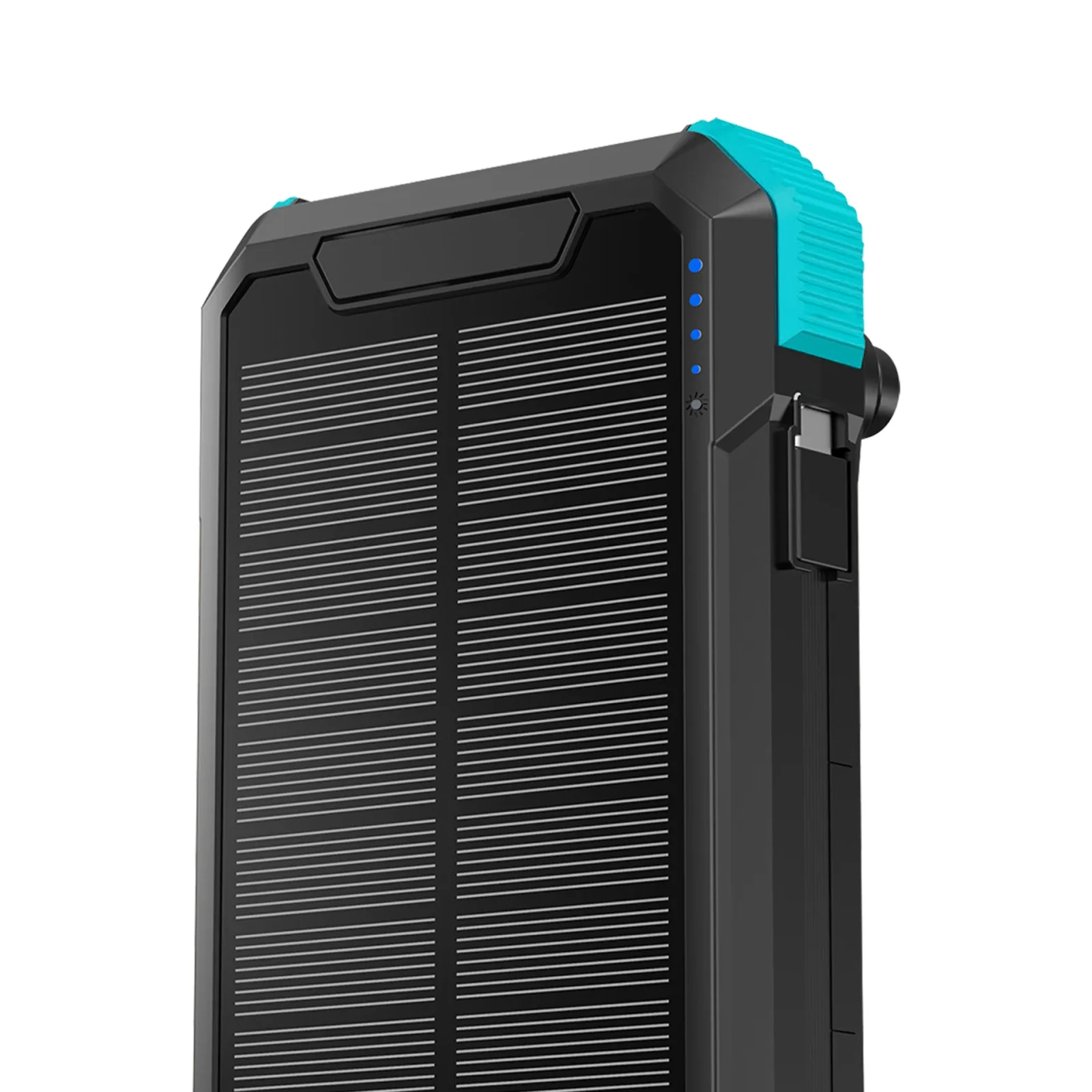
| Solar power bank | Pocket size | Individual use, solar-assisted charging |
Per-model capacity (Wh), output types, and charging times are published on the company’s product specification pages; the scenarios in the table were compiled from the category definitions.
Portable power in the military field
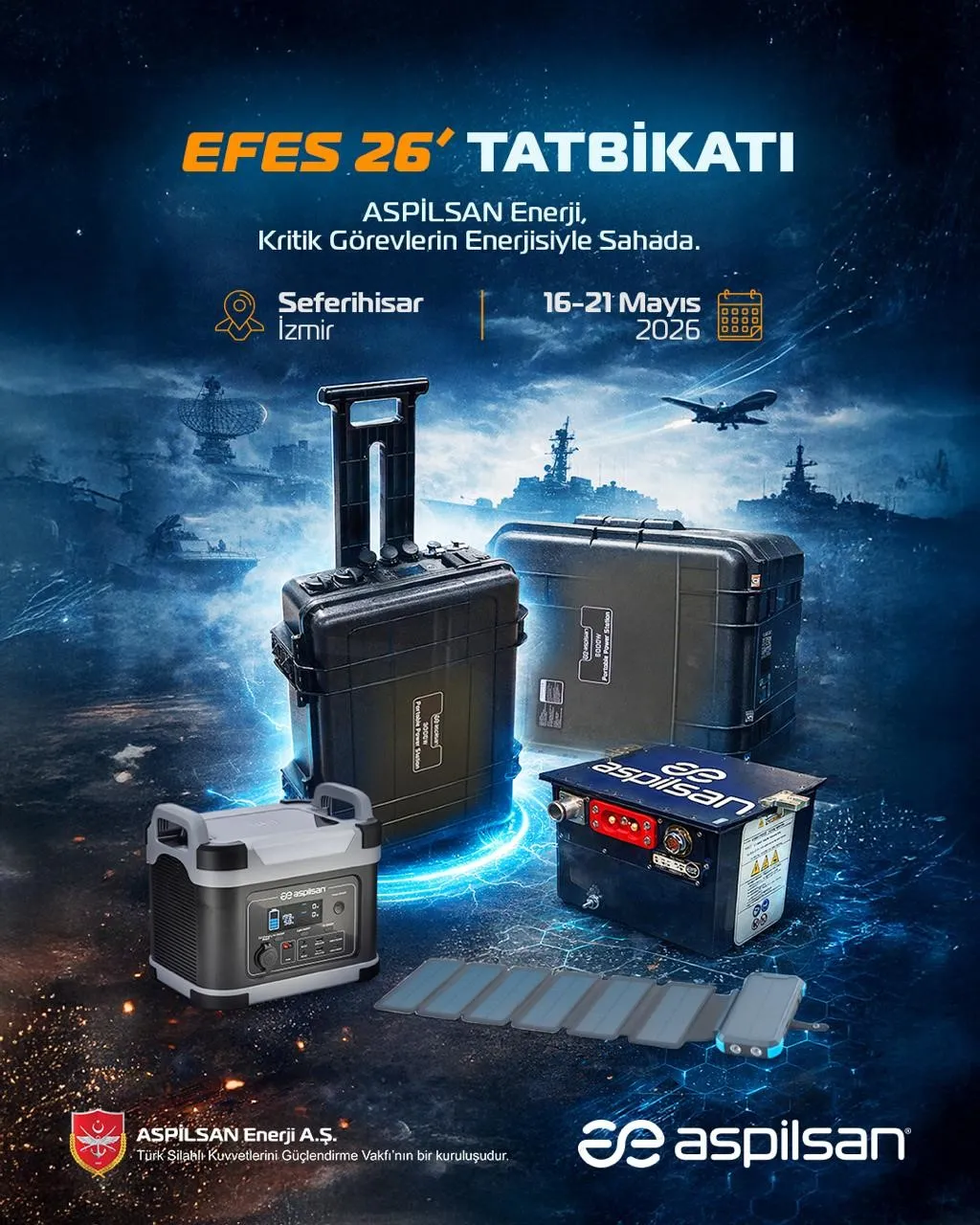
In the company’s 2026 communications material, the portable energy storage systems were presented alongside imagery from the EFES 2026 exercise in Seferihisar, Izmir, as the energy behind critical missions. Portable stations offer a silent, emission-free alternative to generators for powering command posts, communications systems, and unmanned-system ground stations independently of the grid. The technical details of military configurations are not officially disclosed; portable power solutions on the radio side are covered in the BB-2590 file. The same product class is also used in disaster and emergency management: in grid-down scenarios, suitcase-type stations provide first-response power for communications relays, lighting, and medical devices. Silent operation, emission-free indoor use, and one-person portability are the core advantages over generators in these scenarios.
The civilian market and exports
The same product family is sold into the civilian market for disaster preparedness, camping, and construction site use. In the Anadolu Agency report from April 2026, General Manager Prof. Dr. Ahmet Turan Ozdemir stated that storable energy products are exported to the United States, South Korea, Romania, and other European countries; the market table appears in the export file. In 2026 the company exhibited its portable power products at the CES trade show in Las Vegas.
How do they differ from fixed systems?
Portable products are only one part of the company’s energy storage category. On the fixed-installation side, the ASP Series and ASP Series 2 are listed at home and business scale, the MAT-FCS Series at industrial scale, and the UPS TAK and TEK series for uninterruptible power needs; rack- and cabinet-type batteries are produced for telecom infrastructure. What sets the portable class apart is a built-in inverter, a protective housing, and the ability to operate without a grid connection. The energy storage focus group meeting the company held in early 2026 signals that the category’s product roadmap is being actively expanded; new model announcements should be followed through official channels.
Frequently asked questions
Which cells do the products use?
The company positions its portable products around its own lithium-ion cells; per-model cell configurations are not officially disclosed.
What do they cost?
No official list price is published; sales run through the company’s contact channels and authorized distributors.
Can the 6,000 W model replace a generator?
A continuous 6,000 W-class output can substitute for small generators in many field scenarios; run time depends on the connected load and the battery’s Wh capacity.
Is solar charging supported?
The category lists a solar system battery and a solar power bank; panel inputs for the portable stations are specified in the model specifications.
Where are the products made?
Production is in Kayseri; cells are made at the Mimarsinan Organized Industrial Zone plant, and system assembly takes place at the company’s Kayseri campuses.
Can the products be carried by air?
Air transport of lithium-ion batteries is subject to international dangerous goods rules; high-capacity stations are not accepted on passenger aircraft, and cargo shipment requires special documentation. Shipping conditions should be confirmed with the manufacturer and the carrier.
Sources and verification note
The product list comes from the official category page and the export information from the AA report; readers are directed to the specification pages for per-model figures (Accessed: August 13, 2026).
- https://www.aspilsan.com/cozum-kategori/enerji-depoloma/
- https://www.aspilsan.com/cozumler/enerji-depolama/bavul-tipi-tasinabilir-guc-kaynagi/
- https://www.aspilsan.com/cozumler/enerji-depolama/6000w-bavul-tipi-tasinabilir-enerji-depolama-sistemi/
- https://www.aa.com.tr/tr/ekonomi/aspilsan-depolanabilir-enerji-urunlerini-ihrac-ediyor/3903545
- https://www.enerjiekonomisi.com/tasinabilir-enerji-depolama-sistemi-yerli-aspilsan-uretimi/41749