USS Spruance Destroyer Returns Home After Downing 12 Drones, 4 Missiles in Iran Campaign

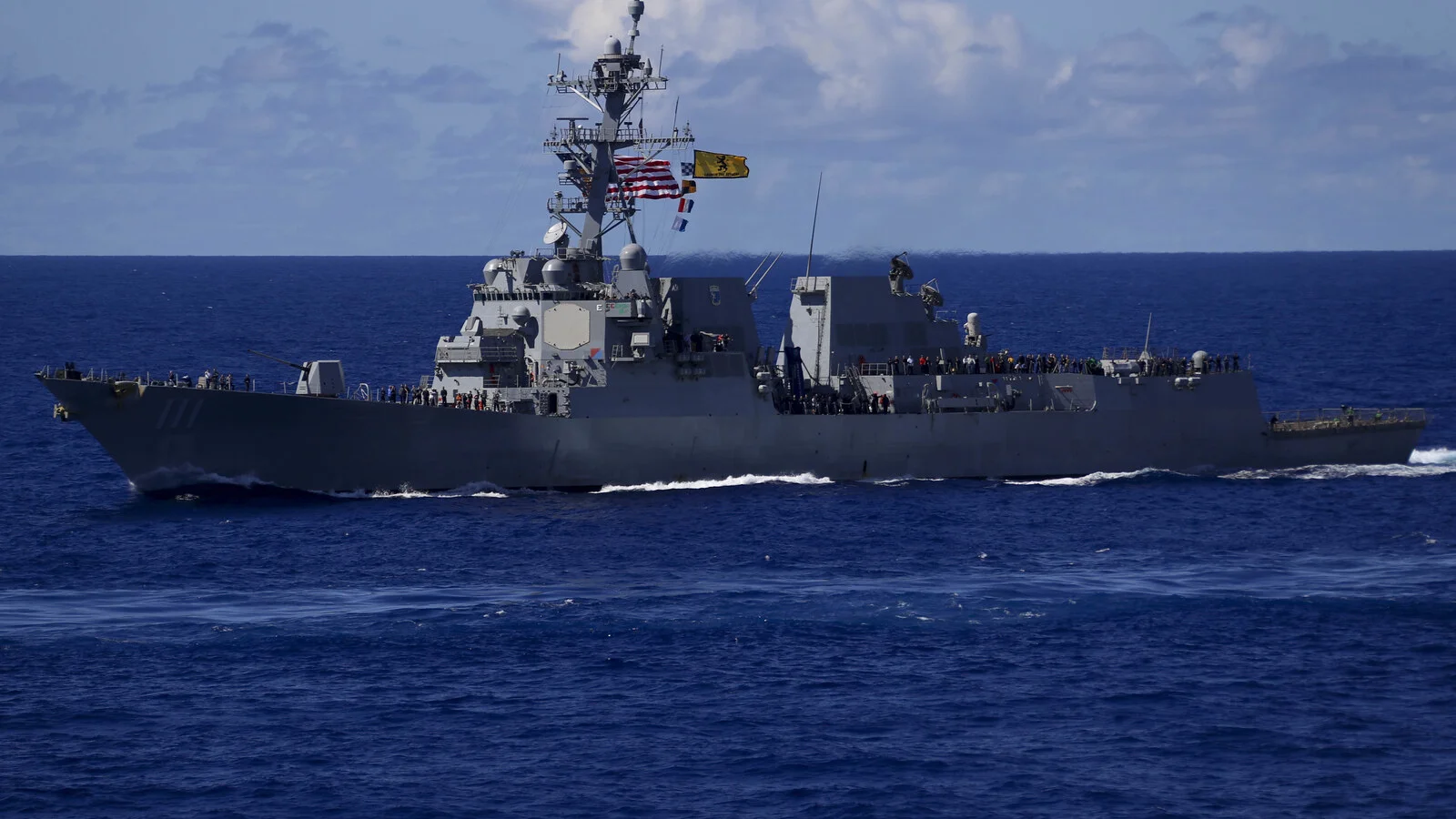
The Arleigh Burke-class guided-missile destroyer USS Spruance (DDG-111) pulled into its home port of San Diego on November 13, closing out a deployment of nearly a year. According to a release from U.S. Third Fleet, picked up by Seapower Magazine, the ship’s crew credits itself with downing 12 drones and four anti-ship cruise missiles while supporting operations against Iran.
Spruance left San Diego on November 21, 2025, sailing with the USS Abraham Lincoln Carrier Strike Group. When the carrier headed home in the late summer of 2026, the destroyer stayed behind in the Middle East on its own, eventually logging more than 88,000 nautical miles before returning.
The Navy says the deployment also included Tomahawk land-attack missile strikes on Iranian military targets, maritime interdiction duty, and the disabling of the cargo vessel Touska. Third Fleet’s release puts the number of underway replenishments at 43, a figure that hints at the logistical effort required to keep one warship on station for most of a year.
What the Navy has not said is almost as notable as what it has. There is no public breakdown of which interceptors or gun systems accounted for the 12 drones and four missiles, nor any description of the drone type involved. Army Recognition, which first flagged the figures for a wider defense audience on November 15, cautioned that it would be premature to describe the episode as a single coordinated saturation attack rather than a tally built up over many separate incidents.
That caution matters for how the numbers should be read. Without a timeline, it is unclear whether Spruance faced one intense engagement or several smaller skirmishes spread across the deployment. The ambiguity is consistent with how U.S. Central Command has handled Iran-related disclosures through 2026, including a February 28 statement on Iranian attacks and a May 31 report on U.S. strikes against Iranian facilities — both treated by the Navy as separate from Spruance’s own tally.
Commissioned in 2011 and named for World War II-era Admiral Raymond A. Spruance, the destroyer is a Flight IIA Arleigh Burke variant built around the Aegis Combat System and the SPY-1 radar, which let a single hull combine air defense, surface warfare and land-attack missions. That versatility is the real story here: one ship, with one air-defense suite, handled missile defense, a blockade role and strike missions in the same deployment.
The pattern is not new. The Navy applied a similar approach in late 2024, keeping individual destroyers on station in the Red Sea against Houthi attacks even as carrier groups rotated home. Defense analysts have pointed to extended single-ship deployments like Spruance’s as a symptom of a surface fleet stretched thin by the pace of Middle East tasking and by delays in new destroyer construction.
Gulf allies and NATO navies alike are watching deployments like this one as a benchmark for their own planning. A single destroyer absorbing missile defense, interdiction and strike duties simultaneously is a useful data point for partners assessing gaps in their own layered air-defense and surface-warfare capacity, even where they have no direct role in the Iran campaign itself.
With Spruance back in San Diego, the ship is expected to enter a maintenance period while its crew rotates off. Navy officials have indicated that deployments of similar length will likely continue as long as current tensions in the Middle East persist.
Sources
- U.S. Navy / U.S. Third Fleet press release, “USS Spruance Returns Home After Nearly Year-Long Deployment” (November 13, 2026) — primary source for deployment length, distance sailed, UNREP count and the drone/missile figures. https://www.c3f.navy.mil/
- Seapower Magazine, “USS Spruance Returns Home After Nearly Year-Long Deployment” (November 13-14, 2026) — used for the detailed relay of the Navy’s release. https://seapowermagazine.org/
- Army Recognition, “U.S. Navy USS Spruance Destroyer Shot Down 12 Drones and 4 Missiles During Iran Campaign” (November 15, 2026, by Alain Servaes) — used for analytical framing and CENTCOM context. https://www.armyrecognition.com/