Norm Technologies Activated-Carbon Technologies Guide

Quick answer: Activated carbon is the material class at the center of Norm Technologies’ CBRN protective products. According to the company’s official product pages, it manufactures four grades of activated carbon — led by “NorBd” spherical activated carbon, produced by activating a spherical polymer at high temperature — in spherical, granular, pellet and powder forms. These materials are used as adsorbents in CBRN suit linings, filters, masks and industrial filtration processes.
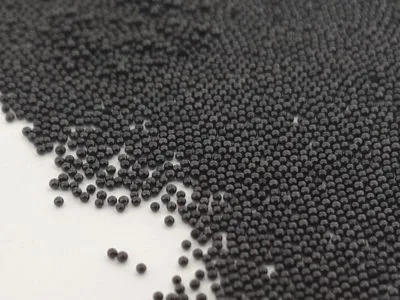
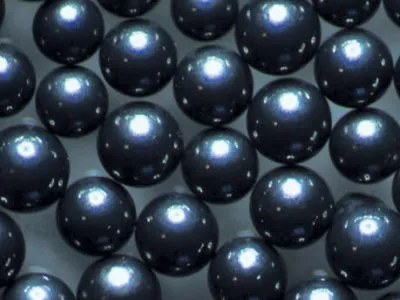
NorBd: spherical activated carbon
According to the manufacturer, NorBd has a surface area of up to 2,000 m²/g and a highly microporous structure, with a granule diameter ranging from 0.2 to 1.0 mm. The product page highlights low dust and ash content, high gas-adsorption capacity and high mechanical strength. This form is designed for use in CBRN and specialty filters; its role in filter manufacturing is covered further in the CBRN filter systems file.
| Product | Form | Highlighted feature (manufacturer’s claim) |
|---|---|---|
| NorBd | Spherical | Up to 2,000 m²/g surface area, 0.2-1.0 mm granule diameter |
| NorGran | Granular | Irregularly shaped granules, used in industrial filtration |
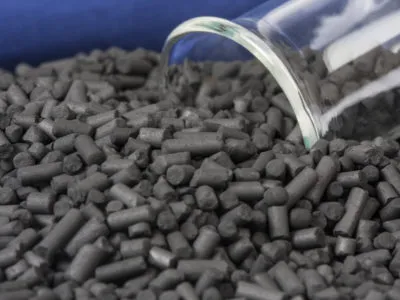
| NorPel | Pellet (cylindrical) | Cylindrical extruded form, used in filter and mask applications |
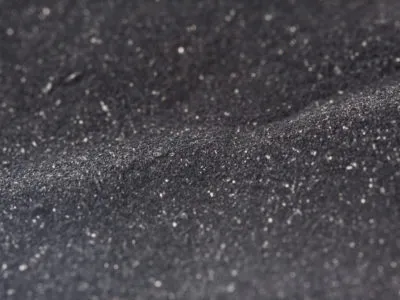
| NorPow | Powder | Fine-particle, high-surface-area powder form |
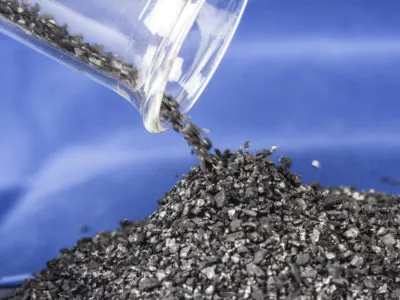
Granular, pellet and powder forms
The official site describes NorGran granular activated carbon’s application range as “CBRN protective suits, CBRN filters, air and water purification filters, mask filters, medical applications and specialty filtration processes.” This same application description applies equally to NorBd, NorPel and NorPow; the choice of form largely depends on the type of filter or fabric it will be used in. NorPel’s cylindrical, extruded structure is preferred particularly for fixed-bed filter systems, while NorPow’s fine powder form is used in fabric-impregnation and coating processes.
The role of activated carbon in suits and filters
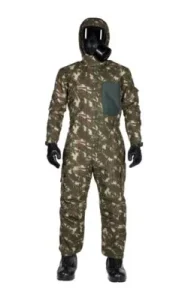
The high adsorption capacity of activated carbon underlies the basic principle by which CBRN protective suits capture chemical warfare agents. As described in the CBRN suit family file, the NorBeCBRN model uses NorBd spherical activated carbon as its adsorbent, while NorFeCBRN uses activated-carbon fabric. The fabric form of activated carbon and its application in filters are covered in the filter systems file.
Frequently asked questions
What role does activated carbon play in CBRN protection?
Thanks to its high surface area, it adsorbs (captures on its surface) chemical and biological hazardous agents, acting as a barrier in protective suits and filters.
What is the difference between NorBd and NorGran?
NorBd has spherical granules, while NorGran has an irregular granular shape; both are activated carbon, but their geometry and the filter types they suit can differ.
Does Norm Technologies manufacture its own activated carbon?
The official site uses the phrase “developed by us”; the raw-material source and manufacturing process details are not publicly disclosed.
Is this activated carbon used only in defense applications?
No; the product pages also list industrial uses such as air and water purification filters and medical applications.
Why does the surface area of activated carbon matter?
Adsorption (capture) capacity increases with surface area; the manufacturer states a maximum value of 2,000 m²/g for NorBd.
Sources and verification note
- Norm Technologies, NorBd spherical activated-carbon page — https://www.normltd.com/norbd-kuresel-aktif-karbon/index.htm
- Norm Technologies, NorGran granular activated-carbon page — https://www.normltd.com/norgran-granul-aktif-karbon/index.htm
- Norm Technologies, NorPel pellet activated-carbon page — https://www.normltd.com/norpel-pellet-silindirik-aktif-karbon/index.htm
- Norm Technologies, NorPow powder activated-carbon page — https://www.normltd.com/norpow-toz-aktif-karbon/index.htm
Technical values (surface area, granule diameter) were taken directly from the manufacturer’s official product pages; independent laboratory verification is not publicly available. Accessed: August 25, 2026.