Tron TRDB and TRBB: RF combiners and dividers

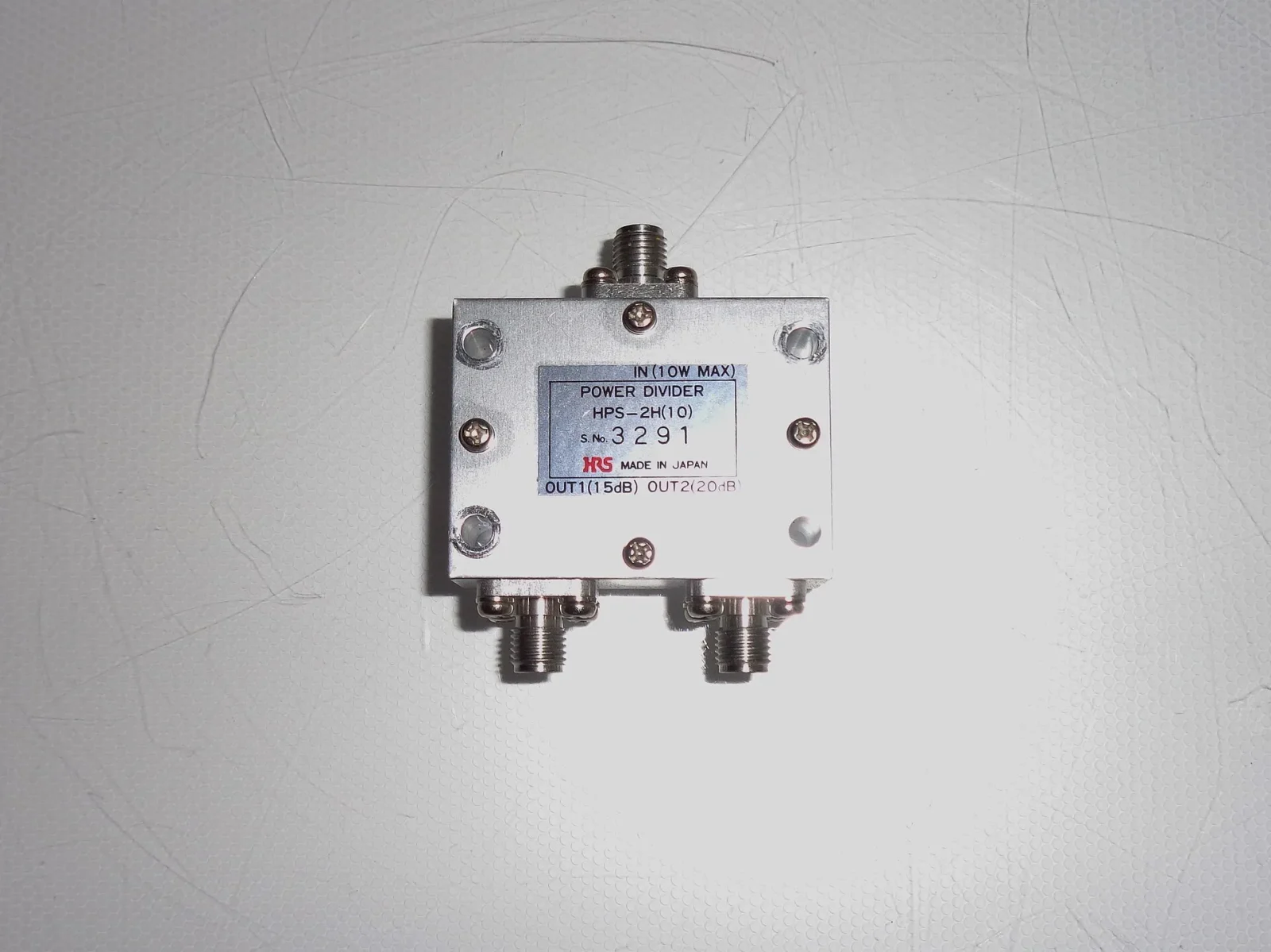
Quick answer: TRDB and TRBB are Tron Elektronik’s L band RF divider and combiner series. The SSB 2026 Product Catalogue entry lists the TRDB-L-1-8 as an RF distribution unit and the TRBB-L-8-1 as an RF combiner; the 1-8 and 8-1 structure in the codes shows the direction of splitting and combining. According to the company’s archived series page, the TRDB and TRBB are active distribution units connecting eight receivers to a single 950-1450 MHz port; they carry a switchable low-noise input amplifier and are designed for harsh naval environments. The same page states that the units comply with the MIL-S-901D Grade B shock test. A power divider referred to in the SSB catalogue under the code TPD is also part of the family.
What are dividers and combiners?
A divider and a combiner are in fact the same circuit used in two directions. When a signal fed to a single input is shared out across the outputs it is called a divider; when signals fed to the outputs are gathered at a single point it is called a combiner.
Splitting carries an unavoidable cost. Split a signal into eight equal parts and each part takes one eighth of the total power, which corresponds in theory to about 9 dB of attenuation. Once circuit losses are added, the real figure comes out slightly above that. An active distribution unit adds an amplifier to the structure to make up that loss. The phrase “active distribution unit” in the company’s TRDB and TRBB description, together with the switchable low-noise input amplifier, describes exactly that.
The second critical quantity is isolation. A change at one output must not affect the others; otherwise the behaviour of one receiver disturbs its neighbour. The company’s product description characterises performance in terms of low noise figure, high intermodulation suppression and port-to-port isolation.
Product table
| Model | Catalogue description | Configuration | Band | Note |
|---|---|---|---|---|
| TRDB-L-1-8 | RF distribution unit | 1 input → 8 outputs | L band | Switchable LNA |
| TRBB-L-8-1 | RF combiner | 8 inputs → 1 output | L band | Switchable LNA |
| TRDB / TRBB series | Active distribution unit | 8 receivers ↔ single port | 950-1450 MHz | MIL-S-901D Grade B shock test statement |
| TPD-1040-2-1 | Power divider | Not officially disclosed. | Not officially disclosed. | Listed as a product on the current site |
Numerical values such as insertion loss, isolation and amplitude imbalance are not published in the company’s public sources.
Why does 950-1450 MHz turn up in these products?
The 950-1450 MHz operating range of the TRDB and TRBB series is the band used as an intermediate frequency (L band IF) in satellite communications. In satellite receive systems the converter at the antenna brings the high-frequency satellite signal down into this range; the signal carried indoors over coaxial cable and distributed to the receivers is in this band.
That explains why the distribution unit connects eight receivers to a single port: it is the typical architecture where the L band signal from a single antenna system on a platform has to be shared among several receivers. The company’s history in broadband and satellite distribution hardware also overlaps with this band; the archived corporate timeline carries a record of the first analogue satellite receiver design in 1994.

What does the MIL-S-901D Grade B shock test mean?
This is the most specific qualification statement the company gives for the TRDB and TRBB series. MIL-S-901D is the shock resistance standard the US Navy applies to shipboard equipment. The test simulates the transmission to the equipment of the impact created in a ship’s hull by an underwater explosion; the device must keep working after the shock.
Grade B is one of the classifications within the standard. The statement is consistent with the description of the product as designed for naval platforms; the company states that the series is designed for harsh naval environments. The statement rests on the company’s own product page; no independent test report has been published.
The TPD power divider
The SSB 2026 Product Catalogue entry lists a power divider coded TPD among Tron Elektronik’s products. On the company’s current site the product appears under the model code TPD-1040-2-1. However, because that section of the site is built with a client-side structure, the content of the product detail page could not be accessed; nor does a page for this model exist on the archived old site. For that reason the product’s frequency range, port count and power capacity have not been officially disclosed.
On the current site, the RF modules category groups amplifiers and dividers together under the heading “RF Amplifiers & Dividers”. The amplifier side is covered in the file on power amplifiers.

Where they sit in the system
Dividers and combiners are functional neighbours of the multicoupler family. The difference lies in scale and in how active they are: a multicoupler sits in a rack as a system unit, carrying remote management and built-in test; a divider is mostly smaller and often a passive component. The TRDB and TRBB series sit between the two, taking on the character of a distribution unit through their active structure and LNA.
The other links in the chain these products belong to are the preamplifiers and the signal generator units. All of the company’s product groups are listed in the product guide.
Frequently asked questions
What is the difference between TRDB and TRBB?
The code structure shows the direction: the TRDB-L-1-8 splits a single input into eight outputs, the TRBB-L-8-1 combines eight inputs into a single output.
Why does loss occur in a divider?
Because the power is shared among the outputs, each output takes a fraction of the total. In an eight-way split the theoretical attenuation is around 9 dB; active units make up that loss with an amplifier.
Which application does the 950-1450 MHz band belong to?
It is the L band range used as an intermediate frequency in satellite communications. The converter on the antenna side brings the satellite signal down into this band.
What is MIL-S-901D Grade B?
It is a US Navy standard measuring the resistance of shipboard equipment to shock caused by an underwater explosion. The company states that the series complies with this test.
What are the specifications of the TPD-1040-2-1?
The product is listed on the current site, but the content of the detail page could not be accessed and it has no counterpart in the archive. Not officially disclosed.
What are the insertion loss and isolation values?
These values are not published on the public product pages. Not officially disclosed.
Sources and verification note
Product descriptions rest on the company’s archived TRDB/TRBB series page and the SSB 2026 Product Catalogue entry. MIL-S-901D Grade B compliance is the company’s own statement; no independent test report has been published. No characteristics are given for the TPD-1040-2-1 because the current site offered no accessible technical content. The explanations of splitting loss are general RF engineering knowledge. Accessed: August 12, 2026.
- https://tron.com.tr/
- https://web.archive.org/web/2022/https://tron.com.tr/en/product/trdb-trbb-series
- https://web.archive.org/web/2022/https://tron.com.tr/en/product/trdb-l-1-8
- https://web.archive.org/web/2022/https://tron.com.tr/en/product/trbb-8-1
- SSB 2026 Product Catalogue, Tron Elektronik entry