





South Africa’s Defense-Industrial Reckoning: Paramount Challenges Pretoria Over Foreign Procurement

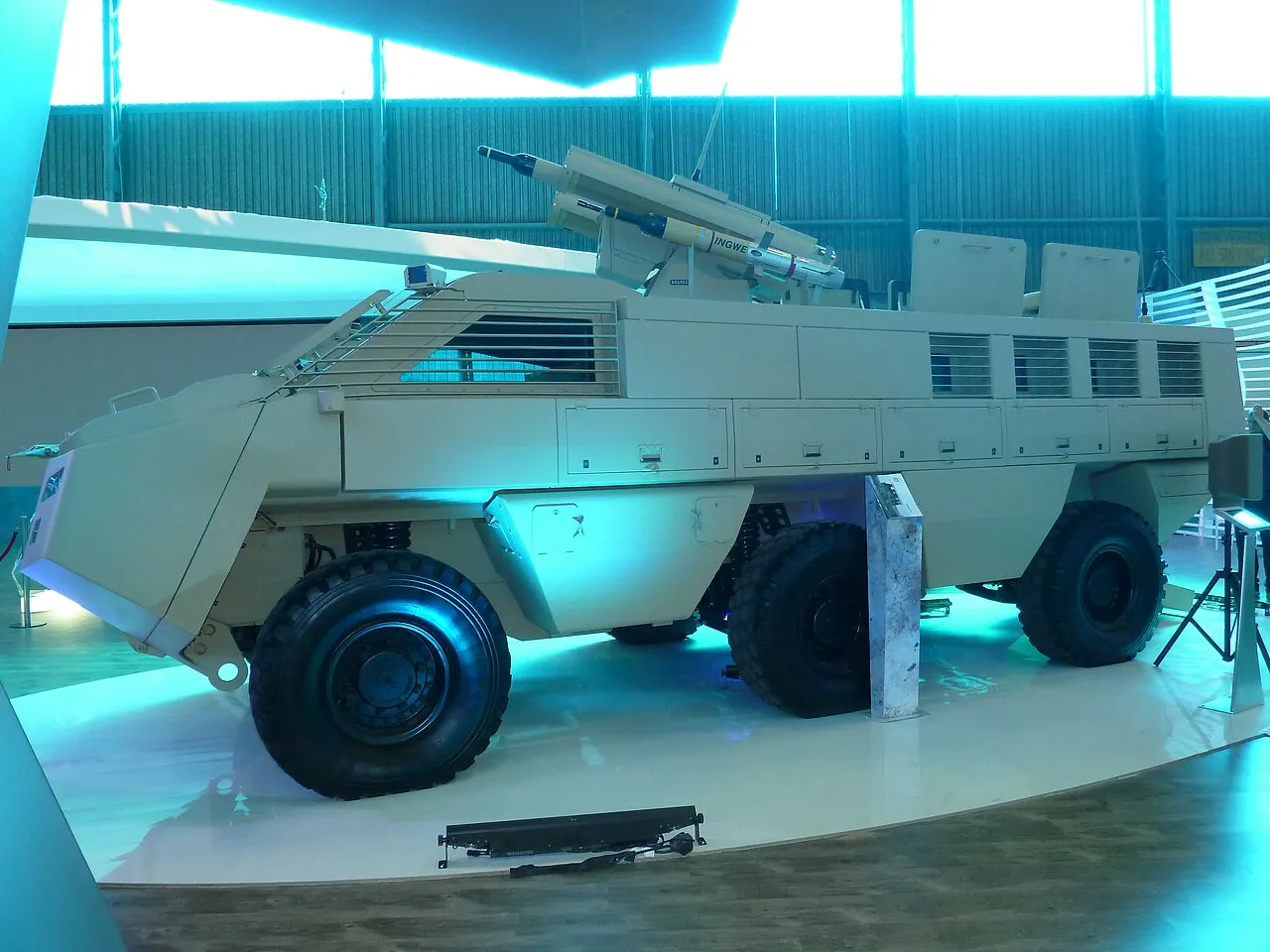
South Africa’s defense-industrial base has spent much of the past decade absorbing budget pressure and watching flagship acquisition programs slip year after year. According to DefenceWeb, Paramount Group’s South African unit used its August 27 media day at Gerotek to make that tension explicit, pitching its Mbombe 8 8×8 wheeled infantry combat vehicle directly against Project Hoefyster — the Badger armored vehicle program that is now fourteen years behind its original schedule.
- Event: August 27, 2026, Gerotek test facility, near Pretoria
- Speaker: Dr. Mathews Phosa, Chairman, Paramount Group South Africa
- Vehicle offered: Mbombe 8 (8×8 mine-protected wheeled IFV)
- Delayed program: Project Hoefyster (Badger IFV), 14 years behind schedule
- Planned order: over 200 Badger variants from Denel Land Systems
- Mbombe 8 specs: 28-tonne gross weight, 800 km range, 110 km/h top speed
Background: A Program Stuck for Fourteen Years
Project Hoefyster was launched to replace the South African Army’s Ratel-series wheeled IFVs, which have been in frontline service since the late 1970s. The program called for Denel Land Systems to deliver more than 200 Badger vehicles across several variants, with deliveries originally scheduled between 2019 and 2022. As The Citizen reported, development setbacks and Denel’s protracted financial crisis pushed that timeline out repeatedly. Denel’s most recent update to Parliament indicated development would only be completed by the end of the 2026/27 financial year, with production timelines still to be “re-planned.” In the meantime, the aging Ratel fleet remains the Army’s primary mechanized infantry platform, well past its intended service life.

Phosa’s Pitch: “Why Are We Looking Beyond Our Borders?”
Phosa’s remarks at Gerotek were addressed squarely at government procurement policy. Per DefenceWeb, he argued South Africa retains world-class engineering, manufacturing and intellectual-property capability in defense technology, telling attendees: “When we send South African soldiers into harm’s way, they deserve the best equipment we can provide.” He pointed to Pretoria’s growing reliance on vehicles sourced from China and Turkey, adding: “We should not be asking whether South Africa can build the equipment our soldiers need. We should be asking why we are not buying more of it.” His closing formula for what he called sustainable defense-industrial policy: “Build here. Innovate here. Develop the intellectual property here. Partner globally. And export to the world.”
What the Mbombe 8 Brings to the Table
Paramount’s counter-offer is concrete. The Mbombe 8 is an 8×8 mine-protected wheeled IFV powered by a six-cylinder turbocharged diesel driving a six-speed automatic transmission, with a gross weight of 28 tonnes, a 110 km/h top speed and an 800 km range, carrying a crew of three plus eight dismounts. Those figures sit close to Badger’s own target specifications — which is precisely the point Paramount is making: comparable capability, but deliverable now rather than years from now. The company displayed its 4×4, 6×6 and 8×8 Mbombe variants at the Gerotek event.
| Vehicle | Status | Configuration | Range / Speed |
|---|---|---|---|
| Ratel-90 | In service since 1976 | 6×6 wheeled | ~860 km / ~105 km/h |
| Badger (Hoefyster) | In development, 14 years delayed | 8×8 wheeled, multiple variants | ~800 km / ~110 km/h (target) |
| Mbombe 8 | Production-ready, offered | 8×8 wheeled | 800 km / 110 km/h |
Regional Context: Africa’s Localization Debate
Paramount’s intervention lands inside a wider continental conversation. The second day of South Africa’s African Aerospace and Defence (AAD) 2026 conference is dedicated to the continent’s defense-industrial landscape, with organizers flagging that African militaries remain heavily import-dependent even as low-cost drones and improvised systems reshape battlefield dynamics. Nigeria, meanwhile, is preparing to host AFRIDEX, the continent’s first large-scale defense exhibition, later in 2026. Paramount’s Gerotek pitch is, in effect, the most visible domestic case study of that broader question: whether African defense budgets should prioritize import purchases or continent-based industrial capacity.
Why This Matters Beyond South Africa
For NATO and Western defense-industrial planners watching African procurement trends, the episode is a useful data point on how import-dependent markets are recalibrating. Phosa’s direct naming of China and Turkey as beneficiaries of South Africa’s current sourcing pattern reflects a broader trend: competitively priced wheeled armor from both countries has been gaining traction in African markets where legacy European and South African suppliers once dominated by default. Turkish manufacturers such as Otokar, FNSS and BMC have delivered or bid wheeled armored vehicles across several African militaries in recent years — a track record Phosa’s remarks implicitly acknowledge as a competitive benchmark, even as he argues for a domestic alternative. Whether Pretoria acts on Paramount’s pitch will signal how much appetite African governments retain for import diversification versus industrial self-sufficiency.
Frequently Asked Questions
What is Project Hoefyster?
It is the South African Army’s program, executed through Denel Land Systems, to replace its Ratel-series wheeled IFVs with more than 200 Badger vehicles across multiple variants.
Why has the Badger program been delayed so long?
Development technical setbacks combined with Denel’s years-long financial crisis pushed deliveries from the original 2019-2022 window to beyond the 2026/27 financial year.
Is the Mbombe 8 the same vehicle as Badger?
No — they are separate platforms, but their weight class, range and speed specifications are closely comparable, which is the basis of Paramount’s “ready alternative” argument.
Who is Paramount Group?
A South Africa-headquartered defense manufacturer producing armored vehicles and defense systems exported to multiple countries.
Is Paramount’s call binding on the government?
No. It is a public policy and industrial advocacy statement; the final procurement decision rests with South Africa’s Department of Defence and National Treasury.
Conclusion
Paramount’s Gerotek media day reopened a familiar but unresolved question in South African defense procurement: whether limited budgets should keep funding a delayed domestic program or pivot toward ready-made imports. With Badger’s development now targeted for completion at the end of the 2026/27 financial year, how the production timeline is ultimately “re-planned” will largely determine which side of that argument prevails.