






NATO’s Northern Flank Gets a New Pair of Ears: Saildrone’s 20-Metre Surveyor Will Now Be Built in Norway

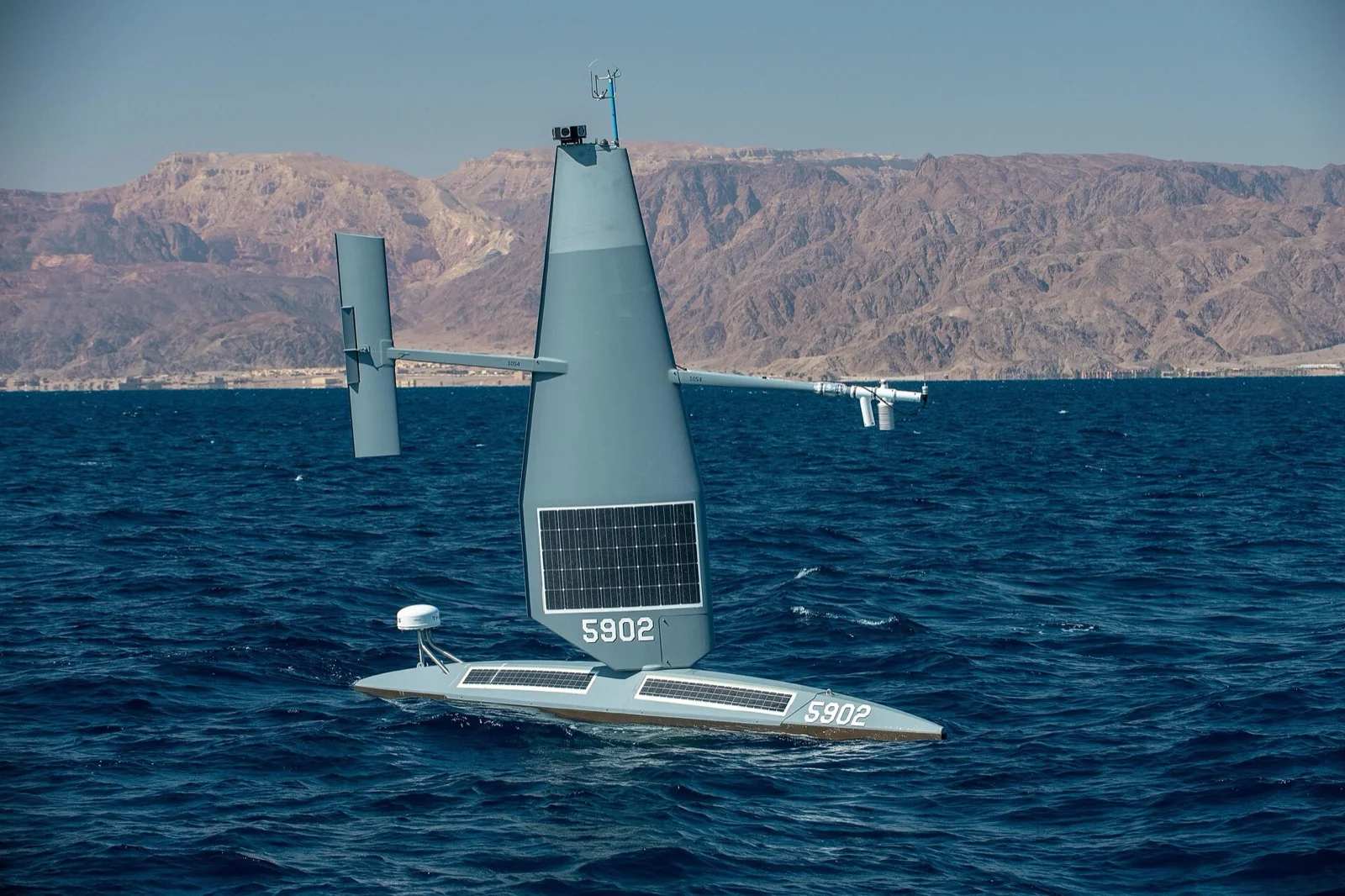
- What happened Saildrone selected Norwegian yard Umoe Mandal to manufacture its next-generation 20-metre Surveyor uncrewed surface vehicle (USV).
- Where Mandal, southern Norway; the company’s European headquarters sits in the historic Quintus Bastion building in Copenhagen’s Holmen district.
- Who Umoe Mandal CEO Tom Fidjeland, Saildrone Europe Managing Director Robert Kleist, founder and CEO Richard Jenkins.
- How many More than 70 Saildrone USVs are in continuous operation worldwide; the European push spans three separate build contracts in three countries.
- How much Saildrone closed a $60 million round in April 2025 led by Denmark’s Export and Investment Fund (EIFO).
- Why it matters European navies no longer want to buy finished USVs. They want the production line on their own soil — and that changes the rules for every exporter.
The real product here is the production line
Under the agreement reported by Naval News on the morning of 25 August, the Umoe Mandal yard in southern Norway will take on serial production of Saildrone’s next-generation Surveyor-class uncrewed surface vehicle. Until now those 20-metre hulls have been built in a single place: Austal USA’s facility in Mobile, Alabama. The Norwegian line will be the first Surveyor production outside North America.
Umoe Mandal CEO Tom Fidjeland frames the yard’s contribution in terms of material science. The company has spent decades building advanced composite structures — glass and carbon fibre laminates that are dramatically lighter than metal and carry a far smaller magnetic signature. The hulls of the Royal Norwegian Navy’s Skjold-class corvettes came out of this yard, as did mast structures for the Type 26 frigates serving with both the Royal Navy and the Royal Norwegian Navy. For a vehicle that must stay at sea for months, carry almost no fuel and remain as light as possible, that expertise converts directly into endurance.
Saildrone Europe Managing Director Robert Kleist put the commercial logic in a single sentence: building Surveyor in Norway will bring deep maritime know-how together with Saildrone’s technology “while giving our European customers access to sovereign production capacity closer to where they operate.” The operative word is sovereign — meaning production, spares and maintenance that do not depend on a third country’s export-licence calendar.
Read as a single shipyard story, this looks minor. Read as a market signal, it is not. Over the past two years European procurement has developed a reflex that exporters everywhere are still adjusting to: the customer wants not just the platform, but the right to build it, repair it and patch its software at home. Spreading production across three countries is not generosity on Saildrone’s part. It is the entry fee.
Copenhagen hub, three-country build network
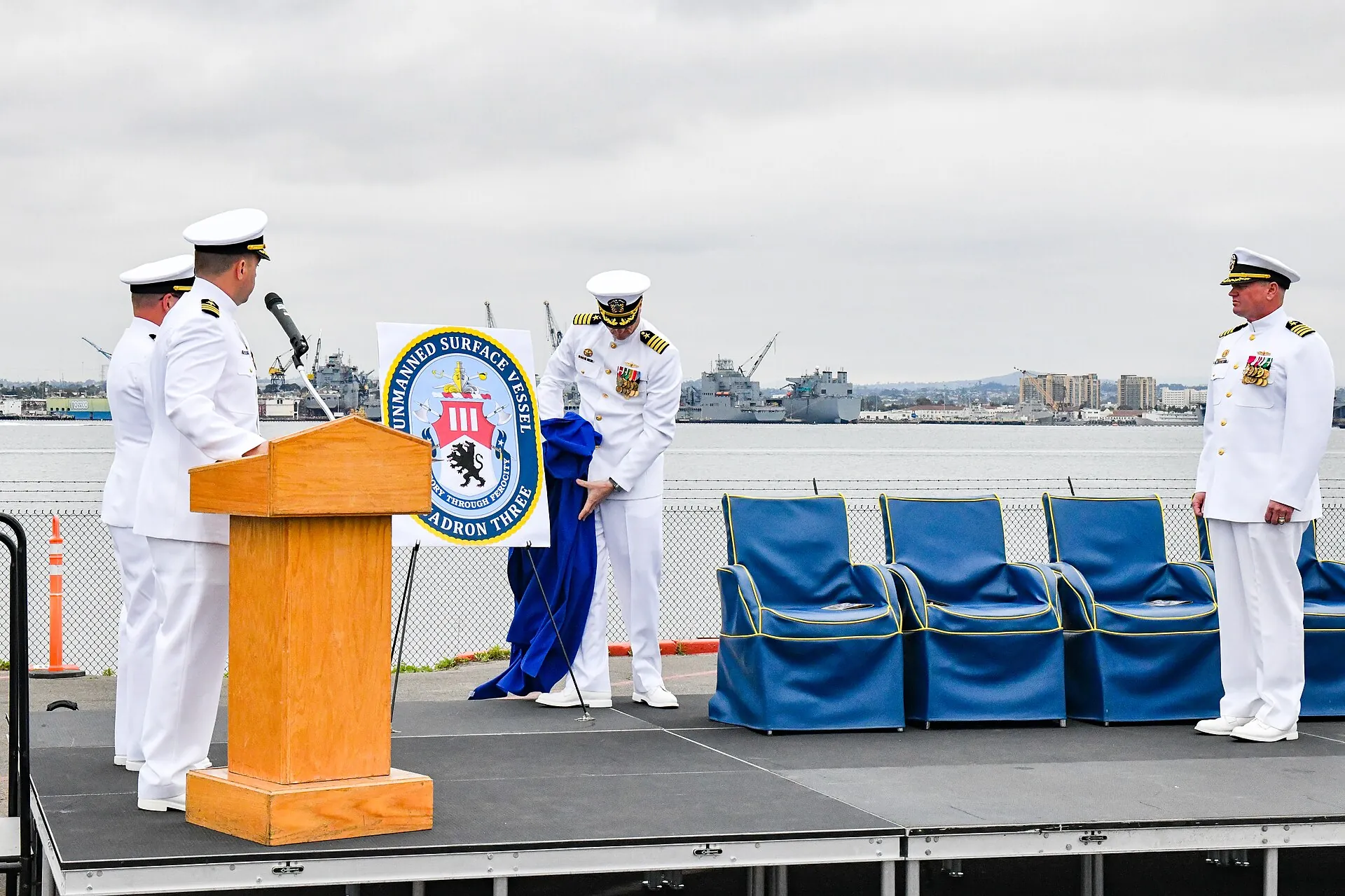
Saildrone set up its European subsidiary in April 2025 and began operating in Danish waters that June. On 17 August 2026 it formally opened its EU headquarters at the historic Quintus Bastion in Copenhagen’s Holmen district, with Denmark’s Prince Joachim attending and describing the company as bringing “the latest maritime sensing technology” to protect shared European waters. The office is not a sales front: mission planning, remote piloting, vehicle assembly, servicing and maintenance will all run from there, cutting the company’s dependence on US facilities.
The three build contracts announced with it split the work deliberately. Van Der Valk Shipyard in the Netherlands will construct the first European-built 52-metre Saildrone Spectre. Umoe Mandal in Norway takes the next-generation 20-metre Surveyor. Southern Spars in Poland will produce the Surveyor’s wing structures. Founder and CEO Richard Jenkins announced “not one, but three large construction projects.”
| Partner / Country | Scope of work | Why this firm |
|---|---|---|
| Van Der Valk Shipyard (Netherlands) | 52 m Saildrone Spectre — the first European-built hull | Established capacity in large composite and aluminium hull construction |
| Umoe Mandal (Norway) | Next-generation 20 m Surveyor | Advanced composite pedigree from Skjold-class hulls and Type 26 masts |
| Southern Spars (Poland) | Surveyor wing structures | High-strength spar and wing production drawn from competitive sailing |
| Saildrone Europe (Denmark) | Mission planning, remote piloting, assembly and maintenance hub | Proximity to Baltic and North Sea operating areas |
The geography is not accidental. Hull in Norway, large platform in the Netherlands, wings in Poland — three NATO members, all bordering or adjacent to the Baltic and North Sea basin. Saildrone moves its supply chain to this side of the Atlantic and simultaneously answers the domestic-content clause in three separate national defence budgets.
What a Surveyor actually is: a sensor platform that sails and does not come home
Surveyor sits at the heavy end of the Saildrone range, above the 7-metre Explorer and the 10-metre Voyager. It measures 20 metres (65 feet) and weighs roughly 15 tonnes, and it is classed to the American Bureau of Shipping Light Warship code — a certified military platform rather than an experimental boat.
The propulsion architecture is what makes it unusual. A rigid wing sail roughly 13 metres (44 feet) tall rises from the hull, supported by solar panels and a 78-horsepower high-efficiency auxiliary diesel generator. Under sail the vehicle burns nothing; the diesel is there for calms and for precise manoeuvring. The result is 2,500 nautical miles at six knots under power, more than three months under sail, and a stated maximum endurance of 180 days. The newer dual-source power architecture delivers 100 days between service stops with 2,000 watts of steady-state and 4,000 watts of peak payload power.

That power budget exists for the sensors. Surveyor carries a Kongsberg EM 304 MkII multibeam echosounder for deep water and an EM 2040 MkII for shallow work, mapping the seabed to 11,000 metres. Add a sub-bottom profiler and passive acoustic listening, and the platform becomes an intelligence collector as much as a survey vessel. The US Navy has been testing Surveyor for surface and undersea intelligence roles, anti-submarine warfare among them.
| Characteristic | Figure |
|---|---|
| Length / weight | 20 m (65 ft) / approx. 15 tonnes |
| Classification | ABS Light Warship code |
| Propulsion | ~13 m rigid wing sail + solar array + 78 hp auxiliary diesel generator |
| Speed / range | 6 knots; 2,500 nm under power, more than three months under sail |
| Endurance | Up to 180 days; 100 days between service stops on the new power architecture |
| Payload power | 2,000 W steady state / 4,000 W peak |
| Primary sensor | Kongsberg EM 304 MkII (deep) and EM 2040 MkII (shallow) multibeam sonar |
| Mapping depth | Down to 11,000 metres |
| Production | Austal USA (Alabama) in the US; Umoe Mandal (Norway) in Europe |
Six months in the Baltic: 170,000 contacts at 92 percent uptime

What keeps Saildrone’s European pitch from being a brochure claim is the Danish deployment. Four Voyager-class vehicles completed a six-month uninterrupted mission in Baltic waters, and the company released two numbers from it: 92 percent fleet uptime and more than 170,000 unique contacts detected.
Both figures matter more than they look. Ninety-two percent uptime means the fleet was on station almost every single day for half a year, and uptime is precisely where uncrewed programmes usually break — the vehicle is well designed, but maintenance intervals, failure rates and the remote support chain quietly end the deployment. The contact count shows the vehicles were not merely floating; they were generating a continuous tactical picture.
The Baltic focus has its own logic. Since the Nord Stream explosions of 2022, subsea pipelines, power interconnectors and fibre-optic data cables in the region have been damaged in a steady sequence of incidents. What these assets share is length: they run for hundreds of kilometres, and guarding them continuously with conventional warships is economically impossible. A crewed-free sensing platform that stays out for months is marketed squarely at that gap.
It is no coincidence, then, that Denmark’s state Export and Investment Fund led Saildrone’s $60 million round in April 2025. Copenhagen does not intend to be merely a buyer of this technology. It intends to build and export it.
The limits: a platform that sees but cannot shoot
The picture needs balancing. A Surveyor-class vehicle is, by design, an observer. Six knots means it cannot chase a fleeing contact or surge to a crisis area within hours. It carries no weapons, so a detected contact can be reported but not engaged. Even in settled conditions it requires storm-window management, and the wing sail — low radar cross-section claims notwithstanding — is visually conspicuous.
The second constraint is communications. A platform that operates unattended for months is only as valuable as its ability to get data ashore, which means satellite links. In an environment where satellite communications are jammed or positioning is spoofed, the vehicle survives physically but its intelligence value drops sharply. The Baltic and the North Sea happen to be among the regions where such interference is reported most frequently.
The correct reading, then, is that long-endurance sensing platforms are not competitors to armed uncrewed surface vessels but complements. One waits for weeks and builds the picture; the other acts on it. The real problem navies must solve this decade is fusing both classes into a single command architecture.
Reading it from Ankara
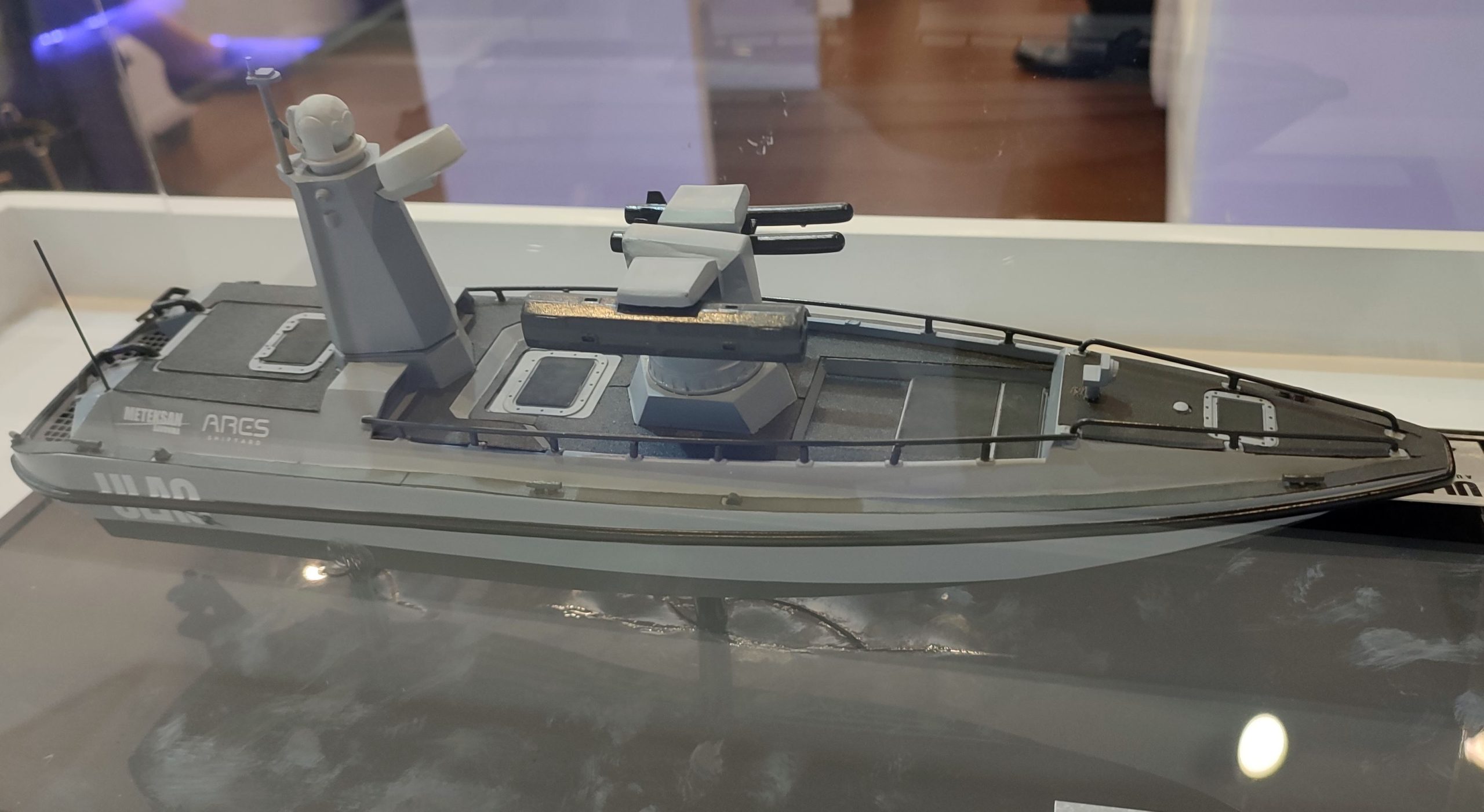
Türkiye’s uncrewed surface vessel portfolio deliberately occupies different ground. The ARES–Meteksan ULAQ, TAIS’s MARLIN, Yonca-Onuk’s ALBATROS-S and the ASELSAN TUFAN kamikaze USV launched only yesterday at TEKNOFEST Blue Homeland 2026 all sit in the offensive or expendable category. Turkish industry built that line fast and built it for export — and it did so in the years when the Black Sea was demonstrating, in public, exactly what armed sea drones can do to a conventional fleet. This is a response to a proven requirement, not a speculative one.
The class Saildrone represents answers a different question: unarmed, endurance-first platforms that listen passively and map the seabed for months. Türkiye’s Blue Homeland doctrine — exclusive economic zone claims, hydrocarbon exploration, subsea pipelines and drilling infrastructure on the continental shelf — describes precisely the kind of geography where a persistent sensing layer pays for itself. A platform that sits quietly around a drillship for weeks is worth as much as every frigate-day sent to the same task, at a fraction of the cost.
The second lesson concerns the business model, and it favours Ankara. The European customer’s new insistence on owning the production line is, in substance, the export model Turkish industry has run for years: joint production, local content, transferred technology. That was the common denominator behind Turkish platform wins in Indonesia, Malaysia and the Gulf. The procurement language Europe has just discovered is one Ankara already speaks fluently.
The third point is the most practical. Publishing measurable figures from the Baltic deployment — 92 percent uptime, 170,000 contacts — is as strong an export argument as the vehicle itself. Comparable public data on endurance, mission duration and detection performance for Turkish USVs would do more lasting persuasive work than any promotional film. The hardware is already in the water; what is missing is the documentation of what it does there.
Sources
- Naval News — Norway’s UMOE Mandal to produce Saildrone Surveyor V3 (25 August 2026)
- Defence Industry Europe — Saildrone expands European manufacturing in Norway, Poland and the Netherlands
- Saildrone — Saildrone Expands European Footprint (official release)
- Saildrone — Surveyor platform page