S-500 Prometey Explained: Range, Missiles and Status in 2026

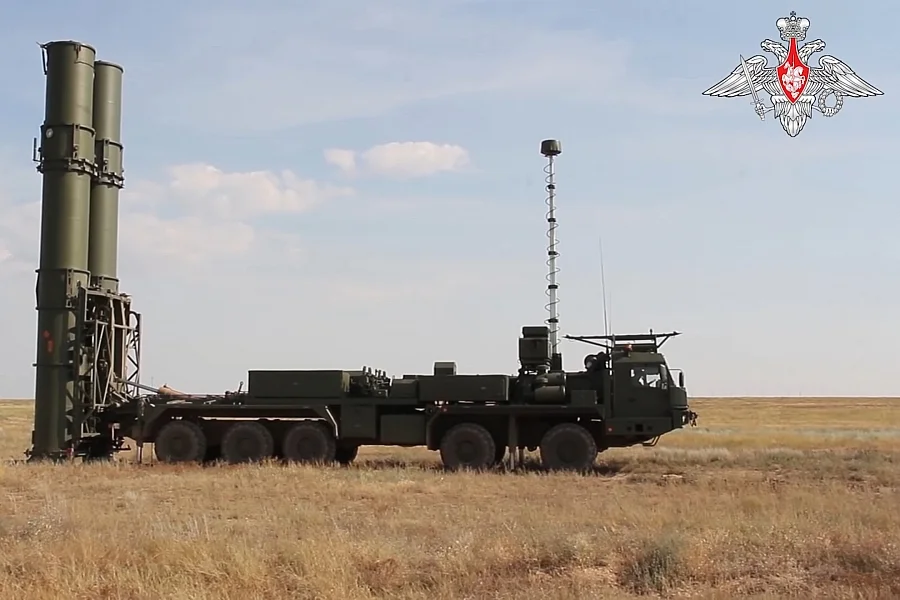
The S-500 Prometey is Russia’s newest long-range air and missile defence system, built to shoot down ballistic missiles, aircraft and, according to Russian officials, targets in near space. Developed by the Almaz-Antey concern, it entered service in 2021 to protect Moscow, TASS reported.
Interest in the system rose again in November 2026 after reports that Russia had offered India access to S-500 technology. This guide explains what the S-500 is, what it can reportedly do, how it differs from the S-400, and where the programme stands now.
What is the S-500 Prometey?
The S-500, also known by the name Prometey (Prometheus), is a mobile, ground-based surface-to-air missile system. The Missile Threat project of the Center for Strategic and International Studies (CSIS) describes it as designed to counter aircraft and ballistic and cruise missiles, with a reported ability to target low-orbit satellites.
Russia began developing the S-500 in 2010, shortly after deploying its first S-400 units in 2007, according to CSIS. The programme faced repeated delays, with serial production moved from 2014 to 2017 and then 2021.
Almaz-Antey designs the system to “defeat all possible means of an air and space attack” across the entire range of heights and speeds, TASS reported, describing it as the eventual replacement for the S-400 Triumf.
S-500 range and missiles
The S-500 fires more than one type of interceptor. According to CSIS, citing the Jamestown Foundation:
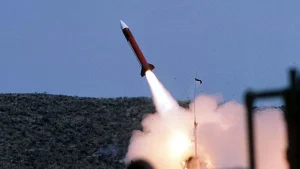
- 40N6M – for aircraft and cruise missiles, with a reported range of about 400 km.
- 77N6 and 77N6-N1 – new interceptors against ballistic missiles or satellites, with a reported range of 500–600 km.
In May 2018, Russia carried out what was described as the world’s longest surface-to-air missile test with the S-500, hitting a target nearly 482 km (300 miles) away. CNBC reported the test, citing sources familiar with US intelligence reporting.
In June 2021, Russian media reported the S-500 would receive interceptors capable of engaging hypersonic weapons. CSIS notes that this capability “remains uncertain”. Most performance figures for the S-500 come from Russian statements and have not been independently verified.
Radars and components
Each S-500 battery uses four radar vehicles, according to CSIS:
- 91N6E(M) – S-band acquisition radar
- 96L6-TsP – C-band acquisition radar
- 76T6 – multi-mode engagement radar
- 77T6 – anti-ballistic-missile engagement radar
Russian sources have claimed this radar set can detect ballistic targets at up to 2,000 km and air-breathing targets at up to 800 km, CSIS notes, citing the Russian outlet Versia.
When did the S-500 enter service?
On July 20, 2021, the Russian Defence Ministry said the S-500 had been tested against a high-speed ballistic target at the Kapustin Yar range in southern Russia. On September 16, 2021, then Deputy Prime Minister Yuri Borisov said the system had completed trials and the first launchers had been supplied to the armed forces, TASS reported.
On October 13, 2021, TASS cited a source close to the Defence Ministry as saying the first S-500 regiment had entered service with a unit guarding the airspace over Moscow. That airspace is the responsibility of the 15th Aerospace Forces Army (Special Purpose), which also covers the Central Industrial District.
The same source said the contract was “long-term” and that a second regiment would follow. Russia has not published how many S-500 units are now in service.
S-500 vs S-400: what is the difference?
| S-400 Triumf | S-500 Prometey | |
|---|---|---|
| Developer | Almaz-Antey | Almaz-Antey |
| First deployed | 2007 | 2021 (first regiment, Moscow) |
| Main targets | Aircraft, cruise missiles, drones, some ballistic missiles | Ballistic missiles, aircraft, cruise missiles; reportedly low-orbit satellites |
| Interceptors | Includes the 40N6 family | 40N6M; 77N6 and 77N6-N1 |
| Reported maximum range | About 400 km | 500–600 km (anti-ballistic interceptors) |
| Exports | Several customers, including India | No confirmed export customer |
The two are meant to work together rather than as direct substitutes. The S-400 covers a broad range of air threats at long range, while the S-500 is aimed at a higher tier of harder targets, including ballistic missiles with longer reach, ETDefence noted. Shorter-range systems such as the Pantsir-S1 and Buk-M3 fill the lower layers.
S-500 news in 2026: the India pitch
In November 2026, Military Watch Magazine reported that Russia had offered India access to S-500-related technology as part of a wider sale of ten more S-400 battalions, ETDefence reported on November 7. The offer emerged through Indian media reporting and has not been officially announced by either government.
India’s existing S-400 contract, signed in October 2018, was worth $5.43 billion for ten battalions, according to the report. Four had been delivered and a fifth was expected in November 2026.
ETDefence stressed that “technology transfer” can mean anything from local assembly and maintenance training to broader manufacturing rights. Until there is official confirmation, the reported proposal should be treated as an indication of intent rather than a settled agreement, it said.
How the S-500 fits Russia’s air defence
The S-500 sits at the top of a layered system that protects Moscow and other key sites. For the full picture of Russia’s forces, see our Russia military inventory. For a comparison with Western and Turkish systems, read our guide to the top air defence systems in 2026.
Russian-language readers can find our earlier report on the S-500 Prometey’s characteristics and status.
Frequently asked questions
What is the range of the S-500?
Its 77N6-series anti-ballistic interceptors reportedly reach 500–600 km, and the 40N6M about 400 km, according to CSIS. In a 2018 test it reportedly hit a target almost 482 km away.
Is the S-500 operational?
Yes. TASS reported in October 2021 that the first regiment had entered service with the unit defending Moscow. Russia has not disclosed how many units it now operates.
Has Russia exported the S-500?
No export contract has been confirmed. Reports in November 2026 said Russia had offered India access to S-500-related technology, but neither government has announced a deal.
Sources: TASS; CSIS Missile Threat; CNBC; Russian Ministry of Defence; ETDefence (The Economic Times) citing Military Watch Magazine.