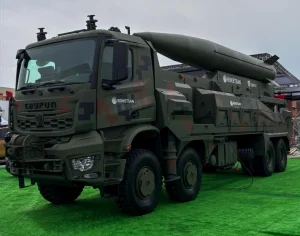
Roketsan Starts Serial Production of TAYFUN Block-3, the Missile That Hit a Moving Ship

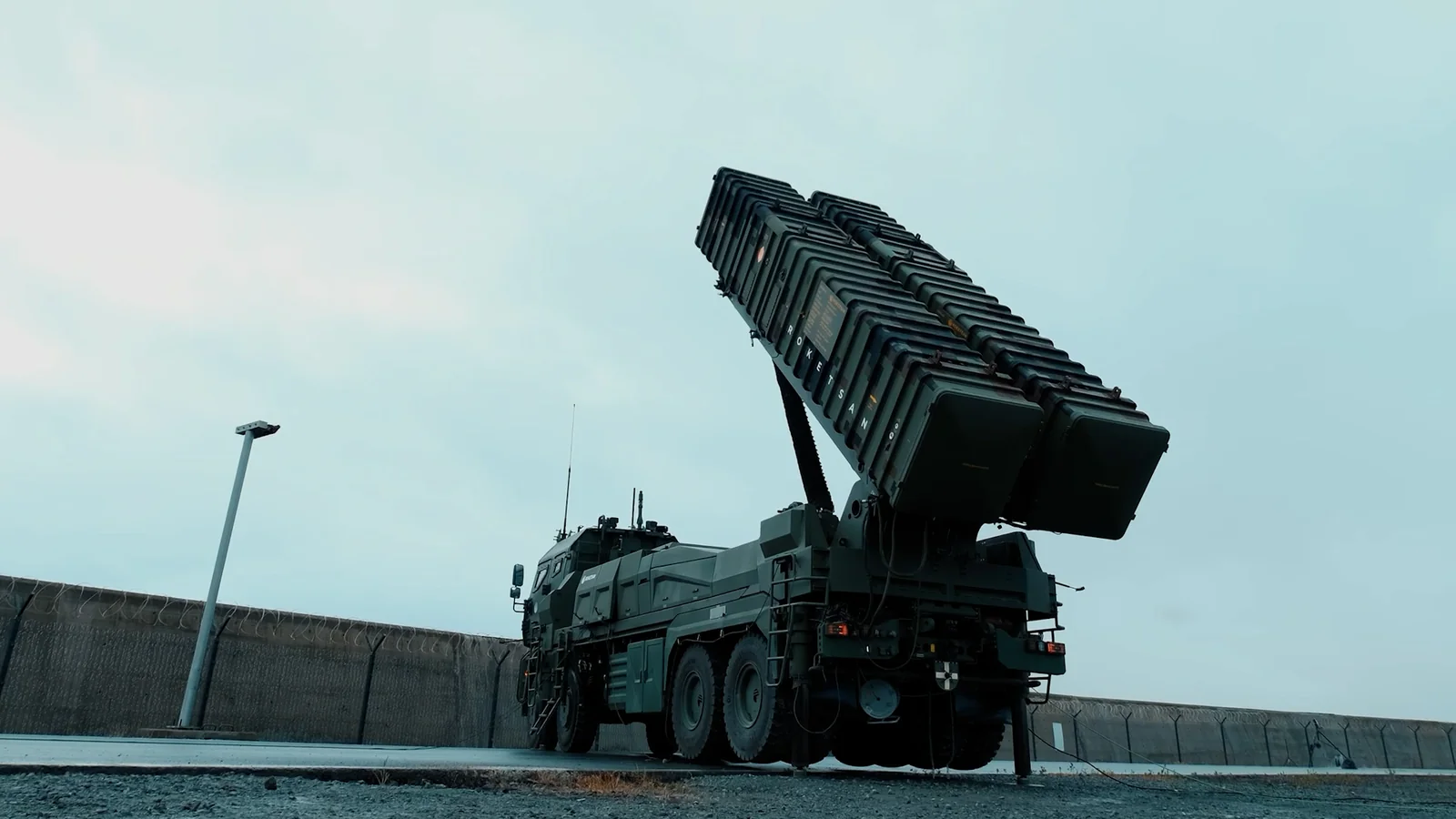
Roketsan General Manager Murat İkinci says serial production of the Block-3 variant of Turkey’s TAYFUN short-range ballistic missile is now underway, alongside the already-tested Block-2. İkinci said both versions are targeted to enter the Turkish Armed Forces’ inventory before the end of 2026. He made the remarks on October 3 at the TEKNOFEST Güneydoğu event in Şanlıurfa, and repeated the same timeline in a CNN Türk interview at the ADEX2026 exhibition.
Production running alongside testing
According to İkinci, Block-3’s flight-test campaign has not yet concluded, but the production line has already started turning out missiles in parallel. “Testing of Block 3 is continuing. At the same time, we have started serial production,” he said, describing a deliberate decision to keep Block-2 and Block-3 on the same delivery schedule rather than wait for one programme to finish before starting the other.
At ADEX2026, İkinci reiterated that both blocks have moved into serial manufacturing and that deliveries are planned within 2026. Roketsan has not disclosed unit numbers or a firm delivery calendar for either variant.
A seeker head that can hit a moving ship
The feature that distinguishes Block-3 from earlier TAYFUN variants is a seeker head integrated into the missile’s terminal stage, which allows it to detect and lock onto moving maritime targets. That capability pushes TAYFUN beyond a purely land-attack ballistic missile and into anti-ship territory, a combination still held by only a handful of states.
The capability was demonstrated in a live-fire test launched from Rize-Artvin Airport on Turkey’s Black Sea coast. The missile struck and destroyed an unmanned surface vessel roughly the size of a small fishing boat, using a live warhead. Defence-intelligence publisher Janes described the test as the first clear public demonstration by a NATO member of a ballistic missile engaging a moving sea target.
Range figures remain partly unofficial
Roketsan’s own public materials describe the TAYFUN family’s range as “over 280 kilometres.” Turkish government communications officials have previously cited an effective range of 280 kilometres and a maximum range of 800 kilometres for earlier TAYFUN tests, though those figures were not issued specifically for Block-3. Roketsan has not released Block-3-specific range, speed, or seeker performance data, citing operational security.
A rare capability class
Ballistic missiles able to strike moving ships are a capability held by very few armed forces worldwide; China’s DF-21D and some variants of Iran’s Fateh family are the examples most often cited in open-source literature. The Rize-Artvin test places Turkey closer to that small group, though no independent assessment of the system’s reliability under contested or electronic-warfare conditions has been published.
For a country bordering the Black Sea and the eastern Mediterranean, a land-launched missile able to threaten ships at sea adds a deterrent layer beyond what conventional anti-ship missiles typically reach, particularly around strait approaches and chokepoints.
Where TAYFUN fits in Turkey’s missile programme
TAYFUN is the most visible product of Turkey’s drive to build an indigenous short-range ballistic missile capability, with flight tests running intermittently since 2022. Each successive block has added range and guidance refinements; Roketsan has said in earlier statements that later blocks, including a reported Block-4, are meant to add complementary capabilities to the family. İkinci’s remarks at TEKNOFEST and ADEX2026 mark the first concrete signal that the programme has moved from flight testing into serial production and delivery planning for both Block-2 and Block-3, with the Turkish Land Forces expected to receive the first units, though Roketsan has not confirmed exact quantities or unit assignments.
Sources
Roketsan General Manager Murat İkinci, remarks at TEKNOFEST Güneydoğu (October 3, 2026) and in a CNN Türk interview at ADEX2026 — used to confirm Block-3 serial production status. Janes Defence Intelligence, “Türkiye Tests TAYFUN Block 3 Ballistic Missile” — used to verify the Rize-Artvin test and the moving-target engagement.