ROKETSAN Careers: Jobs, Career Paths and How to Apply

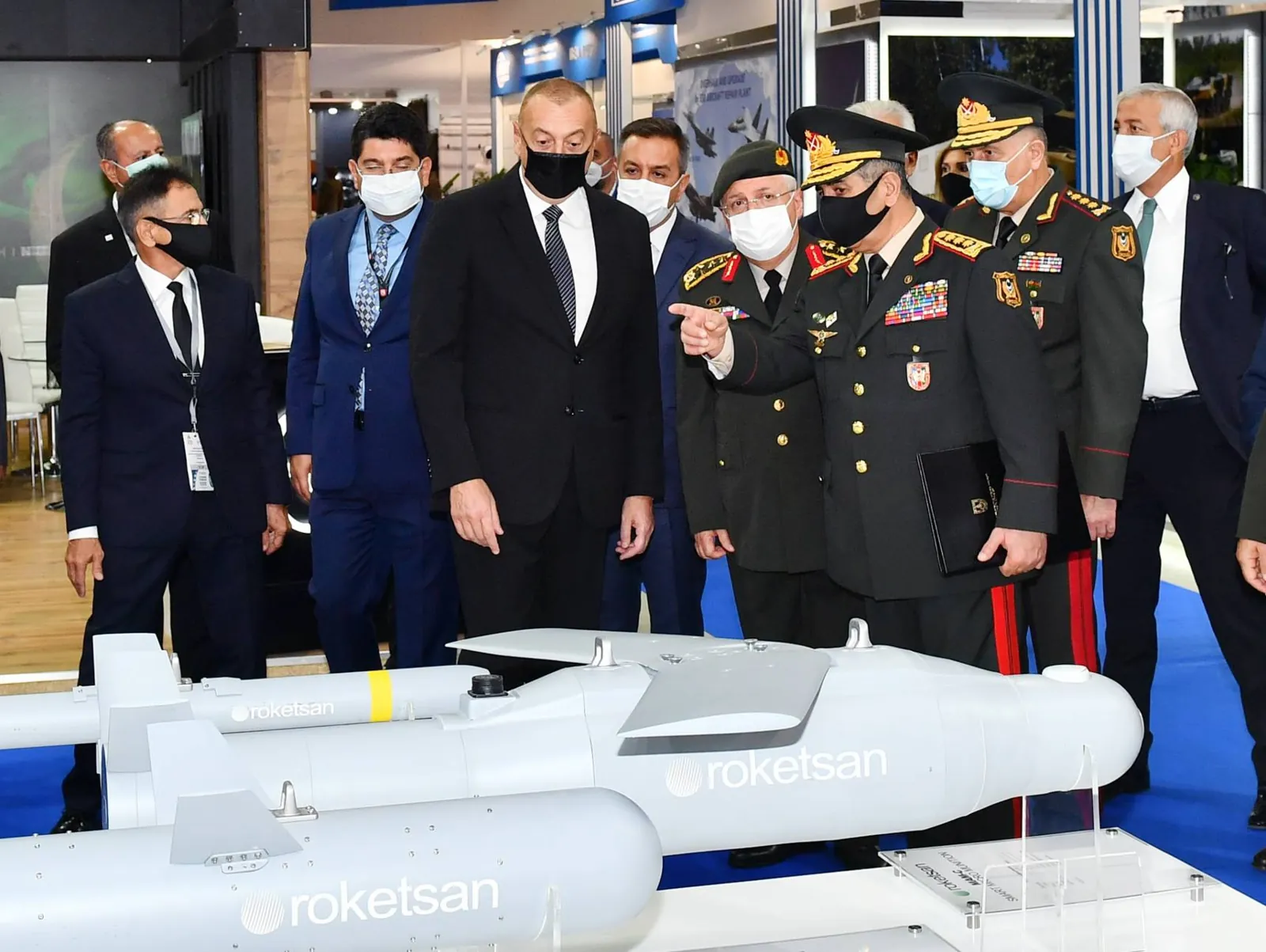
ROKETSAN careers span three broad groups: engineering, technician and corporate roles. With about 5,000 employees and a research staff of roughly 2,000, the Ankara-based missile maker is one of Türkiye’s most R&D-intensive defence employers. All applications go through the company’s official career portal, where open positions are posted.
| ROKETSAN Careers — At a Glance | |
|---|---|
| Company | ROKETSAN Roket Sanayii ve Ticaret A.Ş. |
| Industry | Defence (missiles, rockets, air defence, munitions) |
| Main locations | Ankara (Elmadağ; Lalahan, Kırıkkale) |
| Workforce | ~5,000 (~2,000 in R&D) |
| Main role groups | Engineering, technicians, corporate functions |
| How to apply | Official ROKETSAN career portal |
| Growth status | Lalahan + Kırıkkale plants (April 2026), $1B+ investment |
| CEO/General Manager | Murat İkinci |
What kinds of jobs does ROKETSAN offer?
ROKETSAN’s workforce falls into three main groups. The largest is engineering. Designing and producing missiles requires many disciplines working side by side: mechanical, aerospace, electrical and electronics, computer and software, chemical, industrial, metallurgy and materials, and mechatronics engineering. The technical spectrum runs from guidance and control algorithms to propulsion systems, from composite airframe design to flight-test engineering.
The second group is the backbone of the production and test floor: technicians. Graduates of two-year vocational colleges and vocational high schools work in assembly, integration, quality control, test infrastructure, maintenance and workshop operations. Skilled technicians matter enormously in sensitive areas such as missile integration and propellant production, and demand in this group is expected to grow as the Lalahan and Kırıkkale plants ramp up.
The third group is corporate functions: human resources, finance and accounting, procurement and supply chain, contract and project management, IT, corporate communications, legal and business development. Defence programmes are long-running and contract-heavy, so these functions need specialised professionals on a continuous basis.
On top of these, new-graduate programmes and internship intakes serve as the main entry route for students and young engineers. The full list of vacancies appears only on the official career portal; job titles and headcounts shift with project needs.
Why work at ROKETSAN?
The first draw is the nature of the technology. As Türkiye’s pioneering missile designer and manufacturer, ROKETSAN runs programmes such as ATMACA, HİSAR, SİPER, TAYFUN, CİRİT and the MAM smart-munition family. Working on them gives an engineer end-to-end system experience — design, test, production and fielding all happen inside one company — that is hard to find elsewhere.
The second is its R&D weight. Roughly 2,000 of about 5,000 employees work in research and development, an unusually high ratio that opens room to specialise in emerging fields: directed-energy systems, space and micro-satellite launch work, composite structures and propulsion technologies.
The third is growth momentum. General Manager Murat İkinci has stated that 2025 turnover exceeded $2 billion, with the total order book reaching roughly $10 billion on the back of new contracts. The Lalahan missile-integration and Kırıkkale propellant plants, opened in April 2026 with more than $1 billion invested, aim to lift missile production capacity around fivefold. Expanding output and exports generally translate into new hiring and internal promotion opportunities over the medium term.
Finally, there is institutional stability: ROKETSAN belongs to the Turkish Armed Forces Foundation (TSKGV) and works on long-term state programmes, which supports project continuity and job security. Pay and benefits are not officially disclosed; standard sector practice includes shuttle transport, meals and private health insurance.
The table below summarises ROKETSAN’s main position groups with example roles in each. It is not an official organisation chart; current vacancies are posted only on the official career portal and change with project needs.
Career paths, development and training
In organisations running decade-long R&D programmes, careers typically advance along two tracks. The technical expert track sees an engineer deepen in one field — guidance algorithms, solid-propellant technology, composite structures — and rise through specialist and senior specialist roles. The management track leads to team leadership, project management and department management. Both tracks open higher responsibility and pay bands; which one an employee follows usually depends on performance, interest and organisational need.
On development, standard defence-industry practice includes on-the-job training, mentoring, project rotation and technical training programmes. Supporting employees who pursue graduate degrees through university partnerships is also common in the sector, and ROKETSAN’s R&D-heavy profile makes master’s and doctoral study a natural part of many careers there. Because the exact scope of these programmes is not officially disclosed, candidates should confirm current development opportunities during the interview process.
For technicians, progression runs through seniority, certification and multi-skilling across different lines and machines. Moving up to foreman, team supervisor or into the quality organisation are common steps on the shop floor. In corporate functions, the specialist–senior specialist–manager ladder is typical.
How to apply: the career portal
The only official channel for job and internship applications is ROKETSAN’s own career portal. Candidates create a profile, upload a CV and apply directly to open positions. Listings on third-party job boards are not guaranteed to be current, so applications should always go through the official portal.
After applying, the typical flow includes CV screening, technical and HR interviews, assessment tests for some positions, and the security clearance investigation specific to the defence sector. Clearance can make the overall process longer than in other industries, and knowing this up front sets realistic expectations. Details vary by position; anything beyond officially announced steps here reflects general sector practice.
Practical preparation tips:
- Complete the portal profile fully: project experience, thesis work and internships make a difference at technical screening.
- Read the vacancy carefully: match your discipline, years of experience and skills to what the posting asks for.
- Refresh technical fundamentals: interviews test command of your field’s core topics.
- Know the company: familiarity with ROKETSAN’s product families and current programmes signals genuine motivation.
This guide combines ROKETSAN’s official corporate data (workforce, facilities, growth) with general defence-industry HR practice. The company does not officially publish its organisation chart, pay scales or the exact scope of training programmes; the only authoritative source for current vacancies and process details is ROKETSAN’s official career portal.
Frequently Asked Questions
What degrees does ROKETSAN hire for?
Mostly mechanical, aerospace, electrical and electronics, computer/software, chemical, industrial, metallurgy-materials and mechatronics engineering; plus vocational-college and vocational-high-school technicians, and corporate professionals in HR, finance, procurement and legal.
How do I apply for a job at ROKETSAN?
Through the official ROKETSAN career portal only. Candidates create a profile and apply to posted vacancies, which appear periodically according to project needs. The official portal, not third-party job boards, should be treated as the authoritative source.
How many people work at ROKETSAN?
About 5,000 as of 2024, roughly 2,000 of them in R&D. The Lalahan and Kırıkkale facilities opened in April 2026 target around a fivefold increase in missile production capacity, which points to continued hiring.
What does career progression look like at ROKETSAN?
Two main tracks: a technical expert track (specialist and senior specialist roles) and a management track (team lead, project manager, department manager). Development relies on on-the-job training, mentoring and graduate-study support common in the sector; exact programme scope is not officially disclosed.
Can new graduates join ROKETSAN?
Yes. New-graduate intakes and internship programmes are the most common entry route, and internship experience raises a candidate’s visibility in later hiring rounds. Applications are taken through periodic postings on the career portal.
Does ROKETSAN require security clearance?
Yes. As across the Turkish defence industry, hiring includes a security clearance investigation, which can lengthen the process compared with other sectors. Candidates should factor this into their timelines.
Sources
- ROKETSAN official — roketsan.com.tr
- ROKETSAN careers page — roketsan.com.tr/en/career
- Defense News Top 100, 2025 edition
- TSKGV — tskgv.org.tr
- General defence-industry HR practice (sector context)