Roketsan Fires ÇAKIR Cruise Missile From Land, Hitting Both Coastal and Sea Targets

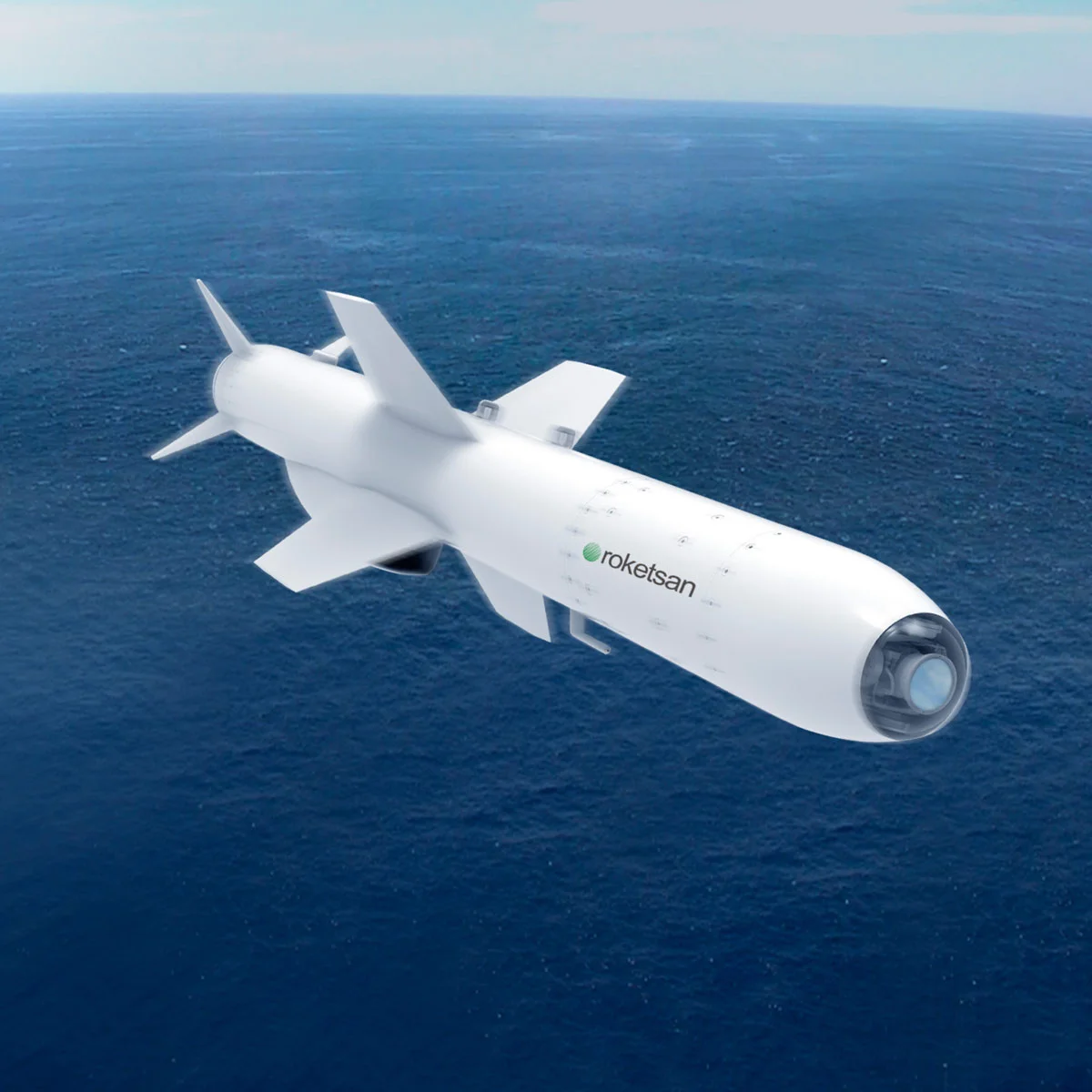
Roketsan announced on 28 August 2026 that it had fired its ÇAKIR cruise missile from a ground-based platform for the first time, with two missiles launched in separate tests against a land target and a maritime target. Both scored direct hits, the company said, and the firings also validated an extended range delivered by a new fuel system.
What the tests demonstrated
The missiles used a new-generation imaging infrared seeker, which builds a thermal picture of the target in the terminal phase rather than simply homing on a heat source. That matters most against ships, where the seeker has to pick a specific vessel out of a cluttered sea surface and aim at a chosen part of it.
Launching from the ground changes the physics of the shot. An air-launched missile begins its flight with the speed and altitude of its carrier; a surface-launched one starts from zero. ÇAKIR therefore takes a solid-propellant booster in its land and naval configurations, stretching the airframe from roughly 3.3 metres to somewhere between 3.8 and 4.1 metres and raising launch weight from about 275 kg to around 330 kg.
A missile built to fit almost anything
Roketsan unveiled ÇAKIR in March 2022 as a modular family intended for air, naval and land platforms. It is a subsonic weapon powered by a Kale Arge KTJ-1750 turbojet, with a stated range above 150 km. Guidance combines inertial navigation with anti-jam satellite navigation, radar and barometric altimeters, and in some fits terrain-referenced navigation — the ingredients for sea-skimming or terrain-following flight profiles.
A two-way datalink lets an operator retarget the missile in flight, order a re-attack, or abort the mission. Roketsan also lists coordinated swarm employment among the design goals. The first flight test came in May 2023, when a ÇAKIR was released from a Bayraktar Akıncı unmanned combat aircraft at around 7,000 metres.
Size is the point. Heavy cruise missiles restrict the launcher to large combat aircraft, submarines or ships with vertical launch cells. A 275 kg weapon fits under the wing of a mid-sized drone, on the deck of a fast attack craft, or in a canister on a truck. The same round can therefore be bought once and fired from many places — a procurement argument as much as a tactical one.
Why a land launcher matters
Ground-launched anti-ship missiles have moved from a niche capability to a central one over the past four years. Mobile coastal batteries are cheap relative to warships, difficult to find, and capable of holding a sea area at risk without committing a fleet to it. The Black Sea provided the clearest demonstration of that arithmetic.
For Türkiye, coastal defence itself is not new; ATMACA has already been fielded in a shore-based role. What ÇAKIR adds is commonality. A single compact round shared across drones, patrol boats and trucks simplifies stockpiles, training and maintenance in a way that separate weapons for each platform cannot.
Export picture
Qatar and Indonesia have been confirmed as ÇAKIR customers, with an Indonesian joint venture envisaged for local production. Validating the land-launched configuration widens the addressable market to states shopping for coastal batteries rather than air-launched strike weapons.
Roketsan did not say whether the firings formed part of a formal qualification campaign or were staged as a customer demonstration, so the timeline for the ground-launched variant entering service remains unstated. The test range, the launcher type and the range figure achieved were likewise not disclosed.
Sources
- Roketsan official statement, 28 August 2026
- Roketsan product page — ÇAKIR Cruise Missile