MBDA and Poland’s WITU Close In on a Cheap Supersonic Interceptor, Firings Set for 2027

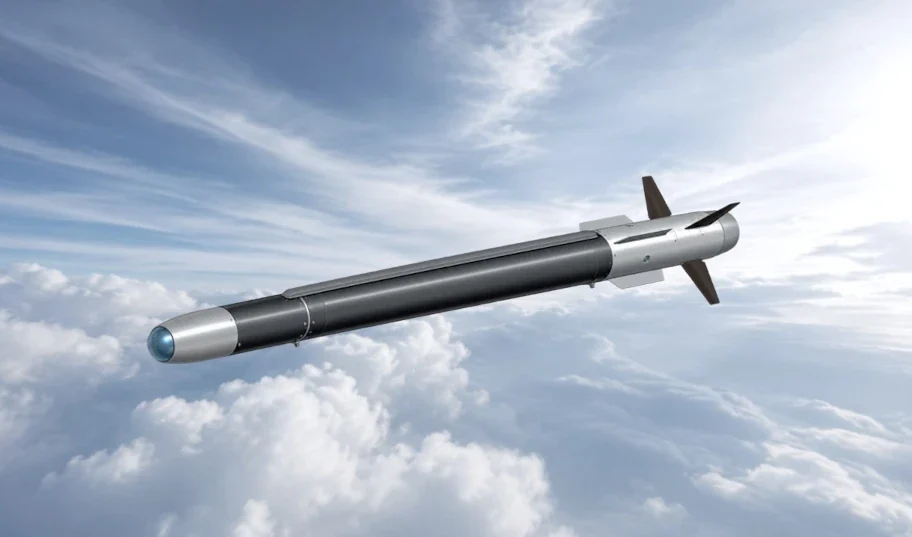
Europe’s answer to the drone-versus-interceptor cost problem took a concrete step this week. MBDA and Poland’s state armament technology institute WITU said they have completed seeker field trials for the Counter Mass Interceptor (CMI), a low-cost supersonic missile built to absorb saturation attacks by one-way attack drones and cruise missiles. An initial firing campaign is planned for 2027.
What was tested
The trials took place at a Polish test range in September 2026 and put the seeker through a spread of use cases, including representative drone target types. Their completion clears the way for integration of the seeker into a prototype missile body designed by WITU — the step that has to be finished before live firings can begin.
CMI is described as a supersonic missile able to engage targets at ranges and altitudes beyond 6 km. Both partners are drawing on field-proven technologies rather than starting from a blank sheet, an approach meant to compress schedule and cost risk.
The arithmetic driving the programme
The logic behind CMI is not exotic. Ukraine and the Middle East have made the imbalance impossible to ignore: drones that cost tens of thousands of dollars are routinely shot down with missiles costing hundreds of thousands, sometimes millions. Defenders burn through inventory faster than attackers burn through airframes.
MBDA and WITU are positioning CMI against exactly that gap, pairing an affordable design with production capacity sized for mass attacks. The target set spans one-way attack drones, ISR unmanned aircraft, helicopters and cruise missiles.
MSPO 2026 and the Northolt framework
The cooperation sits under a broader memorandum of understanding signed at Poland’s MSPO 2026 defence exhibition, covering missile research and drawing on British and Polish government support under the Northolt Treaty. The partners say the aim is a sovereign Polish missile capability rooted in the domestic industrial base, and a low-cost European interceptor available to allied forces.
For MBDA, this builds on an existing footprint. The company is already embedded in Poland’s PILICA+ very-short-range and NAREW medium-range air defence programmes. Chris Allam, MBDA’s UK Managing Director, said the cooperation “expands on our strong support to Poland’s world leading layered air defence capability as we ramp up delivery of PILICA+ and unprecedented technology transfer on NAREW.” Colonel Paweł Sweklej, CEO of WITU, said the arrangement lets Poland pair “a fully Polish missile design” with a state-of-the-art seeker, alongside the institute’s parallel work with MBDA on HYDIS.
Why the timing matters
CMI is maturing while Polish airspace is being violated by Russian drones and NATO’s eastern flank is rehearsing dispersed basing. Warsaw’s recent moves share one objective: reserve expensive interceptors for high-value threats and build a lower tier that can meet cheap, numerous targets in their own price class.
That layered logic will be familiar to readers following Türkiye’s own air defence build-out, where GÜRZ, KORKUT and SUNGUR sit under longer-range systems and directed-energy work is being pushed toward the same cost question. CMI is a useful marker of how European industry intends to compete for that layer — and for the export market forming around it.
Sources
- MBDA — “Counter Mass Interceptor cooperation announced at MSPO”
- Defence Industry Europe, 13 September 2026