Lockheed Martin to Accelerate AIM-260 JATM Output Under New U.S. Framework Deal

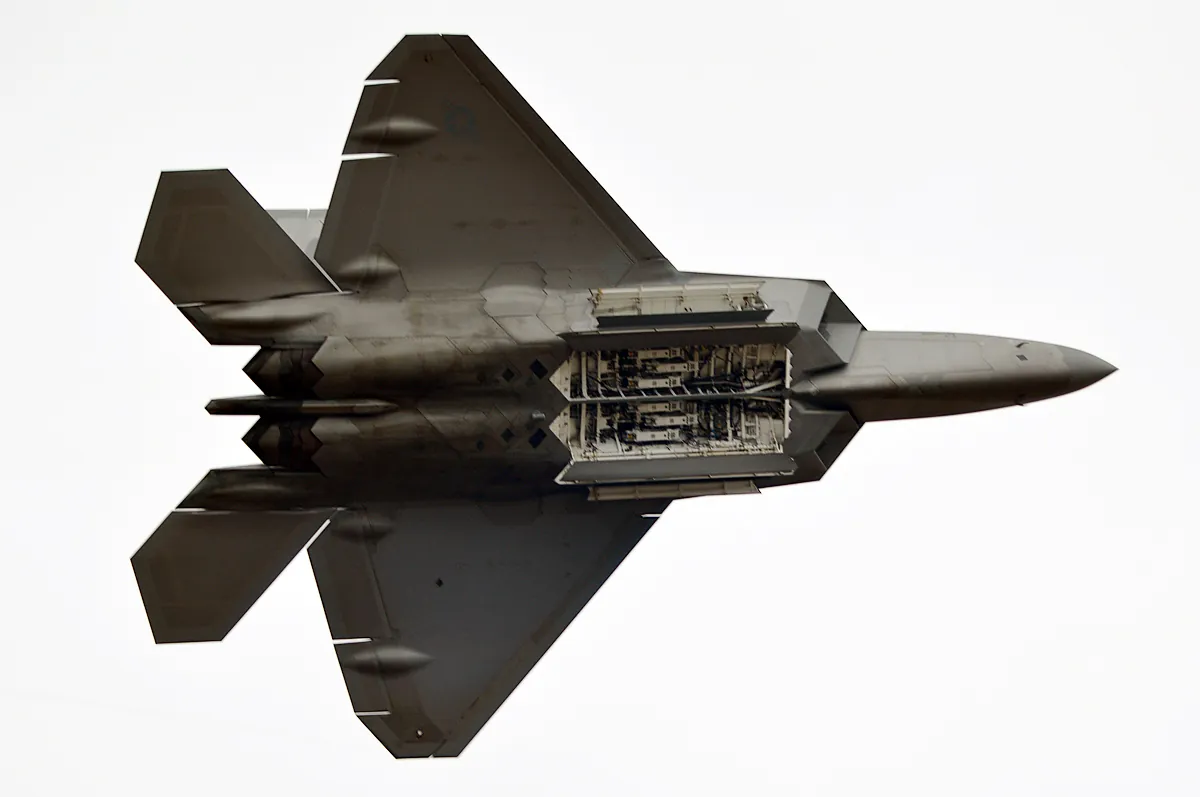
WASHINGTON, 17 September 2026 — Lockheed Martin and the U.S. Department of War have signed a framework agreement to accelerate production of the AIM-260 JATM air-to-air missile. The deal lays the groundwork for a multiyear procurement contract that will require congressional approval. Carried by the F-22 Raptor and F-35 Lightning II, the weapon sits at the centre of the U.S. Air Force’s long-range air superiority architecture.
What the framework delivers
The agreement does not itself carry an order quantity; it is a framework aimed at expanding manufacturing capacity. Lockheed Martin will back the investments needed to increase output across the JATM industrial base — an expansion that reaches into rocket motor, guidance section and warhead suppliers, not just the prime’s final assembly line.
Tim Cahill, president of Lockheed Martin Missiles and Fire Control, said the company “will deliver JATM at the speed our nation and allies demand.” The second half of that sentence matters: the programme is no longer framed as a U.S.-inventory-only effort.
No annual production target, delivery schedule or total value has been disclosed. The multiyear contract itself depends on congressional approval; such contracts typically give the manufacturer volume certainty and the government a lower unit price.
What the AIM-260 JATM is
JATM — the Joint Advanced Tactical Missile — is being developed by Lockheed Martin as a joint U.S. Air Force and Navy programme. It is positioned as the next-generation replacement for the AIM-120 AMRAAM family, the West’s standard beyond-visual-range air-to-air weapon for three decades.
Technical detail remains largely classified. What is public is that the missile offers greater range and effectiveness than existing air-to-air weapons and is designed against both current and projected airborne threats. Its dimensions are understood to have been set so that an F-22 can carry the same number internally as it does AMRAAMs — meaning added reach without giving up internal loadout.
The driver behind the programme is the range advantage of China’s PL-15 and its derivatives. U.S. planners have argued for years that even the latest AMRAAM variants fall into a range disadvantage in certain engagement geometries. JATM was designed to close that gap.
The Australian connection
The programme has acquired an international dimension. Australia has announced an investment commitment to equip its air force with JATM, with the total programme investment put at $736 million. The initial order line reported by Envanter Medya on 1 September stood at $520 million; the difference reflects the distinction between a first-tranche buy and total programme investment.
Canberra’s rationale is allied interoperability. The Royal Australian Air Force operates the F-35A and the F/A-18F Super Hornet, and sharing a common magazine with the United States is decisive for logistics and stockpile management in joint Indo-Pacific planning.
Read from Ankara
Since its removal from the F-35 programme in 2019, Türkiye has been building its own answer in the beyond-visual-range segment. The GÖKDOĞAN programme, run by TÜBİTAK SAGE and Roketsan, was designed to meet the active-radar BVR requirement, while the infrared-guided BOZDOĞAN has already entered service in the short-range category. Both form the backbone of KAAN’s planned weapons package.
JATM entering serial production is not a procurement question for Türkiye — the missile was never going to enter the Turkish inventory. But it carries two indirect effects. The first concerns the regional air superiority balance: as Greece’s F-35A programme advances, the possibility of JATM later joining that inventory would change the range comparison. The second is the benchmark question — against what threshold GÖKDOĞAN’s range and counter-countermeasure targets are set.
A missile replacing AMRAAM in serial production also means AMRAAM stocks gradually freeing up on the second-hand and re-export market. That is a side effect that could ease AMRAAM procurement for mid-tier air forces over the next decade.
The programme’s key uncertainty is cost. JATM’s unit price is widely expected to sit well above AMRAAM’s, which is why a mixed inventory rather than wholesale replacement is the working assumption. Driving that unit cost down is precisely what the multiyear contract is meant to achieve.
Sources
- Lockheed Martin corporate statement and remarks by Tim Cahill, 17 September 2026
- Defence Industry Europe, “Lockheed Martin says new U.S. agreement will accelerate AIM-260 production”, 17 September 2026
- Australian Department of Defence JATM investment announcement