The Harpoon Comes Ashore: Land-Based Launcher Hits Its Target Ahead of Taiwan Delivery

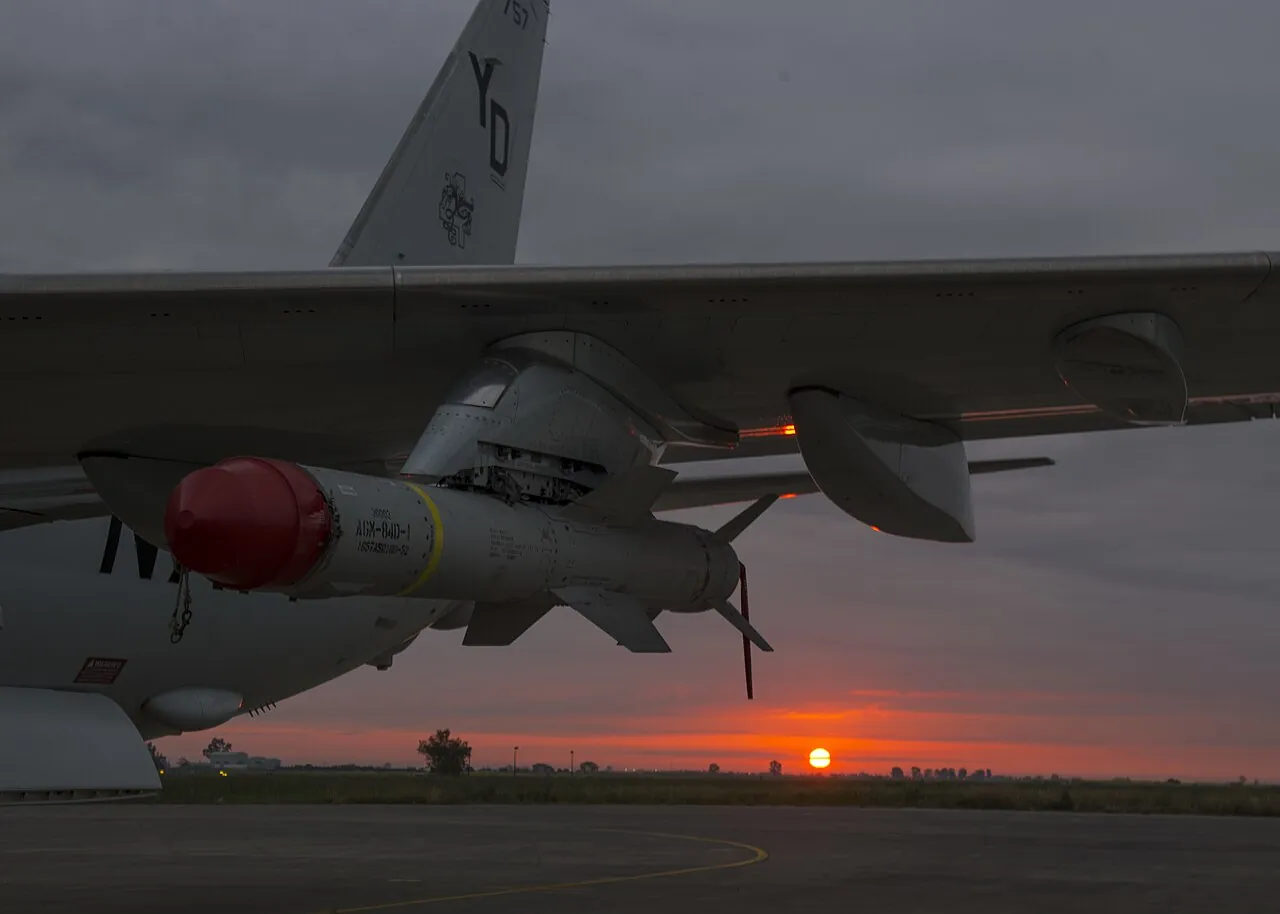
A Harpoon missile launched from dry land struck a vessel manoeuvring in littoral waters off California. The US Navy has confirmed the result of the first developmental test of the Harpoon Coastal Defense System (HCDS), and the significance sits less in the hit itself than in who is waiting for the system.
DT-1 at Point Mugu
The test, designated DT-1, was conducted at the Point Mugu Sea Range in late July across two days of intensive activity. The Navy said it validated the system’s ability to engage and neutralise maritime threats, demonstrating that a Harpoon can be launched from shore against a vessel operating in near-shore waters.
HCDS is not currently under contract with the US military or any force other than Taiwan’s. The successful live-fire is therefore a step tied directly to Taipei’s order rather than to an American requirement.
Moving a naval missile onto a truck
The AGM/RGM-84 Harpoon has been in service since the 1970s, launched from surface ships, submarines and aircraft. It is a subsonic sea-skimmer with an active radar seeker, and its ubiquity across dozens of navies is itself an argument: munitions, spares and training pipelines already exist.
In the coastal defence configuration the missile moves to mobile truck-mounted launchers, with fire control and communications relocated to ground vehicles. The military logic is straightforward. Launchers disperse across terrain, relocate and hide. Sinking a warship requires one successful engagement; suppressing dozens of dispersed launchers demands a far larger reconnaissance and strike effort, sustained over time.
Taiwan’s $2.3 billion bet
Taiwan has ordered HCDS in a package worth roughly $2.3 billion. Coastal batteries sit at the centre of what Taipei describes as asymmetric defence: rather than a small number of expensive capital platforms, a large number of dispersed, mobile and comparatively cheap systems intended to make an amphibious operation prohibitively costly.
The island already fields indigenous Hsiung Feng II and III anti-ship missiles in shore batteries. Adding Harpoon deepens the magazine and creates a second supply source tied to the American logistics chain.
Why the timing is awkward
US arms sales to Taiwan have accumulated a backlog measured in billions of dollars of approved-but-undelivered orders. The causes are familiar: transfers to Ukraine competing for production capacity, munitions output struggling to match demand, and some systems no longer in active production.
HCDS occupies a particular corner of that problem. The system is in service with no military anywhere, which means the Taiwanese order requires standing a production line back up. Completing developmental testing is one of the validation steps that has to close before serial production begins.
Sea denial as a doctrine
Shore-based anti-ship missiles have recovered a value they had lost. Ukraine’s Neptune batteries demonstrated in the Black Sea that coastal defence can push a modern navy away from a body of water without contesting it directly. Norway’s NSM-based coastal systems, Japan’s Type 12 batteries and the US Marine Corps’ NMESIS reflect the same conclusion from different starting points.
What unites them is an objective short of sea control. The aim is not to use the water but to deny its safe use to somebody else — a cheaper proposition, and one available to states that cannot fund a blue-water fleet.
Turkiye’s own coastal line
Turkiye answered the same question with ATMACA. Developed by Roketsan, it has been integrated across several classes of Turkish Navy vessels and has entered service in a land-based battery configuration. Its range class exceeds 200 kilometres, and its architecture supports target updates through the cruise phase.
Geography drives the requirement. The Aegean and Mediterranean present islands and narrow passages; the Black Sea presents a long coastline. Mobile shore batteries offer both deterrence and rapid repositioning in a crisis.
Land-based Harpoon and ATMACA coastal batteries occupy a similar range class. The difference lies in the supply chain: Turkiye builds the missile, the fire control system and the launcher domestically and controls its own export decisions — a position whose commercial value is visible in ATMACA’s export discussions, Indonesia among them.
Sources
- US Navy press release, “Harpoon Coastal Defense System successfully intercepts target vessel in crucial testing”, 28 August 2026 (navy.mil)
- US Navy Point Mugu Sea Range test communications