Canada Puts C$11 Billion Into Ice: Six New Icebreakers for the Coast Guard

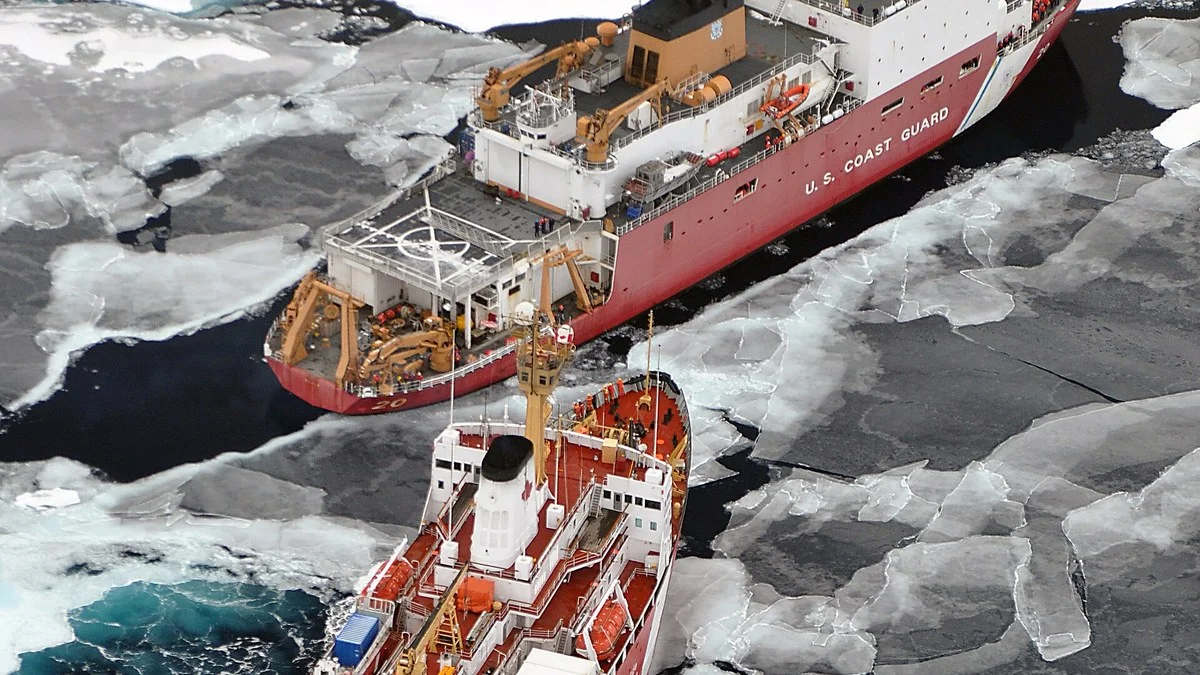
Canada has put a number on its Arctic ambitions. On 24 August 2026 Prime Minister Mark Carney announced an investment of more than C$11 billion to build six new program icebreakers for the Canadian Coast Guard in partnership with Chantier Davie Canada. The government described it as the largest shipbuilding contract in Quebec’s history.
The ships
The six vessels will be built to Polar Class 3, the third-highest rung on the seven-step scale the International Association of Classification Societies uses for polar ships. In practice that means year-round operation in waters containing multi-year ice.
Published design parameters put the ships at roughly 110 to 120 metres in length, capable of maintaining three knots through 1.4 metres of ice. That single figure — sustained speed against a given ice thickness — is the fundamental measure of an icebreaker. It determines whether the ship can open a channel for a convoy and how quickly it can reach a vessel in trouble.
These are not single-purpose hulls. The Coast Guard describes the program icebreakers as multi-mission ships covering science support, search and rescue, marine pollution response, escort duty and sovereignty patrol.
Timeline and industrial weight
Construction is scheduled to begin in 2027 at the Davie yard in Levis, Quebec. The first ship is due five years later, with the full fleet expected in service by 2038. Ottawa says the construction phase alone will support close to 5,000 jobs and contribute roughly C$650 million a year to national GDP.
Davie did not arrive here overnight. The yard received a C$19.6 million contract in 2024 for initial design work on the six program icebreakers, and in March 2026 held a production start ceremony for a separate polar icebreaker. The new award converts design into full-rate construction.
Why everyone suddenly wants icebreakers
Seasonal ice retreat has opened northern sea routes for longer stretches of the year. That helps commercial shipping and it helps military access, which is the part governments are reacting to. Russia operates the world’s largest icebreaker fleet, part of it nuclear-powered. The United States has spent years discussing the gap left by its ageing heavy icebreakers and has been accelerating replacement programmes.
Canada’s move reads two ways. It renews the capacity to maintain a persistent presence in its own northern waters, and it keeps polar shipbuilding inside the country as a sovereign industrial capability. That capability is narrower than it sounds: specialised steel alloys, reinforced hull geometry and high-torque propulsion put polar construction within reach of only a small number of yards worldwide.
Why an icebreaker costs what it costs
C$11 billion for six hulls invites scrutiny, so it is worth saying what the money buys. Ice-belt plating is thickened and made from alloys that do not turn brittle in extreme cold. The bow is shaped to ride up onto the ice and break it under the ship’s own weight. Propulsion must deliver high torque at low speed, which typically means diesel-electric or azimuth arrangements, with propellers strengthened against ice impact. Endurance stores — fuel, water, provisions, waste — all scale up for weeks on station.
Add the mission fit: a flight deck, laboratory space, pollution response gear, search and rescue equipment. What emerges is a long-lived, multi-role and expensive platform, and a schedule that runs to 2038 for good reason.
The political layer
Announcing the contract in Quebec, and framing it as the province’s largest shipbuilding deal, makes the industrial-policy dimension explicit. Canada’s national shipbuilding strategy distributes major naval programmes across designated yards, and Davie has settled into the polar and icebreaking lane. Five thousand construction jobs is the regional argument that goes with the strategic one.
Sources
- Office of the Prime Minister of Canada, news release, 24 August 2026
- Canadian Coast Guard and Public Services and Procurement Canada programme announcements
- Chantier Davie Canada Inc. corporate statements