British Submarines: Complete Royal Navy Fleet Guide

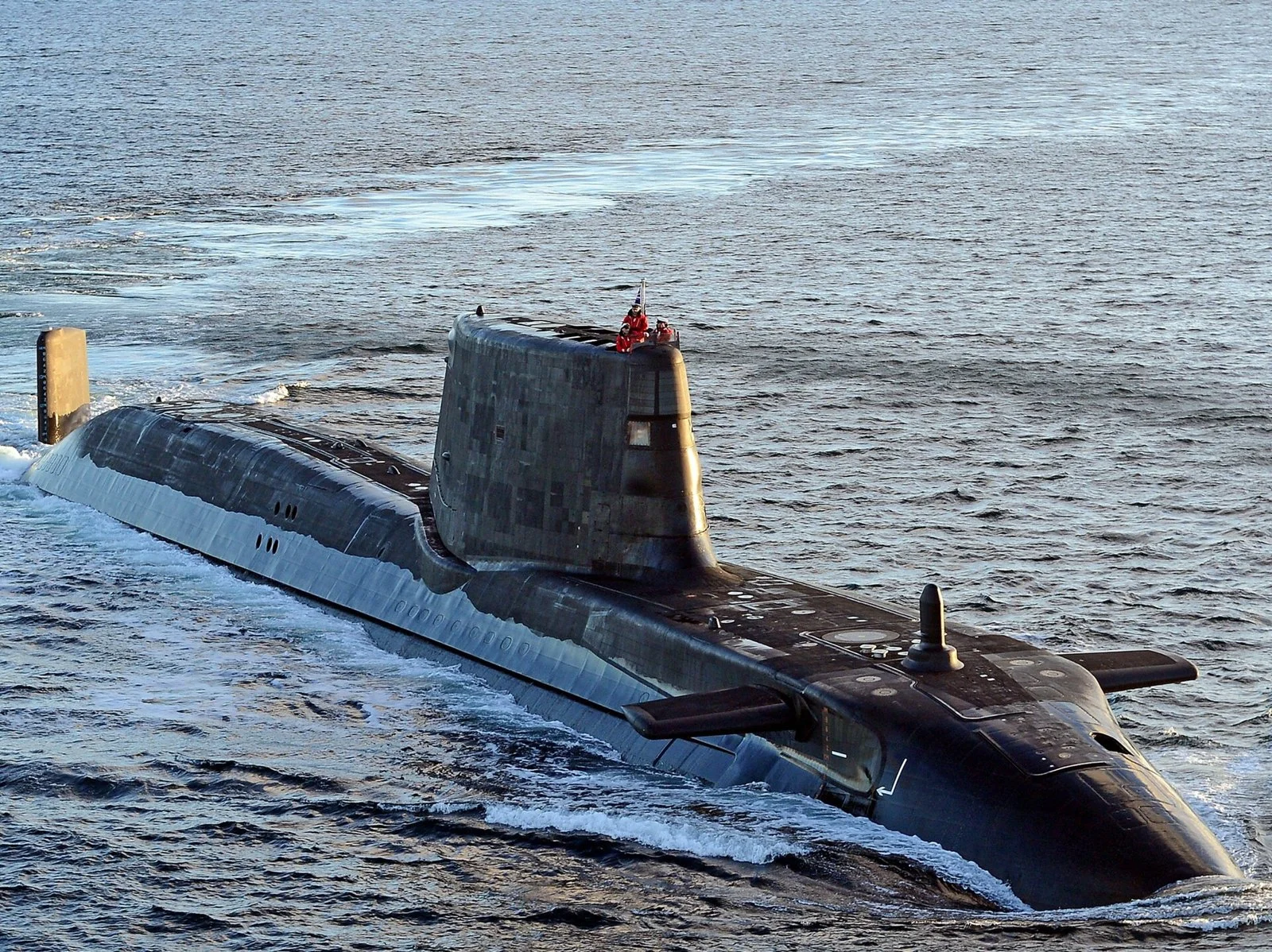
As of 29 November 2026, the Royal Navy counts nine submarines in service: four Vanguard-class ballistic missile boats and five Astute-class attack submarines. All are nuclear powered. A sixth Astute is on sea trials, a seventh is being built, and four Dreadnought-class submarines are under construction.
Britain’s submarine force does two very different jobs. One group of boats carries the country’s nuclear deterrent. The other hunts ships and submarines, protects the fleet and can strike targets on land. This guide separates the boats you can count today from those still being tested, built or planned.
How many submarines does the Royal Navy have?
The Ministry of Defence’s 2026 annual update on the Defence Nuclear Enterprise, published in September 2026, lists four Vanguard-class submarines and five Astute-class submarines in service. The sixth Astute, HMS Agamemnon, was commissioned in September 2025 but was not among the five: she left Barrow for sea trials in September 2026.
“In service” does not mean “at sea”. The government does not disclose how many submarines are available on a given day. Specialist outlet Navy Lookout reported in June 2026 that all five operational Astutes were alongside at the same time; the Ministry of Defence has not confirmed that picture.
Current submarine fleet by class
| Class | Type | Propulsion | Number in Service | Builder | Programme Status |
|---|---|---|---|---|---|
| Vanguard | SSBN | Nuclear | 4 | Barrow yard (now BAE Systems) | In service, to be replaced |
| Astute | SSN | Nuclear | 5 | BAE Systems | 1 more on trials, 1 building |
| Dreadnought | SSBN | Nuclear | 0 | BAE Systems | 4 under construction |
| SSN-AUKUS | SSN | Nuclear | 0 | BAE Systems | Planned, in design |
| Trafalgar | SSN | Nuclear | 0 | Barrow yard | Retired (last boat 2025) |
The Astute boats one by one
| Boat | Pennant | Status |
|---|---|---|
| HMS Astute | S119 | In service; due for a mid-life revalidation period |
| HMS Ambush | S120 | In service; reported at very low readiness |
| HMS Artful | S121 | In service |
| HMS Audacious | S122 | In service; long maintenance at Devonport |
| HMS Anson | S123 | In service |
| HMS Agamemnon | S124 | Commissioned, on sea trials |
| HMS Achilles | S125 | Under construction |
The Trafalgar class has left service. HMS Triumph, the last of the seven, was decommissioned in July 2025.
Submarine types: SSBN and SSN
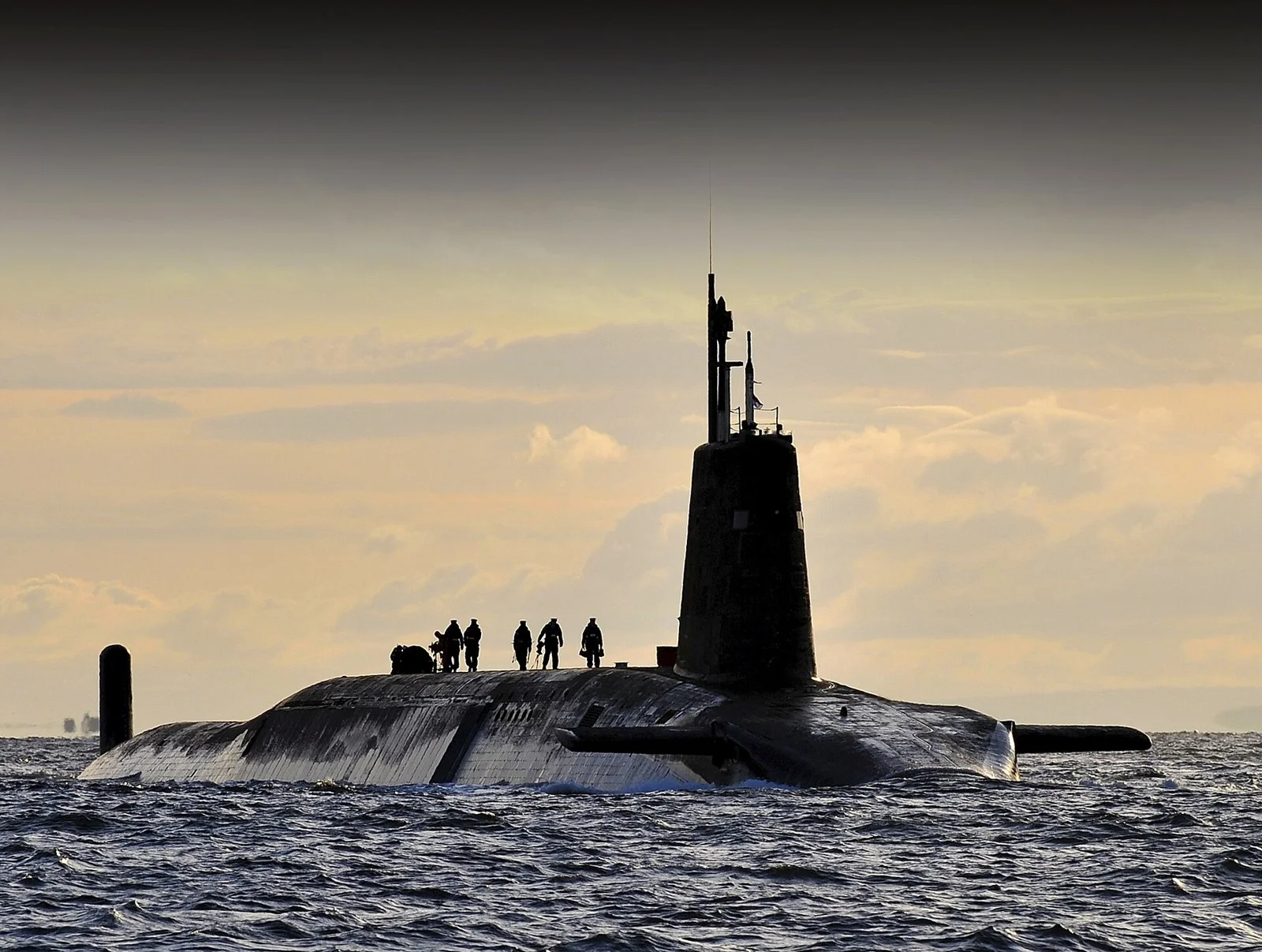
SSBNs are ballistic missile submarines. Their task is to stay hidden so that a nuclear response is always possible. Britain has kept at least one deterrent submarine on patrol continuously since April 1969.
SSNs are nuclear-powered attack submarines. They carry conventional weapons only. “Nuclear” here describes the engine, not the warheads. Our explainer on how nuclear submarines work covers the reactor and life support.
Are British submarines nuclear or conventional?
Every submarine in the current fleet is nuclear powered. Vanguard and Astute use the PWR2 pressurised water reactor and Dreadnought will use the newer PWR3. Rolls-Royce builds the reactor plant in Derby. According to the Ministry of Defence, an Astute’s reactor never needs refuelling during the boat’s service life.
Technical specifications
| Item | Astute | Vanguard | Dreadnought |
|---|---|---|---|
| Length | 97 m | 150 m | 153.6 m |
| Displacement | 7,400 t | 15,900 t | Figures differ |
| Crew | 98 | 135 | 130 |
| Speed | Over 20 knots (official; maximum classified) | Over 25 knots dived | Not published |
Dreadnought’s displacement is given as 15,900 tonnes on one GOV.UK page and about 17,200 tonnes in other published material, so no single figure is used here. BAE Systems says Astute can stay dived for 90 days, limited by food and crew rather than fuel.
What weapons do British submarines carry?
- Spearfish heavyweight torpedoes, against ships and submarines.
- Tomahawk land-attack cruise missiles on Astute-class boats. The government’s 2026 release gives their reach as more than 1,000 miles; BAE Systems’ product page says up to 1,000 km.
- Trident II D5 ballistic missiles with UK warheads on Vanguard, and later on Dreadnought.
Astute’s main sonar is the Thales Type 2076 suite. In 2026 the Royal Navy also moved to improve torpedo defence with a new countermeasure contract.
Shipbuilders and bases
All current British submarines came out of the shipyard at Barrow-in-Furness, today run by BAE Systems. Rolls-Royce Submarines supplies the reactor plant and Babcock provides through-life support.
HM Naval Base Clyde at Faslane in Scotland is the home of the Submarine Service, with weapons handled at nearby Coulport. HMNB Devonport in Plymouth is the main centre for deep maintenance and is being rebuilt to take Dreadnought and SSN-AUKUS.
Submarine modernisation
Availability is the weak point that the government is now spending on. On 26 November 2026 it announced a five-year agreement with Babcock, extendable to 15 years, for maintenance and base services at Devonport and Clyde. The Ministry of Defence puts its value at about £8 billion; Babcock states £8.7 billion. See our report on the Babcock submarine maintenance deal.
HMS Victorious has been in a long deep-maintenance and life-extension period at Devonport since 2023. In October 2026 a House of Commons committee warned that frigates and nuclear submarines were either ageing or too often unavailable because of maintenance problems.
New submarines under construction
Dreadnought class: the new deterrent
Four boats are being built: Dreadnought, Valiant, Warspite and King George VI. The first is due to be ready to enter service in the early 2030s. A further £8.4 billion phase was announced in July 2026, including a £5.9 billion contract for BAE Systems. The programme estimate is £41 billion including contingency.
The last Astutes
HMS Agamemnon began sea trials after leaving Barrow in autumn 2026. HMS Achilles, formerly to be named Agincourt, completes the class of seven. No official in-service date has been published for her.
Future programme: SSN-AUKUS
SSN-AUKUS is the planned successor to Astute, designed with Australia and with United States technology support. Official documents speak of up to 12 boats for the Royal Navy, but the number to be bought is expected to be decided by 2028, so it should not be read as an order. First steel for a British boat is planned for 2027 and service entry for the late 2030s. UK boats will be built at Barrow, with Rolls-Royce reactors for both British and Australian submarines.
How the British submarine fleet developed
- 1901: Holland 1, the Royal Navy’s first submarine, is launched at Barrow.
- 1963: HMS Dreadnought, the first British nuclear submarine, is commissioned.
- 1968: HMS Resolution begins the first Polaris missile patrol.
- 1969: Continuous at-sea deterrence is under way.
- 1982: HMS Conqueror sinks the Argentine cruiser General Belgrano in the Falklands War; 323 people die.
- 1990s: Vanguard-class boats take over the deterrent with Trident.
- 2010: HMS Astute, first of the current attack class, is commissioned.
Frequently asked questions
How many nuclear submarines does the UK have?
Nine in service as of 29 November 2026: four Vanguard-class and five Astute-class. HMS Agamemnon is additionally on sea trials.
Do all British submarines carry nuclear weapons?
No. Only the Vanguard class carries Trident. Astute boats are nuclear powered and conventionally armed.
Where are Royal Navy submarines based?
Faslane (HM Naval Base Clyde) is their home base. Major maintenance takes place at Devonport.
What will replace the Vanguard class?
The four Dreadnought-class submarines, with the first due in the early 2030s.
Does the UK have any diesel-electric submarines?
No diesel-electric class appears in the current Royal Navy fleet; all boats listed are nuclear powered.
Sources
- UK MOD: Defence Nuclear Enterprise 2026 annual update (September 2026)
- GOV.UK: sixth attack submarine departs Barrow for sea trials (September 2026)
- GOV.UK: types of Royal Navy submarine
- GOV.UK: the UK's nuclear deterrent explained
- GOV.UK: £8.4bn Dreadnought phase (July 2026)
- GOV.UK: submarine availability agreement (26 November 2026)
- BAE Systems: Astute class
- BAE Systems: Dreadnought
- GOV.UK: HMS Astute joins the Navy (2010)
- Navy Lookout: attack submarine fleet update (June 2026)
- Defense News: Commons committee findings (October 2026)
- National Museum of the Royal Navy: Holland 1
Related guides
- What is a submarine? Underwater warship explained
- How nuclear submarines work
- USS Colorado named first AUKUS submarine for Australia
Last checked: 29 November 2026. Cover image: LA(Phot) Will Haigh / UK Ministry of Defence, Open Government Licence v1.0, via Wikimedia Commons.