Aselsan Says Korkut Air Defence Operates in Nine Countries, Financial Times Reports

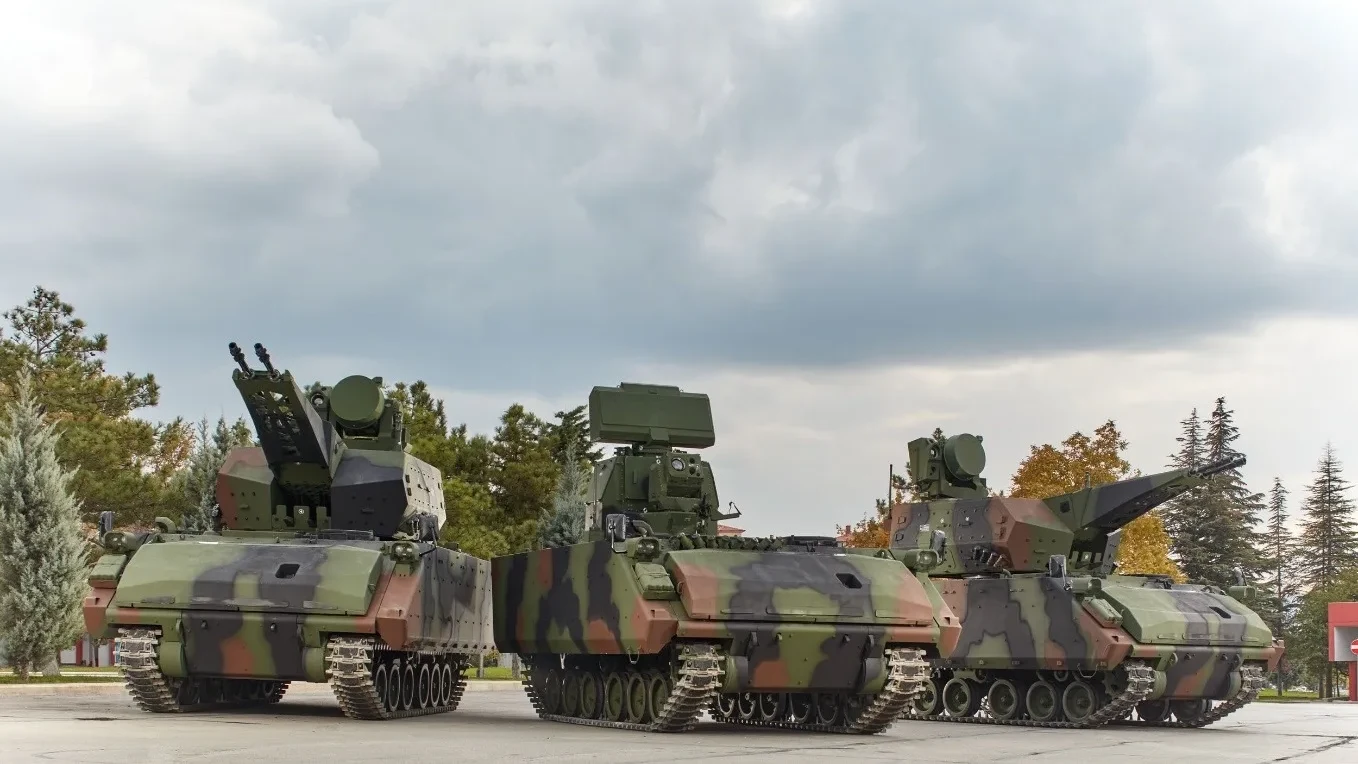
Aselsan chief executive Ahmet Akyol has told the Financial Times that the company’s Korkut gun-based air-defence system is operational in nine countries and has destroyed “maybe hundreds” of drones. The FT report, published on 22 October 2026 and written by John Paul Rathbone and Fabrice Deprez, links the system to a surge in Turkish defence exports to the Gulf and Ukraine.
According to the FT, the nine users include some Gulf states and eastern European countries, with Ukraine among them. Ukraine’s air force confirmed to the newspaper that one of its units has received an undisclosed number of Korkut systems. The nine-country figure and the number of drones downed are Aselsan’s own claims; the FT does not report independent verification of them.
Why cost matters
The FT frames Korkut as an answer to mass-produced attack drones modelled on Iran’s Shahed. Akyol said that destroying one such drone with Korkut costs less than $10,000. The newspaper estimates a programmable 35 mm airburst round at about $1,000, against interceptor missiles such as Patriot PAC-3 or IRIS-T that cost from a few hundred thousand to a few million dollars each. Akyol described Turkey’s offer as fast delivery and cost-effective air defence.
One open question concerns jet-powered Shahed variants, which can reach about 600 km/h. The FT notes there is no public record of a Korkut downing one, but quotes Wood & Company analyst Atınç Özkan as saying it should not be a challenge in theory, because the system was designed for low-flying aircraft and cruise missiles at 700–900 km/h. The newspaper also quotes European analysts who say the quality of Turkish defence products varies.
Aselsan’s export picture
Akyol told the FT that NATO allies remain Aselsan’s core market and cited a $410 million electronic-warfare deal with Poland last year. He called the Gulf a “very important and very huge market” and said Turkey’s August defence pact with Saudi Arabia and Pakistan is another advantage. With an order backlog close to $30 billion, international markets account for a quarter of sales, up from 8 per cent in 2023, with a 50 per cent target by 2030. He also pointed to the Steel Dome air-defence programme as an export driver, calling it modular, “plug and play”.
The FT adds that the Turkish military first deployed Korkut abroad in Libya in 2020. Aselsan, founded in 1975, is 74 per cent owned by a military foundation and has a market value of about $32 billion.
Source: Financial Times, “Turkey markets cheap drone defences in export boom”, 22 October 2026. Figures and quotations are attributed to the FT and Aselsan’s chief executive.