




US Navy’s 2nd Hypersonic Destroyer: Lyndon B. Johnson Gets $99M Sea-Trial Contract

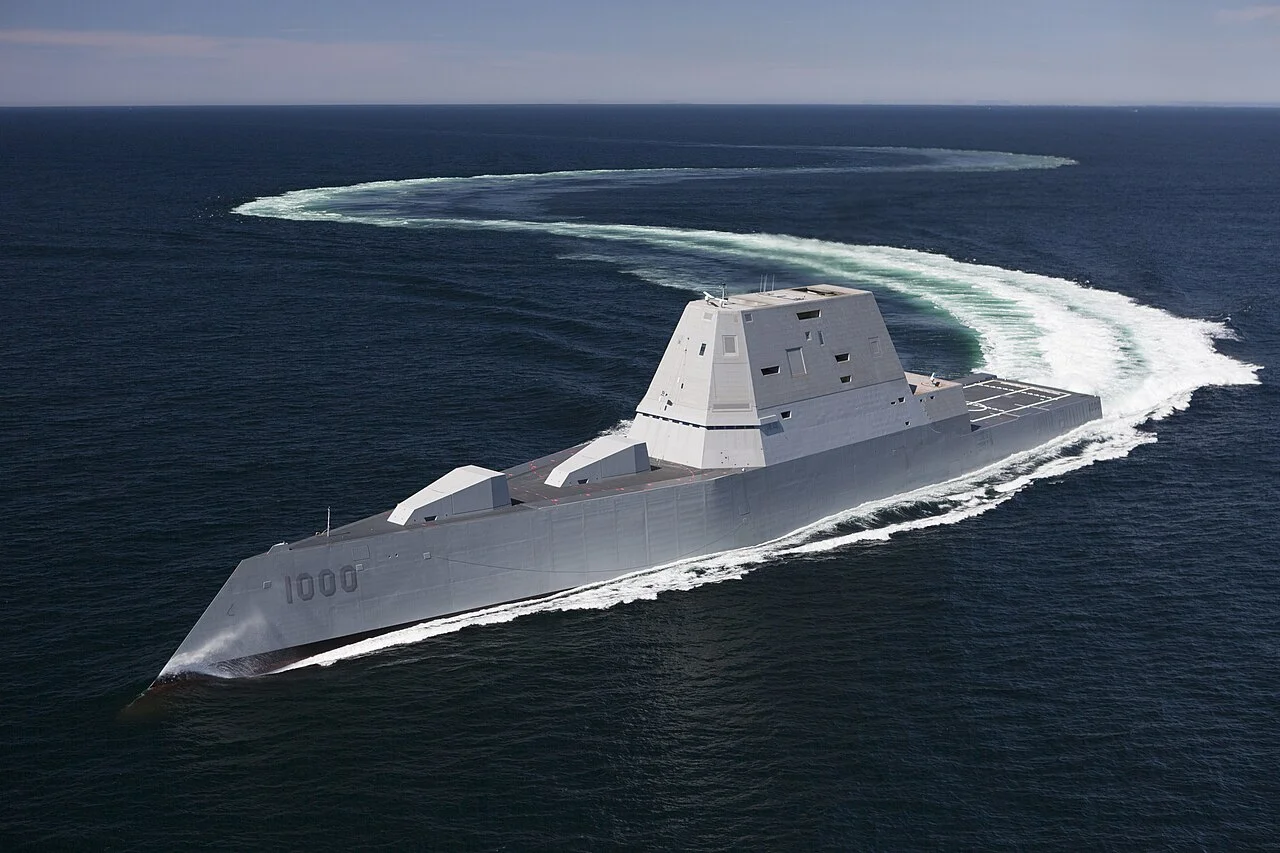
The US Navy has awarded Ingalls Shipbuilding, a division of Huntington Ingalls Industries (HII), a $99 million contract modification tied to the Zumwalt-class destroyer USS Lyndon B. Johnson (DDG-1002). According to an October 22, 2026 report from the Spanish defense outlet Defensa.com, the award funds sea trials and forms part of integrating the Conventional Prompt Strike (CPS) hypersonic weapon system aboard the ship.
Once integration is complete, Lyndon B. Johnson will become the Navy’s second CPS-equipped vessel. The class lead ship, USS Zumwalt (DDG-1000), became the first Zumwalt-class destroyer to conduct sea trials after its hypersonic reconfiguration back in January 2026.
What CPS Actually Is
Conventional Prompt Strike is a boost-glide hypersonic weapon that climbs above the atmosphere before gliding to its target at extreme speed. It relies on the Common Hypersonic Glide Body jointly developed by the Navy and Army; the Army’s version of the same glide body is fielded as the Dark Eagle system.
Total development and fielding costs for CPS are estimated at roughly $21.5 billion, with a per-missile unit cost near $90 million — figures that explain why the weapon is being rolled out to a small number of hulls rather than the whole class at once.
A Separate Production Contract
Apart from the Lyndon B. Johnson sea-trials award, Lockheed Martin separately holds a roughly $1.35 billion contract modification covering CPS production and integration aboard USS Zumwalt. Most of that work will be carried out at facilities in Denver, Colorado, with completion scheduled for September 2032.
Read together, the two contracts outline a sequencing strategy: the Navy is validating the weapon on one hull first, then extending it to the next ship in the class. Zumwalt is the test case; Lyndon B. Johnson is next in line.
Reshaping a Troubled Class
The Zumwalt class comprises three ships: DDG-1000 Zumwalt, DDG-1001 Michael Monsoor, and DDG-1002 Lyndon B. Johnson. The class was originally designed around a 155mm land-attack gun system whose specialized ammunition program was later cancelled, leaving the Navy with stealthy, large-displacement hulls in need of a new mission. Converting them into hypersonic missile carriers followed.
That pivot is a rare case of a warship class having its core mission redefined mid-life. The hulls’ low radar cross-section and generous internal volume make them well suited to housing the large vertical launch cells a hypersonic missile needs.
Where the Program Stands
Neither the exact timeline for Lyndon B. Johnson’s sea trials nor the date CPS will actually be loaded aboard has been disclosed. Results from the ongoing Zumwalt validation effort will directly shape how quickly integration proceeds on the second ship, and it remains unclear when the third hull, Michael Monsoor, will join the CPS program.
For naval planners, the appeal of a sea-based hypersonic weapon lies in combining long range with mobility: a fixed land launcher stays put, while a destroyer carrying the same missile can reposition across thousands of kilometers of ocean. That flexibility is seen as a factor reshaping deterrence calculations in large maritime theaters such as the Indo-Pacific.
Frequently Asked Questions
What contract did Lyndon B. Johnson receive?
Ingalls Shipbuilding received a $99 million contract modification covering the ship’s sea trials.
Which ships will carry CPS?
Currently USS Zumwalt (DDG-1000) and USS Lyndon B. Johnson (DDG-1002) are the planned platforms.
How much does a single CPS missile cost?
Roughly $90 million per unit, according to program cost estimates.
What is Lockheed Martin’s role?
Lockheed Martin holds a separate roughly $1.35 billion contract covering CPS production and its integration aboard USS Zumwalt.
Sources
- Defensa.com, “El destructor Lyndon B. Johnson se prepara para incorporar CPS,” October 22, 2026 — link. Used to verify the contract value, parties involved, and the scope of CPS integration.