What Is the FA-50? South Korea’s Light Combat Aircraft — Full Analysis


SEO Title: What Is the FA-50? South Korea’s Light Combat Aircraft — Full Analysis
Meta Description: FA-50 specifications, speed, weapons, radar, Poland and Philippines contracts, and a neutral comparison with Turkey’s HÜRJET. Complete technical guide.
URL Slug: what-is-fa-50-south-korea-light-combat-aircraft
—
What Is the FA-50? South Korea’s Light Combat Aircraft — Full Analysis
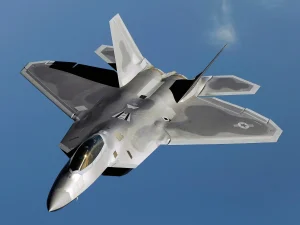
The FA-50 is a light multirole combat aircraft developed by Korea Aerospace Industries (KAI) on the airframe of the T-50 Golden Eagle supersonic trainer. The FA designation — Fighter/Attack — reflects the aircraft’s dual-role capability: air defense intercept and surface attack. Introduced into the Republic of Korea Air Force (ROKAF) in 2011, the FA-50 has since become KAI’s most commercially successful export platform, with deliveries to the Philippines and Poland placing it in active service across two continents.
Poland’s 2022 contract for 48 FA-50PL aircraft — valued at approximately USD 3 billion — marked the first time an Asian-origin combat aircraft manufacturer secured a major deal with a NATO member state. The contract is considered a milestone not only for KAI but for South Korea’s broader defense export strategy.
—
Development Background
The FA-50 traces its lineage directly to the T-50 Golden Eagle program, which KAI co-developed with Lockheed Martin beginning in the late 1990s. The TA-50 armed trainer variant served as a bridging platform, and the FA-50 represents the full combat-capable evolution of that lineage. ROKAF ordered 60 aircraft primarily to replace its aging F-5E/F Tiger II fleet; deliveries began in 2013.
—
Technical Specifications
| Parameter | FA-50 |
|---|---|
| Length | 13.14 m |
| Wingspan | 9.45 m |
| Max Takeoff Weight | 12,300 kg |
| Maximum Speed | Mach 1.5 (~1,837 km/h) |
| Combat Radius | ~444 km |
| Ferry Range | 1,851 km |
| Service Ceiling | 14,630 m |
| Engine | GE F404-GE-102 (17,700 lbs thrust with AB) |
| Radar | EL/M-2032 (IAI/ELTA, Israel) |
| Hard Points | 7 |
| Internal Gun | M61A1 20mm Vulcan (470 rds) |
| Air-to-Air | AIM-9 Sidewinder, AIM-120 AMRAAM |
| Air-to-Ground | AGM-65 Maverick, JDAM, CBU-97, LAU-61 rockets |
| Crew | 2 (pilot + weapon systems officer) |
—
Export Record
| Customer | Variant | Year | Units | Contract Value | Source |
|---|---|---|---|---|---|
| Philippines | FA-50 (Batch 1) | 2014 | 12 | ~USD 420M | KAI, DND Philippines |
| Philippines | FA-50GF (Batch 2) | 2023 | 18 | ~USD 920M | KAI, DND Philippines |
| Poland | FA-50PL | 2022 | 48 | ~USD 3.0B | Polish MoD |
—
Competitor Comparison
| Platform | Country | Manufacturer | Max Speed | Combat Radius | Operational |
|---|---|---|---|---|---|
| FA-50 | South Korea | KAI | Mach 1.5 | ~444 km | Yes |
| HÜRJET | Turkey | TAI | Mach 1.4+ (target) | TBD | Development |
| M-346 Master | Italy | Leonardo | Mach 0.92 | ~1,000 km | Yes |
| Hawk Mk 200 | UK | BAE Systems | Mach 0.88 | ~1,270 km | Yes |
| L-39NG | Czech Republic | Aero Vodochody | Mach 0.8 | ~700 km | Yes |
—
Neutral Comparison: FA-50 vs HÜRJET
The FA-50 and Turkey’s HÜRJET share the same engine family (GE F404 derivatives) and address comparable mission profiles — advanced jet training and light attack. The FA-50 benefits from an established operational record and an active export portfolio, while HÜRJET remains in the development and early flight-test phase as of 2026. Both platforms reflect their respective countries’ defense indigenization policies. A meaningful comparison should account for procurement timelines, maintenance ecosystem maturity, technology transfer constraints, and total lifecycle costs — parameters that differ substantially between the two programs.
—
FAQ
How fast is the FA-50?
Maximum speed is Mach 1.5, approximately 1,837 km/h.
What weapons can the FA-50 carry?
Air-to-air: AIM-9 Sidewinder, AIM-120 AMRAAM. Air-to-ground: AGM-65 Maverick, JDAM-series guided bombs, CBU-97 cluster munitions, LAU-61 rocket pods. Internal 20mm M61A1 Vulcan cannon.
Why did Poland choose the FA-50?
Following Russia’s full-scale invasion of Ukraine in 2022, Poland accelerated fleet expansion plans. The FA-50PL offered rapid delivery schedules, NATO interoperability, and competitive pricing relative to alternatives available at the time.
Is the FA-50 comparable to the F-16?
The FA-50 is a lighter platform in a lower performance class than the F-16. It is designed to complement higher-end assets rather than replace them, filling a cost-effective light attack and advanced trainer role within a mixed fleet structure.
Sources: KAI Official Website | DAPA | Polish Ministry of National Defence | Philippines Department of National Defence | SIPRI | Defense News | Aviation Week
—