U.S. uses sea drones in combat for the first time: Corsair strike on Bandar Abbas

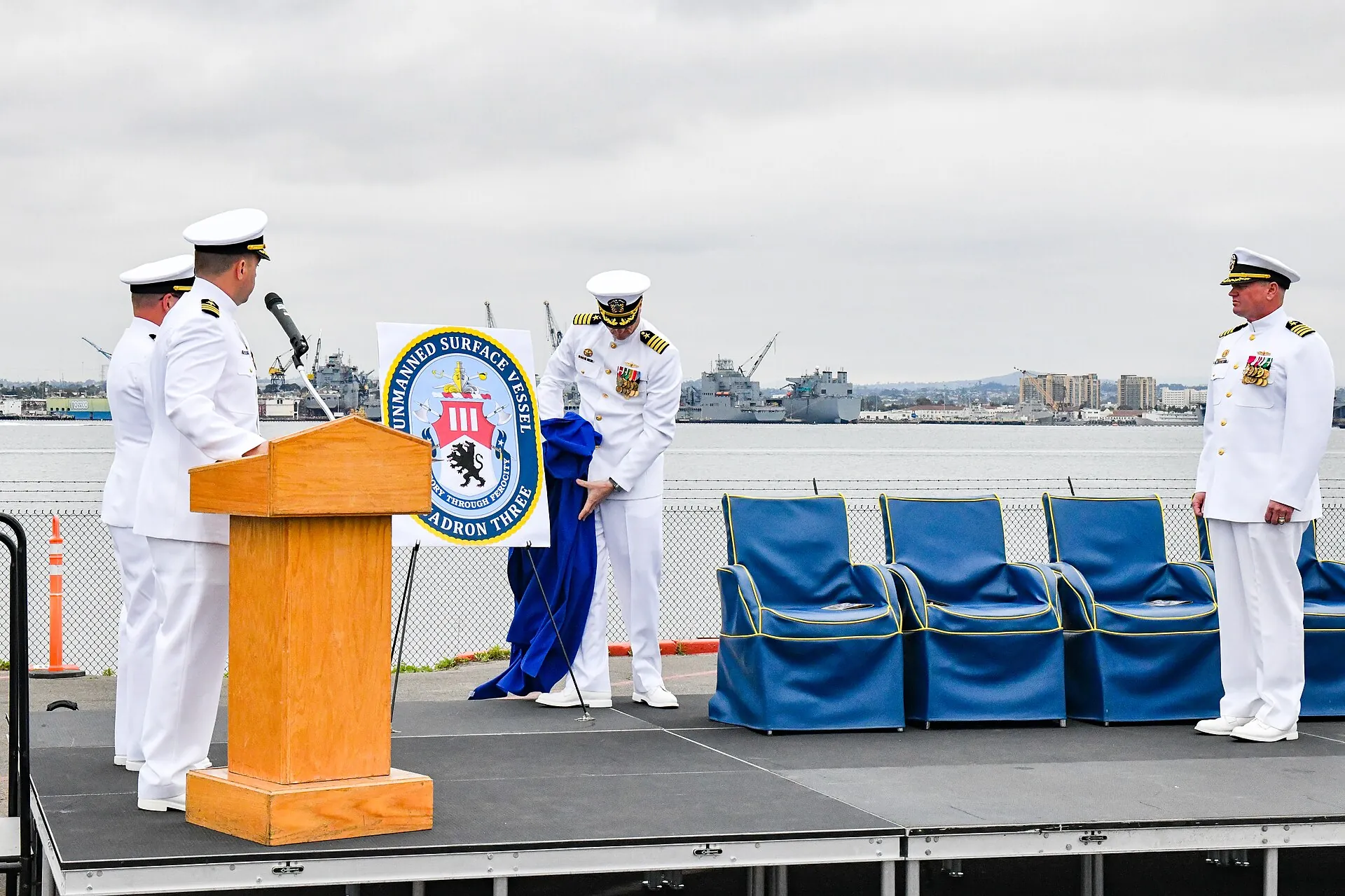
According to U.S. Central Command (CENTCOM), three Saronic Corsair unmanned surface vessels (USVs) struck a submarine and ship-maintenance facility at Iran’s Bandar Abbas Naval Base — the first time U.S. forces have used sea drones in combat.
Representative image: Unmanned surface vessel (representative)
The strike took place on Sunday and was confirmed by CENTCOM. Built by Saronic, the Corsair is about 24 feet (7.3 m) long, with a range of more than 1,000 nautical miles, a payload of roughly 1,000 pounds (450 kg) and a top speed of 35 knots.
The system is operated by the U.S. 5th Fleet’s Task Force 59 (‘The Pioneers’), which focuses on unmanned systems. The task force was stood up in January 2024 and began fielding such drones in theatre from late March.
At a Glance
- Date: Sunday (CENTCOM confirmation ~13 July 2026) · Place: Bandar Abbas Naval Base, Iran
- Craft: 3× Saronic Corsair unmanned surface vessels (USV)
- Corsair: ~7.3 m; range >1,000 nm; ~450 kg payload; 35 knots
- Operator: U.S. 5th Fleet, Task Force 59 (‘The Pioneers’, Jan 2024)
- First: U.S. forces’ first combat use of a sea drone
What the Corsair can do
Designed as a one-way attack (kamikaze) surface drone, the Corsair offers a low-cost strike option against coastal and port targets thanks to its long range and payload. A 35-knot speed and a range beyond 1,000 nautical miles show it can conduct independent operations from long distances.
The strike shows unmanned surface vessels can now be used not only for reconnaissance or maritime security but for direct attack missions.
Background
The development came after the U.S. revoked a license on 7 July that had allowed Iran to sell oil. At the presidential level, the ceasefire that began on 8 April was declared over, though negotiations were said to continue.
The U.S. Navy stood up Task Force 59 to integrate unmanned systems into maritime security in the Middle East; the Corsair strike shows that build-up moving into a combat phase.
Regional and strategic meaning
Unmanned surface vessels became the most notable low-cost element of naval warfare after Ukraine’s Black Sea sea-drone campaign. The U.S. using the same logic offensively in the Gulf means a new threat vector for regional navies and coastal defences.
For countries running unmanned surface vessel programs, Turkey included, this strike confirms the rapidly growing weight of sea drones in deterrence and operational planning.