Tunisia’s Military Strength: How Many Tanks, Fighter Jets and Missiles? (2026)

The Tunisian military inventory is a North African case in which priorities, not numbers, tell the story. Global Firepower’s 2026 data places the country 79th among 145 militaries, with roughly 89,800 active personnel, 145 tank hulls, 155 military aircraft and a defence budget of about US$2.17 billion. Dig into the detail, however, and what defines the picture is what is absent: not a single attack aircraft, not a single attack helicopter, not one rocket artillery system and not one medium-range air-defence battery. Set against that, the number of well-protected wheeled armoured vehicles is high for a country of this scale, and most of them are Turkish-built. The key to reading the inventory lies where those two observations meet: the Tunisian military is equipped not for conventional interstate war but for desert border, mountainous terrain and maritime boundary security.
At a Glance
- Active personnel: ≈ 89,800 active troops and a ≈ 12,000-strong National Guard; no registered reserve
- Global ranking: 79th of 145 countries in the 2026 Global Firepower list (power index 1.7823)
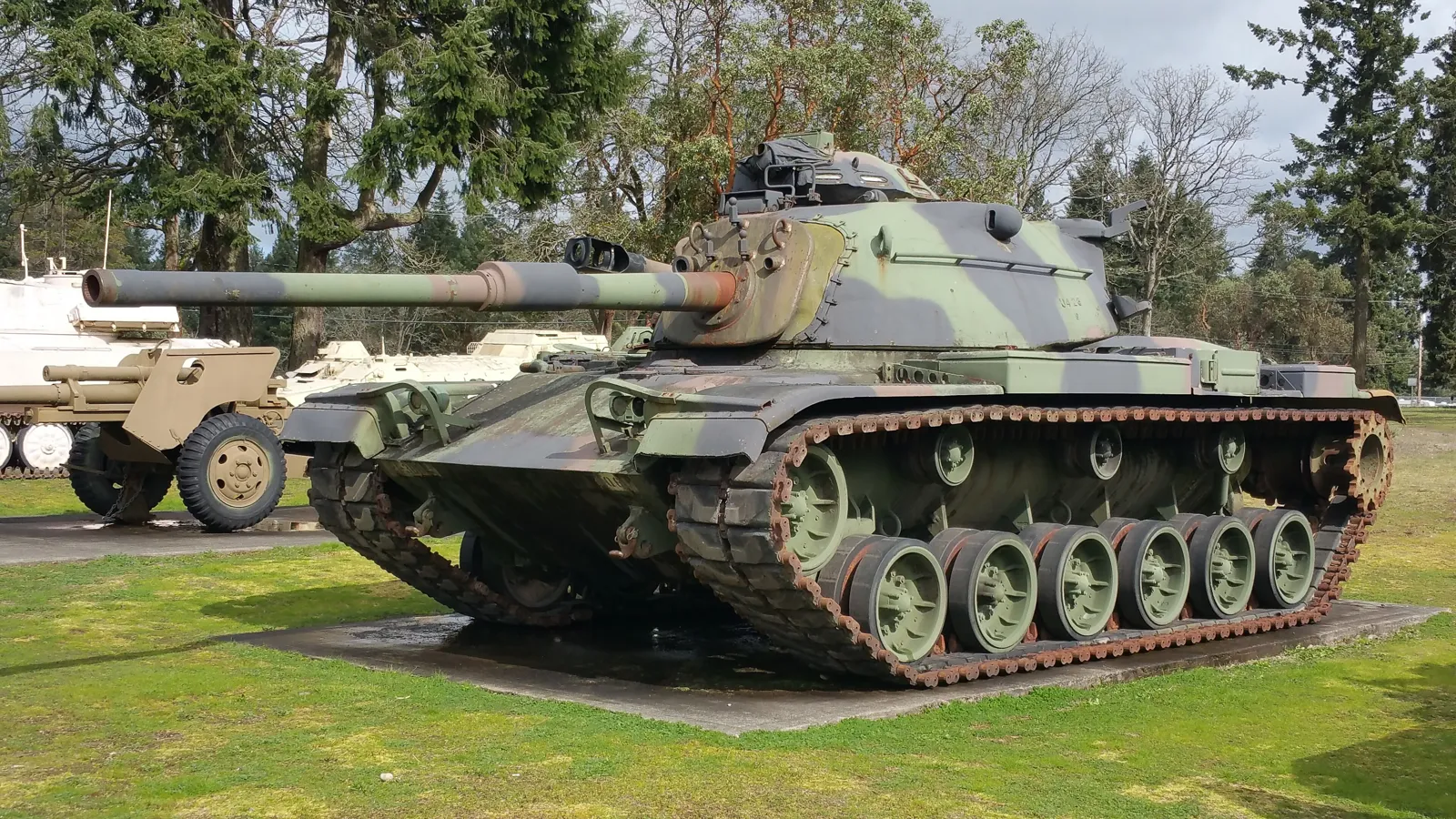
- Main battle tanks: ≈ 145 hulls (≈ 90 M60A1/M60A3 Patton plus ≈ 55 SK-105 Kürassier light tanks); ≈ 87 considered serviceable
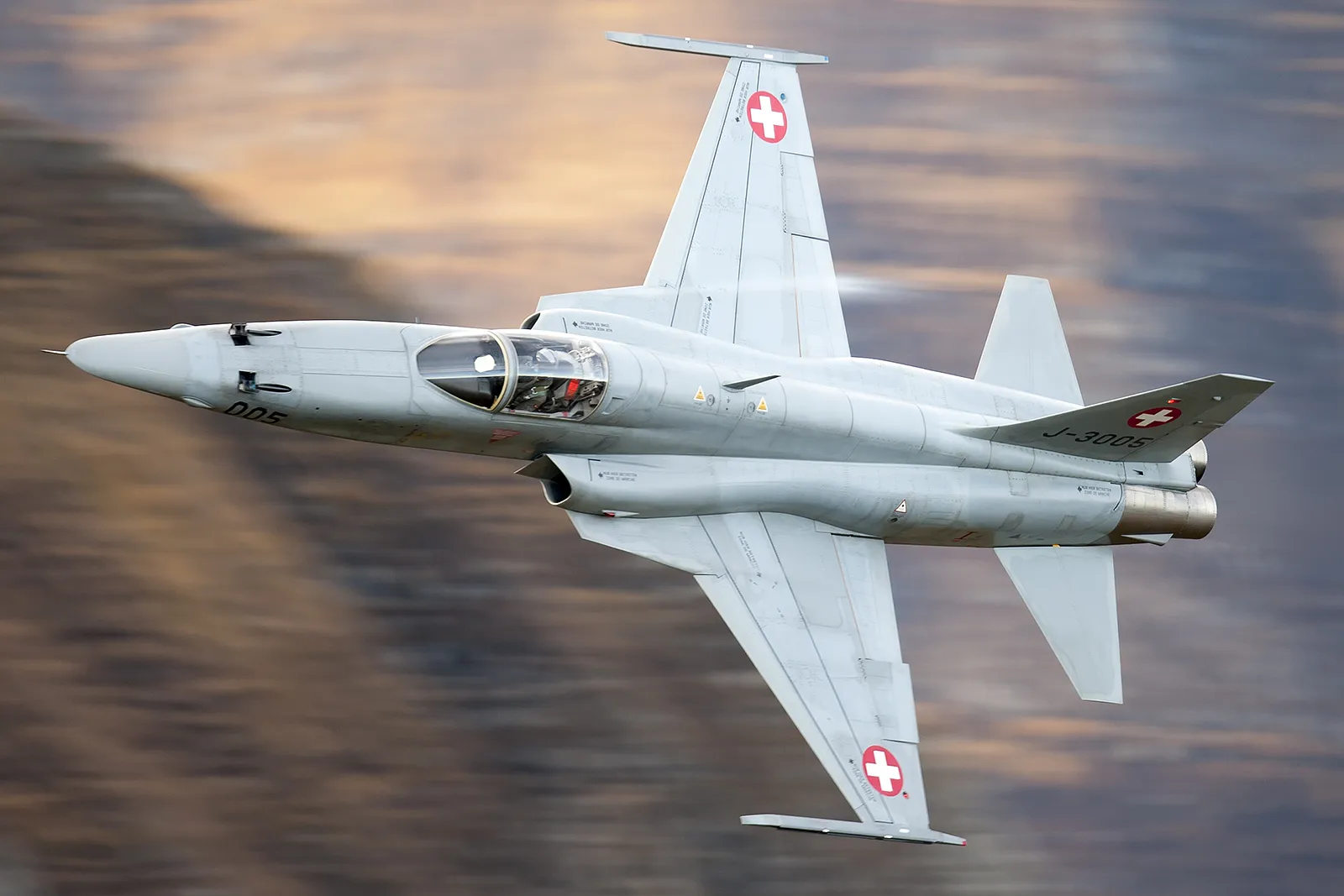
- Combat aircraft: Ten F-5E Tiger II light fighters (plus three F-5F conversion trainers); no attack aircraft and no attack helicopters at all
- Turkish-built armoured vehicles: More than 400 vehicles across four separate lines: BMC Kirpi, Nurol Makina Ejder Yalçın, BMC Vuran and the Otokar Cobra family
- Navy: ≈ 37 naval assets; no submarines, the largest ships being four Damen MSOPV 1400 patrol vessels
- Defence budget: ≈ US$2.17 billion (2026 estimate)
Note: The inventory figures below are approximate values drawn from open sources such as Global Firepower, the IISS Military Balance and SIPRI.
About the Tunisia Armed Forces
The Tunisian Armed Forces grew out of a different institutional tradition from their regional peers. In the decades after independence the military was deliberately kept small and held apart from politics, with the weight of internal security placed on police and security formations under the interior ministry. The inventory reflects that choice: investment went into mobility and survivability rather than heavy platforms. Today the three regular services together number around 89,800 personnel, supplemented by a 12,000-strong National Guard under the interior ministry. Conscription remains in force, though open sources show no registered mobilisation reserve.
The second defining factor is geography and threat definition. Tunisia has a 1,148 kilometre Mediterranean coastline and long land borders with Algeria to the west and Libya to the south-east. Three themes have set the security agenda since 2011: counterterrorism operations in the Chaambi highlands along the Algerian border, the flow of weapons and fighters across the Libyan frontier, and irregular migration and smuggling traffic in the Mediterranean. The army’s maintenance of a separate territorial group for the Saharan region follows directly from that definition. The fastest-growing line in the inventory over the past decade has been precisely the class those missions demand: wheeled vehicles protected against mines and ambush.
The third factor is the procurement structure. Tunisia was designated a major non-NATO ally by the United States in 2015, and a significant share of the inventory has arrived through military assistance and grant channels: C-130J Super Hercules transports, UH-60M Black Hawk helicopters, OH-58D Kiowa Warrior scouts, T-6C Texan II trainers and the FGM-148 Javelin package approved in November 2024. From 2014 onward, however, a clear diversification began, and Türkiye became one of the principal suppliers in the armoured vehicle and unmanned aircraft categories. On the industrial side Tunisia is not a producer; capability sits at the maintenance, sustainment and limited assembly level. Economic pressure under International Monetary Fund programmes also keeps the defence budget in the US$2.17 billion band, a frame that permits incremental modernisation rather than major platform acquisition.
Land Forces Inventory
| System type | Est. quantity |
|---|---|
| Main battle tanks (M60A1 and M60A3 Patton lines, distributed across two mechanised battalions) | ≈ 90 |
| Light tanks (SK-105 Kürassier, Austria; in the reconnaissance and support role with a 105 mm gun) | ≈ 55 |
| Armoured personnel carriers (M113 family; the main mechanised transport platform of the land forces) | ≈ 300 |
| Wheeled armoured vehicles (Fiat-Otobreda 6614, Italy) | ≈ 120 |
| Wheeled armoured vehicles (EE-11 Urutu, Brazil) | ≈ 36 |
| Mine-resistant vehicles (BMC Kirpi, Türkiye — Tunisia was the first export customer of the type) | Deliveries rising from 100 toward the 230 band |
| Armoured combat vehicles (Nurol Makina Ejder Yalçın 4×4, Türkiye; with remote-controlled turrets) | ≈ 70 |
| Armoured personnel carriers (BMC Vuran, Türkiye) | Rising toward the ≈ 50 band |
| Light armoured vehicles (Otokar Cobra and Cobra II, Türkiye) | ≈ 100 |
| Towed howitzers (M198, 155 mm) | ≈ 57 |
| Towed howitzers (M101A1, 105 mm) | ≈ 10-48 |
| Heavy mortars (M30, 107 mm) | ≈ 144 |
| Self-propelled artillery | None — the inventory contains no self-propelled artillery |
| Multiple rocket launchers | None — the Tunisian land forces field no rocket artillery |
| Total armoured vehicles (Global Firepower classification, including light tactical and protected vehicles) | ≈ 13.900 |
Air Force Inventory
| Platform | Est. quantity |
|---|---|
| Total military aircraft (including helicopters; readiness ≈ 93) | ≈ 155 |
| Light fighters (Northrop F-5E Tiger II — the air force’s only combat line) | 10 |
| Conversion trainers (Northrop F-5F) | 3 |
| Attack aircraft | None — the Tunisian Air Force operates no dedicated attack aircraft line |
| Jet trainers (Aero L-59T Albatros, Czechia) | ≈ 6-9 |
| Basic trainers (SIAI-Marchetti SF.260, Italy) | ≈ 17 |
| Next-generation trainers (Textron T-6C Texan II, under US security assistance) | 8 |
| Tactical transports (C-130B and C-130H Hercules) | 4 |
| Tactical transports (C-130J Super Hercules) | 2 |
| Light transports (Let L-410 Turbolet) | ≈ 5 |
| Reconnaissance and surveillance aircraft (Maule MX-7) | ≈ 12 |
| ISTAR aircraft (Cessna 208 Caravan) | ≈ 4 |
| Attack helicopters | None — armed tasks fall on the scout helicopters |
| Armed scout helicopters (Bell OH-58D Kiowa Warrior) | ≈ 18 |
| Armed scout helicopters (SA-342 Gazelle, France) | ≈ 15 |
| Utility helicopters (Bell 205 / UH-1H line) | ≈ 21 |
| Utility helicopters (Bell UH-1N) | ≈ 16 |
| Utility helicopters (Sikorsky UH-60M Black Hawk) | ≈ 8 |
| Search-and-rescue and transport helicopters (Sikorsky HH-3) | ≈ 15 |
| Unmanned aerial vehicles (TUSAŞ ANKA-S, Türkiye; satellite-linked command and control) | 5 |
Missile and Air-Defence Systems
| System | Type / Note |
|---|---|
| RBS 70 (Sweden) | A very-short-range, laser beam-riding air-defence system; with ≈ 60 launchers it is the backbone of the low-altitude umbrella |
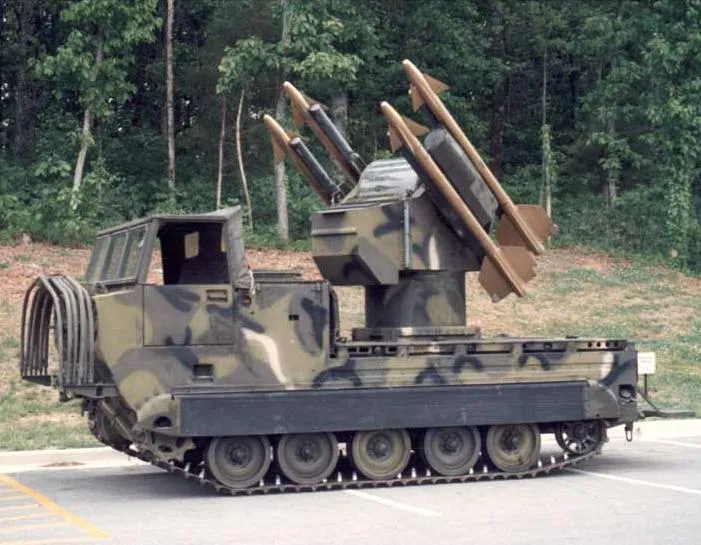
| M48 Chaparral (United States) | A tracked short-range air-defence vehicle firing the MIM-72; ≈ 46 systems, with the line now well advanced in age |
| Gun-based low-altitude air defence | A limited layer built on M167 Vulcan class 20 mm systems and light anti-aircraft guns |
| Medium and long-range air-defence systems | None — there is no Patriot or MIM-23 Hawk class upper layer in the inventory; air defence is entirely at point-defence level |
| Ballistic and surface-to-surface missiles | None — Tunisia fields no surface-to-surface missile line at all, a direct consequence of the defensive orientation of the force |
| BGM-71 TOW (United States) | An anti-tank missile system mounted on HMMWVs; batches of 454 missiles in 1982 and 180 in 2006 were delivered |
| FGM-148 Javelin (United States) | A package of 30 launchers and 184 missiles approved in November 2024; the most recent step in renewing the anti-tank capability |
Naval Power
| Class / Type | Est. quantity |
|---|---|
| Submarines | None — the Tunisian navy has no sub-surface arm |
| Frigates and destroyers | None — although the Global Firepower classification shows one frigate and one corvette, in practice the largest assets are in the patrol-vessel class |
| Offshore patrol vessels (Damen MSOPV 1400; Jugurtha, Syphax, Hannon and Sophonisbe — Netherlands, 2017-2019) | 4 |
| Missile fast attack craft (La Galite class / Combattante III M, France; armed with Exocet anti-ship missiles) | 3 |
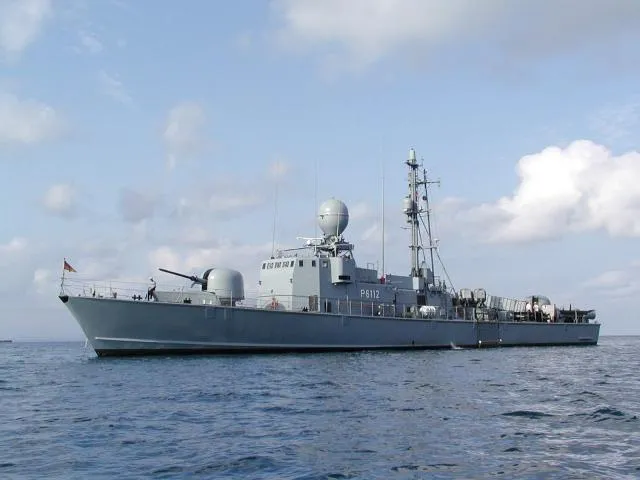
| Fast attack craft (Bizerte class, Lürssen 58 metre, Germany) | 3 |
| Patrol craft (Albatros class; former German Navy boats — Hannibal, Salambo, Sufetula) | 3 |
| Patrol craft (Island class; former US Coast Guard cutters — Tazarka, Menzel Bourguiba) | 2 |
| Patrol craft (Vosper 37 metre, United Kingdom) | 4 |
| Patrol craft (Rampart 36, United Kingdom) | 4 |
| Total naval assets (including small craft and auxiliaries) | ≈ 37-45 |
| Main naval bases | Bizerte, Kelibia, La Goulette and Sfax; covering a 1,148 kilometre Mediterranean coastline |
The Turkey Angle: Turkish Defence Industry
The Türkiye-Tunisia defence relationship is one of the most concrete and most itemised files in this series. According to figures released by the Presidency of Defence Industries in 2020, five Turkish companies exported a combined US$150 million worth of equipment to Tunisia. The package covered TUSAŞ ANKA-S unmanned aerial vehicles, BMC Kirpi mine-resistant vehicles, Nurol Makina Ejder Yalçın armoured combat vehicles, Katmerciler tank transporters and tanker-type logistics vehicles, and ASELSAN electro-optical systems. The relationship therefore rests not on a single platform sale but on a supply line spanning ground vehicles, unmanned systems, logistics and sensors together.
The line begins with the BMC Kirpi. Tunisia became the type’s first export customer, with an initial batch of 100 vehicles delivered between 2014 and 2016. A further agreement followed covering 41 Kirpi 4×4 vehicles and five Kirpi ambulance variants; once deliveries are complete the Kirpi fleet is expected to reach the 230 band. This is one of the longest-running single-platform relationships Turkish industry holds in Africa, and repeat orders spread across a decade are the most direct evidence that the product performs in the field. The vehicle’s role in Tunisia explains why: the mine and improvised explosive device threat in the Chaambi region matches the design intent of the platform exactly.
The second strand sits in the armoured combat vehicle category. The first batch of Nurol Makina Ejder Yalçın 4×4 vehicles reached Tunisia on 13 June 2017; the contract covered roughly 70 vehicles fitted with remote-controlled turrets, and the 2020 edition of the IISS Military Balance records 71 in service. BMC Vuran armoured personnel carriers and Otokar’s Cobra and Cobra II light armoured vehicles entered the inventory over the same period. Taken together, the four Turkish lines now account for the bulk of the Tunisian land forces’ protected wheeled fleet. While the main battle tank and armoured personnel carrier lines remain American in origin, the mine-resistant vehicle class is predominantly Turkish-built.
The third and most visible strand is unmanned aviation. After roughly two years of negotiation between TUSAŞ and the Tunisian defence ministry, an US$80 million contract was signed in December 2020 covering three ANKA-S unmanned aerial vehicles, three ground control stations and the training of 52 Tunisian pilots and maintenance personnel at TUSAŞ facilities in Ankara. Financing came through an US$80 million loan from Türk Eximbank. The first two aircraft were delivered in the second half of 2021 and the third in 2022; two more followed in June 2023, bringing the total to five ANKA-S. Tunisia thereby became the first export customer of the ANKA family. The technical rationale is worth noting: the ANKA-S satellite-linked command and control capability allows beyond-line-of-sight missions across the country’s long desert border and wide maritime area.
What comes next should be read honestly. The gaps in Tunisia’s inventory align closely with areas where Turkish industry is strong: there are no attack helicopters at all, a gap of the kind the T129 ATAK addresses; there is no rocket artillery line whatsoever, a class in which ROKETSAN’s T-122 Sakarya and TRG-300 set the precedent; air defence stops at point defence, leaving the medium-altitude layer and low-altitude drone defence as areas where HİSAR and KORKUT class systems provide answers; the age of the F-5E line opens a medium-term renewal window in the light attack and advanced trainer category; and on the naval side, sustaining and renewing the patrol-class fleet is a heading for which the work Turkish yards and ASFAT have done in Qatar and Jordan sets a precedent. None of these has a signed contract behind it; they are areas where requirement and capability intersect. The structural obstacle on the other side is equally clear: Tunisia’s major non-NATO ally status and the American security assistance channel cover many line items through grants or low-cost transfers, while budget pressure under the economic programme limits large new acquisitions. The advantage Türkiye has built in this market is not price or grant terms but a decade-long delivery record and a sustainment relationship proven through repeat orders.
Frequently Asked Questions
How many tanks does Tunisia have? Global Firepower data puts the total number of tank hulls in the Tunisian inventory at around 145, of which roughly 87 are considered serviceable. That figure covers two distinct classes: approximately 90 M60A1 and M60A3 Patton vehicles serving as main battle tanks and distributed across two mechanised battalions, plus roughly 55 Austrian-built SK-105 Kürassier light tanks in the reconnaissance and fire-support role. Neither line is new, and Tunisia fields no third-generation main battle tank. The centre of gravity of the force lies not in armoured divisional warfare but in border and counterterrorism missions conducted with well-protected wheeled vehicles.
What fighter aircraft does Tunisia operate? The only combat line in the Tunisian Air Force is the Northrop F-5E Tiger II. The inventory holds ten F-5E aircraft and three F-5F conversion trainers, with no separate attack aircraft line beyond them. Most of the roughly 155 total aircraft are helicopters and trainers: Aero L-59T Albatros jet trainers, SIAI-Marchetti SF.260 basic trainers and eight Textron T-6C Texan II aircraft delivered under American security assistance fall into this group. Transport is handled by C-130B, C-130H and two C-130J Super Hercules aircraft. The age of the F-5E line raises a medium-term renewal question in the light fighter and attack category.
Which Turkish weapon systems are in Tunisian service? Tunisia is one of the most established customers of the Turkish defence industry in Africa. The inventory contains four separate Turkish armoured vehicle lines: the BMC Kirpi mine-resistant vehicle (Tunisia was the type’s first export customer, with 100 delivered between 2014 and 2016 and subsequent agreements expected to take the total toward the 230 band), the Nurol Makina Ejder Yalçın 4×4 armoured combat vehicle (the first batch arrived on 13 June 2017, roughly 70 vehicles), the BMC Vuran armoured personnel carrier, and the Otokar Cobra and Cobra II. In the air, the TUSAŞ ANKA-S unmanned aerial vehicle is in service: an US$80 million contract signed in December 2020 covered three aircraft and three ground control stations, and deliveries between 2021 and 2023 brought the fleet to five. Katmerciler logistics vehicles and ASELSAN electro-optical systems complete the picture.
What air-defence systems does Tunisia have? Tunisia’s air defence sits entirely at the point-defence level. The backbone is the Swedish-built RBS 70, a very-short-range laser beam-riding system, with roughly 60 launchers in the inventory. The second element is the M48 Chaparral, a tracked short-range system firing the MIM-72, with around 46 in service and the line now well advanced in age. M167 Vulcan class 20 millimetre gun systems add a further low-altitude layer. Against that, the inventory holds not a single medium or long-range battery of the Patriot or MIM-23 Hawk class. In other words, the country can protect specific points in its airspace but does not possess a layered air-defence architecture.
Does Tunisia have submarines, and how strong is its navy? The Tunisian navy has no submarines and no frigates in the conventional sense. The largest ships in a force of roughly 37 naval assets are four Damen MSOPV 1400 offshore patrol vessels built in the Netherlands and delivered between 2017 and 2019: Jugurtha, Syphax, Hannon and Sophonisbe. The strike element consists of three French-built La Galite class missile fast attack craft armed with Exocet anti-ship missiles. Alongside them serve German Lürssen-designed Bizerte class craft, Albatros class boats transferred from the German Navy, two Island class boats formerly with the US Coast Guard, and British-built Vosper and Rampart patrol craft. Operating from Bizerte, Kelibia, La Goulette and Sfax, the navy covers a 1,148 kilometre coastline, with a mission set built around maritime border security, counter-smuggling and search and rescue.
Bottom Line
The Tunisian inventory is a case best read through what a military has chosen not to hold. Attack aircraft, attack helicopters, rocket artillery, self-propelled guns, ballistic missiles and medium-range air defence are all absent; set against that is a protected wheeled vehicle fleet that is large for a country of this size. That is the direct result of a force deliberately kept small and apolitical, then reshaped after 2011 around counterterrorism, border security and maritime tasks. What looks like weakness on paper is in fact a coherent answer to a narrow mission set. Türkiye’s place in this picture becomes clear at exactly that point: the relationship is not a one-off export success but a supply line spread across a decade and grown through repeat orders. Being the first export customer of the Kirpi, the first foreign operator of the ANKA family and running four Turkish armoured vehicle lines at once makes Tunisia one of the most established markets Turkish industry holds in Africa. The items in the window ahead are equally clear: attack helicopters, rocket artillery and layered air defence are the three largest gaps in the inventory, and Turkish industry has products in all three. Yet the grant advantage of the American security assistance channel and budget pressure under the economic programme suggest those gaps will not close quickly. The real lesson of the Tunisia file is that staying in a market runs not through one large contract but through delivered equipment performing in the field and a sustainment relationship that endures.