



Scorpène Submarine: Naval Group’s Export Weapon Chosen by Five Navies

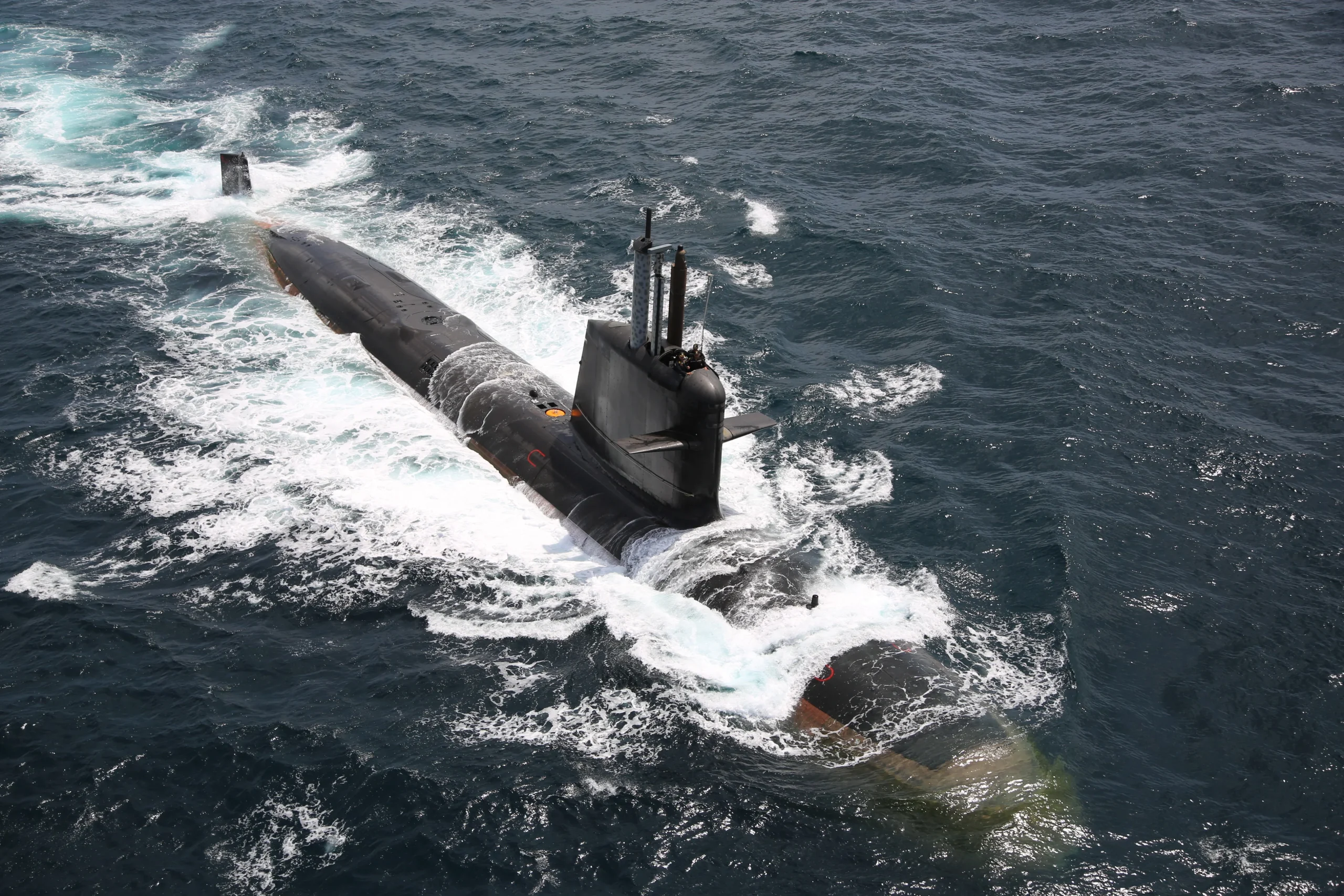
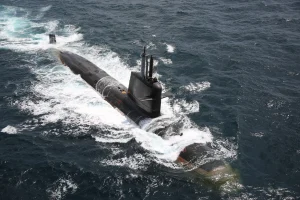
Scorpène is a diesel-electric conventional attack submarine jointly developed by France’s Naval Group and Spain’s Navantia, in operational service with five navies worldwide and widely regarded as one of the most commercially successful submarine export platforms of the past three decades. Its modular architecture, low acoustic signature, and technology-transfer model have made it the preferred choice for India, Brazil, Chile, Malaysia and Indonesia. As of 2025, more than 14 units are operational or under construction.
What Is It? What Does It Do?
Scorpène is a conventional attack submarine (SSK) powered by diesel-electric propulsion. Its primary missions are anti-submarine warfare (ASW), anti-surface warfare (ASuW), special operations, intelligence gathering and covert coastal reconnaissance. Key differentiators include:
- Low acoustic signature: Vibration-isolated ACISS platform, non-magnetic hull sections and low electromagnetic signature meet NATO acoustic standards.
- Modular architecture: Sensor, weapon and propulsion packages configurable per customer. Torpedoes, anti-ship missiles and mines can all be loaded.
- Technology transfer: Naval Group includes domestic production rights in almost every Scorpène export, enabling buyers to build national naval industry capacity.
- Operational endurance: 45 days at sea in the standard version; 80 days in the Scorpène Evolved full lithium-ion battery configuration.
Technical Specifications
| Parameter | Standard Scorpène (CM-2000) | Scorpène Evolved (new gen) |
|---|---|---|
| Surfaced displacement | 1,565 tonnes | 2,000+ tonnes |
| Submerged displacement | 1,740 tonnes | 2,200+ tonnes |
| Length | 61.7–70.6 m | ~75 m |
| Crew | 31 | ~31 |
| Max diving depth | 300+ m | 350+ m |
| Surfaced speed | 12 knots | 12 knots |
| Submerged speed | 20 knots | 20+ knots |
| Range | 6,500 km at 8 knots | 8,000+ nautical miles |
| Endurance | 45 days | 80 days |
| Torpedo tubes | 6 × 533 mm bow | 6 × 533 mm bow |
| Weapon load | 18 torpedoes/missiles or 30 mines | 18+ |
| Torpedo | WASS Black Shark heavyweight | Black Shark Evolved / F21 |
| Missile | MBDA SM39 Exocet (sub-launched) | SM39 / MdCN option |
| Propulsion | Diesel-electric (lead-acid batteries) | Full lithium-ion battery |
Development History
The Scorpène program began in the early 1990s as a joint Naval Group (then DCNS) and Navantia (then Bazán) venture targeting export markets. The design objective was a modern, affordable submarine suited to medium-sized navies — a deliberate contrast to the high-capability, high-cost Western platforms then dominating the market.
The first boat was delivered to Chile in 2005, followed by Malaysia, India and Brazil — each sale including a technology transfer and local production component that distinguished Naval Group from its competitors. The program’s 2024 breakthrough came when Indonesia ordered two Scorpène Evolved units built locally by PT PAL. In October 2025, Naval Group and India’s MDL signed an MOU to jointly offer Scorpène to third countries.
Scorpène Evolved — Next Generation
Scorpène Evolved integrates full lithium-ion battery (LiB) technology, eliminating the need for a traditional AIP system while delivering superior underwater endurance. Key advantages over lead-acid batteries:
- Extended endurance: 80 days at sea (full LiB configuration) versus 45 days for the standard version.
- Faster recharge: LiB charges significantly faster than lead-acid batteries, improving operational tempo.
- Higher sustained speed: More electrical power available for prolonged high-speed submerged operations.
This positions Scorpène Evolved as a credible alternative to AIP-equipped submarines like the TKMS Type 212CD, particularly in markets where the hydrogen fuel-cell supply chain creates operational complications.
User Countries and Operational Status
| Country | Variant | Units | Status | Production Site |
|---|---|---|---|---|
| Chile | O’Higgins / Carrera class | 2 | Operational | DCNS, France |
| Malaysia | Tun Abdul Razak class | 2 | Operational | DCNS France + Armaris |
| India | Kalvari class (P75) | 6 | All operational | Mazagon Docks, Mumbai |
| Brazil | Riachuelo class | 4 | 3 operational, 1 building | EMGEPRON, Itaguaí |
| Indonesia | Scorpène Evolved | 2 | Under construction (2025+) | PT PAL, Surabaya |
Export History and Contracts
Chile — First Export (2005–2006)
Chile ordered two Scorpènes in 1997; both delivered in 2005 and 2006, replacing Oberon-class submarines. This first export validated the commercial concept of the platform.
Malaysia — €1.04 Billion (2002–2009)
Malaysia’s 2002 order for two Scorpènes at €1.04 billion delivered both boats in 2009. The sale was overshadowed by the Altantuya Shaariibuu murder scandal and persistent allegations linking the contract to corruption. Technical issues with torpedo systems were also reported, extending maintenance periods significantly.
India — $3 Billion + Technology Transfer (2005–2023)
India’s six-submarine P75 order placed through MDL includes full technology transfer — one of the most comprehensive in Naval Group history. All six were delivered between 2017 and 2023. In late 2025, India signed a new contract for three additional Scorpènes worth approximately $4.3 billion (Rs 36,000 crore).
2016 leak scandal: Technical documentation was leaked and published in an Australian newspaper. Naval Group maintained operational security was not compromised, but the incident raised export-market credibility questions.
Brazil — $10 Billion + Nuclear Submarine Partnership (2009–present)
Brazil’s contract is the most expansive: four Riachuelo-class Scorpènes plus a new shipyard at Itaguaí and engineering support for Brazil’s indigenous nuclear submarine program (SN-BR). The deal transformed Naval Group from an arms exporter into a strategic industrial partner building a sovereign naval industry.
Indonesia — Scorpène Evolved (2024–present)
Indonesia signed for two Scorpène Evolved units at $2.16 billion in March 2024 (contract in force July 2025, construction began at PT PAL). In July 2025, Indonesia initiated a formal process for four additional submarines as part of a $25 billion 20-year naval modernization plan.
Advantages
- Combat-validated design: 30-year operational history across five navies.
- Technology transfer model: Buyers build domestic shipbuilding capacity; strategic industrial partnership, not just arms sale.
- Modular weapon package: Torpedoes, anti-submarine missiles, anti-ship cruise missiles and mines from a single platform.
- Low acoustic signature: Vibration-isolated platform meeting NATO acoustic standards.
- Scorpène Evolved: 80-day endurance with full lithium-ion propulsion — AIP-competitive without AIP complexity.
Disadvantages
- Malaysia 2016 data leak: Technical documentation breach generated lasting credibility concerns in export markets.
- Malaysia technical issues: Torpedo system malfunctions and extended maintenance periods damaged the program’s reliability image.
- No AIP in standard version: Rivals with hydrogen fuel-cell AIP maintained submerged endurance advantage until Evolved addressed this.
- No nuclear option: Disadvantaged against SSNs for long-range rapid deployment missions.
- Weapon supply dependency: SM39 and Black Shark torpedoes sourced from French and Italian suppliers.
Competitor Systems
| System | Country | Displacement | Propulsion | Exports |
|---|---|---|---|---|
| Scorpène Evolved | France/Spain | 2,000+ t | Diesel + Full LiB | 5 nations, 14+ units |
| TKMS Type 214 | Germany | 1,860 t | Diesel + H2 AIP | Greece, Turkey, S. Korea, Portugal |
| TKMS Type 212CD | Germany | ~2,000 t | AIP + LiB hybrid | Germany, Norway (domestic) |
| Hanwha KSS-III | South Korea | 3,358 t | AIP + LiB | South Korea (Canada candidate) |
| Navantia S-80 Plus | Spain | 2,426 t | AIP (bioethanol) | Spain only |
Turkish Equivalent — MILDEN Analysis
Current Fleet — Type 214TN (Reis Class)
Turkey currently operates TKMS-licensed Type 214TN (Reis-class) submarines built at Gölcük Naval Shipyard. The second boat was handed over by TKMS to the Turkish Navy in November 2025.
- Displacement: 1,860 tonnes; 8 × 533 mm torpedo tubes
- Propulsion: MTU diesel + Siemens PEM fuel-cell AIP
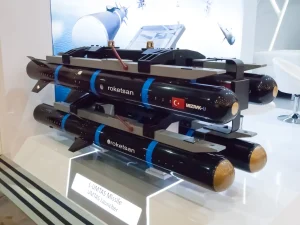
- Weapons integration: ROKETSAN AKYA heavyweight torpedo, ATMACA anti-ship missile, Gezgin cruise missile (planned)
Future — MİLDEN (National Submarine)
MİLDEN (Millî Denizaltı) is Turkey’s fully indigenous submarine design and production program, coordinated by the Defense Industries Presidency (SSB).
| Parameter | Scorpène Evolved | Type 214TN (Turkey) | MİLDEN (planned) |
|---|---|---|---|
| Displacement | ~2,000 t | 1,860 t | ~2,700 t |
| Length | ~75 m | 65 m | 80+ m |
| Torpedo tubes | 6 × 533 mm | 8 × 533 mm | 8 × 533 mm |
| Propulsion | Diesel + Full LiB | Diesel + H2 AIP | Diesel + Indigenous AIP (300 kW) |
| Weapon autonomy | Partially dependent | Low (German design) | Full indigenous (target) |
Turkey’s MİLDEN program targets a larger displacement, fully indigenous weapons package and domestically developed AIP — a more ambitious design than Scorpène in several dimensions. However, MİLDEN remains in the development phase; operational capability is still several years away. Turkey’s ongoing Type 214TN production at Gölcük provides the engineering experience base that MİLDEN will build upon.
Envanter Media Assessment
Scorpène’s 30-year track record across five navies makes it one of the few submarine platforms with genuine multi-generational operational validation. More significantly, Naval Group’s technology transfer model has consistently distinguished Scorpène from competitors: buyers don’t just receive submarines, they receive the industrial capacity to build and eventually export them. The India-MDL joint export MOU signed in October 2025 extends this model to a new dimension — essentially creating a second sales channel for the platform.
The Scorpène Evolved’s lithium-ion integration addresses the program’s most persistent criticism — AIP absence — and positions it competitively against the TKMS Type 212CD and Hanwha KSS-III in upcoming procurement contests.
From Turkey’s perspective, the honest comparison is this: Turkey is building Type 214TN submarines today and aims to build MİLDEN submarines tomorrow. The strategic logic parallels Scorpène’s own journey — from licensed production to fully indigenous capability. Turkey’s path is the harder one (full design sovereignty versus technology transfer), but if MİLDEN delivers on its specifications, it would represent a more complete form of industrial independence than any Scorpène customer has yet achieved.