US Hypersonic Weapons Programs: Status According to Official Reports

A Congressional Research Service report, “Hypersonic Weapons: Background and Issues for Congress” (R45811), updated August 27, 2025, is the backbone of this status review. Official Defense Department test releases cited in that report are used where they add a dated official result. A budget request is not a fielded weapon, a successful test is not a completed program of record, and U.S. efforts described here are official conventional-prototype programs, not nuclear-armed systems.
The official U.S. picture as of the August 2025 CRS report
CRS notes that the Pentagon’s FY2026 budget request for hypersonic research was $3.9 billion, down from a $6.9 billion request in FY2025, and that the Missile Defense Agency additionally requested $200.6 million for hypersonic defense in FY2026, up from an $182.3 million request in FY2025. At present, the report says, the Department of Defense has not established any programs of record for hypersonic weapons, which CRS reads as suggesting that the department may not have approved either mission requirements for the systems or long-term funding plans. The report quotes a former principal director for hypersonics as saying DOD has not yet made a decision to acquire hypersonic weapons and is instead developing prototypes to evaluate concepts and mission sets. CRS also records that most U.S. hypersonic weapons, in contrast to those in Russia and China, are not being designed for use with a nuclear warhead.
The same report lists four principal U.S. efforts intended to produce operational prototypes: the Navy’s Conventional Prompt Strike (CPS); the Army’s Long-Range Hypersonic Weapon (LRHW), also known as Dark Eagle; the Air Force’s Air-Launched Rapid Response Weapon (ARRW); and the Air Force’s Hypersonic Attack Cruise Missile (HACM). A June 2018 DOD memorandum, as described by CRS, assigned the Navy to lead development of a Common Hypersonic Glide Body for use across the services, to be paired with a booster as a common all-up round for the Navy and the Army.
What official documents and tests said about each effort
For CPS, CRS reports that DOD completed successful “end-to-end” tests of the all-up round in June and December 2024 and in April 2025, after an earlier failed test in June 2022 and later tests that did not occur because of failed preflight checks. Official DOD releases are the public source for those successful-test announcements. CRS says Navy FY2026 budget documents note an intention to continue CPS integration on Zumwalt-class destroyers through 2026 and to begin integration on Virginia-class submarines in FY2025, and that the Navy requested $798.3 million for CPS research, development, test and evaluation in FY2026, without requesting weapons-procurement funding in FY2025 or FY2026. The FY2024 annual report of the Director, Operational Test and Evaluation, as quoted by CRS, said insufficient data were available to assess the operational effectiveness, lethality and suitability of the Phase 1 CPS prototype.
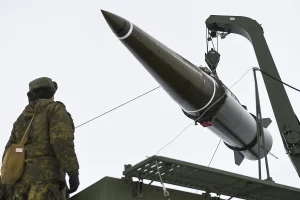
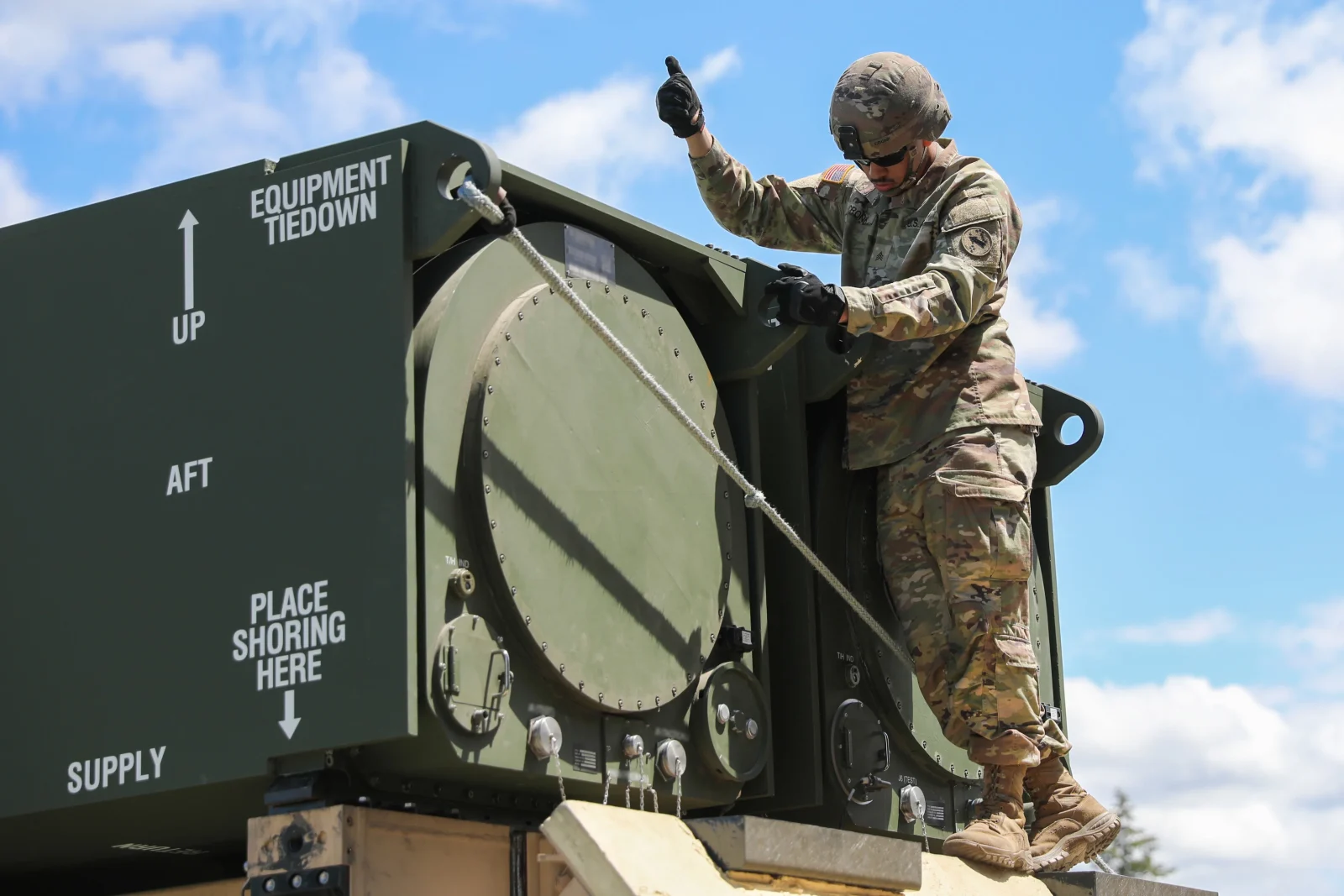
For LRHW, CRS says the Army requested $513 million for research, development, test and evaluation in FY2026 and $353.4 million for procurement of ground-support equipment and three all-up rounds and canisters. It reports that the Army has fielded prototype LRHW equipment and “intends to field two additional batteries of LRHW” by FY2027. CRS also records that the December 2024 all-up-round test, in official DOD wording, was the first live-fire event for the LRHW system using a Battery Operations Center and a Transporter Erector Launcher. The same DOT&E caveat appears for LRHW: insufficient data were available, in the FY2024 annual report, to evaluate operational effectiveness, lethality, suitability and survivability. CRS describes the system as intended to have a range of over 1,725 miles; that figure should be read as an official-source description of intended range in the primer, not as a completed test-range result published here.
For ARRW, CRS states that the Air Force conducted a final test in March 2024 and declined to discuss the results; that it did not request research-and-development funds for ARRW in FY2025 or FY2026 and that budget documents characterized the program as “completed”; and that the Air Force nonetheless requested $387.1 million for ARRW procurement in FY2026. For HACM, CRS reports that the Air Force requested $802.8 million in FY2026, up from a $517 million request and a $466.7 million appropriation in FY2025. Those are official request and documentation facts as of the primer. They do not, by themselves, establish that either missile has been fielded as a program of record.
How to read this status review
The CRS report is dated August 27, 2025. Later official test announcements or later budget justifications can change the picture; this article does not harvest unofficial later claims into a new inventory. Existing English-language Envanter explainers on what a hypersonic missile is, and on hypersonic glide vehicles, address the general concept. This page is a U.S. program-status review and links to that concept explainer: What is a hypersonic missile?.
Sources
- Congressional Research Service, Kelley M. Sayler, “Hypersonic Weapons: Background and Issues for Congress,” R45811, updated August 27, 2025, https://www.congress.gov/crs_external_products/R/PDF/R45811/R45811.55.pdf
- U.S. Department of Defense releases on all-up-round flight tests, including June 28, 2024; December 12, 2024; and May 2, 2025, as cited in that CRS report.