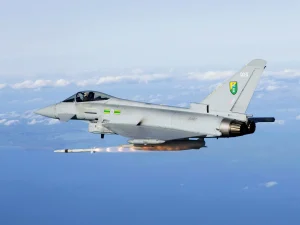
Spain to Buy €104.3 Million in IRIS-T Missiles for Its EF-18 and Eurofighter Fleets

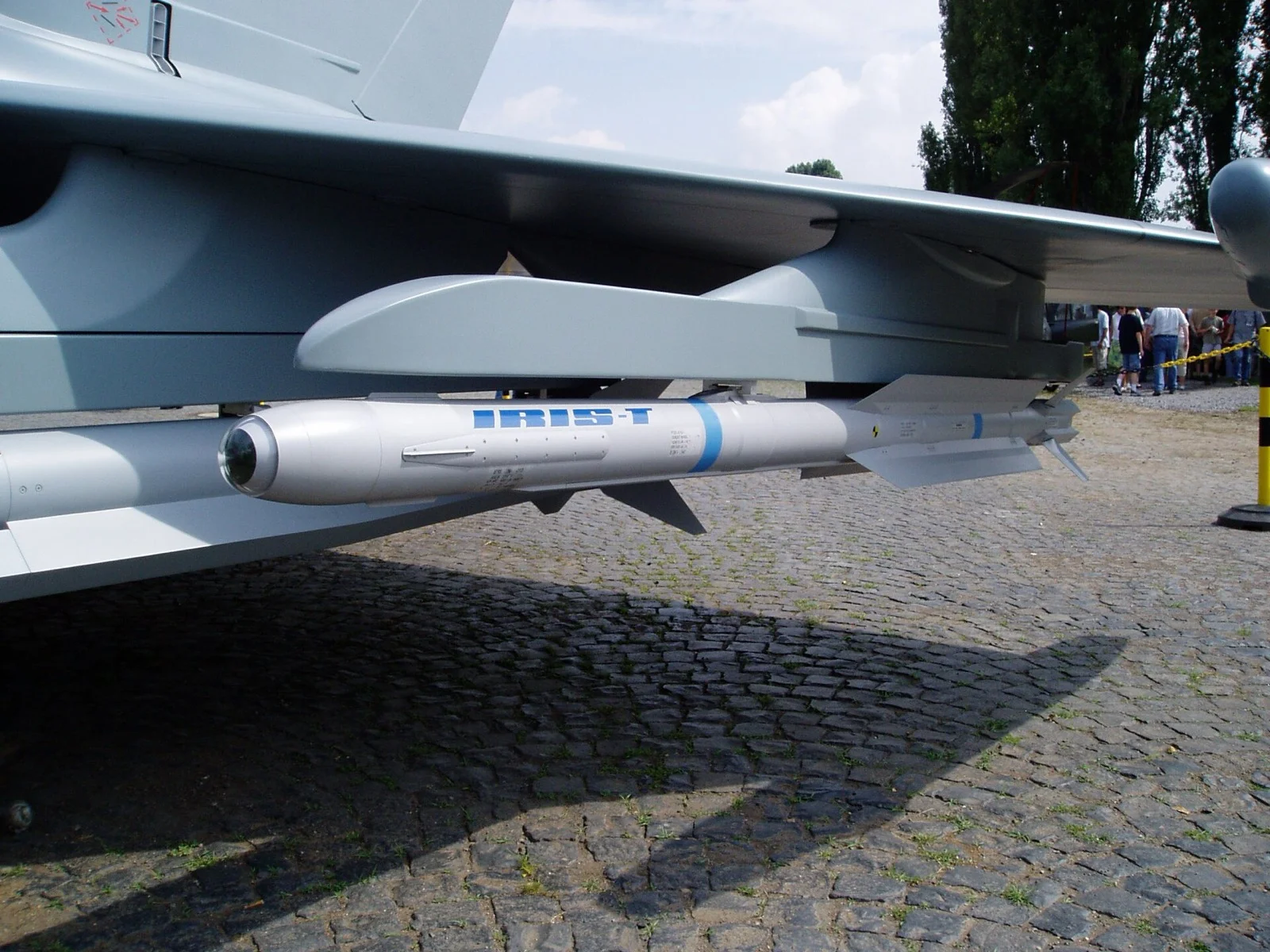
Spain’s Council of Ministers has approved the purchase of German-made Diehl Defence IRIS-T short-range air-to-air missiles for its Eurofighter Typhoon and EF-18 Hornet fleets. The decision, taken at the council’s meeting on October 6, is confirmed by the official reference document published by La Moncloa, Spain’s government press office, which puts the approved package at exactly €104.3 million. The Defense Ministry’s justification states the missiles equip the Air and Space Force’s EF-18 and Eurofighter fleets, and that updating and modernizing this weapon system’s stock “constitutes a strategic priority to maintain operational capacity.” Infodefensa picked up the story on Wednesday, becoming the first trade outlet to carry it.
In the same council session, Spain approved a separate €50 million voluntary contribution to NATO in support of Ukraine’s prioritized 2026 requirements list. Taking both decisions in a single session suggests Madrid is treating its own fleet’s munitions readiness and allied support as parallel, simultaneous budget items rather than competing priorities.
The purchase will update ammunition stocks for the EF-18s based at Torrejón and Zaragoza and for Eurofighter units. Under the contract, Spanish company Sener will be responsible for producing the flight control actuators and wing assemblies for the missiles — meaning the purchase is not a purely external procurement but one with a domestic industrial stake built in.
The IRIS-T program’s roots trace back to 2009, when Spain approved roughly €250 million for 770 IRIS-T missiles to replace the AIM-9L Sidewinders long used by its fleets. Seventeen years on, stocks have been drawn down through operational use, training launches and technical upgrades; the new purchase is meant to replenish that stock and keep the fleet ready for current threat conditions.
IRIS-T is run through a multinational NATO procurement structure led by Germany, with Italy, Greece, Sweden and Norway also participating. That structure lets member states build their own industry into the missile’s supply chain — Spain’s contribution through Sener is one example of that model. The missile’s infrared seeker and high-agility airframe have made it a widely adopted choice across NATO’s air-to-air inventory.
The timing of the decision lines up with a broader pressure to replenish munitions stocks globally. The continuing war in Ukraine and ongoing tensions in the Middle East are pushing NATO member states to grow both their own stockpiles and the reserve inventory they can pass on to allies. Spain’s move can be read less as an isolated fleet requirement and more as the Iberian reflection of a stock-replenishment wave visible across NATO.
The IRIS-T decision also sits alongside Spain’s larger wave of investment in its Eurofighter fleet. Madrid has separately earmarked billion-euro-level pre-financing for the Halcón program — new Eurofighters from Airbus to replace the F-18s based in the Canary Islands — plus a further budget line for modernizing and logistically supporting the existing Eurofighter fleet. The IRIS-T purchase is comparatively small next to those platform investments, but it directly affects operational readiness: however modern the airframe, a fleet with insufficient munitions stock has limited deterrent value.
No delivery timeline or named official statement was included in the published decision; these details will likely emerge as the contract moves into implementation. Still, the speed with which the package moved through Council of Ministers approval signals that Madrid treats munitions procurement as a budget priority rather than a routine line item.
For Turkey, the IRIS-T case offers a comparative reference point rather than a direct supply relationship. Turkey’s own effort to develop its Gökdoğan medium-range and Bozdoğan short-range air-to-air missiles domestically aims to fill a role similar to what IRIS-T occupies in NATO’s inventory. Roketsan’s accumulated expertise in seeker and guidance technology for these missiles parallels the industrial-participation logic Spain applies through Sener’s actuator and wing production for IRIS-T — the key difference being that Turkey’s program is designed as a fully domestic system rather than a multinational consortium product, which gives each side a different kind of flexibility on exports and technology sharing.
Kaynaklar
- La Moncloa (Spanish Government), Council of Ministers meeting reference, October 6, 2026 — https://www.lamoncloa.gob.es/consejodeministros/referencias/Paginas/2026/20261006-referencia-rueda-de-prensa-ministros.aspx (official decision text, amount and justification)
- Infodefensa, “Defensa comprará misiles aire-aire IRIS-T para los F-18 y Eurofighter por 104 millones de euros,” October 7, 2026 — https://www.infodefensa.com/texto-diario/mostrar/6042614/defensa-comprara-misiles-aire-aire-iris-t-f-18-eurofighter-104-millones-euros (contract details, historical context and Sener’s role)