Poland Orders Hundreds of Chassis for Waran 4×4 and Heron 6×6 in a €150 Million-Plus Package
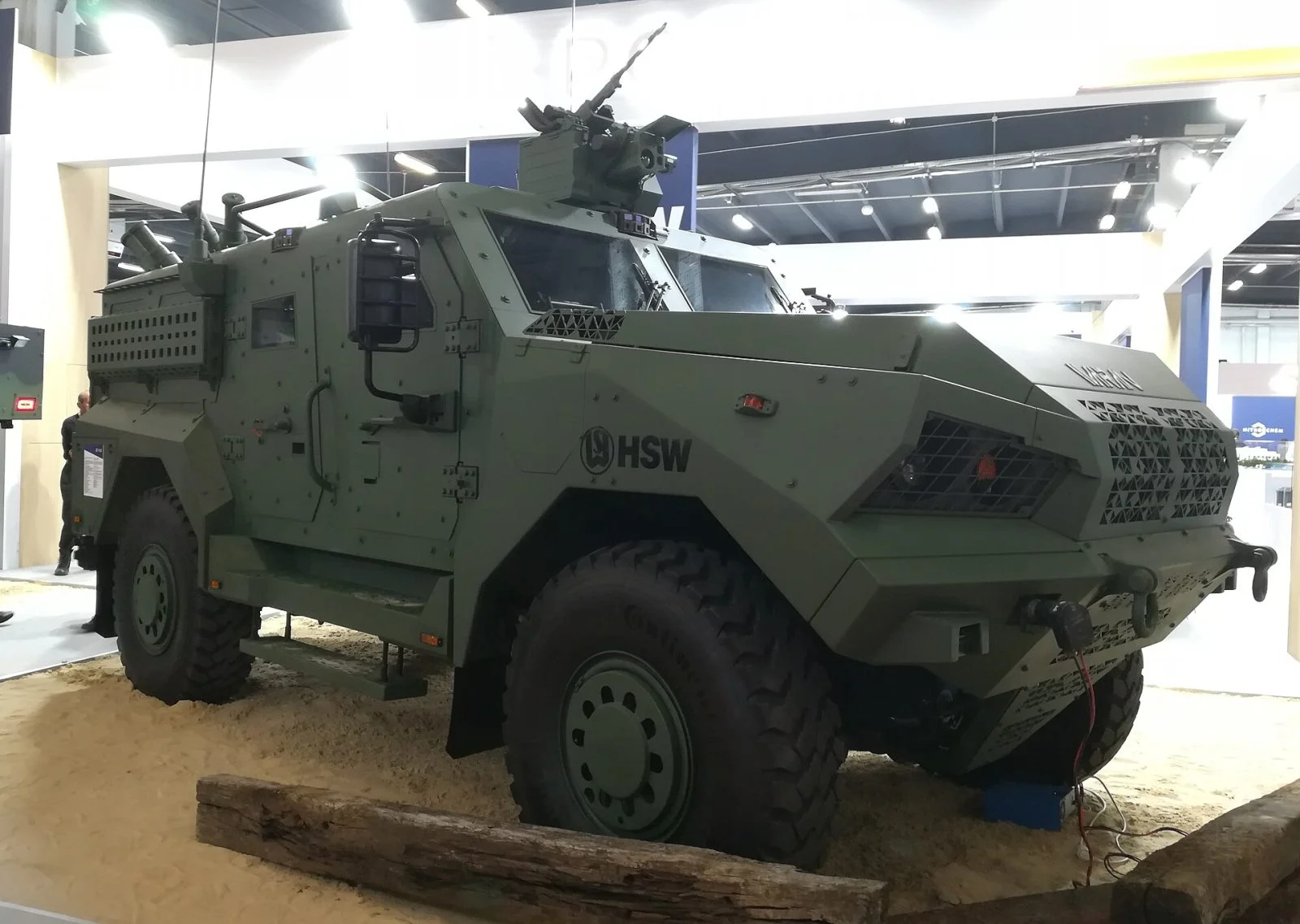
Poland’s state-owned defence manufacturer Huta Stalowa Wola (HSW) has ordered several hundred chassis for Waran 4×4 multipurpose tactical vehicles and Heron 6×6 armoured vehicles on behalf of the Polish Armed Forces. The package, spread across three separate contracts, is worth more than €150 million (about $174 million).
The supplier is Czech-based CSG Group, with the vehicles built on its Patriot II and Tadeas platforms. The contracts include assembly kits, and deliveries are scheduled to complete by the end of 2029. The order also covers dedicated command variants for Missile and Artillery Forces units.
Wojciech Grzonka, president of the CSG Polska management board, described the deal as a “continuation and expansion” of the strategic partnership, highlighting the “rapid delivery of top-quality products.”
What Waran and Heron are
One clarification first: the Heron here is a Polish 6×6 armoured ground vehicle, unrelated to the Israeli-built Heron unmanned aircraft. The shared name is coincidence.
The Waran 4×4 is a multipurpose tactical vehicle that HSW builds under licence from CSG. The Polish Armed Forces have already taken delivery of several dozen, including variants fitted with the Gladius unmanned system complex — a vehicle-based package carrying Warmate-type loitering munitions and reconnaissance UAVs. In that role the Waran is not a troop carrier but a weapon system carrier.
The Heron 6×6 sits a class heavier, offering the internal volume needed for command and control, medical evacuation and support roles. Routing the command variants to the Missile and Artillery Forces is no accident: Poland’s HIMARS, Homar-K (based on the K239 Chunmoo) and Krab howitzer fleets are expanding fast, and every battery of that firepower needs its own fire-direction and command vehicles.
Why the chassis is bought separately
Buying the chassis under its own contract looks like paperwork detail but is central to the industrial logic. In a modern tactical vehicle the chassis — engine, transmission, axles, suspension and driveline — is the most capital-intensive assembly with the longest lead time. Armoured hulls, turrets, communications and mission systems are comparatively easier to localise.
Hence the model spreading across Europe: source a mature foreign chassis under licence, then solve the superstructure and mission systems at home. That is exactly what HSW is doing. It lowers delivery risk while concentrating domestic value-add in the hull, integration and electronics. The inclusion of assembly kits in the contract is the tell — part of the build will happen at Stalowa Wola.
Why it matters regionally
Poland has become NATO’s fastest-rearming member over the past five years. With defence spending above 4 percent of GDP, Warsaw has bought tanks, howitzers and multiple rocket launchers at scale from South Korea and the United States. But those headline systems only function on top of a far larger fleet of support vehicles: command posts, resupply trucks, reconnaissance carriers, casualty evacuation.
This €150 million chassis package finances precisely that invisible layer — and it is the most frequently overlooked cost of growing an army. Buying a HIMARS battery makes headlines; buying the ten different support vehicles that keep it in the field does not.
The picture is familiar from Türkiye. Nurol Makina’s Ejder Yalçın and NMS families, Otokar’s Cobra II and Arma, and BMC’s Kirpi and Vuran follow the same modular logic, deriving dozens of roles from a single hull. The difference is notable, though: Turkish manufacturers solve most of the vehicle — chassis and driveline included — with their own designs, and those vehicles come back as export earnings. Poland’s licence route through a Czech chassis is faster; Türkiye’s integrated route captures more value over time. Two industrial strategies, two answers to the same requirement.
Sources
- CSG Group / CSG Polska — statement by Wojciech Grzonka
- Huta Stalowa Wola — Waran and Heron programme material
- The Defense Post — “Poland Orders Hundreds of Chassis for Waran 4×4, Heron 6×6 Tactical Vehicles”